
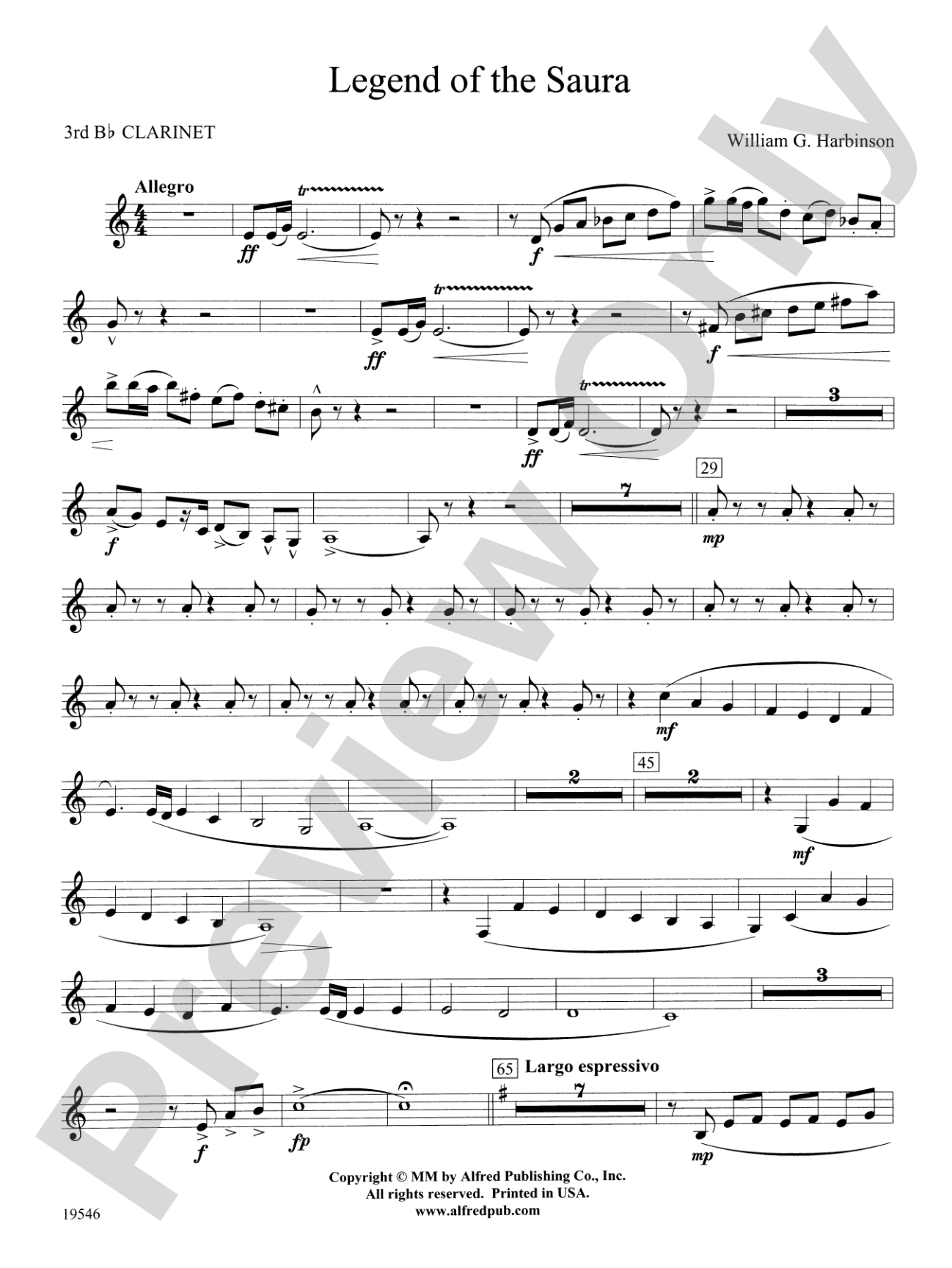

Legend of the Saura: 3rd B-flat Clarinet
By William G. Harbinson
Grade: 3 (Medium)
Item: 00-PC-0000334_C3
$5.99
Pickup currently not available
Description
Commissioned by the South Stokes Band Boosters of North Carolina, Legend of the Saura is a tribute to the Saura Indians who lived in what today is Stokes County. The piece opens with a vibrant flourish of woodwinds and percussion that immediately leads into the pensive yet driving main theme. The contrasting middle section pulls back to a reflective and mysterious solo for recorder (or optional flute), accompanied by exotic percussion instruments. Then, the beautiful theme is continued by solo trumpet, making for a truly incredible moment.


Don't just read it, hear it, play along with it, and watch your students grow with it. In MakeMusic Cloud, Legend of the Saura: 3rd B-flat Clarinet comes alive with professional accompaniment, adjustable tempo, and built-in practice tools that turn solo practice into real progress.
Open in the Player
Jump straight in and assign it today.
Start Your Free Trial
Open this title and explore the full library in minutes.
Sample Audio
1
Audio File
--:--
0:00
0:00
Sample Video
No sample videos found.
Additional Details
Series:
Alfred Concert Band
Publisher:
Alfred Music
Page Count:
146
SKU:
00-PC-0000334_C3
More about this title
Why we love this
Harbinson crafts a piece that feels genuinely earned rather than merely programmatic. The structure respects your ensemble's capabilities while delivering moments of real impact: that recorder solo floats with genuine mystery, and when the trumpet enters with the main theme, your students will feel the shift in their bones. It's the kind of Grade 3 work that lets a solid band sound accomplished without overselling.
What to expect
The opening crackles with energy and cultural pride. As the work deepens, it settles into something reflective and shadowed, with those exotic percussion colors creating an unfamiliar sonic space that intrigues rather than confuses. The return of the main theme through solo trumpet feels like recognition, like something known arriving home.
Who it's for
Concert bands at the intermediate level who want substantial programming that goes beyond generic concert fare. This works for groups comfortable with independent part-writing, able to handle a recorder soloist (or flexible enough to substitute flute), and ready to tackle a piece that asks something musically of both section and solo players.
How to get the most out of it
- Balance the opening woodwind flourish so percussion can cut through clearly; this sets the piece's energy and demands clean articulation from your reeds.
- Shape the recorder (or flute) solo with dynamic control and subtle rubato in the mysterious section. This solo carries the emotional weight of the middle passage, so encourage your soloist to breathe intentionally.
- Let the trumpet theme sing through the accompaniment underneath. The players supporting the solo trumpet need to understand they're framing something lyrical, not competing for attention.
- Mark any exposed entrances in your parts beforehand; Grade 3 ensembles benefit from visual cues when moving between textures, especially in the transitions between sections.
How to use it
This piece sits comfortably in a concert exploring regional or cultural themes, or as a strong standalone selection for festival play. Its Grade 3 level and contest designation make it ideal for a spring concert that needs both accessibility and substance, or as the centerpiece of a program honoring commissioning traditions and local history.
Skills your students will build
- Maintaining steady tempo and ensemble cohesion through contrasting textures (flourish, main theme, solo accompaniment, trumpet feature)
- Balancing foreground and background voices while supporting a featured soloist
- Interpreting cultural and regional musical intent through ensemble sound
- Responding to dynamic and rhythmic shape in transitions between distinct sections
- Sight-reading and executing independent part-writing at Grade 3 difficulty