
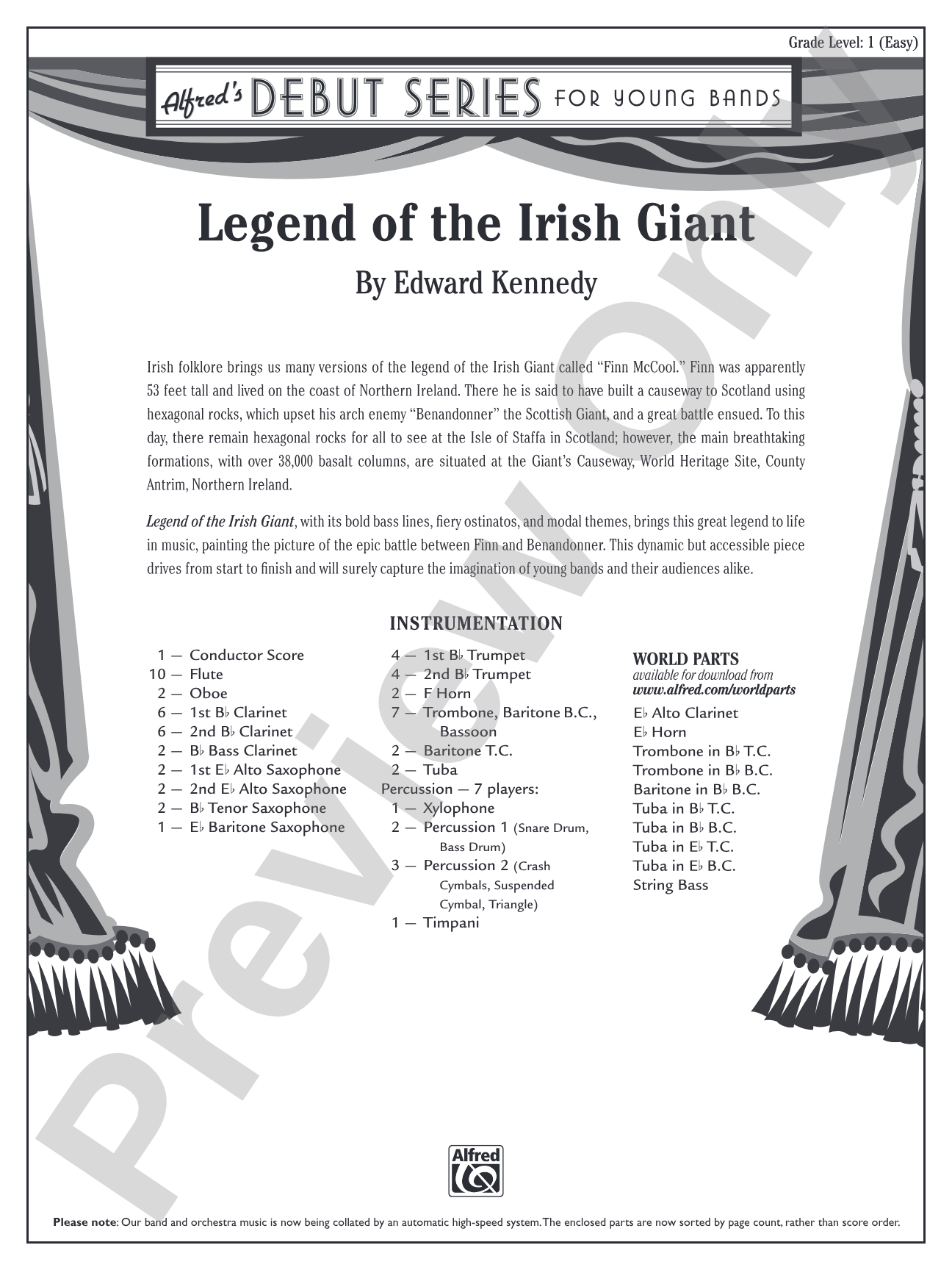
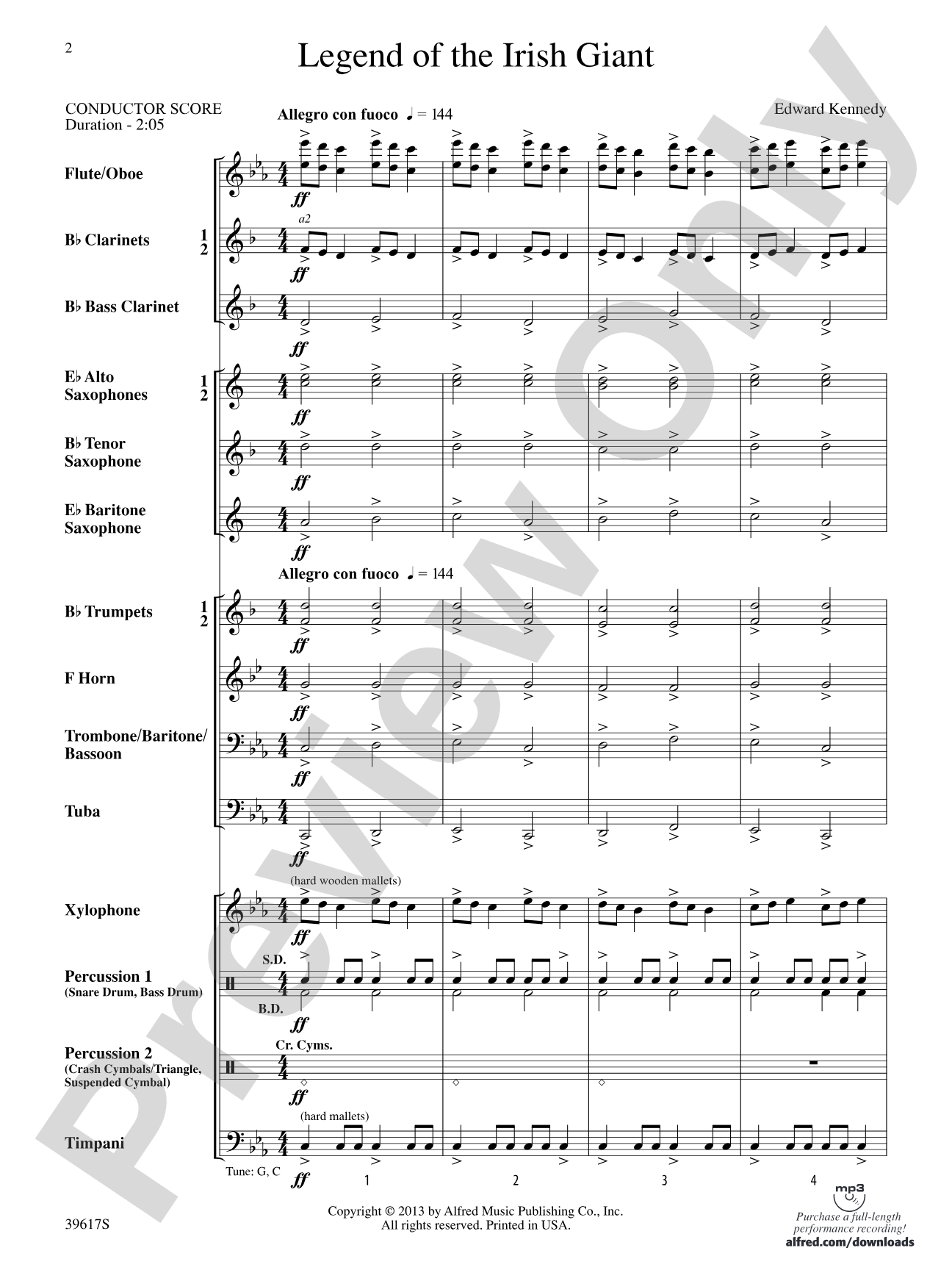
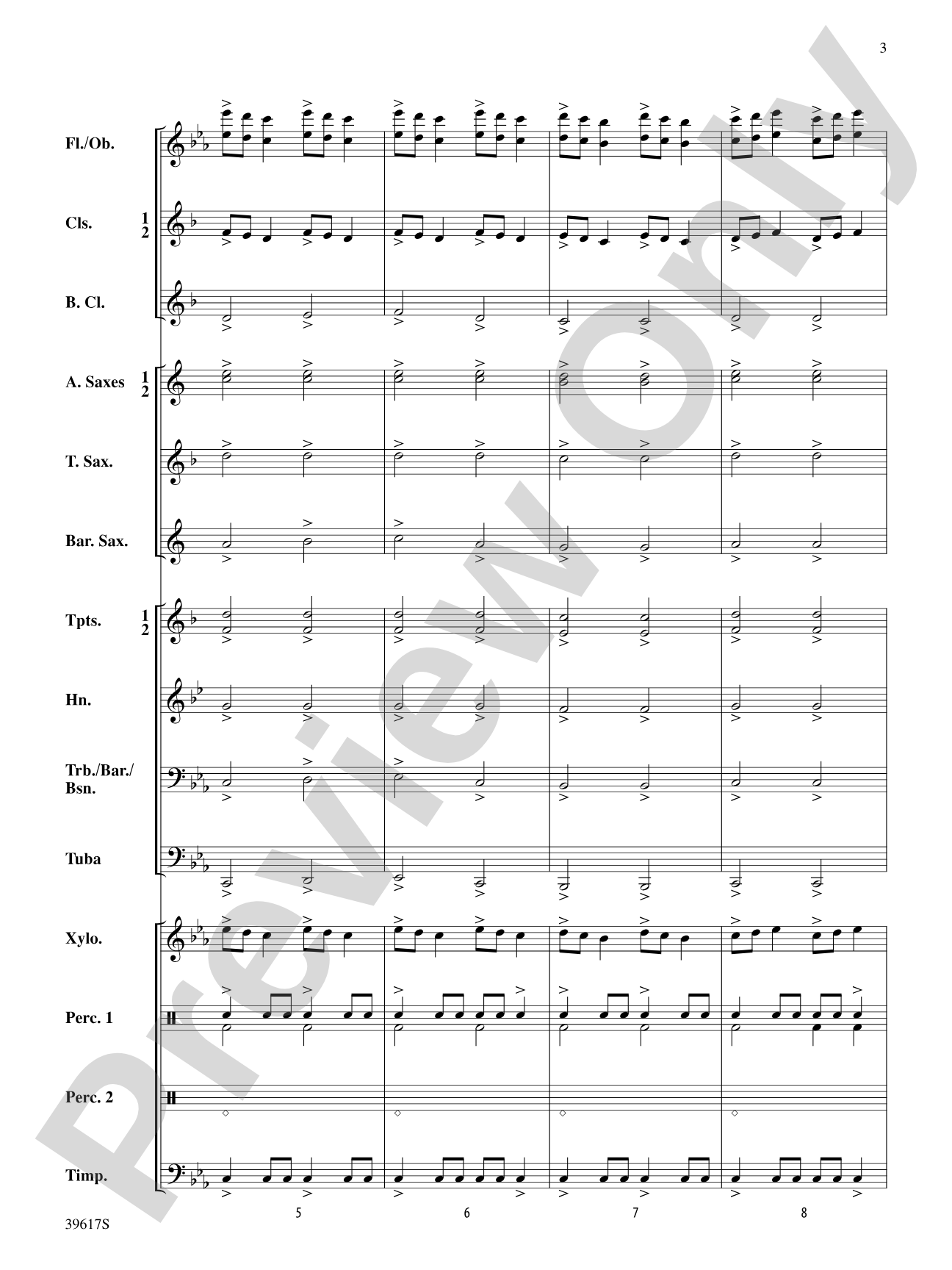
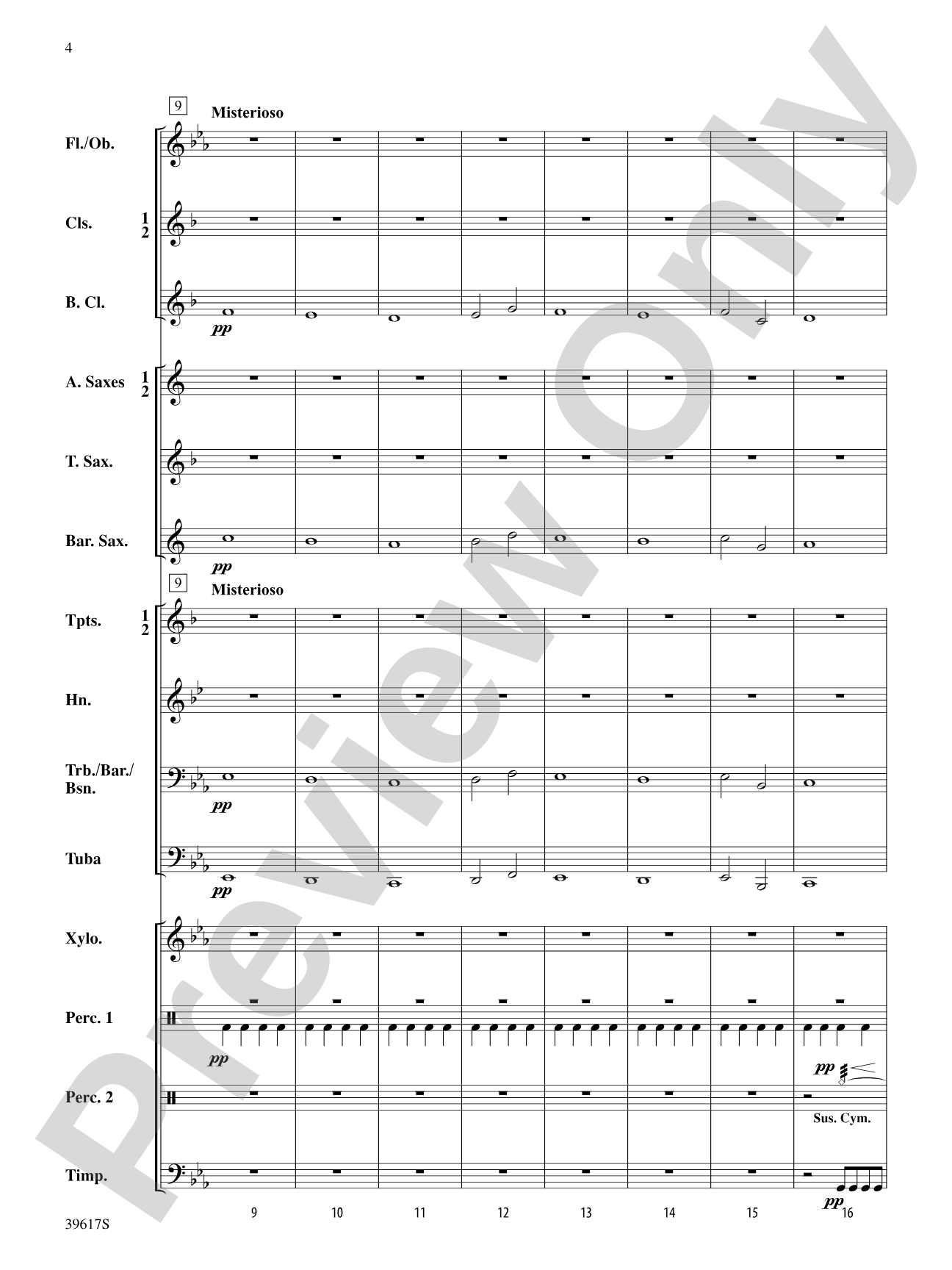
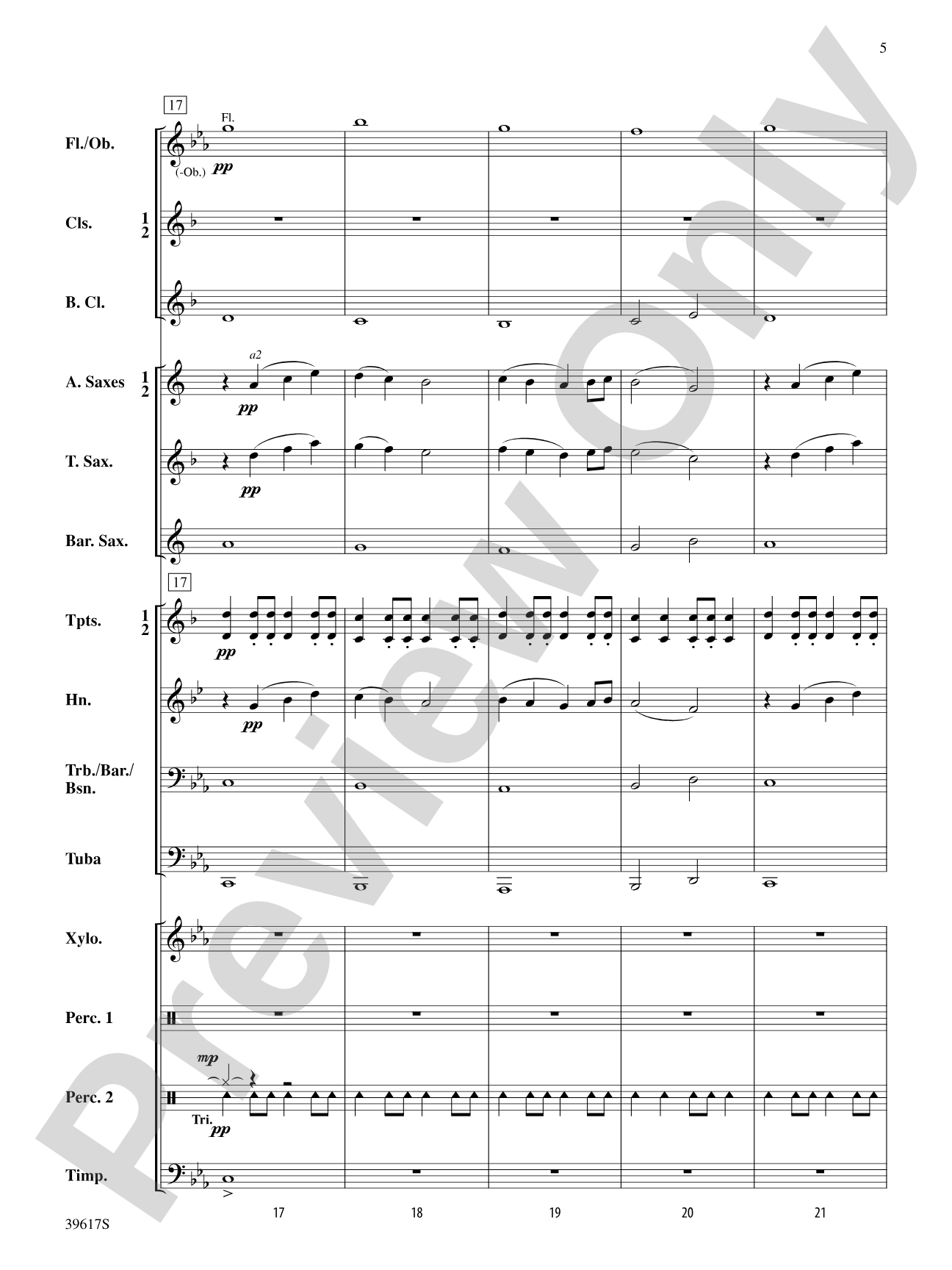
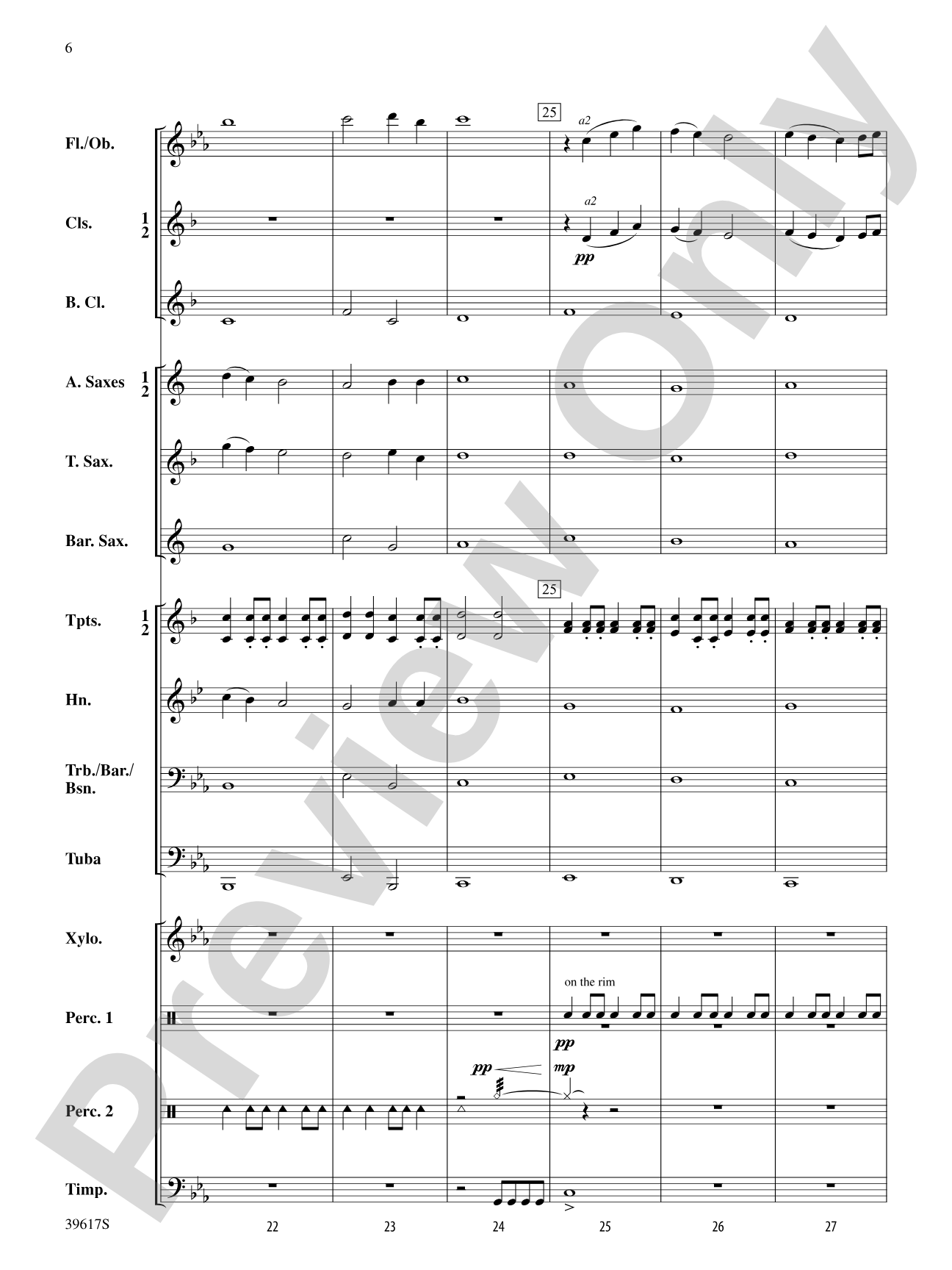
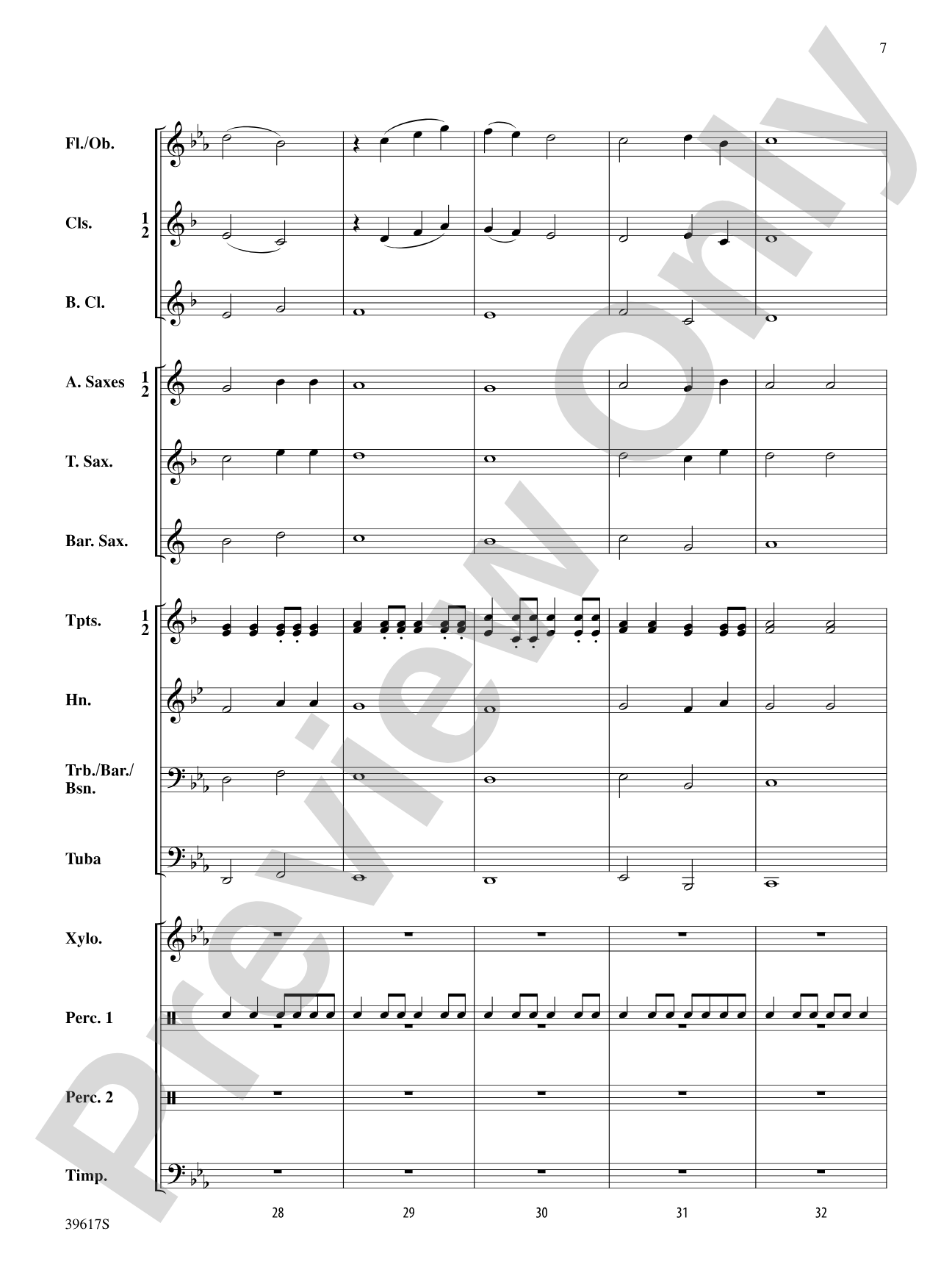
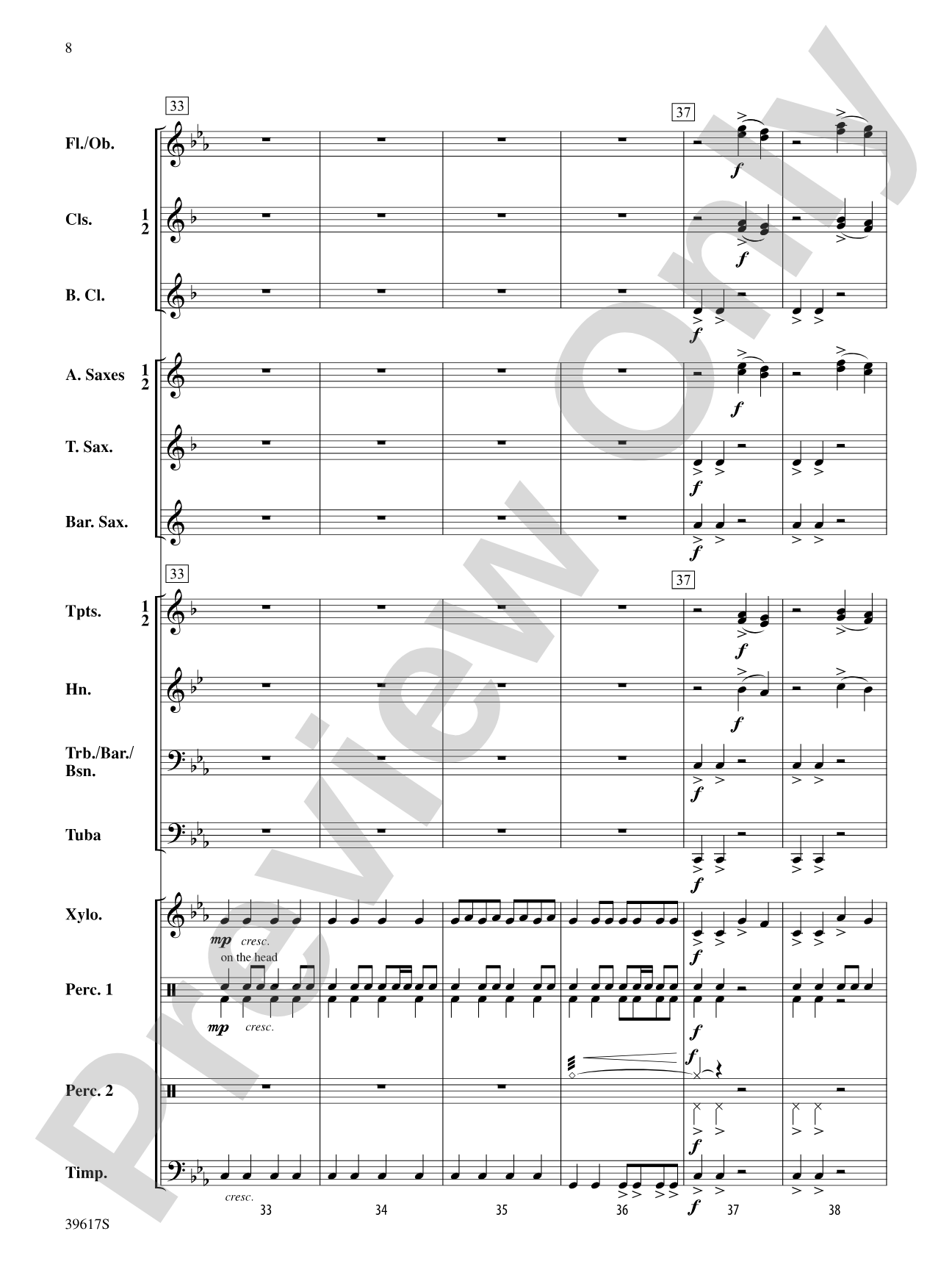
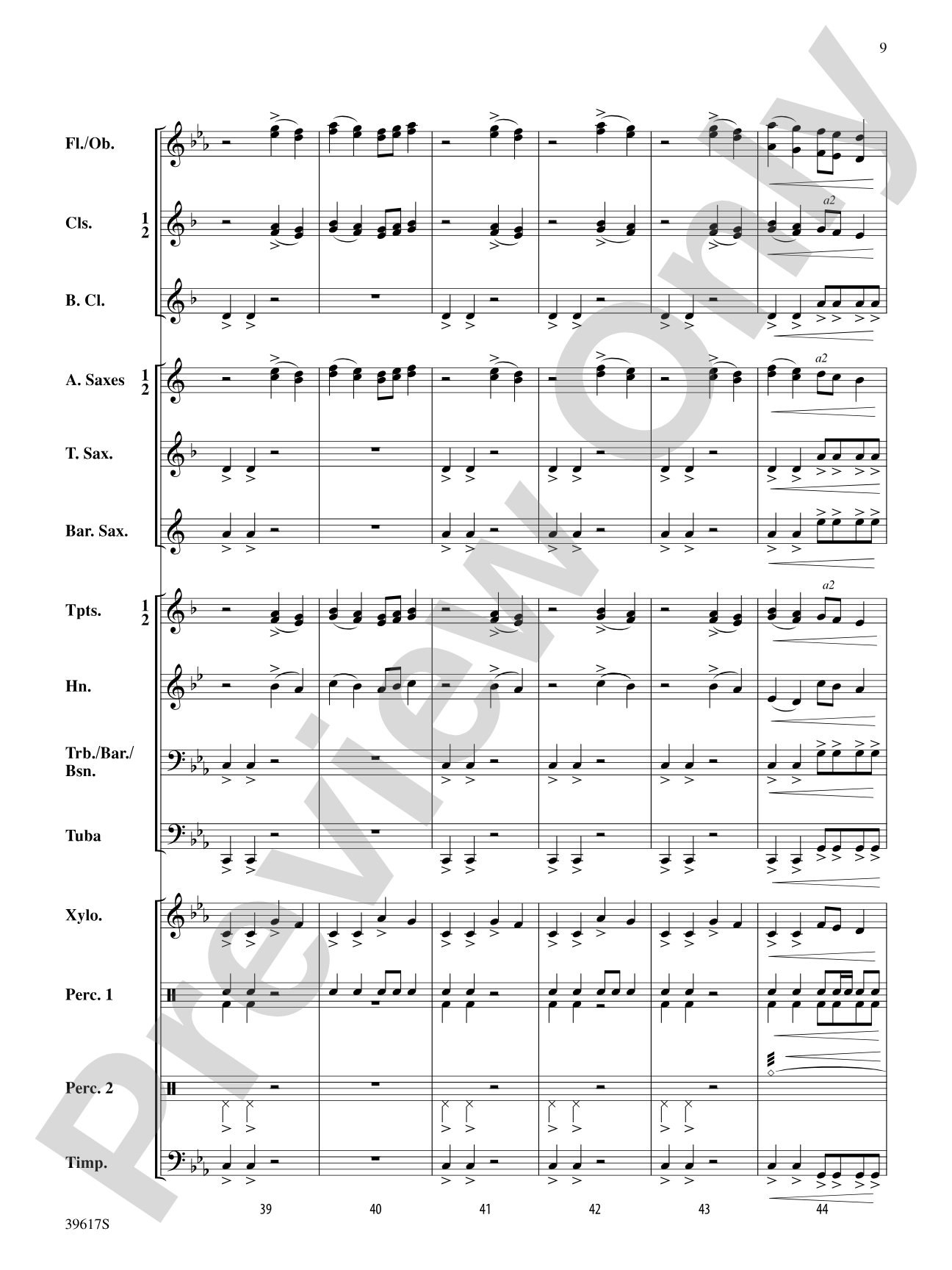
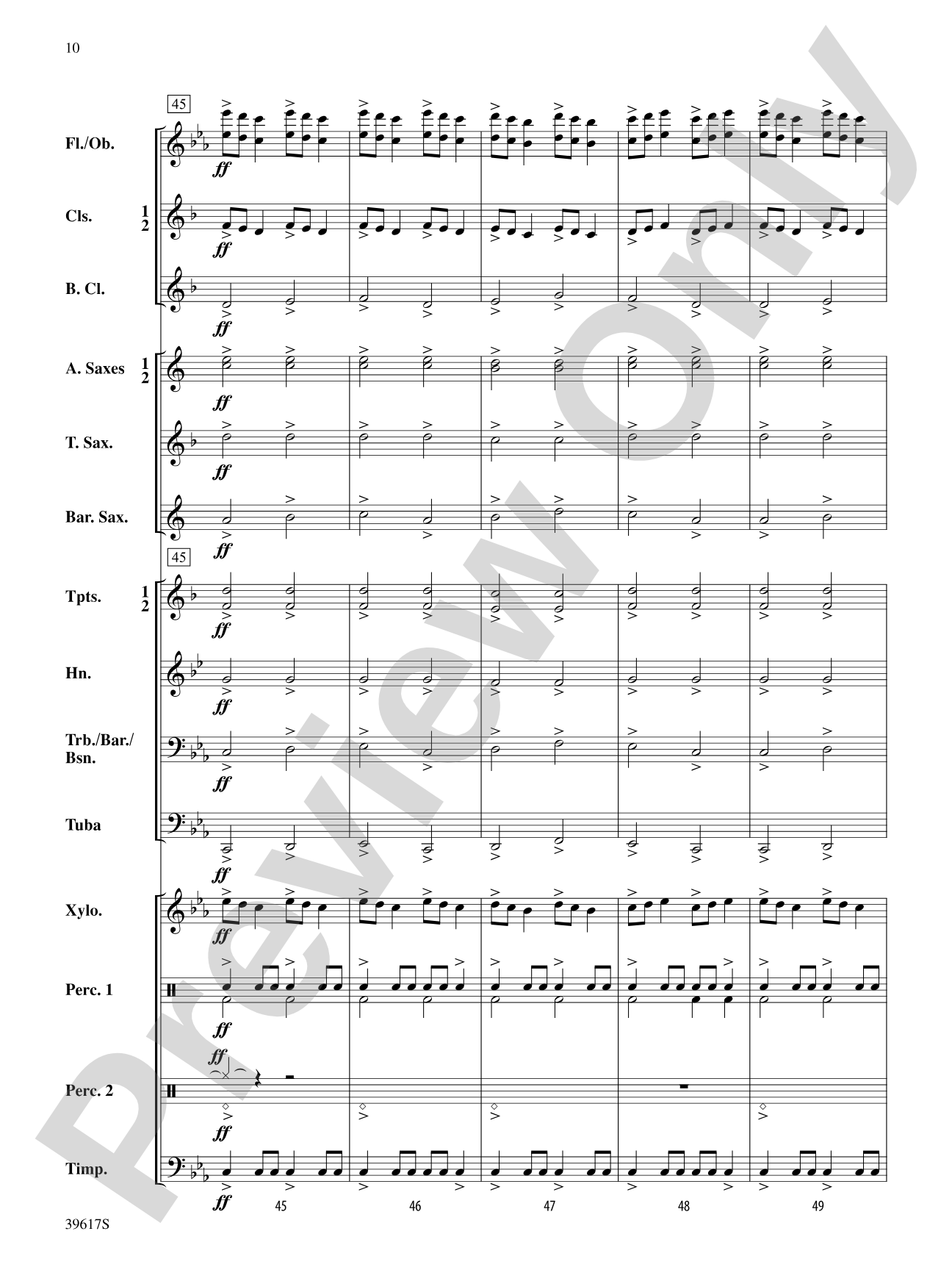
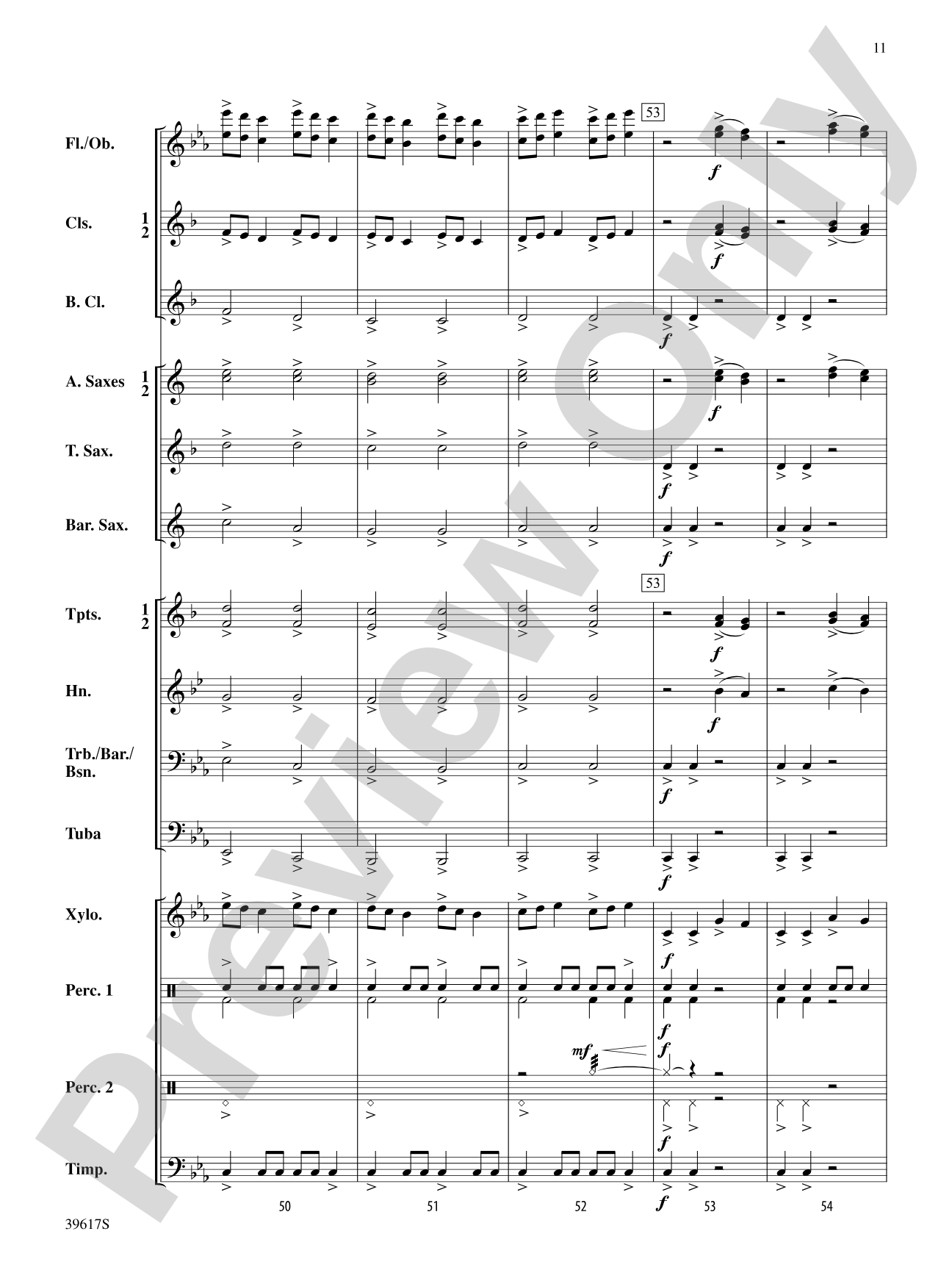
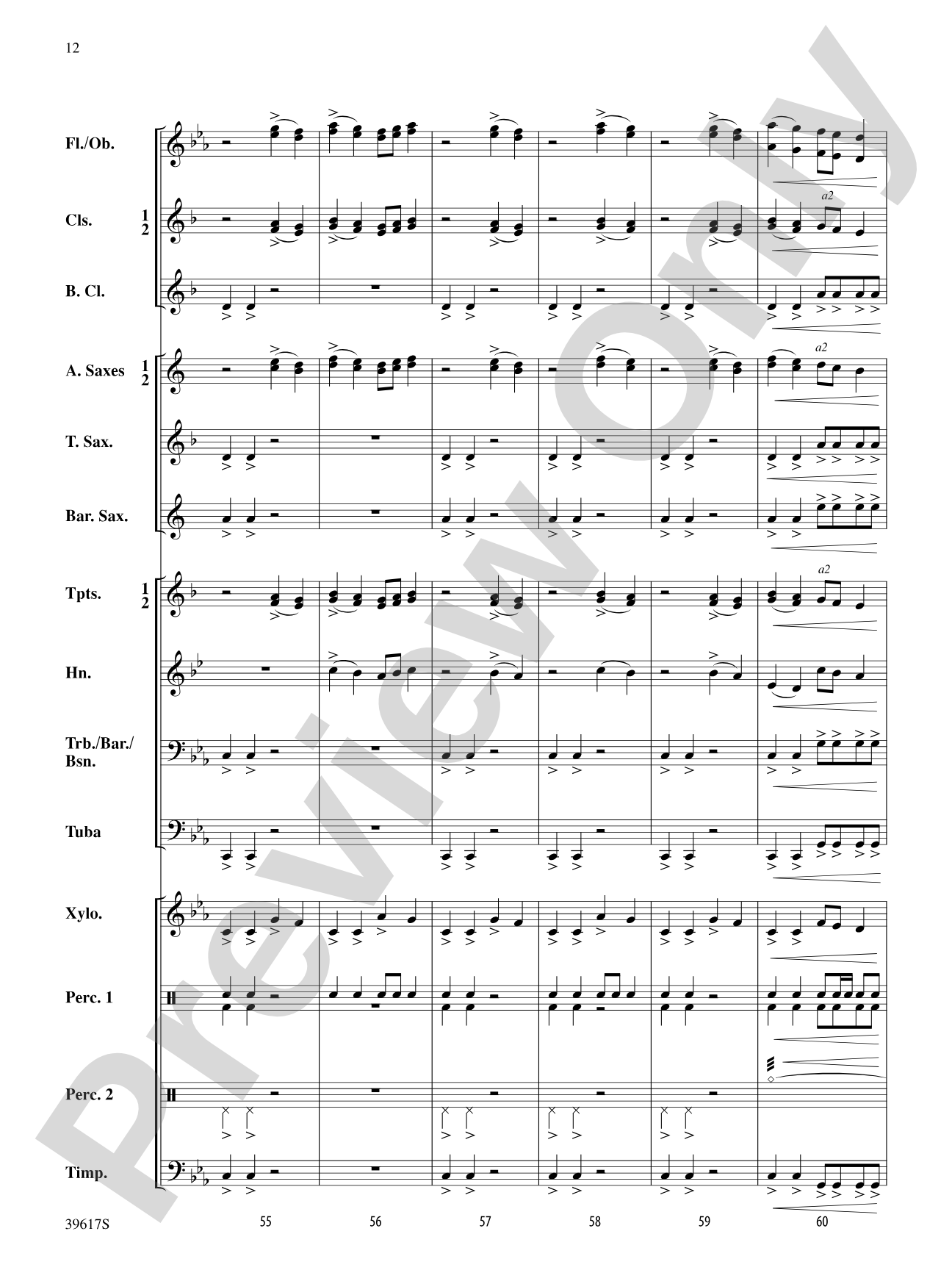
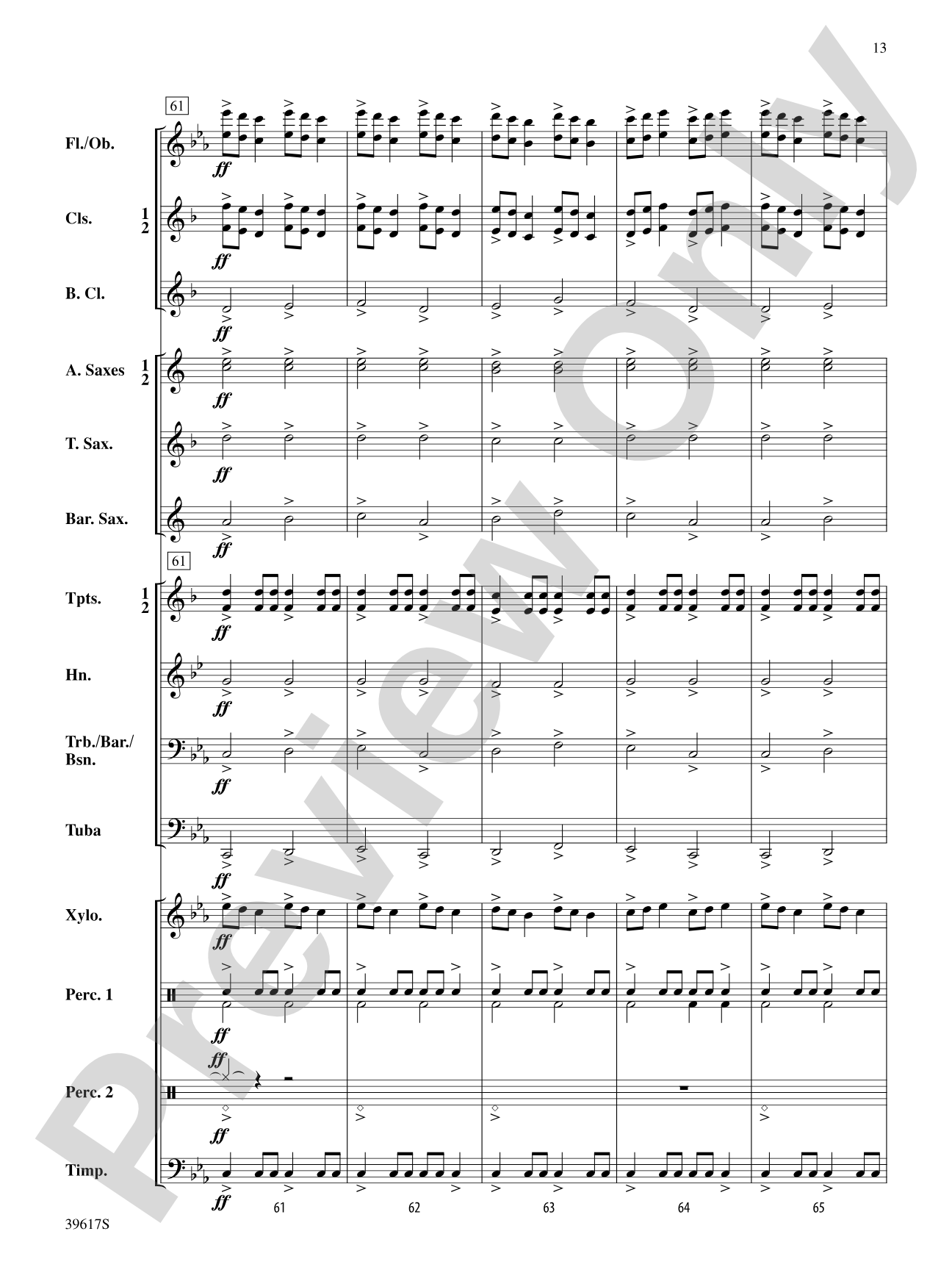
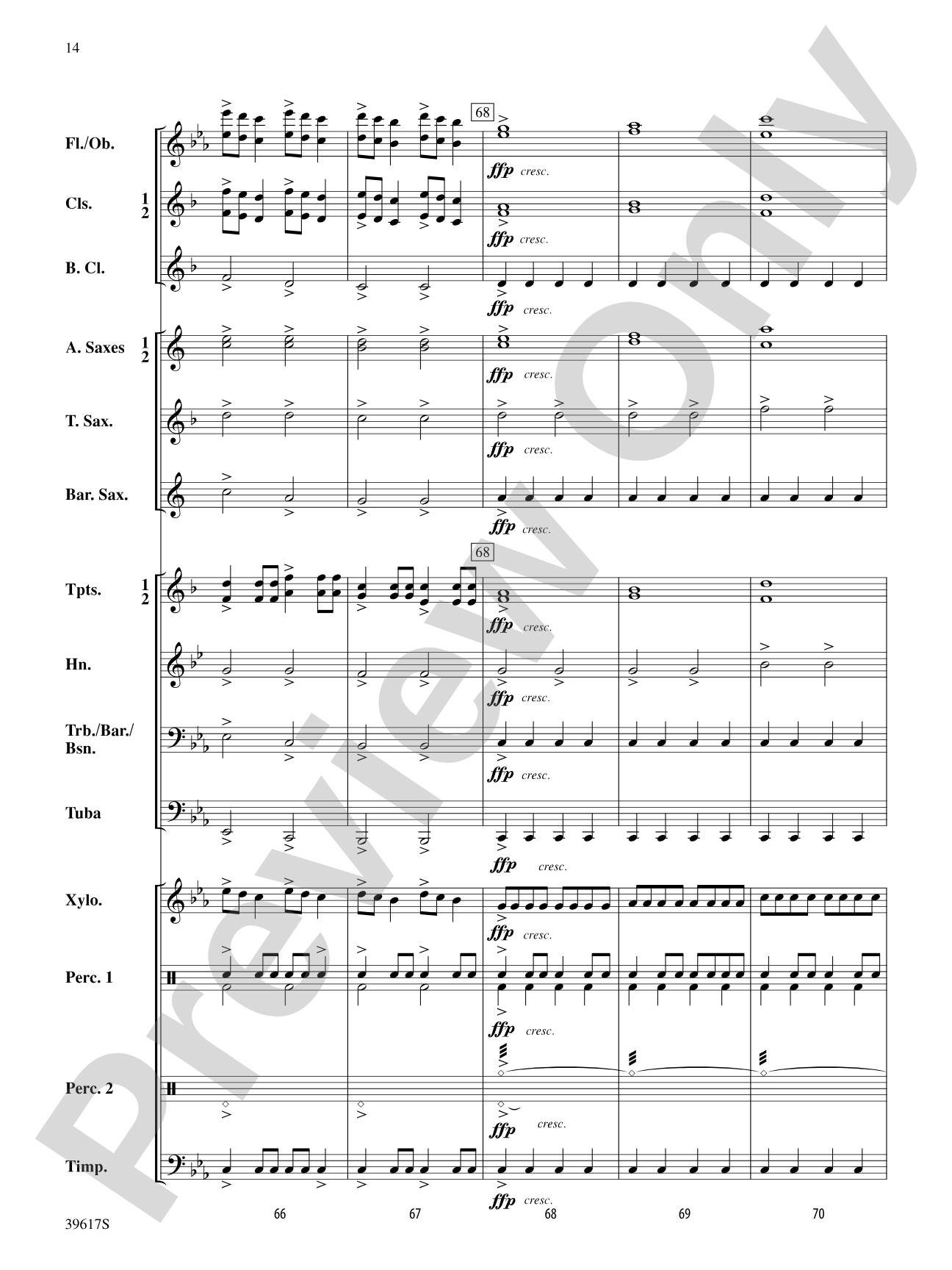
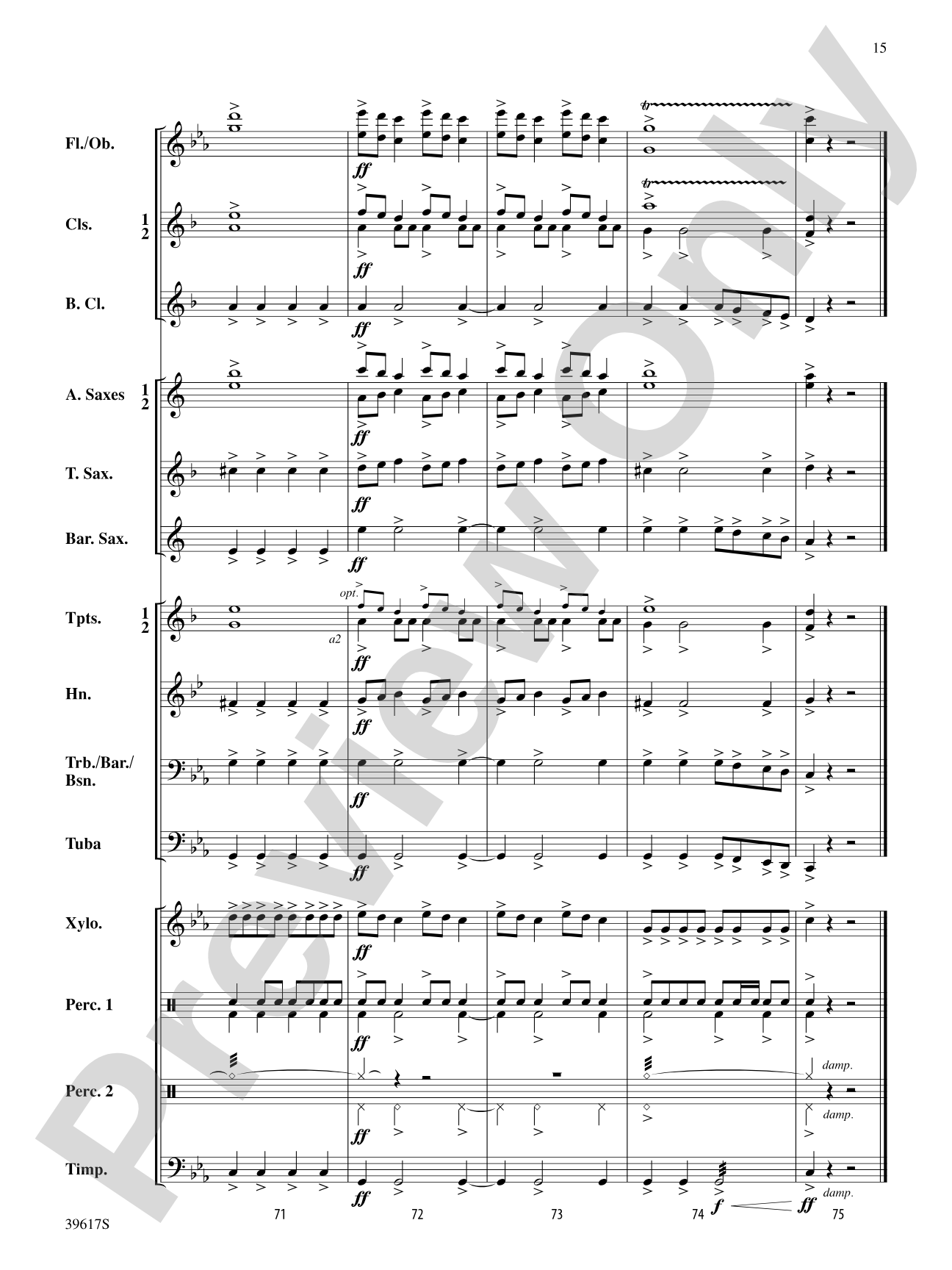


Legend of the Irish Giant: Concert Band Conductor Score & Parts
By Edward Kennedy
Grade: 1 (Very Easy)
Item: 00-PK-0005640

$48.00
Pickup currently not available
Buy Extra Parts (Digital PDF Download)
Parts Added to Cart!
Description
Irish folklore brings us many versions of the legend of the Irish Giant called Finn McCool. This work, with its bold bass lines, fiery ostinatos, and modal themes, brings this great legend to life in music, painting the picture of the epic battle between Finn and Benandonner. This dynamic but accessible piece drives from start to finish and will surely capture the imagination of young bands and their audiences alike. (2:05) This title is available in MakeMusic Cloud.


Don't just read it, hear it, play along with it, and watch your students grow with it. In MakeMusic Cloud, Legend of the Irish Giant: Concert Band Conductor Score & Parts comes alive with professional accompaniment, adjustable tempo, and built-in practice tools that turn solo practice into real progress.
Open in the Player
Jump straight in and assign it today.
Start Your Free Trial
Open this title and explore the full library in minutes.
Sample Audio
1
Audio File
--:--
0:00
0:00
Sample Video
No sample videos found.
Additional Details
Series:
Alfred Debut Series
Publisher:
Alfred Music
Page Count:
122
SKU:
00-PK-0005640
More about this title
About the Composer: Edward Kennedy

Edward Kennedy brings together training across the UK and Australia to create accessible wind band music grounded in strong pedagogical principles. Born in Belfast and educated at the University of Southern Queensland and Salford University, he holds advanced diplomas from Trinity College of Music London. Kennedy has spent his career as a music educator, conductor, and clinician across multiple continents, and currently directs bands and teaches music in Brisbane with the Queensland Education Department.
Why we love this
Kennedy captures the raw energy of Irish mythology without overcomplicating the instrumentation or rhythmic language, making this piece immediately playable for young ensembles while keeping audiences genuinely engaged. The modal melodies and driving ostinatos create forward momentum that sustains attention across the entire two-minute arc, and the bold bass writing gives your lower voices something genuinely musical to carry rather than filler parts.
What to expect
The music conjures vivid action without pretense. Bold, striding bass lines anchor fiery rhythmic figures that propel the narrative forward. There's a sense of legend and scale here, the orchestration feels bigger than the technical difficulty, giving young musicians the experience of playing something genuinely dramatic and mythic.
Who it's for
Grade 1 bands ready to tackle something with genuine character and dramatic stakes. This piece works for ensembles with solid fundamentals in their basic instrument technique but limited advanced skills; Kennedy writes accessibly without patronizing the players or audience.
How to get the most out of it
- Establish the ostinatos in rehearsal first, then layer the melodic themes over them so students understand the harmonic foundation driving each section.
- Shape the dynamic shifts deliberately; the piece 'drives from start to finish,' but without clear crescendos and releases, the energy can flatten into relentless noise.
- Emphasize articulation in the modal themes to distinguish them from the repetitive ostinatos, creating textural contrast that young players can hear and execute.
- Let the brass weight the bass lines (tubas, trombones, low clarinets) so the legend feels genuinely epic rather than thin.
How to use it
Use this as a concert opener or mid-set highlight where you need to shift the energy and capture attention quickly. The five-minute runtime and Grade 1 difficulty make it ideal for young band showcases, festival appearances, or family concerts where you want to program something substantial that audiences will remember.
Skills your students will build
- Sustaining energy and phrasing across longer melodic lines
- Layering ostinatos with melody to understand harmonic texture
- Articulation contrast between repeated figures and soaring themes
- Balancing forte dynamics without sacrificing tone quality
- Responding to modal (rather than major/minor) harmonic language