
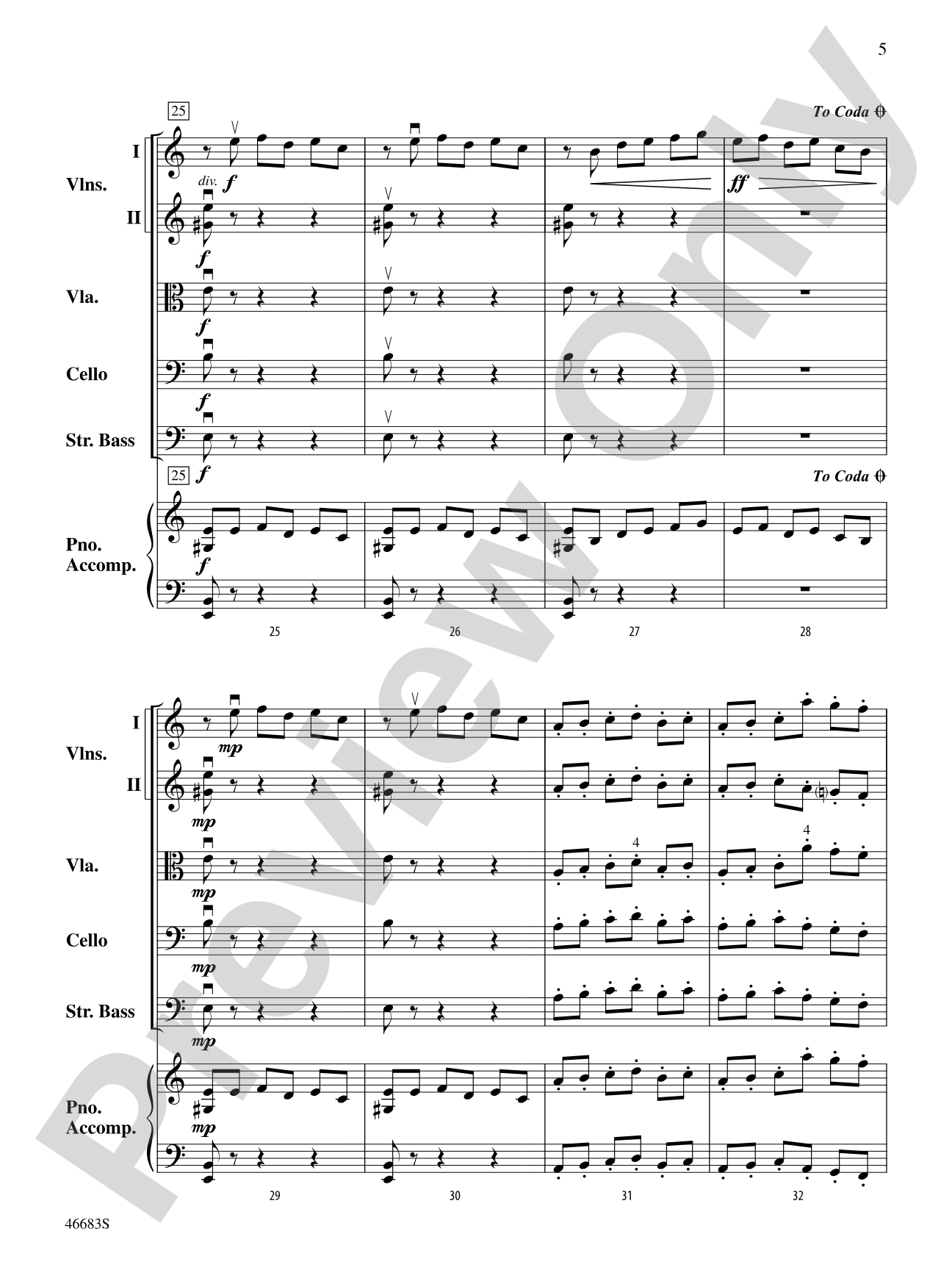
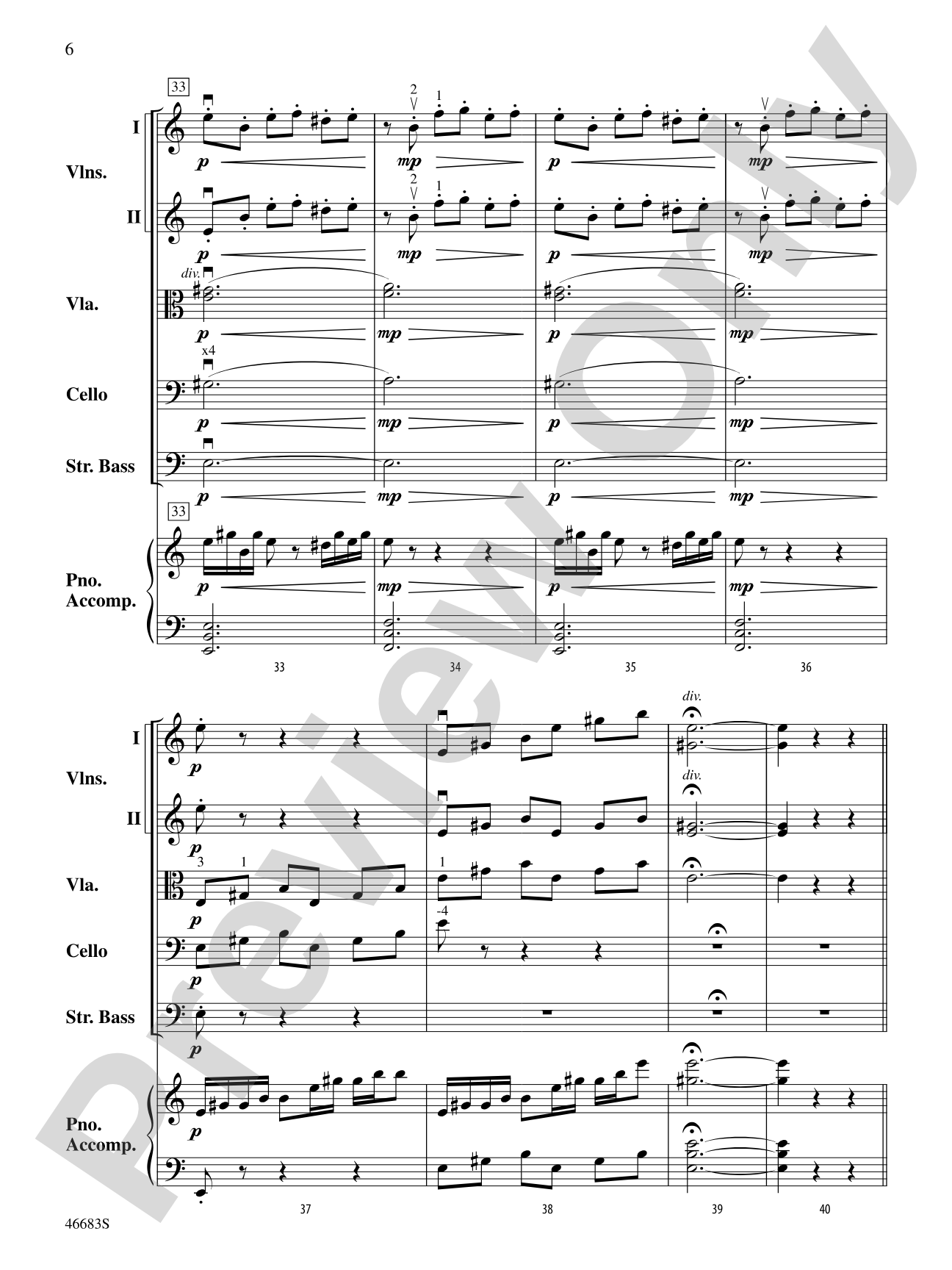
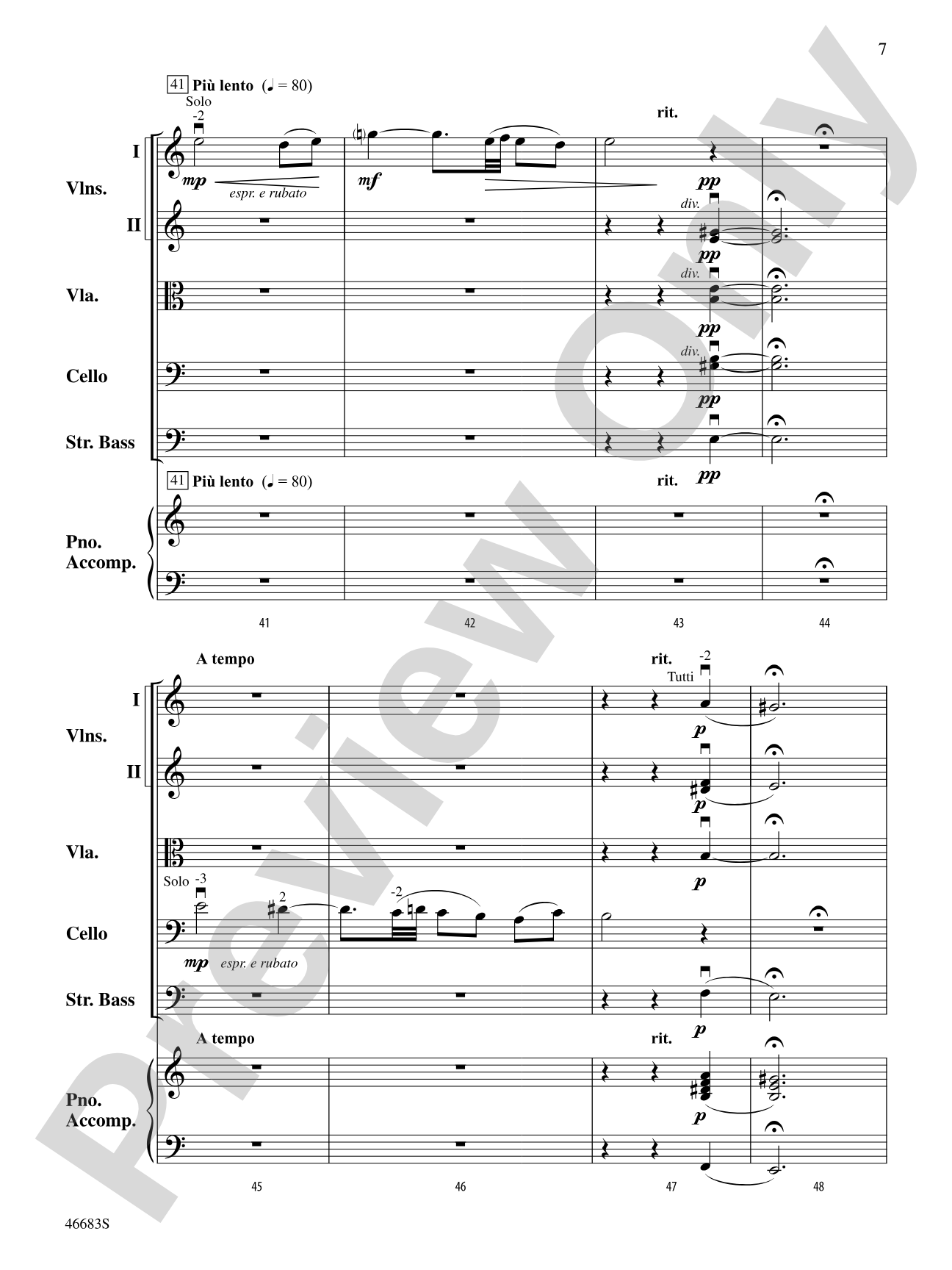
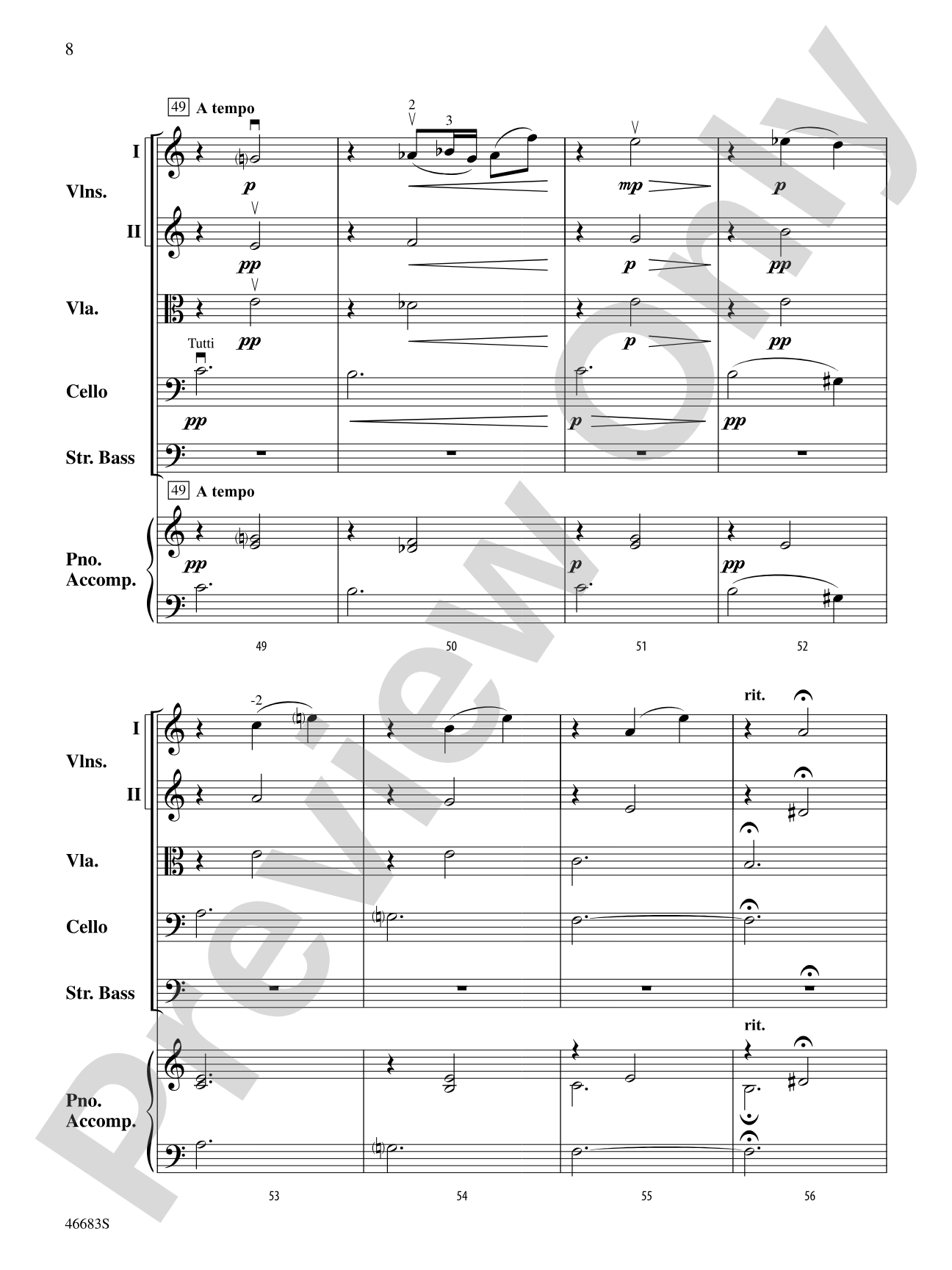
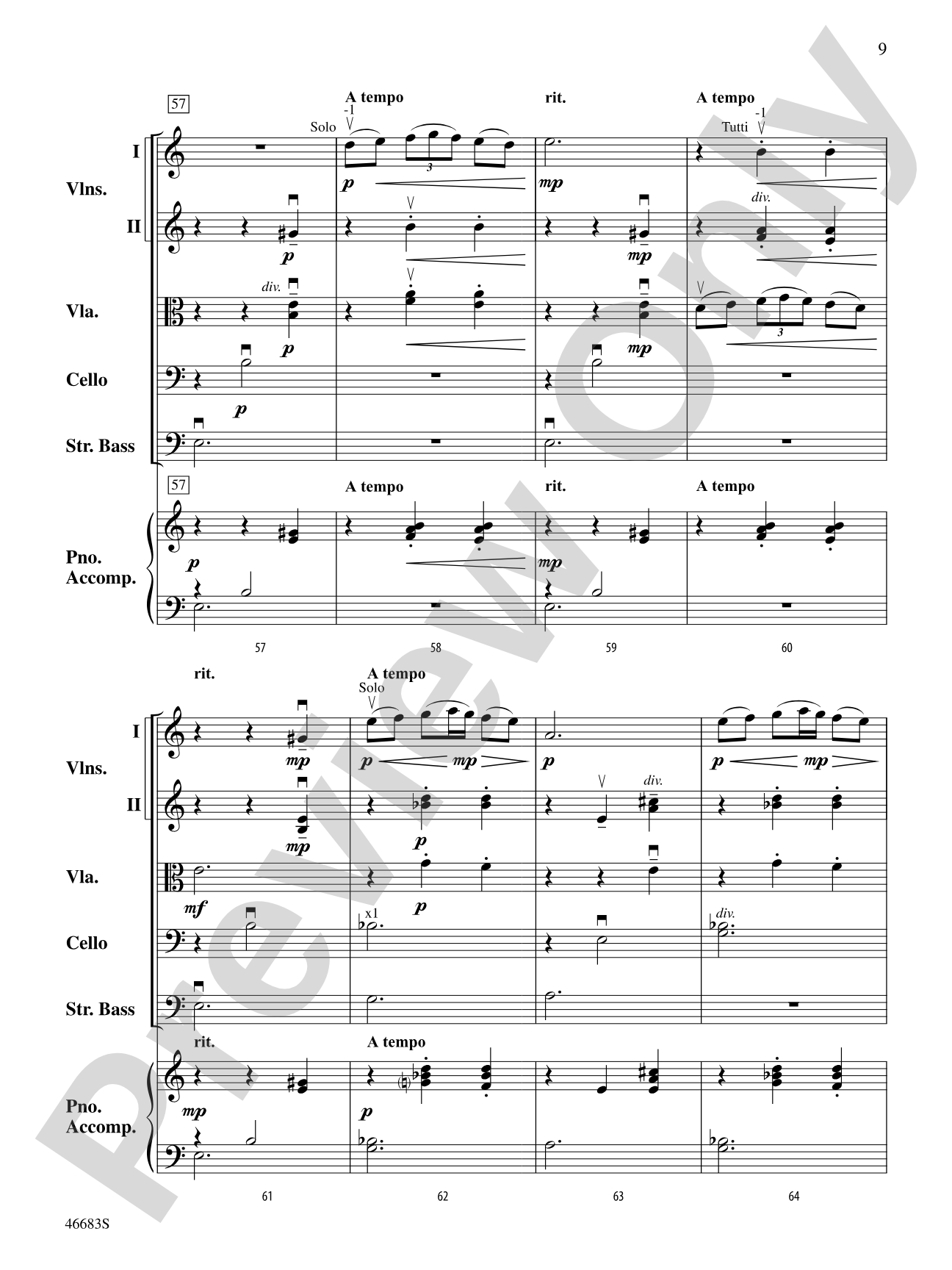
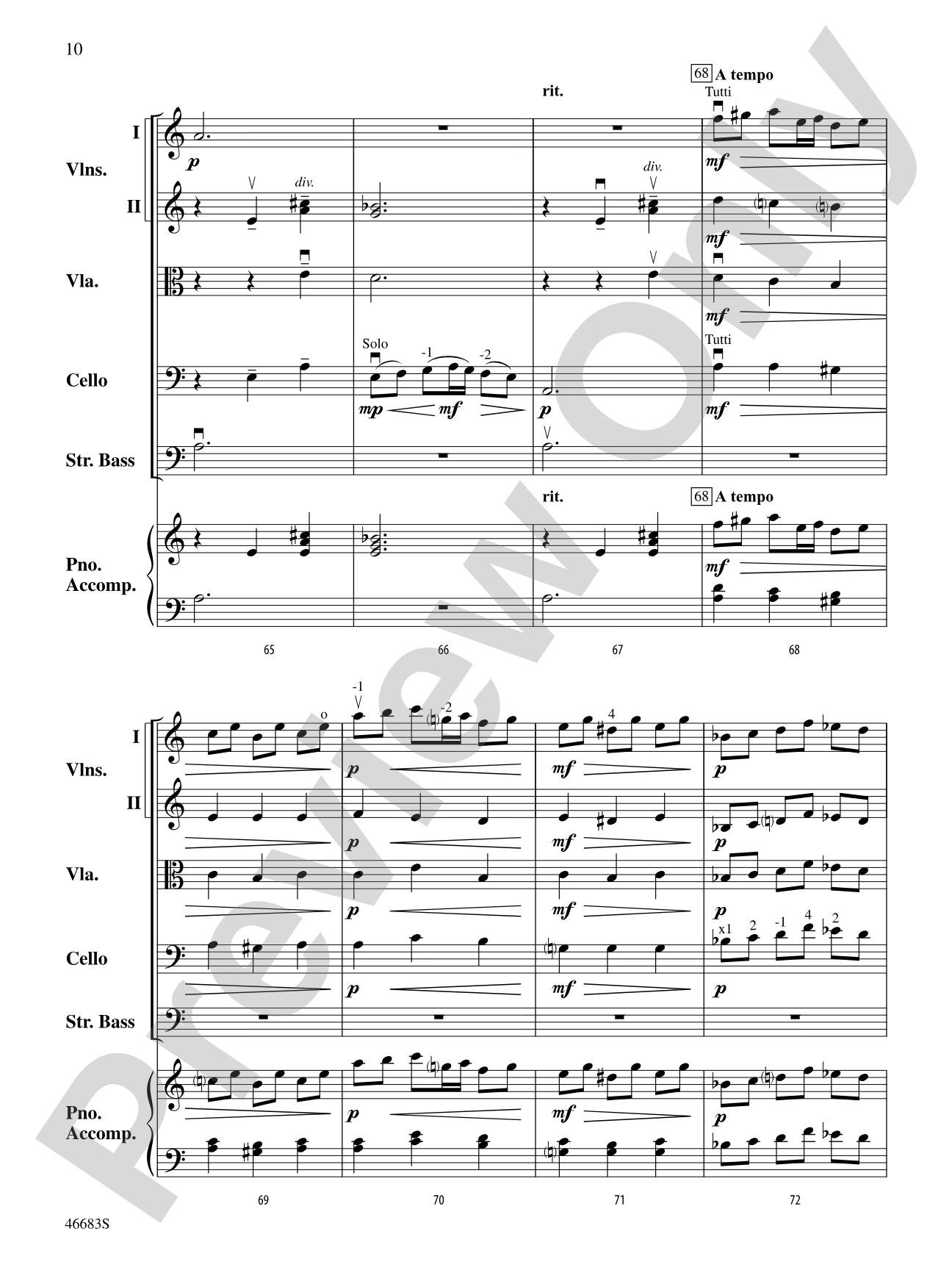
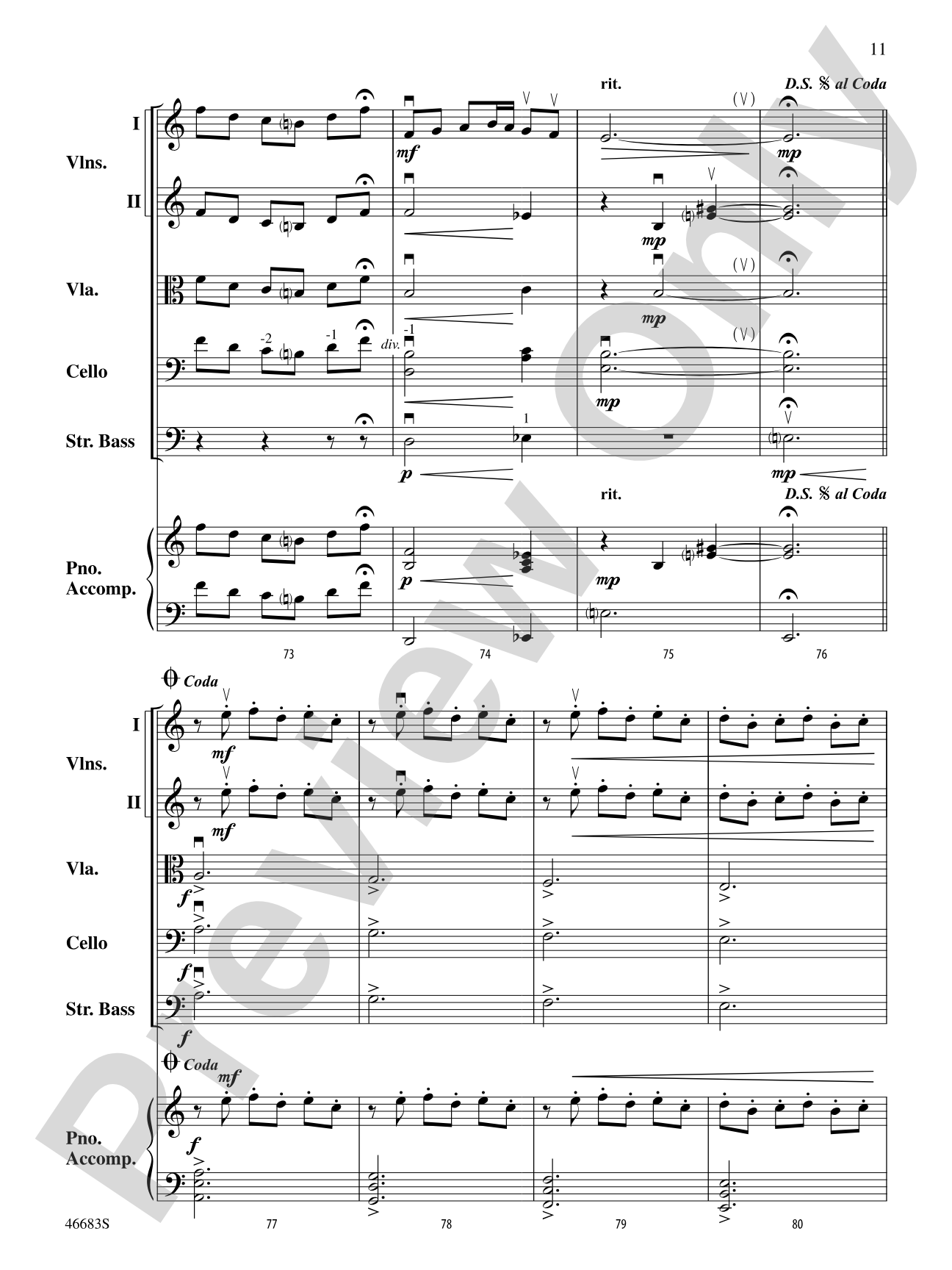
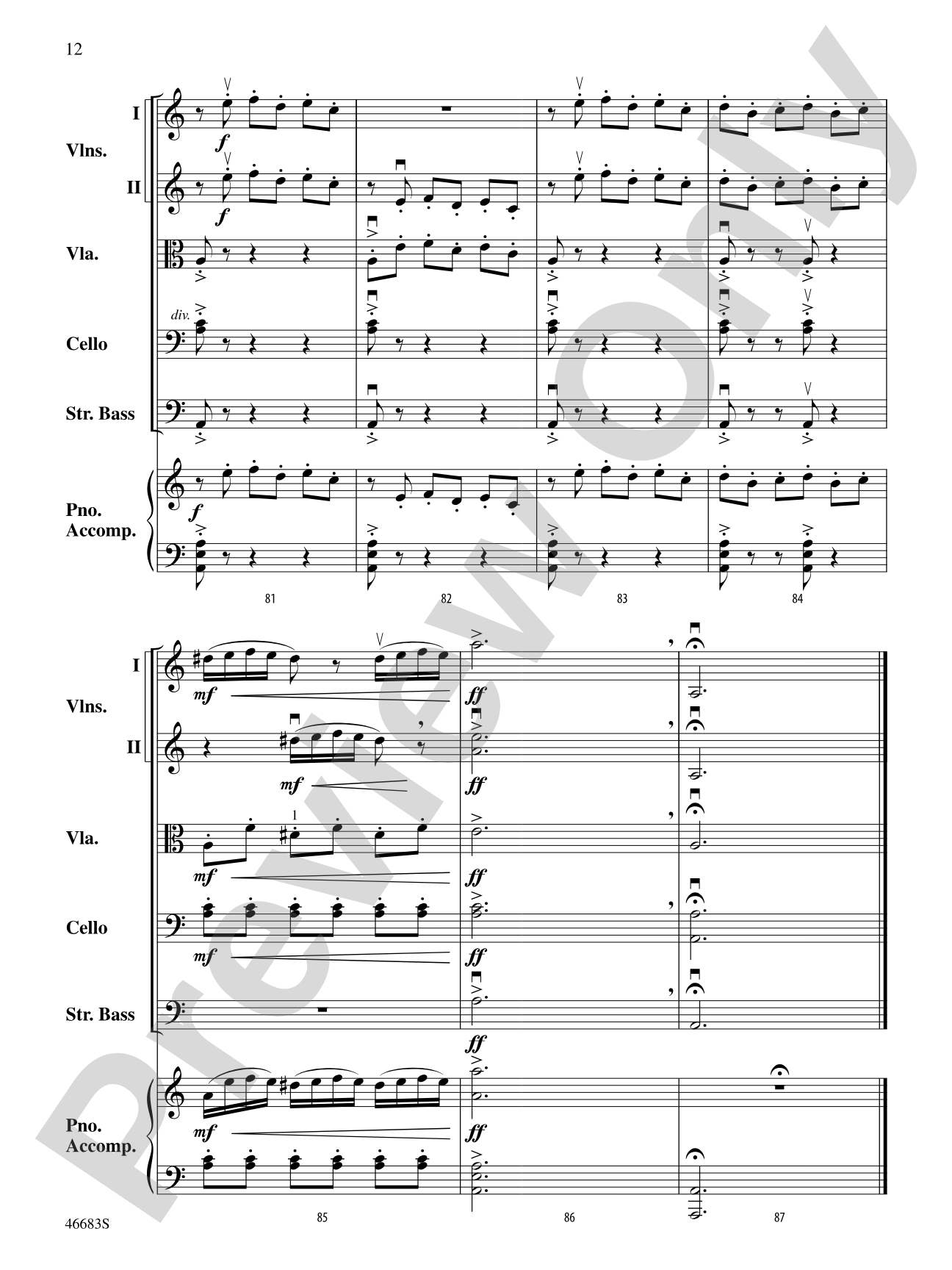

Legend of Asturias: Score
By Isaac Albéniz / arr. Victor López
Grade: 3
Item: 00-PR-0006030
$10.00
Pickup currently not available
Description
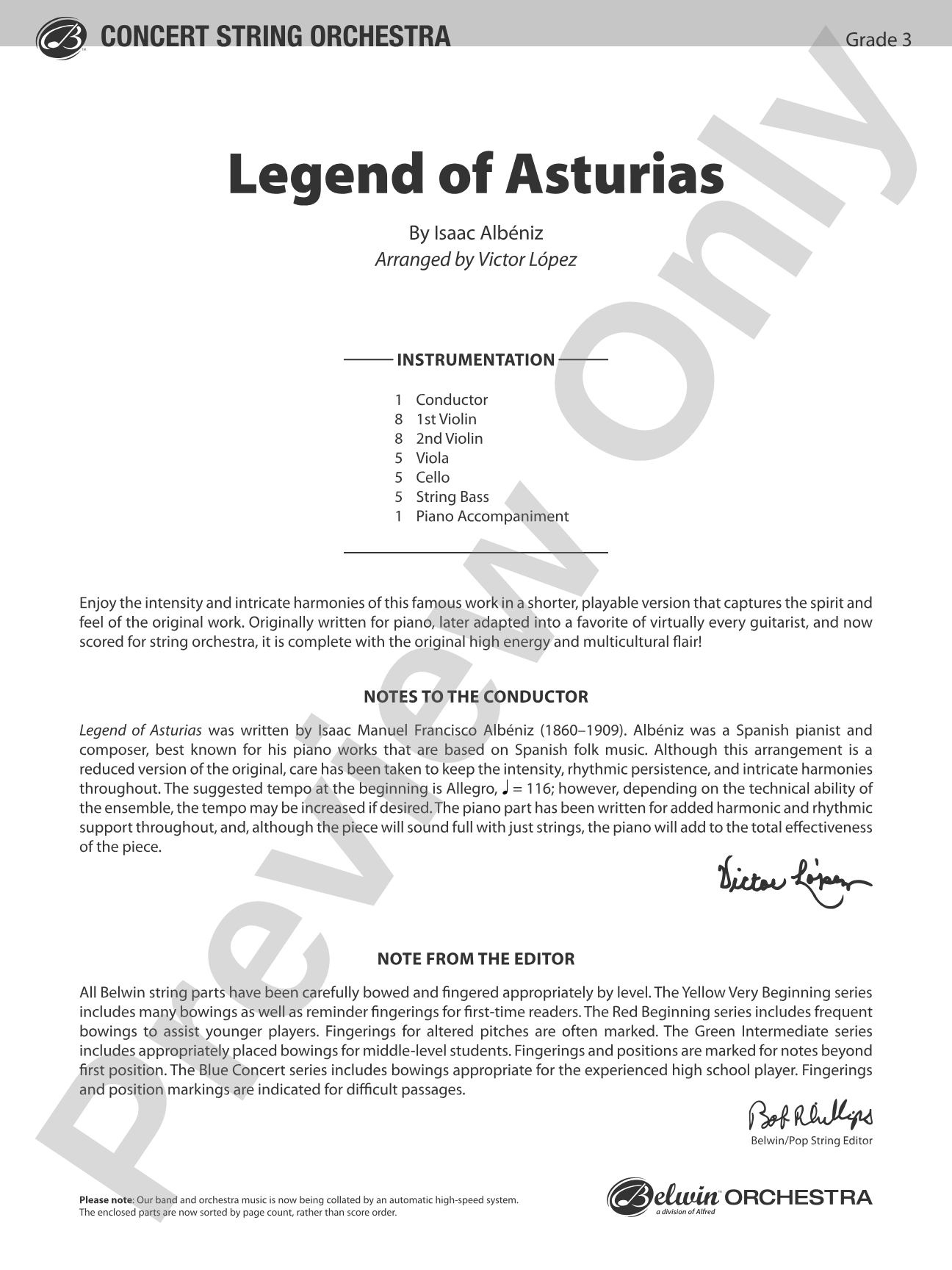
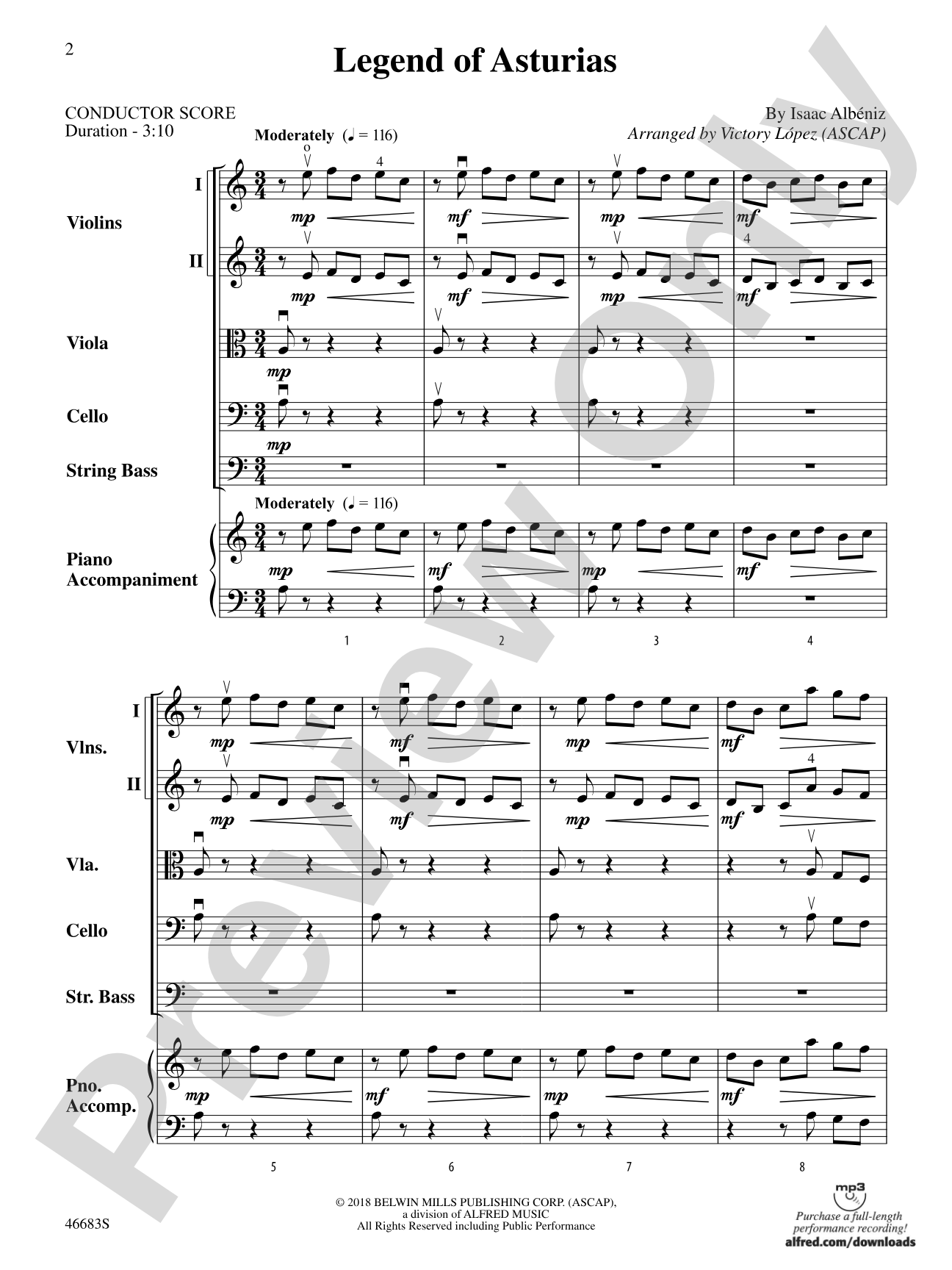
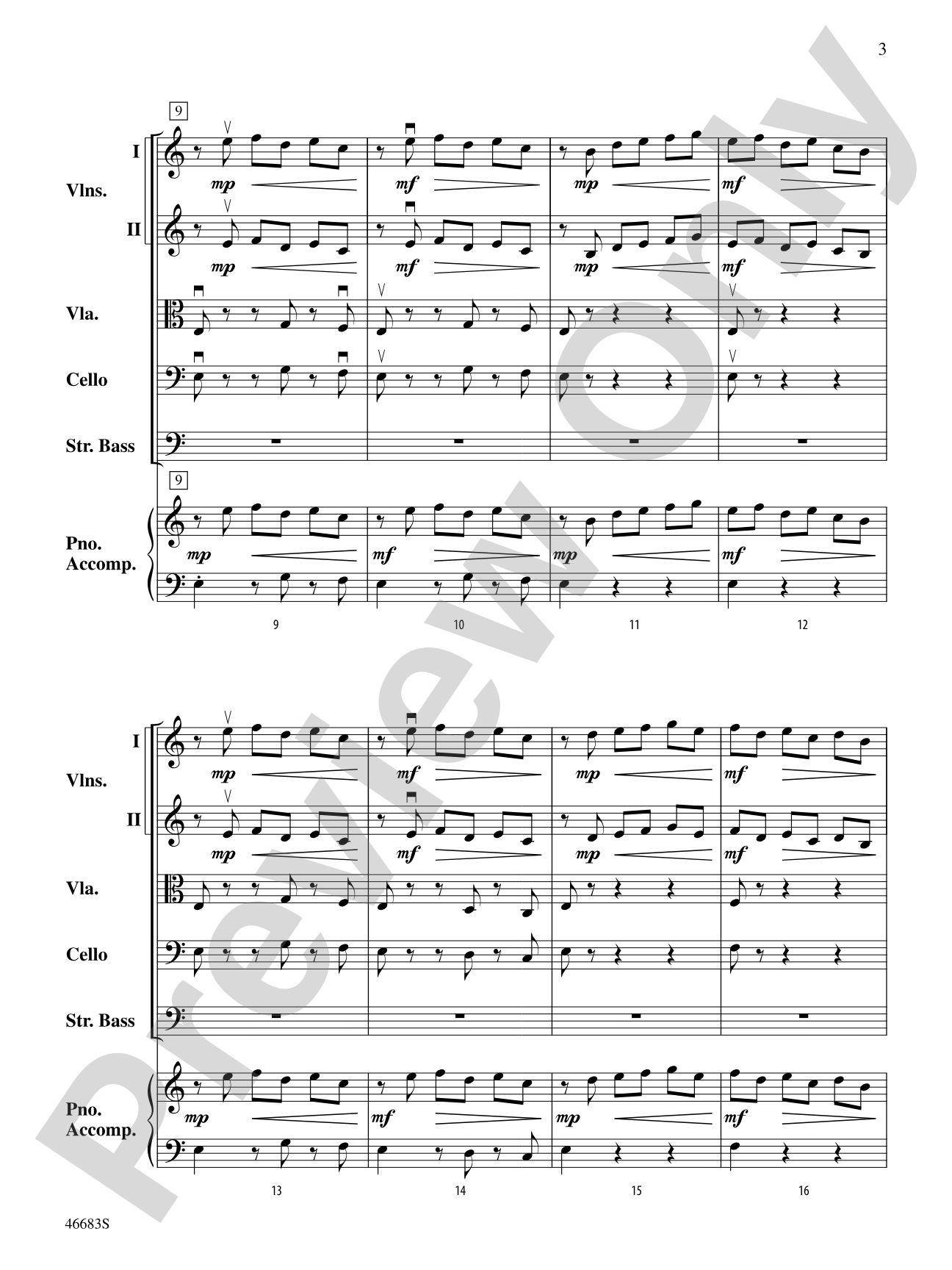
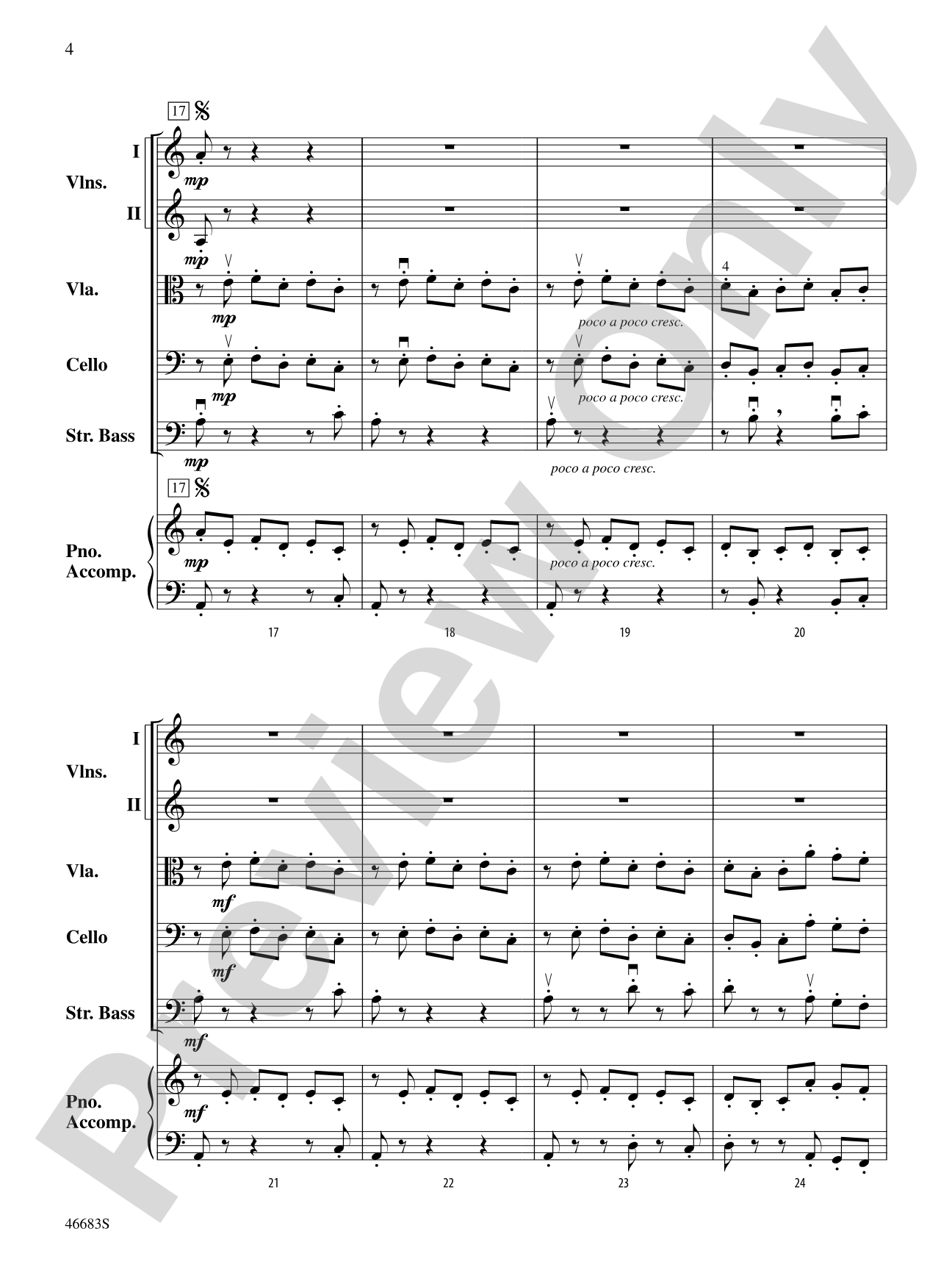
Enjoy the intensity and intricate harmonies of the "Legend of Asturias" in a shorter playable version that captures the spirit and feel of the original work. Written first for piano and a favorite of virtually every guitarist, this beloved piece has been effectively scored at grade 3 by composer/arranger Victor López for concert string orchestra, complete with the original high-energy with a multicultural flair!


Don't just read it, hear it, play along with it, and watch your students grow with it. In MakeMusic Cloud, Legend of Asturias: Score comes alive with professional accompaniment, adjustable tempo, and built-in practice tools that turn solo practice into real progress.
Open in the Player
Jump straight in and assign it today.
Start Your Free Trial
Open this title and explore the full library in minutes.
Sample Audio
1
Audio File
--:--
0:00
0:00
Sample Video
Additional Details
Series:
Belwin Concert String Orchestra
Publisher:
Alfred Music
Page Count:
118
SKU:
00-PR-0006030
More about this title
About the Composer: Isaac Albéniz
Isaac Albéniz (1860-1909) was a Spanish Romantic composer and pianist whose music captured the rhythms, colors, and spirit of Iberian folk traditions. His keyboard works, particularly the suite Iberia, became foundational repertoire for pianists and guitarists alike, blending classical form with nationalist fervor and virtuosic brilliance.
Why we love this
Victor López's Grade 3 arrangement strips away none of the character that makes this piece so compelling; the energy remains palpable, the harmonic color stays intact, and your ensemble gets to experience a genuine masterwork rather than a diluted version. String orchestras at this level rarely get access to repertoire with this much personality and concert appeal.
What to expect
Spanish sunlight and passion translated into string sound; intricate harmonic movement combined with propulsive rhythmic energy creates a sense of movement and drama. The arrangement captures the swagger of the original while remaining playable, giving students access to music that feels both sophisticated and joyful.
Who it's for
String orchestra directors programming Grade 3 repertoire who want substance alongside accessibility. This works for ensembles ready to engage with real compositional architecture and players hungry for music that feels genuinely professional.
How to get the most out of it
- Emphasize the rhythmic drive that propels the opening; crisp articulation in the lower strings creates the percussion-like pulse that defines the piece.
- Shape the melodic material with clear phrasing even during faster passages; Albéniz's lines sing, and they should never feel mechanical.
- Balance upper and lower string lines carefully so countermelodic material in violas and cellos emerges without overshadowing the main theme.
- Let the multicultural flavor breathe in slower or transitional sections; resist rushing through moments that showcase harmonic color.
How to use it
Pair this with lighter fare in a concert program to showcase your ensemble's range and maturity. It works equally well as a contest piece where judges expect both technical polish and interpretive depth, or as a showstopper that demonstrates how seriously you program your students' musical development.
Skills your students will build
- Reading colorful harmonic language with accidentals and chromatic movement
- Balancing independent lines within the string choir (particularly viola and cello parts)
- Executing rhythmic precision in syncopated and driving passages
- Shaping melodic phrasing across sustained string textures
- Responding to expressive direction and stylistic nuance in Romantic-era nationalism