
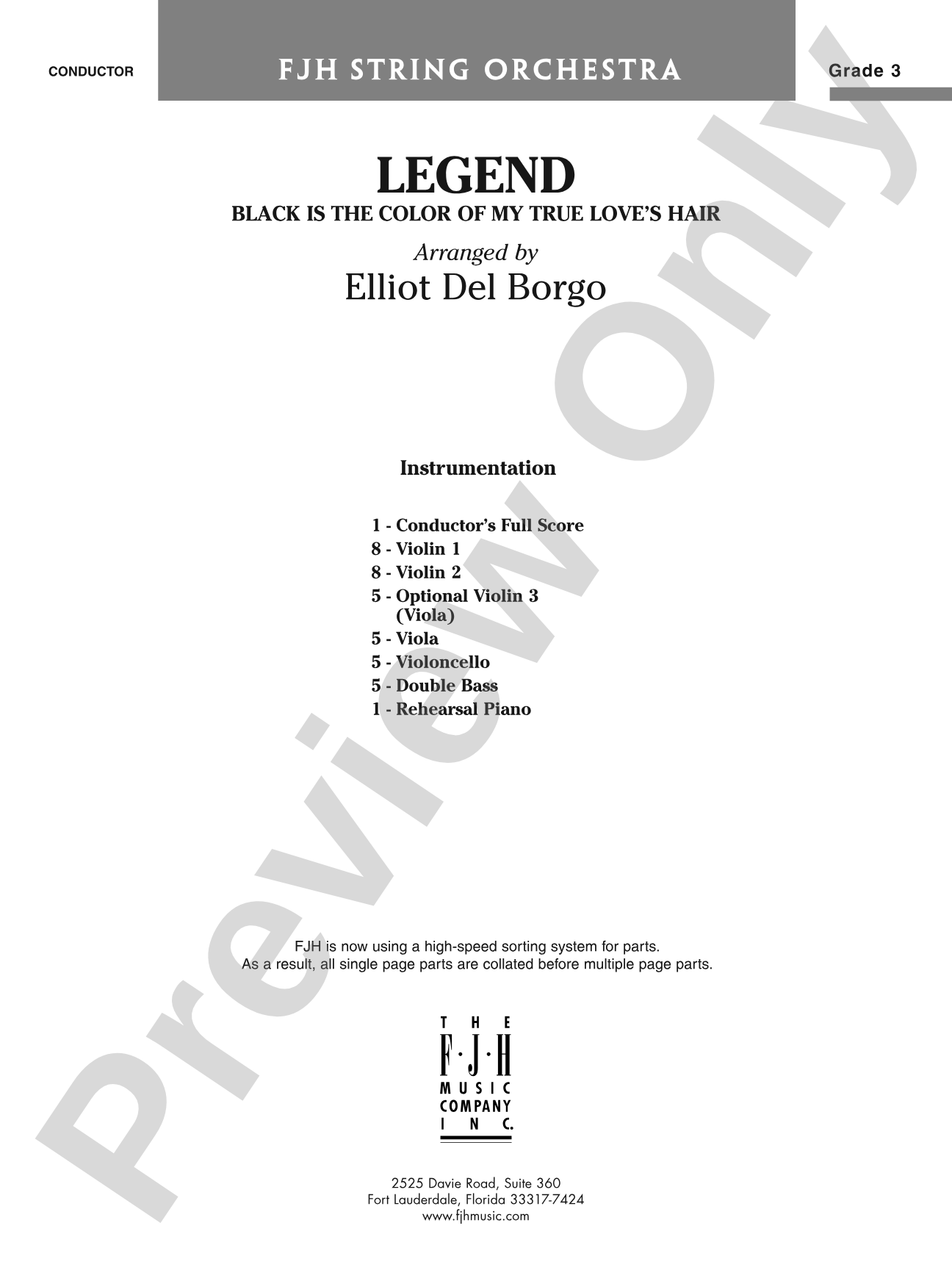

Legend: String Orchestra Conductor Score & Parts
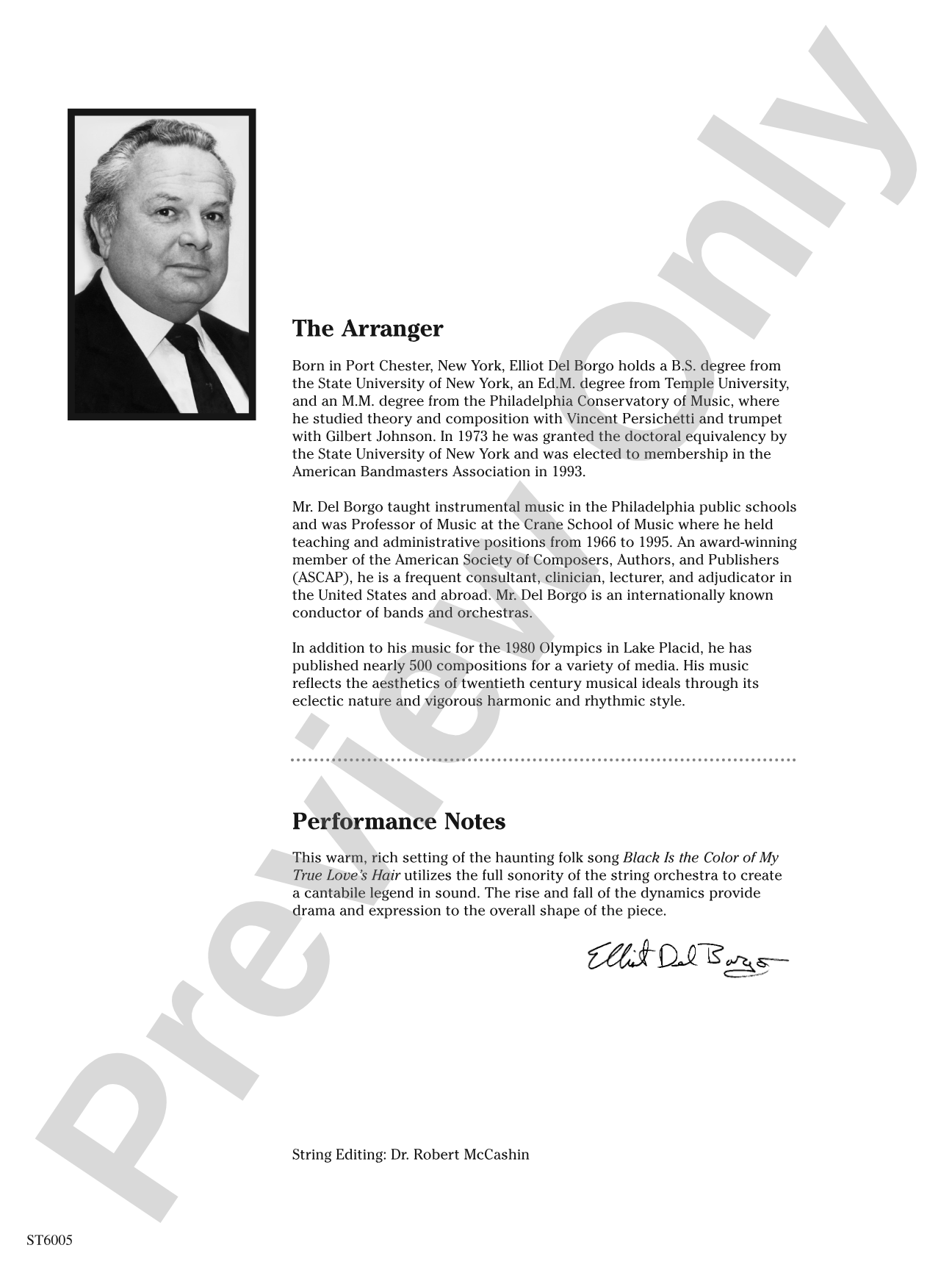
By Elliot Del Borgo
Grade: 3
Item: 98-DST6005
$45.00
Pickup currently not available
Buy Extra Parts (Digital PDF Download)
| Product | Price | Quantity |
|---|---|---|
| Legend: Score | $5.00 | |
| Legend: Violin 1 | $7.00 | |
| Legend: Violin 2 | $7.00 | |
| Legend: Optional Violin 3 (Viola) | $7.00 | |
| Legend: Viola | $7.00 | |
| Legend: Violoncello | $7.00 | |
| Legend: Double Bass | $7.00 | |
| Legend: Rehearsal Piano | $7.00 |
Parts Added to Cart!
Description
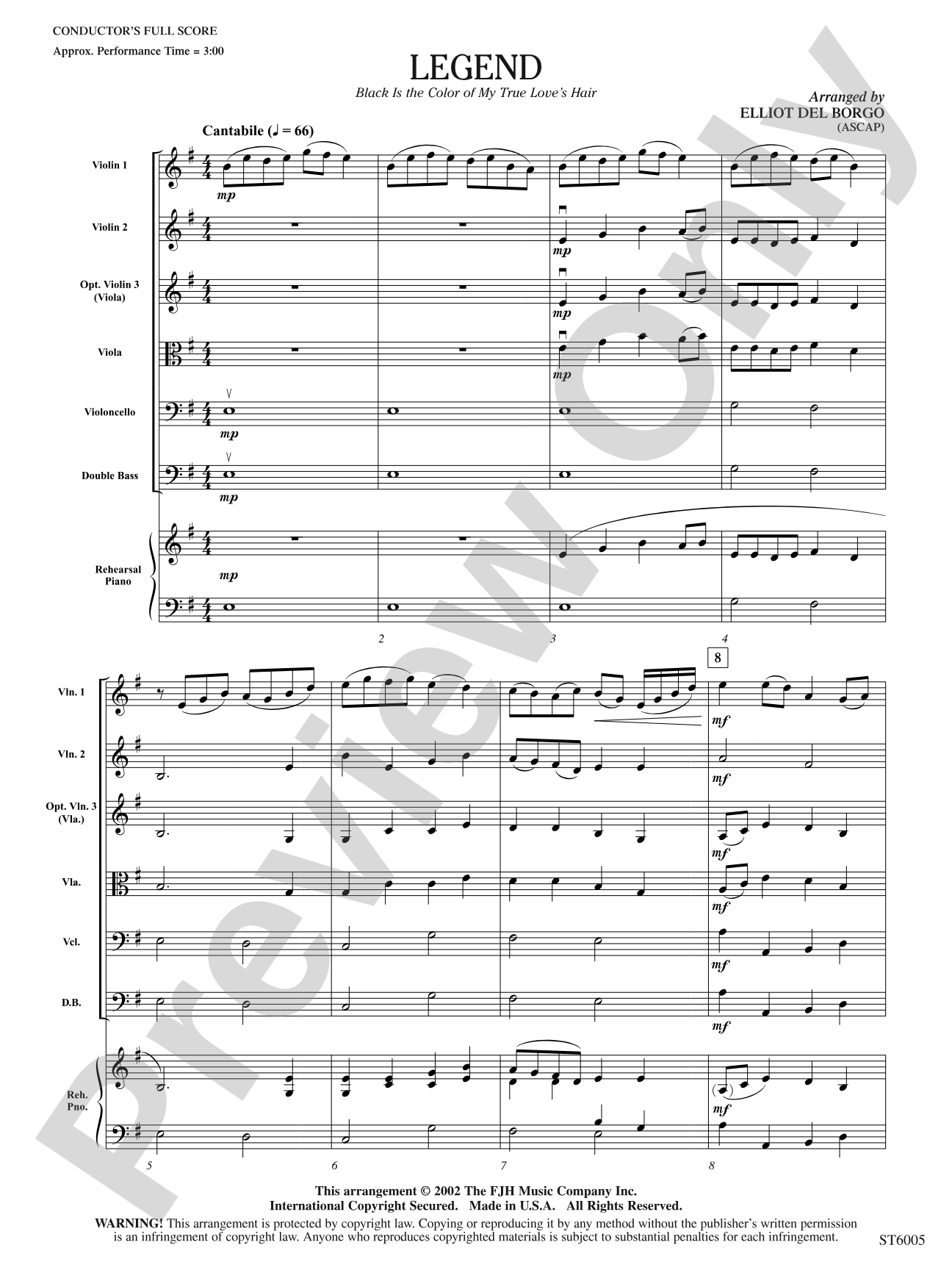
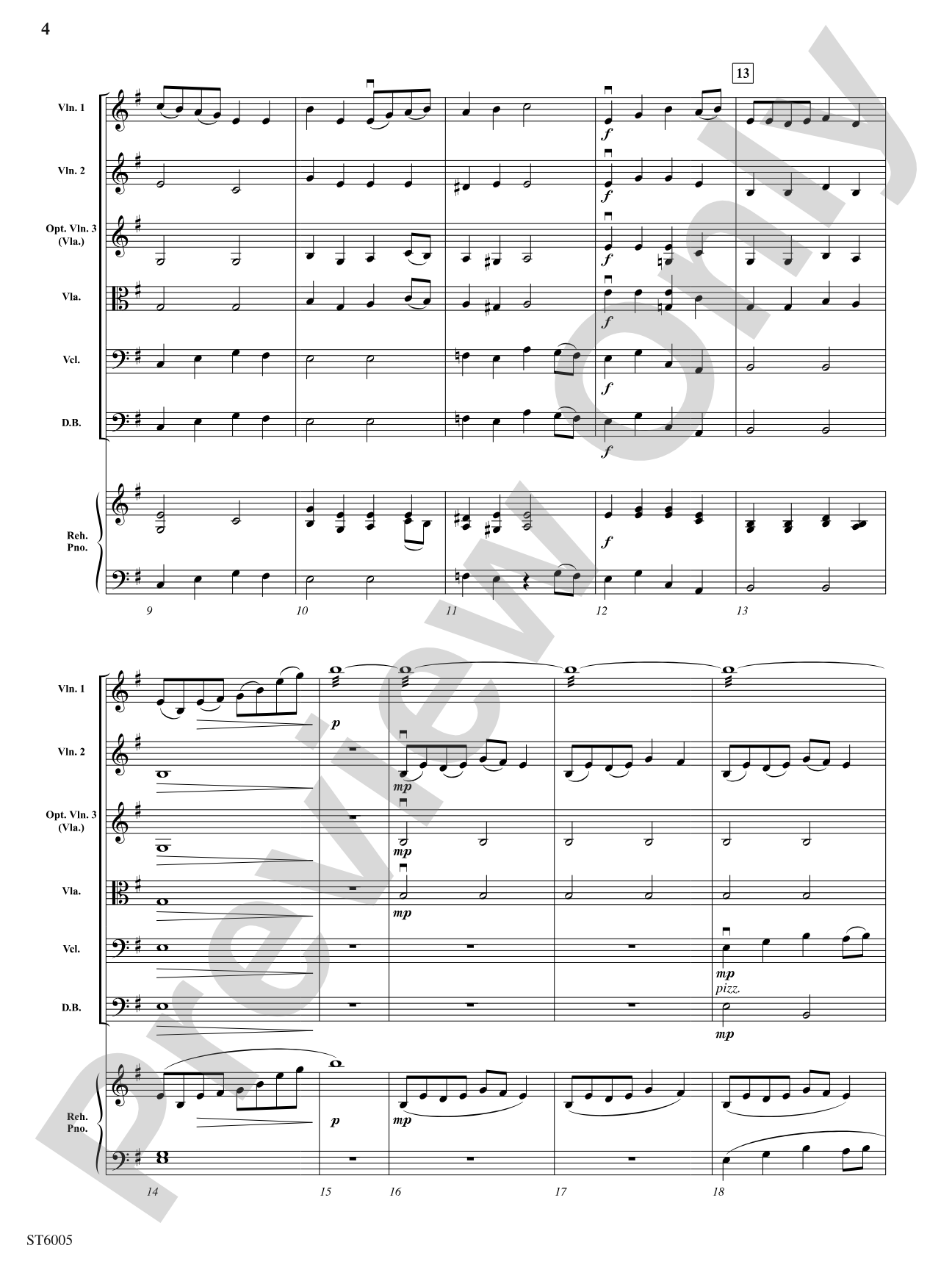
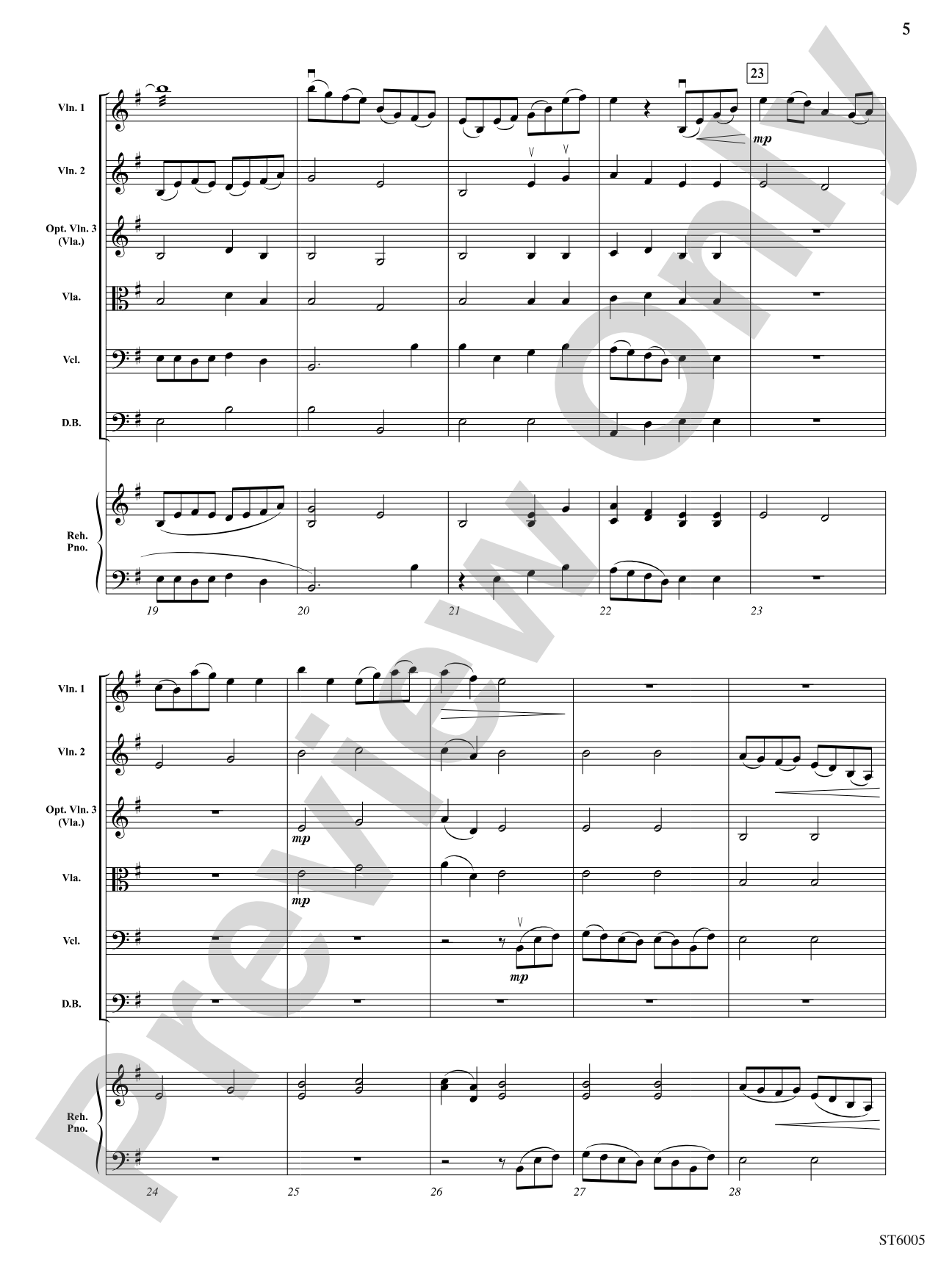
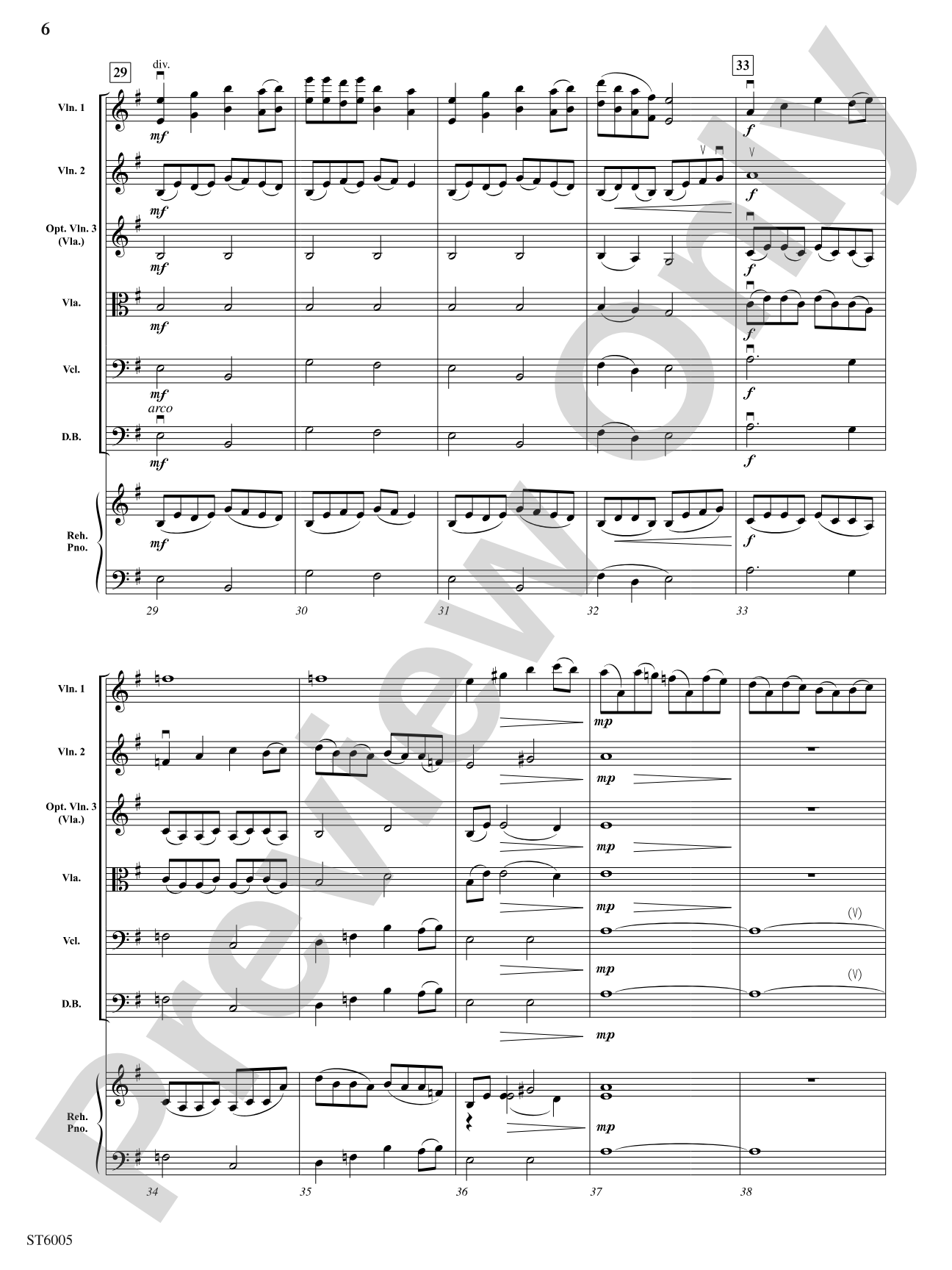
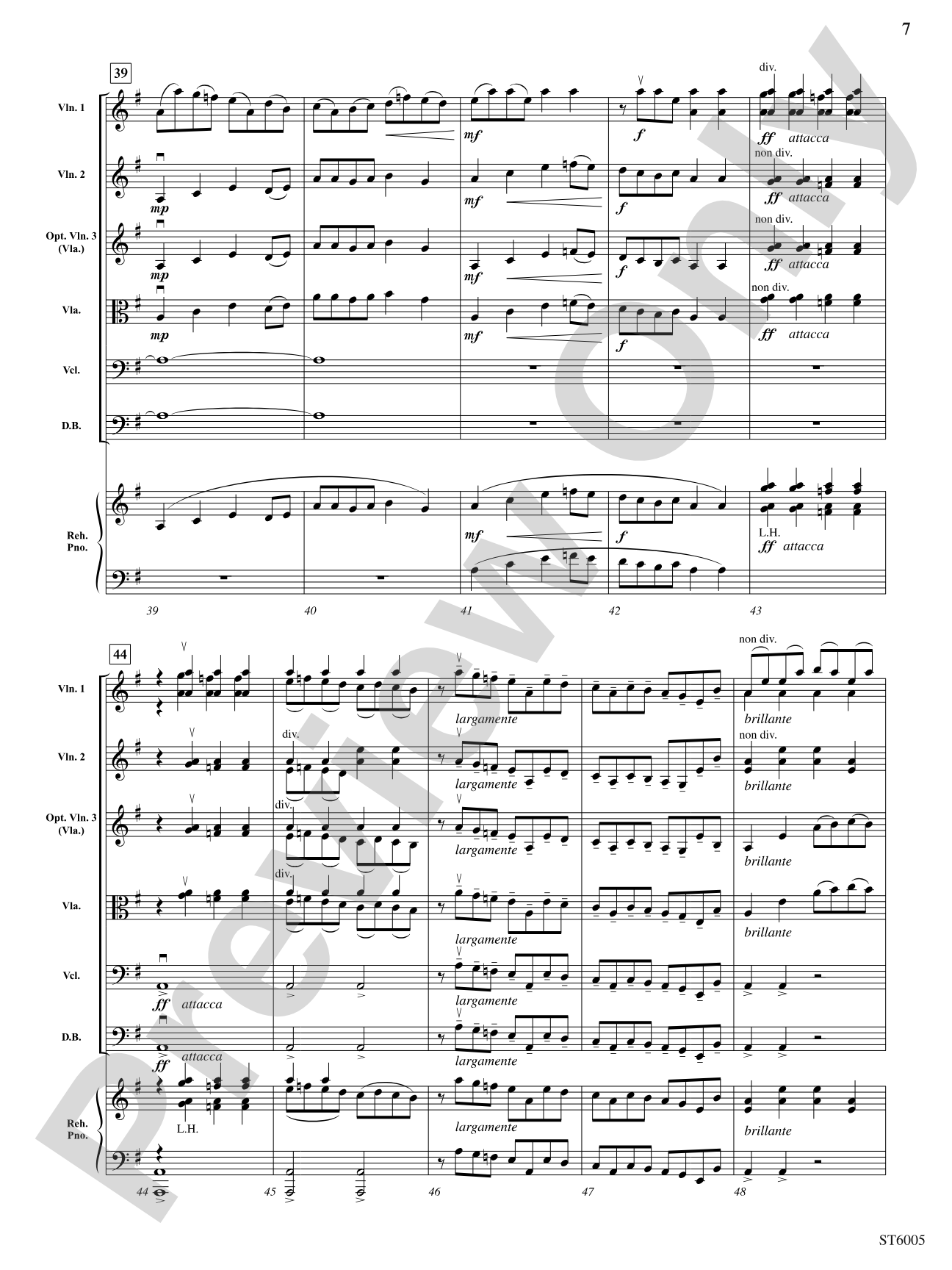
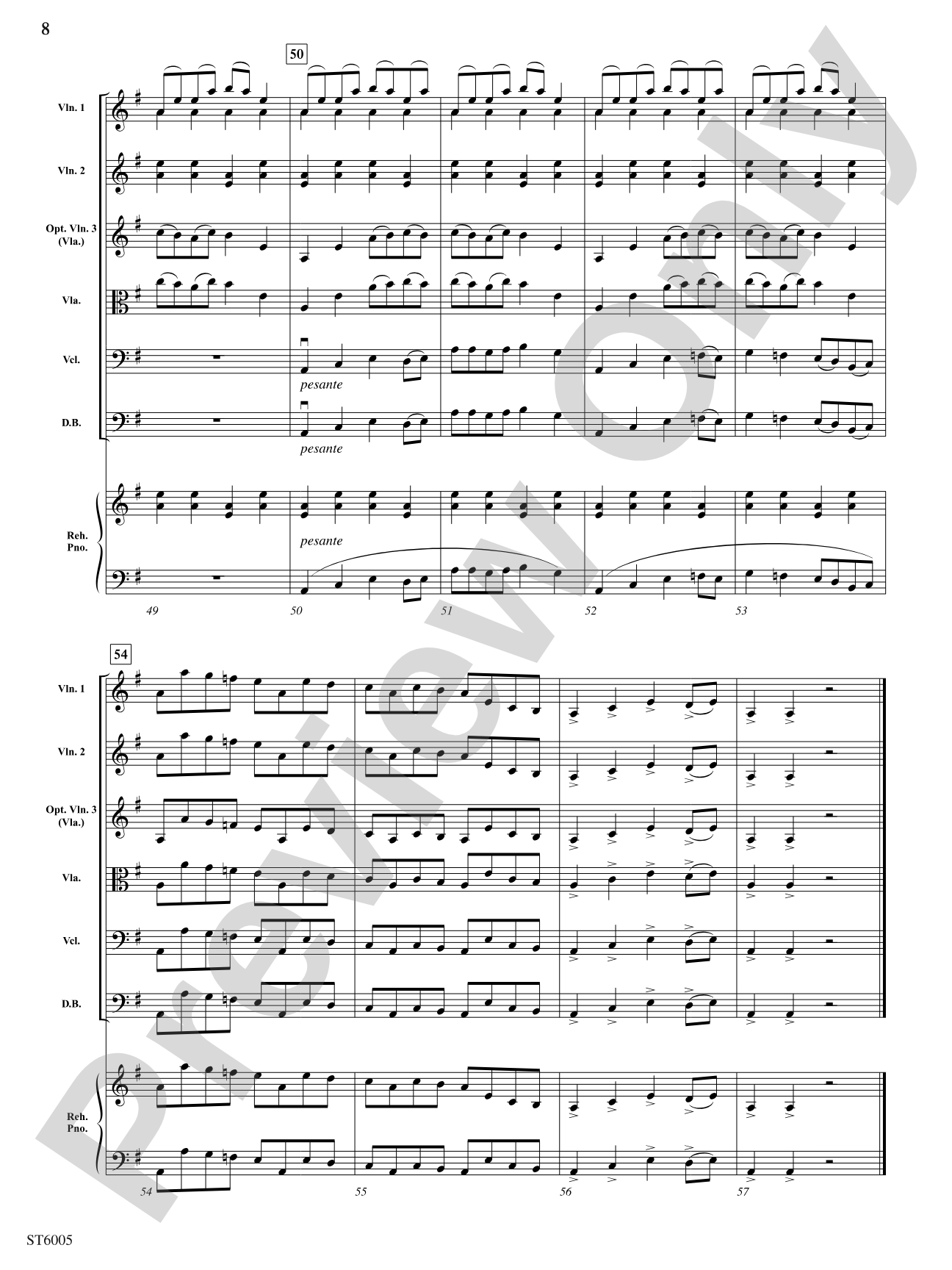
The familiar folk song Black Is the Color of My True Love's Hair is the basis of this beautifully scored work in E minor. The melodic line occurs in various voices against a slightly contrapuntal accompaniment. With octave scoring in all voices, this theme eventually becomes the impetus in the final measures.


Legend: String Orchestra Conductor Score & Parts isn't in MakeMusic Cloud just yet...but it could be. Let us know you'd like to see it, and you'll help shape what comes next. In the meantime, start a free trial and dive into thousands of interactive titles your students can play along with today.
Request This Title
Tell us you want it.
Start Your Free Trial
Explore everything that's ready to play right now.
Sample Audio
1
Audio File
--:--
0:00
0:00
Sample Video
No sample videos found.
Additional Details
Series:
FJH String Orchestra
Publisher:
The FJH Music Company, Inc.
SKU:
98-DST6005
More about this title
About the Composer: Elliot Del Borgo
Elliot Del Borgo is a prolific composer and arranger whose catalog spans multiple instrumental combinations and skill levels. His orchestrations consistently prioritize clarity of texture and accessible harmonic language, making him a trusted voice in school music publishing.
Why we love this
Del Borgo's treatment of this traditional melody respects its inherent beauty while introducing orchestral sophistication that Grade 3 ensembles can actually execute. The contrapuntal writing stays clean and singable across all voices, avoiding the muddy part writing that often undermines folk song arrangements at this level.
What to expect
Intimate and introspective. The E minor tonality and flowing melodic line create a reflective atmosphere, while the contrapuntal accompaniment adds subtle forward momentum. By the closing measures, the full octave scoring builds a sense of resolution and wholeness.
Who it's for
Grade 3 string orchestras preparing contest or festival repertoire. Directors seeking an arrangement that honors a folk standard without oversimplifying it, and students ready to navigate text distributed across multiple voices.
How to get the most out of it
- Balance the main melody against the accompaniment by rehearsing each line separately first. Once students own their individual parts, the interplay between voices emerges naturally.
- Shape the thematic material through the key areas. The movement between different voice placements gives you natural opportunities for dynamic contrast and phrasing.
- Approach the final octave doubling as a statement, not just volume. This is where the arrangement crystallizes, so let the increased doublings breathe.
How to use it
This works beautifully as a concert closer or festival piece that demonstrates textural control. Its moderate length and folk heritage also make it suitable for pairing with more modern works, creating a thematic arc that spans traditional and contemporary voices.
Skills your students will build
- Balancing melody against independent accompaniment lines
- Sustaining tone quality across register changes
- Reading and executing part lines that shift between voices
- Shaping phrase contours within E minor tonality
- Ensemble awareness and listening across the full texture