

Left Alone -- Right On!: 14 Original Pieces for Left Hand Alone or Right Hand Alone: Piano
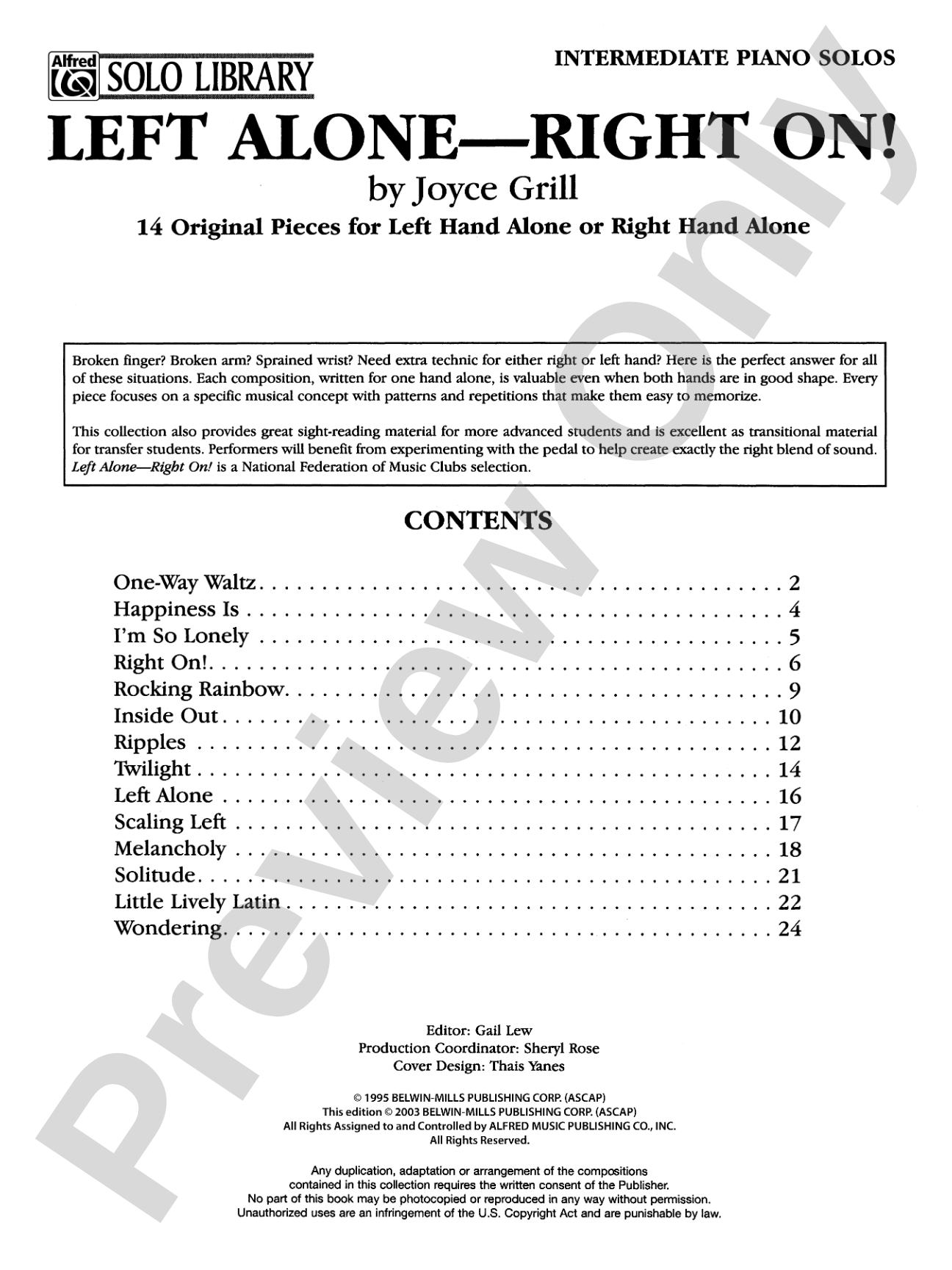
14 Original Pieces for Left Hand Alone or Right Hand Alone
By Joyce Grill
Level: Intermediate
Item: 00-PB-0000552

$6.99
Pickup currently not available
Related Items
Left Alone -- Right On!: Piano Book |
$6.99
|
View |
Description
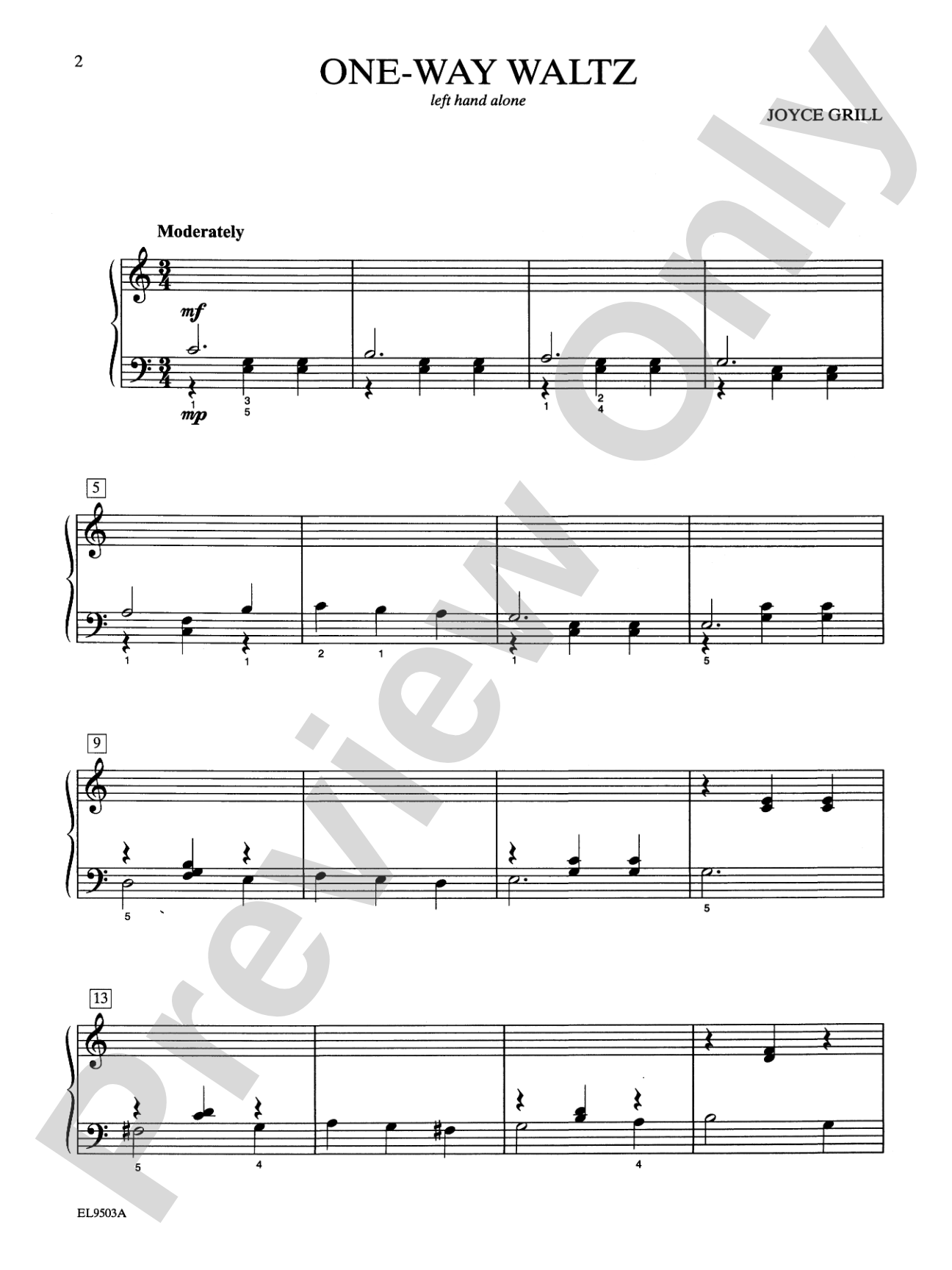
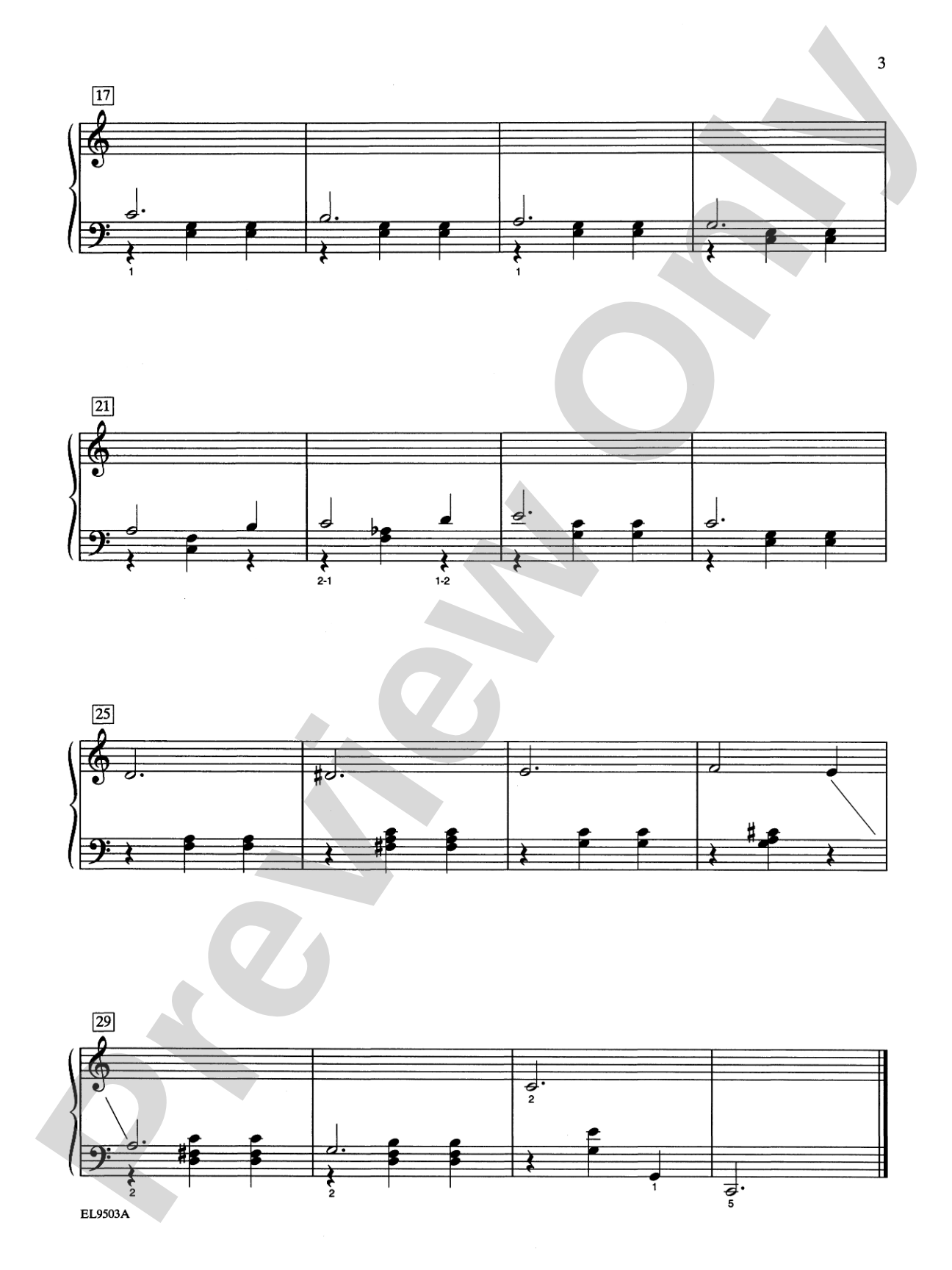
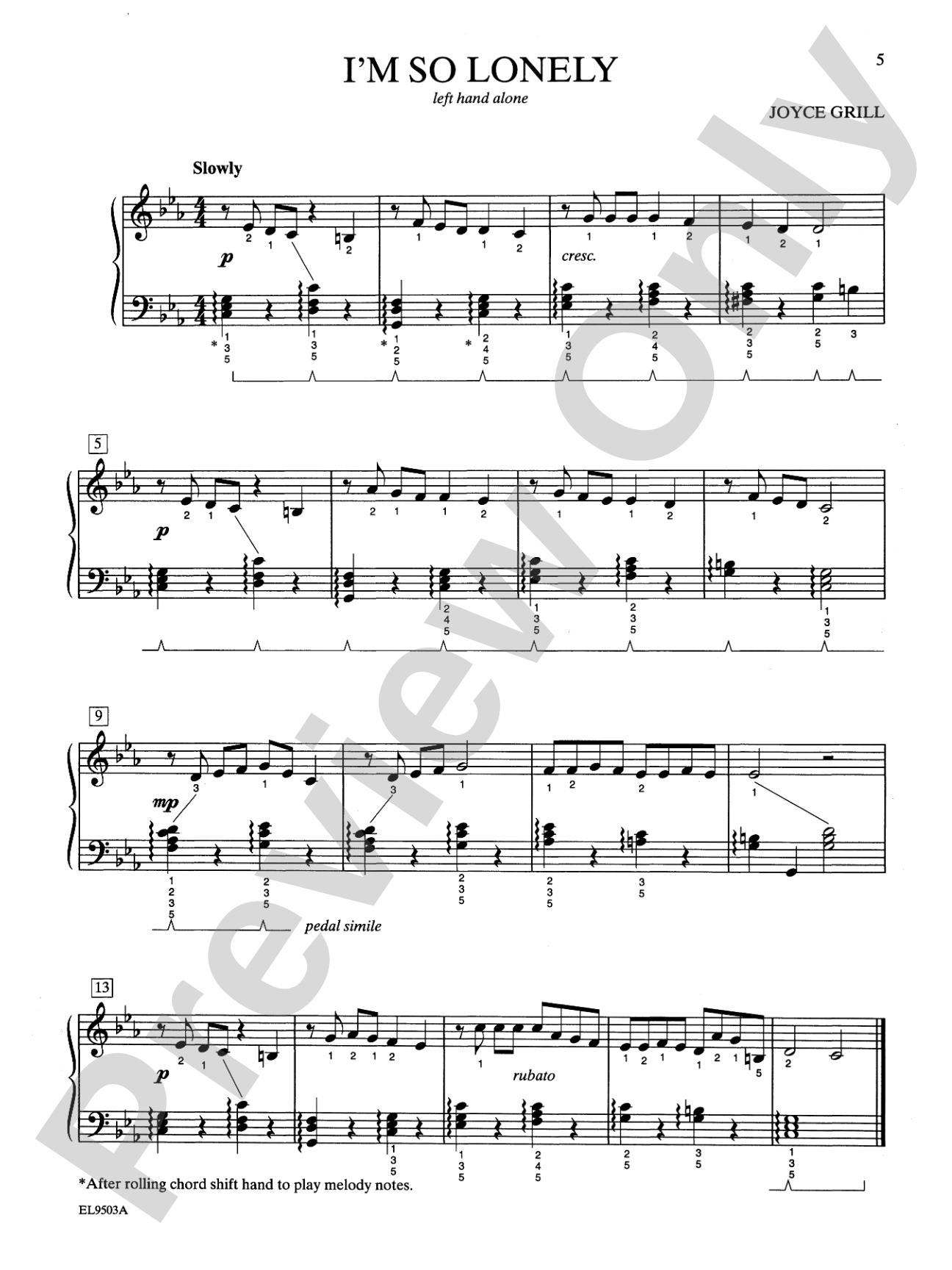
Broken finger? Broken arm? Sprained wrist? Need extra technic for either right or left hand? Here is the perfect answer for all of these situations. Each piece focuses on a specific musical concept with patterns and repetitions that make them easy to memorize. Great sight reading material for more advanced students. "Left Alone" (LH), "Little Lively Latin" (RH), "Melancholy" (RH), "One-Way Waltz" (LH), "Right On!" (RH), "Ripples" (RH), "Rocking Rainbow" (LH), "Scaling Left" (LH), "Solitude" (RH), and "Twilight" (LH) are Federation Festivals 2016-2020 selections. A Federation Festivals 2020-2024 selection.


Don't just read it, hear it, play along with it, and watch your students grow with it. In MakeMusic Cloud, Left Alone -- Right On!: 14 Original Pieces for Left Hand Alone or Right Hand Alone: Piano comes alive with professional accompaniment, adjustable tempo, and built-in practice tools that turn solo practice into real progress.
Open in the Player
Jump straight in and assign it today.
Start Your Free Trial
Open this title and explore the full library in minutes.
Sample Audio
No sample audio found.
Sample Video
No sample videos found.
Additional Details
Publisher:
Alfred Music
Page Count:
24
SKU:
00-PB-0000552
More about this title
About the Composer: Joyce Grill

Joyce Grill spent decades on the faculty at the University of Wisconsin-La Crosse before retiring to an emeritus position, during which time she became known for translating classroom insights into published works. Her credentials include the MTNA Master Teacher Certificate, leadership roles as Wisconsin State President and Division Vice-President of MTNA, and recognition as a MTNA Foundation Fellow in 2006. She studied composition and theory with Nadia Boulanger at the School of Fine Arts in Fontainebleau and earned degrees from the University of Wisconsin-Madison.
Grill has built a reputation for ensemble writing and regularly conducts multi-piano concerts. Her published works, originally released through Warner Bros. Publications, showcase her gift for practical pedagogy paired with genuine musicality. She holds National Certification as a Teacher of Music and maintains active involvement in music education through workshops and advisory roles across the country.
Why we love this
These fourteen pieces solve a genuine problem: students recovering from injury or needing focused technique work on one hand don't have to sit out of active repertoire study. Each piece targets a specific musical concept while building independence and control in the working hand, and the fact that many selections earned Federation Festivals recognition means you're assigning music that meets competitive standards without requiring two-hand coordination.
What to expect
These pieces range from contemplative and introspective ("Melancholy," "Solitude") to rhythmically energetic ("Little Lively Latin," "Rocking Rainbow"), offering musical substance rather than mere exercises. Each one maintains legitimate character and expression while its singular focus allows the working hand to speak clearly.
Who it's for
Students recovering from broken fingers, broken arms, or sprains who need to keep developing at the piano without two-hand demands. Pianists also benefit from these pieces when targeting weak-hand technique or when preparing for repertoire that requires independent hand strength.
How to get the most out of it
- Isolate the technical pattern in the first few measures and establish fluency there before moving forward; the repetition throughout each piece means that early mastery compounds quickly.
- Practice at a tempo slow enough to maintain accuracy in the weaker hand, then gradually increase; rushing these pieces defeats their purpose.
- Use the patterns as memory anchors; Grill's design with repetition and variation makes these pieces manageable to memorize, which frees your attention for musical shape.
- Work sections of the piece in isolation before connecting them, especially when recovering from injury; this prevents re-injury while maintaining progress.
How to use it
Program individual pieces as recital selections when students are recovering from injury, or use them strategically in studio rotations to isolate and strengthen technique in students whose non-dominant hand lags behind. These also serve as sight-reading material for advancing students who need to build fluency without harmonic complexity.
Skills your students will build
- Single-hand independence and strength
- Technique patterns specific to right hand or left hand (scales, arpeggios, hand position shifts)
- Memorization through musical patterns and repetition
- Sight-reading fluency across varied musical styles
- Musical expression and phrasing within technical studies
- Recovery and rehabilitation during injury rehabilitation