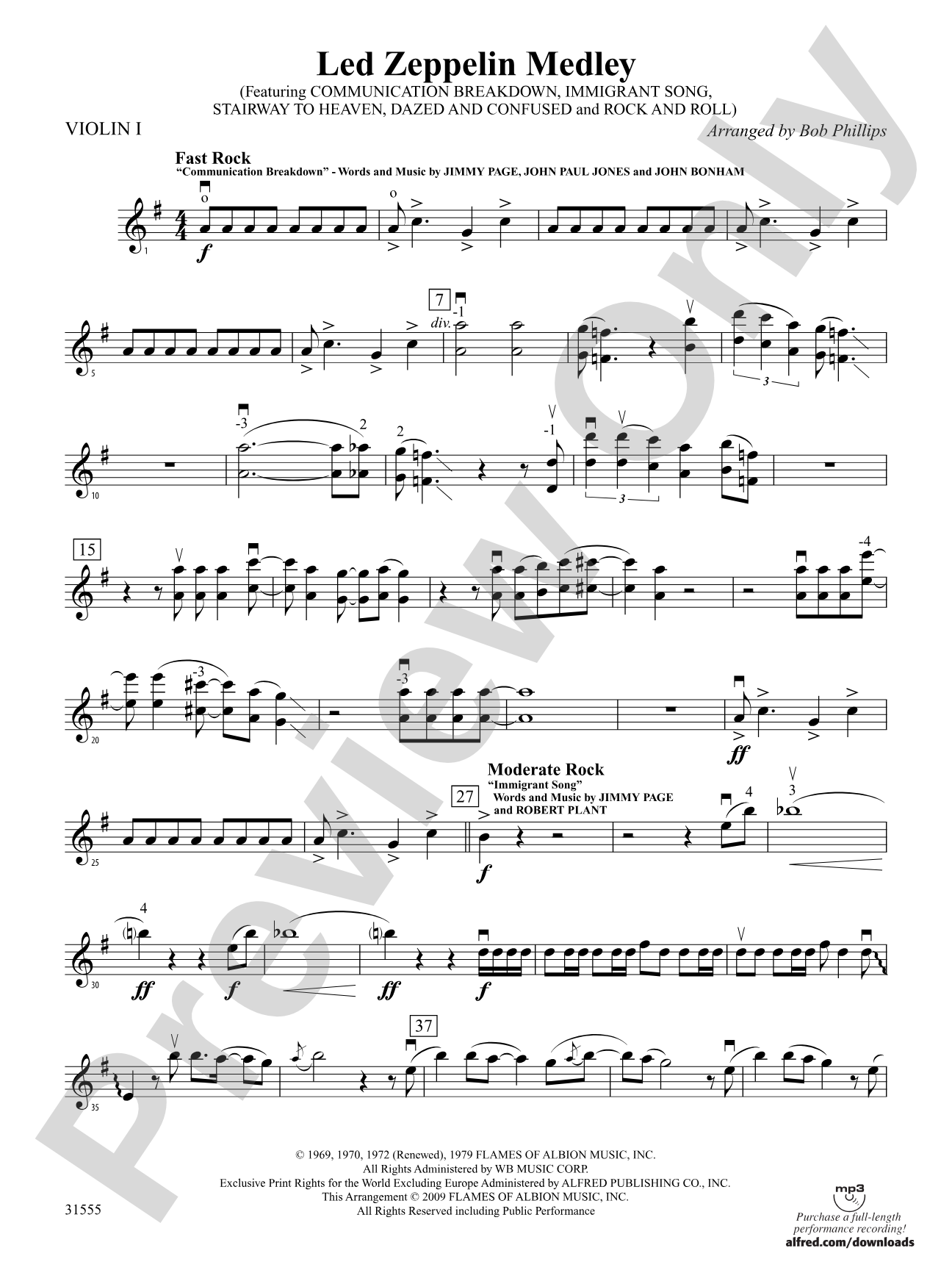
Led Zeppelin Medley: 1st Violin Sheet Music Preview

Led Zeppelin Medley: 1st Violin

Featuring: Communication Breakdown / Immigrant Song / Stairway to Heaven / Dazed and Confused / Rock and Roll

Led Zeppelin / arr. Bob Phillips

Grade: 3.5

Item: 00-PC-0015741_VN1

Digital Download
$5.99
Description
From the classic rock world, treat yourself and your audience to this cool medley including "Communication Breakdown," "Immigrant Song," "Stairway to Heaven," "Dazed and Confused" and "Rock and Roll." Add the drumset and electric bass and bring the house down! (5:00) This title is available in MakeMusic Cloud.

Don't just read it, hear it, play along with it, and watch your students grow with it. In MakeMusic Cloud, Led Zeppelin Medley: 1st Violin comes alive with professional accompaniment, adjustable tempo, and built-in practice tools that turn solo practice into real progress.

Sample Audio
0:00
0:00
Sample Video
Additional Details
Series: Pop Concert String Orchestra
Publisher: Alfred Music
Page Count: 132
SKU: 00-PC-0015741_VN1

More about this title

About the Composer: Led Zeppelin

Led Zeppelin fundamentally changed rock music in the late 1960s and 1970s, blending blues, folk, and world music influences into a template that still defines arena rock. The band's willingness to draw from diverse traditions and reimagine them at massive scale made them one of the most influential acts in popular music history, and their catalog remains deeply embedded in contemporary culture.

For music educators, Led Zeppelin's work offers a rare bridge between the classical training your students receive and the music they actually listen to. The compositions showcase sophisticated harmonic movement, memorable melodic hooks, and dynamic range that rewards serious instrumental study.

Why we love this

Bob Phillips has crafted an arrangement that honors the unmistakable character of these five songs while making them genuinely playable for Grade 3.5 string orchestras. The medley format lets you program substantial repertoire without losing the rock energy that will genuinely excite your students and audiences alike.

What to expect

Powerful and immediate. The arrangement captures the raw energy of classic rock while the string textures add sophistication and depth that transforms these familiar songs into a concert experience. You'll hear the blues foundations, the soaring melodic moments, and the relentless groove that made these records iconic.

Who it's for

String orchestras looking to expand beyond traditional classical repertoire and engage students with music they recognize and care about. Directors seeking a crowd-pleasing concert piece that also delivers legitimate musicianship challenges around rhythmic precision, dynamic control, and ensemble cohesion.

How to get the most out of it

  • Establish a tight click track for the ensemble before rehearsal, especially across the medley transitions. The shift from the blues-rooted grooves to the driving rhythm of "Rock and Roll" requires confident ensemble timing.
  • Balance the rhythm section carefully. The drumset and electric bass should lock together as a single foundation; have them rehearse independently first, then integrate with the strings gradually.
  • Shape the dynamic arc across the entire five-minute arc rather than treating each song in isolation. The medley works best when you build momentum through the selections.

How to use it

This works beautifully as a closer on a concert program, where it can energize an audience that may have sat through more formal concert repertoire earlier in the evening. You might also program it alongside contemporary classical crossover pieces to create a "strings in popular music" concept concert.

Skills your students will build

  • Executing consistent rhythmic grooves across changing meters
  • Blending string textures with non-traditional ensemble instruments (drums, electric bass)
  • Maintaining ensemble precision through extended medley transitions
  • Playing with stylistic authenticity in rock-influenced contexts
  • Building dynamic contrast and phrasing in non-classical genres

You May Also Like