Lebegue: Complete Organ Works, Volume II Sheet Music Preview

Lebegue: Complete Organ Works, Volume II

By Nicolas Lebègue

Level: Advanced

Item: 00-PC-0010011

Digital Download
$0.99
Description
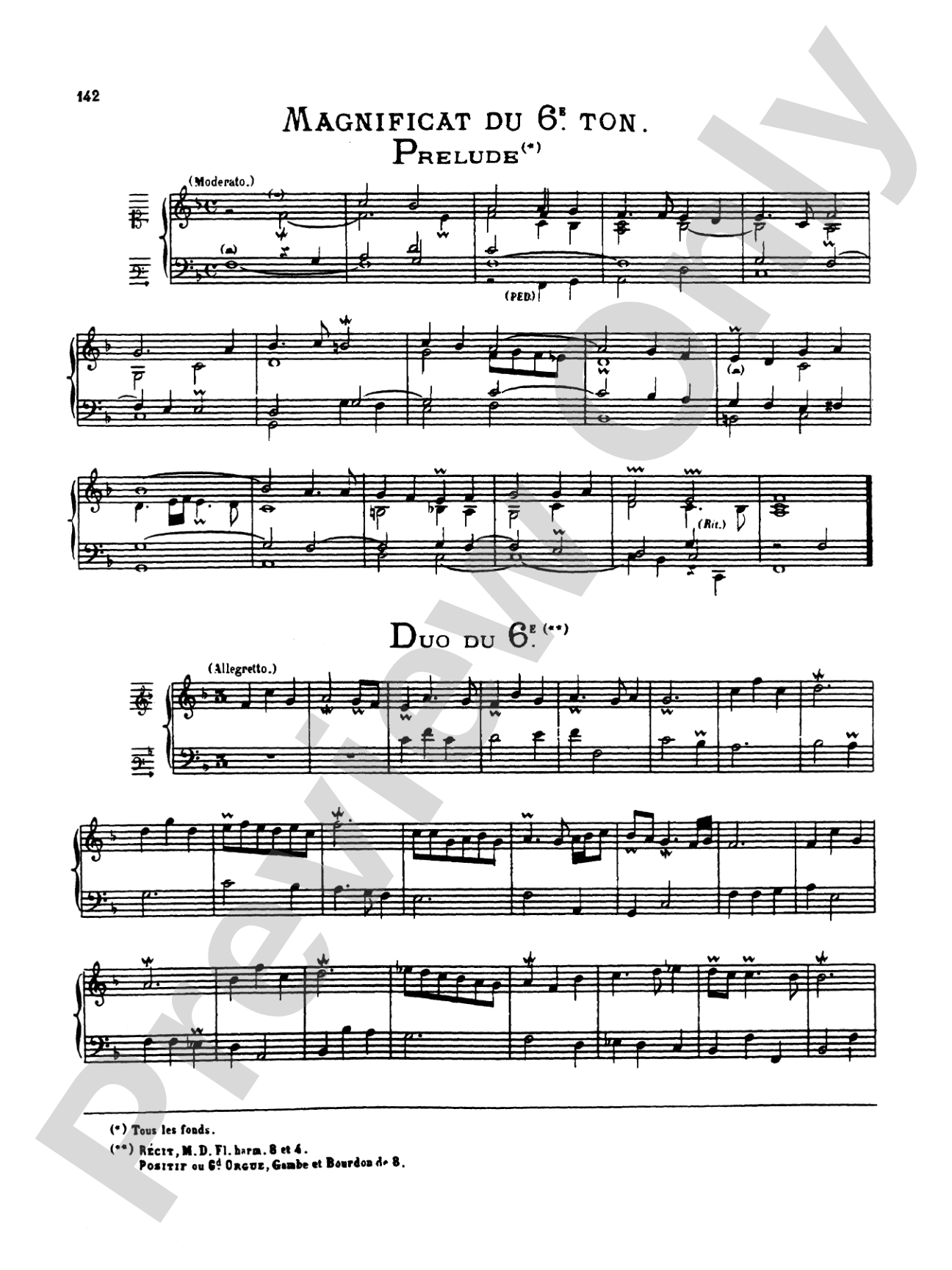
Magnificats and Various Works

Don't just read it, hear it, play along with it, and watch your students grow with it. In MakeMusic Cloud, Lebegue: Complete Organ Works, Volume II comes alive with professional accompaniment, adjustable tempo, and built-in practice tools that turn solo practice into real progress.

Sample Audio
No sample audio found.
Sample Video
Additional Details
Series: Kalmus Edition
Publisher: Alfred Music
Page Count: 72
SKU: 00-PC-0010011

More about this title

About the Composer: Nicolas Lebegue

Nicolas Lebegue (1631-1702) was a central figure in French Baroque organ music, serving as organist at Saint-Germain-des-Prés in Paris during a period of extraordinary musical innovation. His compositional output established many of the harmonic and textural conventions that defined the French organ school, influencing generations of keyboard composers who followed.

Lebegue's three published organ books represent the fullest surviving documentation of his keyboard works. His writing combines rigorous counterpoint with the ornamental vocabulary of French style, creating pieces that demand both technical fluency and interpretive sensitivity. For organists studying the Baroque repertoire, his works offer essential insights into registration practice, manual independence, and the relationship between organ writing and the broader aesthetic of the French court.

Why we love this

Volume II gives organists access to sacred music that sits at the intersection of liturgical function and artistic ambition. The Magnificats showcase Lebegue's gift for adapting complex polyphonic structures to the organ while maintaining clarity across multiple manuals, making these pieces rewarding both to practice and to hear develop under a player's hands.

What to expect

These works unfold with the measured grandeur of the French style, layering ornate figuration and solid harmonic foundations into music that feels both intellectually rigorous and spiritually expansive. The organ writing draws listeners into architectural spaces, using the instrument's full range to create soundscapes that shift between intimacy and majesty.

Who it's for

Advanced organists preparing recital programs, church musicians maintaining regular liturgical repertoire, and students of the French Baroque who need an authoritative edition of works that shaped organ composition. This collection suits players with secure multi-manual technique and familiarity with Baroque performance conventions.

How to get the most out of it

  • Plan your manual divisions carefully before the first rehearsal. Lebegue's counterpoint often requires precise hand independence across the Great and Positif; mark your score with cues for which manual plays each line to avoid confusion during difficult passages.
  • Test registrations in the actual performance space if possible. French Baroque organ sonorities depend heavily on the instrument's specific tonal palette, and what reads as muddy in the studio may clarify beautifully in a resonant church.
  • Approach ornaments as structural rather than decorative elements. These pieces use embellishment to shape phrasing and articulate harmonic movement, so ornament placement deserves the same care you'd give to a fugal subject.
  • Give yourself time to internalize the harmonic language before focusing on speed. Lebegue's vertical sonorities sometimes surprise players accustomed to later Baroque practices; understanding the chord progressions will help your fingers find secure placements.

How to use it

Program individual Magnificats as part of a service or recital exploring sacred organ literature across national schools, or use this collection as the centerpiece of a program devoted entirely to the French Baroque. These pieces also serve well as study material for organists preparing for examination programs or pursuing advanced performance certifications.

Skills your students will build

  • Multi-manual independence and coordinated pedal technique
  • Interpretation of French Baroque ornamentation and style conventions
  • Harmonic analysis of 17th-century functional tonality
  • Liturgical understanding of Magnificat settings and their performance contexts
  • Registration planning and tonal balance across manual divisions
  • Contrapuntal clarity and voice independence at advanced levels

You May Also Like