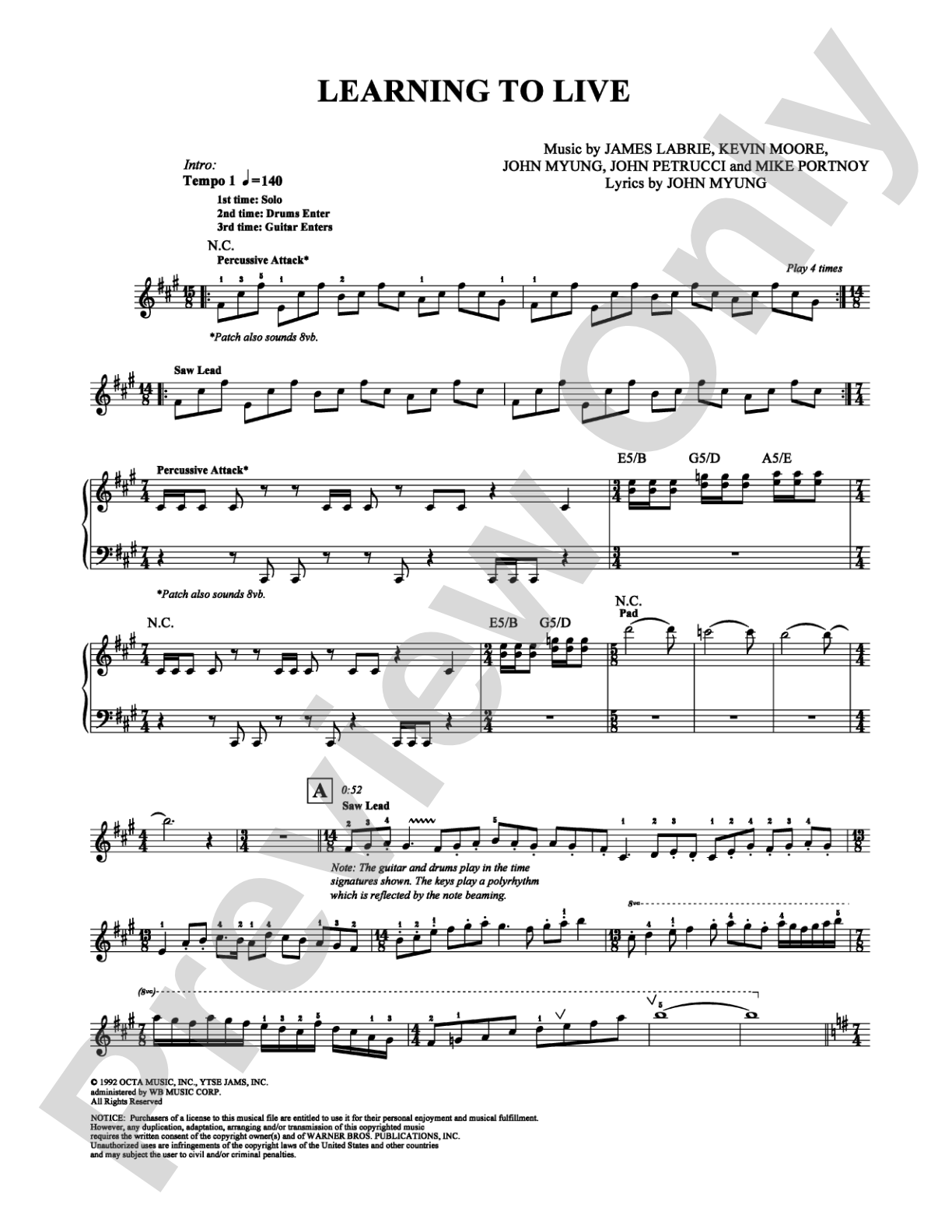
Dream Theater emerged in the late 1980s as one of progressive rock's most technically demanding and conceptually ambitious bands. Their catalog spans elaborate concept albums, intricate instrumental passages, and moments of surprising lyrical accessibility, making them a significant presence in contemporary rock music education.
The band's influence extends beyond rock circles into music theory and performance pedagogy. Their work demonstrates advanced harmonic language, time signature shifts, and the integration of keyboards, guitar, bass, and drums as equal compositional voices, offering educators and serious musicians a rich resource for exploring modern rock composition and arrangement.