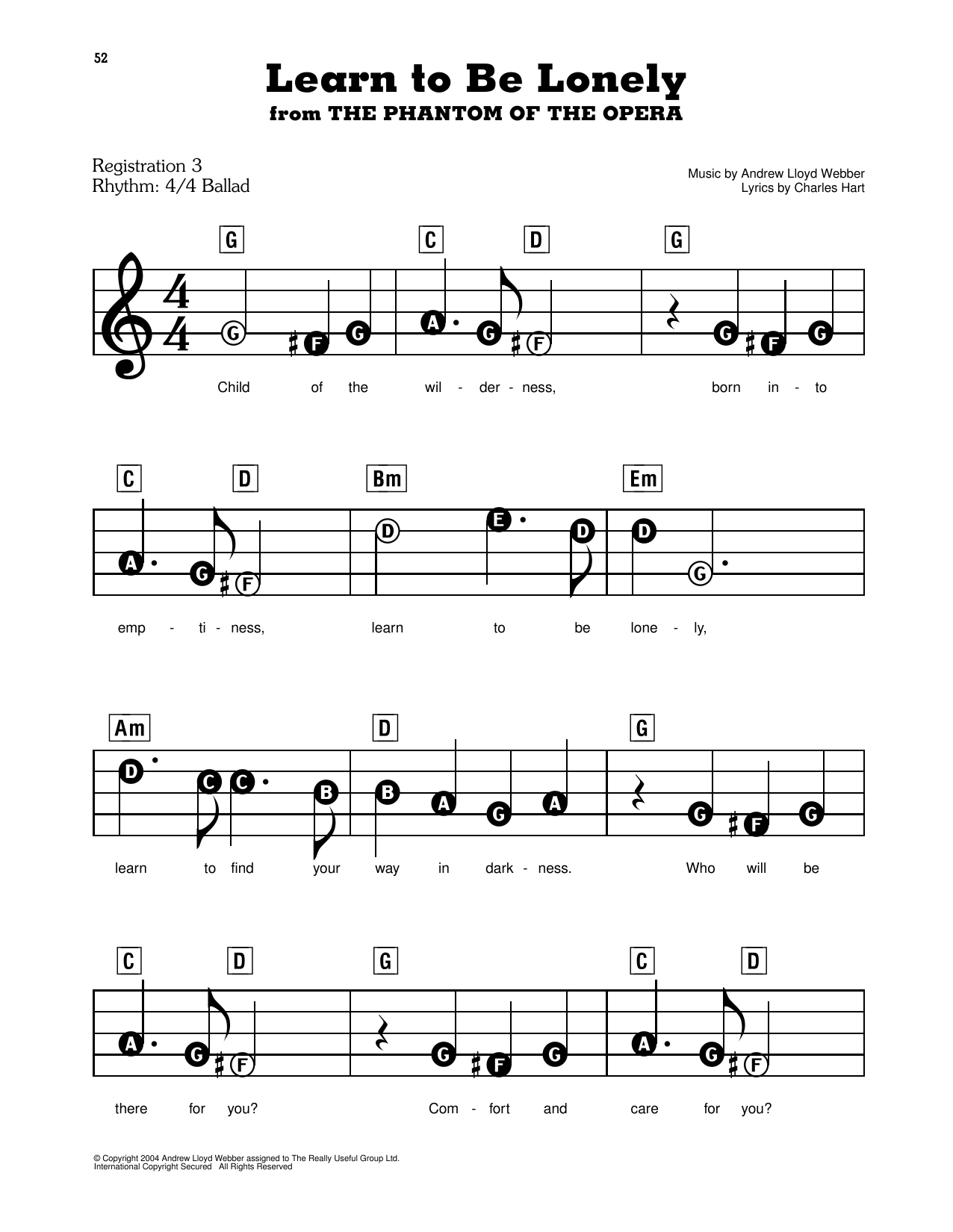
Learn To Be Lonely (from The Phantom Of Opera) Sheet Music Preview

Learn To Be Lonely (from The Phantom Of Opera): E-Z Play Today

Item: 35-DS00504282

Digital Download
$4.99
Description

Learn To Be Lonely (from The Phantom Of Opera): E-Z Play Today isn't in MakeMusic Cloud just yet...but it could be. Let us know you'd like to see it, and you'll help shape what comes next. In the meantime, start a free trial and dive into thousands of interactive titles your students can play along with today.

Sample Audio
No sample audio found.
Sample Video
Additional Details
Publisher: Hal Leonard
Page Count: 3
SKU: 35-DS00504282

More about this title

About the Creator: Andrew Lloyd Webber

Andrew Lloyd Webber's The Phantom of the Opera stands as one of the most successful musicals in theatrical history, captivating audiences worldwide since its 1986 London premiere. Webber's gift for melody and dramatic orchestration created a score that transcends musical theater, offering rich material for pianists at all levels to explore.

Why we love this

This arrangement distills one of the score's most poignant moments into an accessible three-page setting that doesn't sacrifice emotional weight. Students get to inhabit a genuinely theatrical piece with memorable melodic lines, and the E-Z Play format means they can focus on interpretation rather than wrestling with notation.

What to expect

Yearning and introspective, the song dwells in moments of quiet longing punctuated by surges of emotion. The music mirrors the isolation in its text, creating an intimate space even in ensemble or recital settings.

Who it's for

This arrangement suits pianists preparing for auditions, students building their musical theater repertoire, or anyone seeking accessible entry into Webber's compositional language. The simplified notation opens the song to intermediate players who want to perform legitimate theater music with confidence.

How to get the most out of it

  • Shape the melody with genuine phrasing rather than playing mechanically through the phrase marks; this song thrives on vocal quality even at the piano.
  • Resist the urge to rush; the vulnerability of the text depends on space and breathing room in the accompaniment.
  • Listen carefully to how the harmony supports the melody's emotional arc, especially at the song's emotional peaks, and let that guide your dynamic choices.
  • Balance clarity in the left hand accompaniment with prominence for the vocal line so the story comes through without competition.

How to use it

Position this as an intermezzo between heavier classical works in a recital, or pair it with other Broadway selections for a theater night program. It also serves as rewarding material for students exploring how theatrical music functions differently from concert repertoire.

Skills your students will build

  • Phrasing lyrical melody lines with theatrical intent
  • Balancing accompaniment texture with vocal primacy
  • Interpreting harmony to support emotional content
  • Reading and performing simplified notation without loss of musicality

You May Also Like