
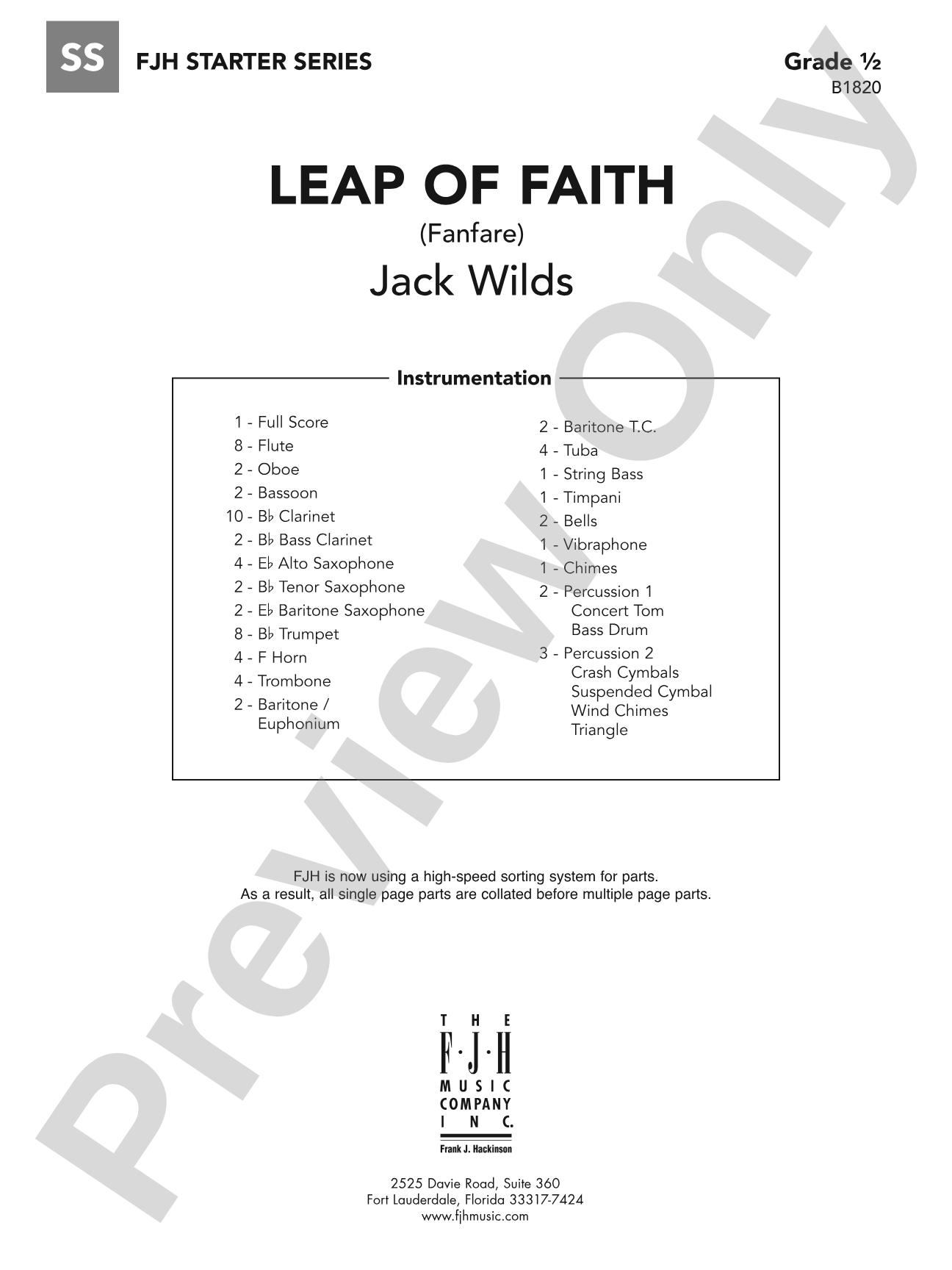

Leap of Faith (Fanfare): Concert Band Conductor Score & Parts
Fanfare
By Jack Wilds
Level:.5
Item: 98-DB1820
$45.00
Pickup currently not available
Buy Extra Parts (Digital PDF Download)
Parts Added to Cart!
Description
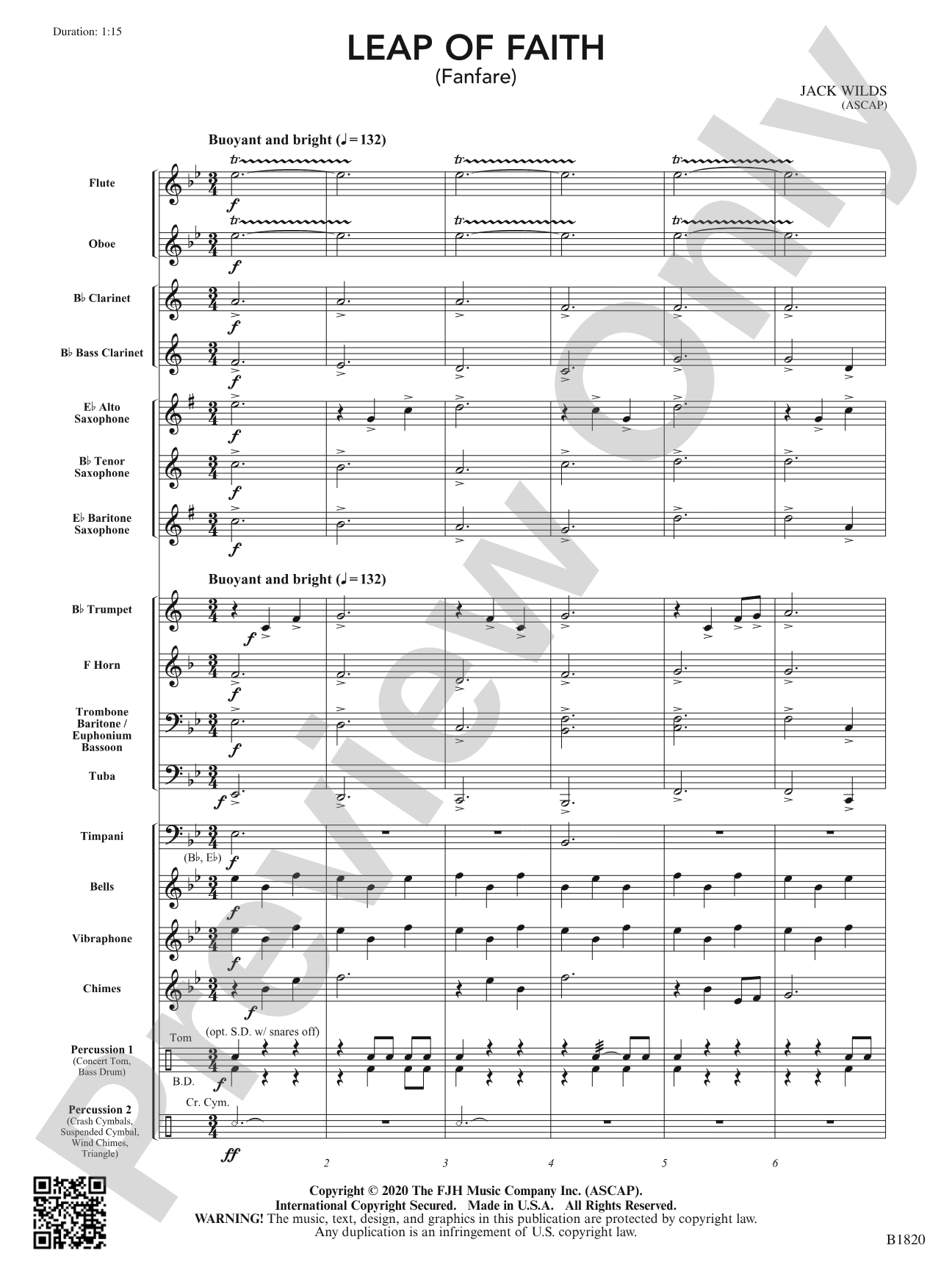
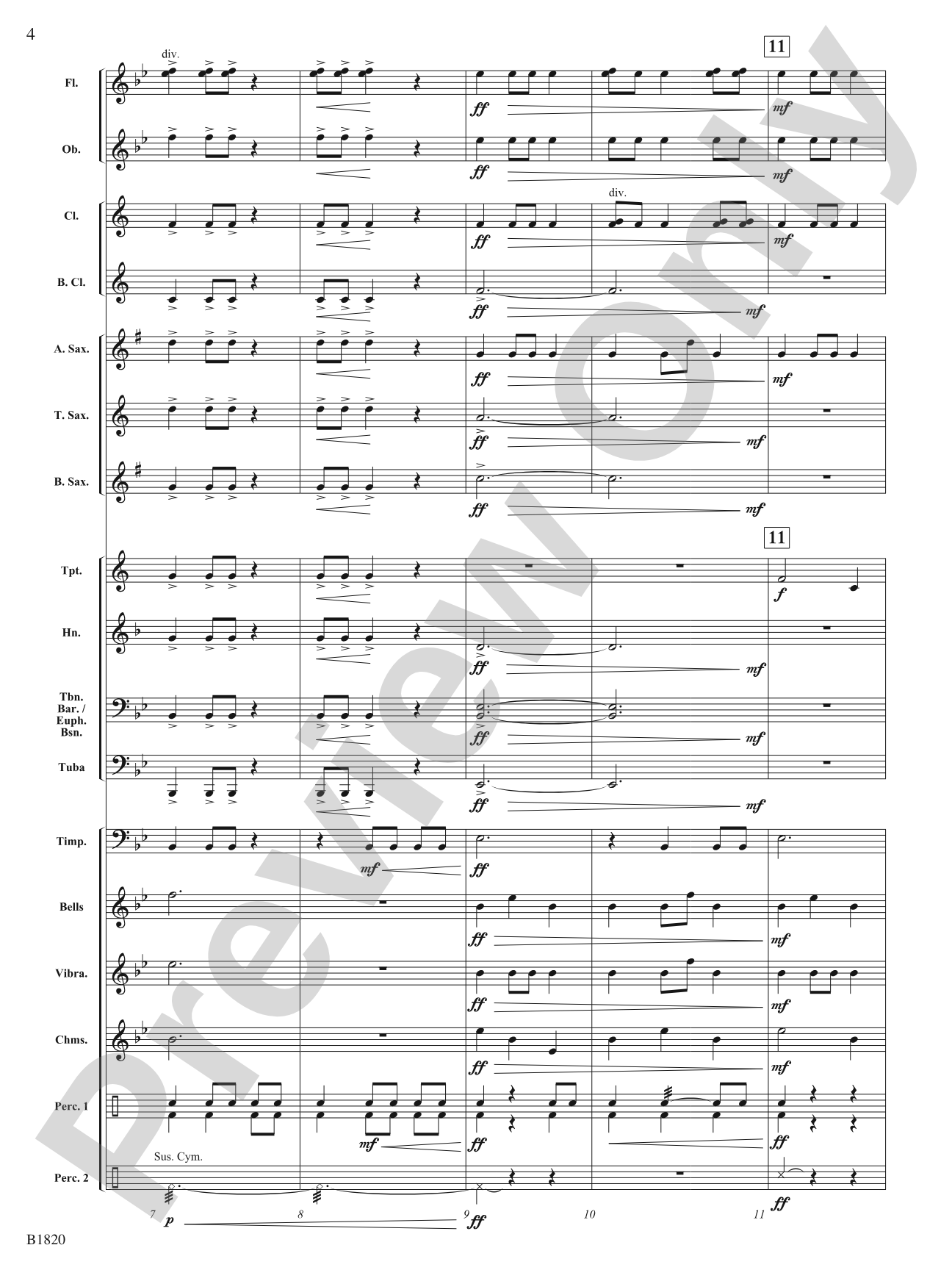
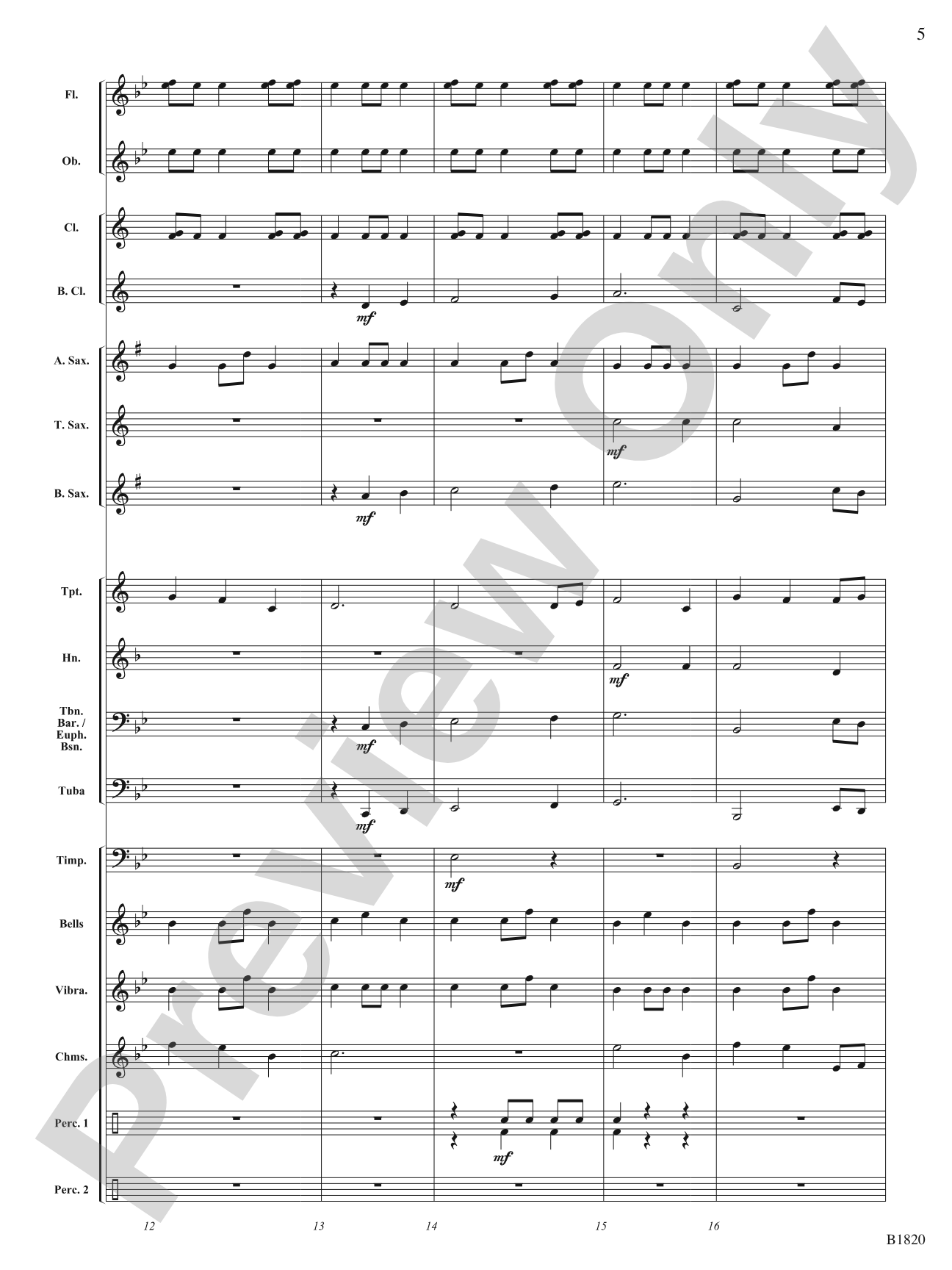
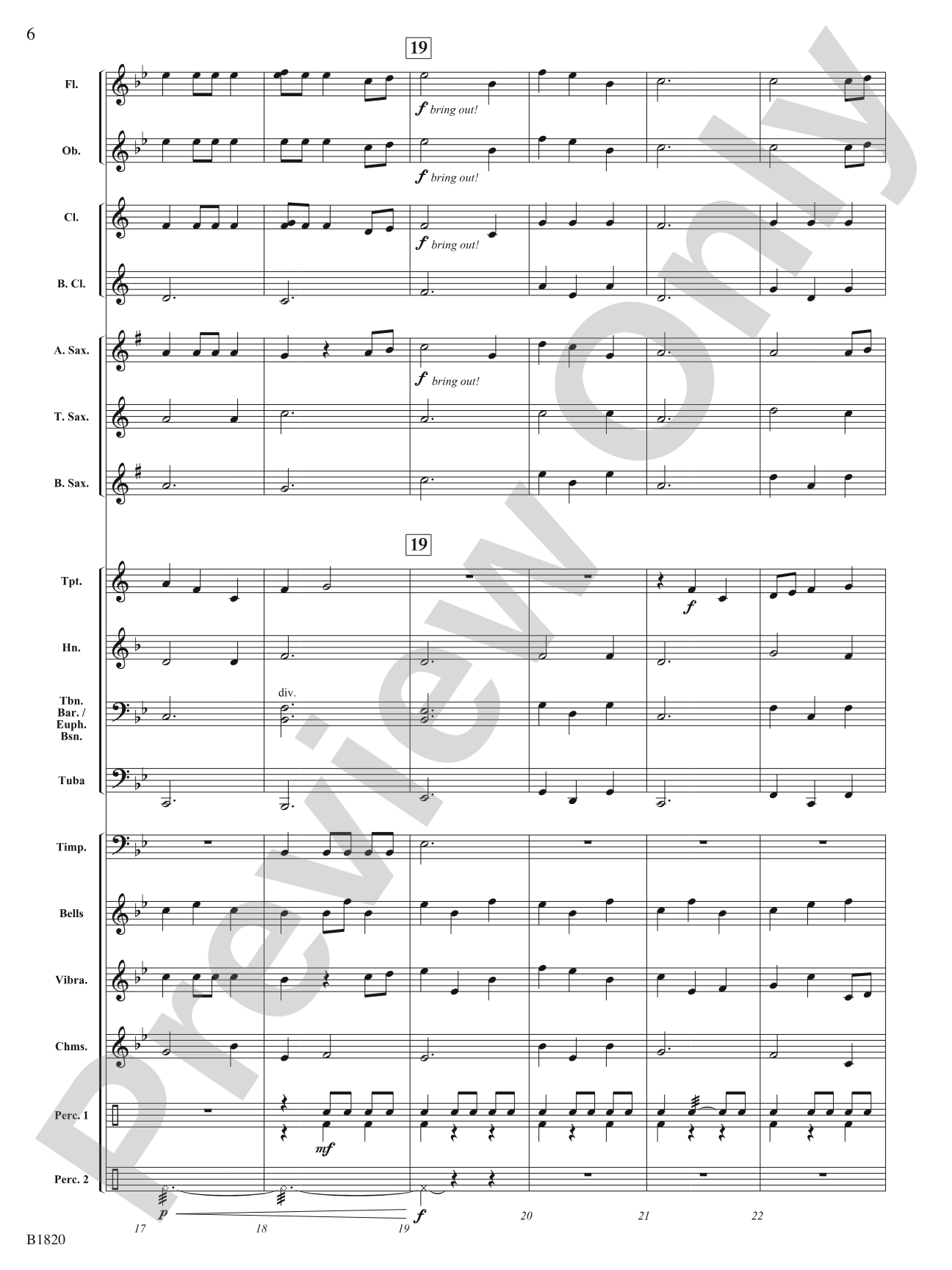
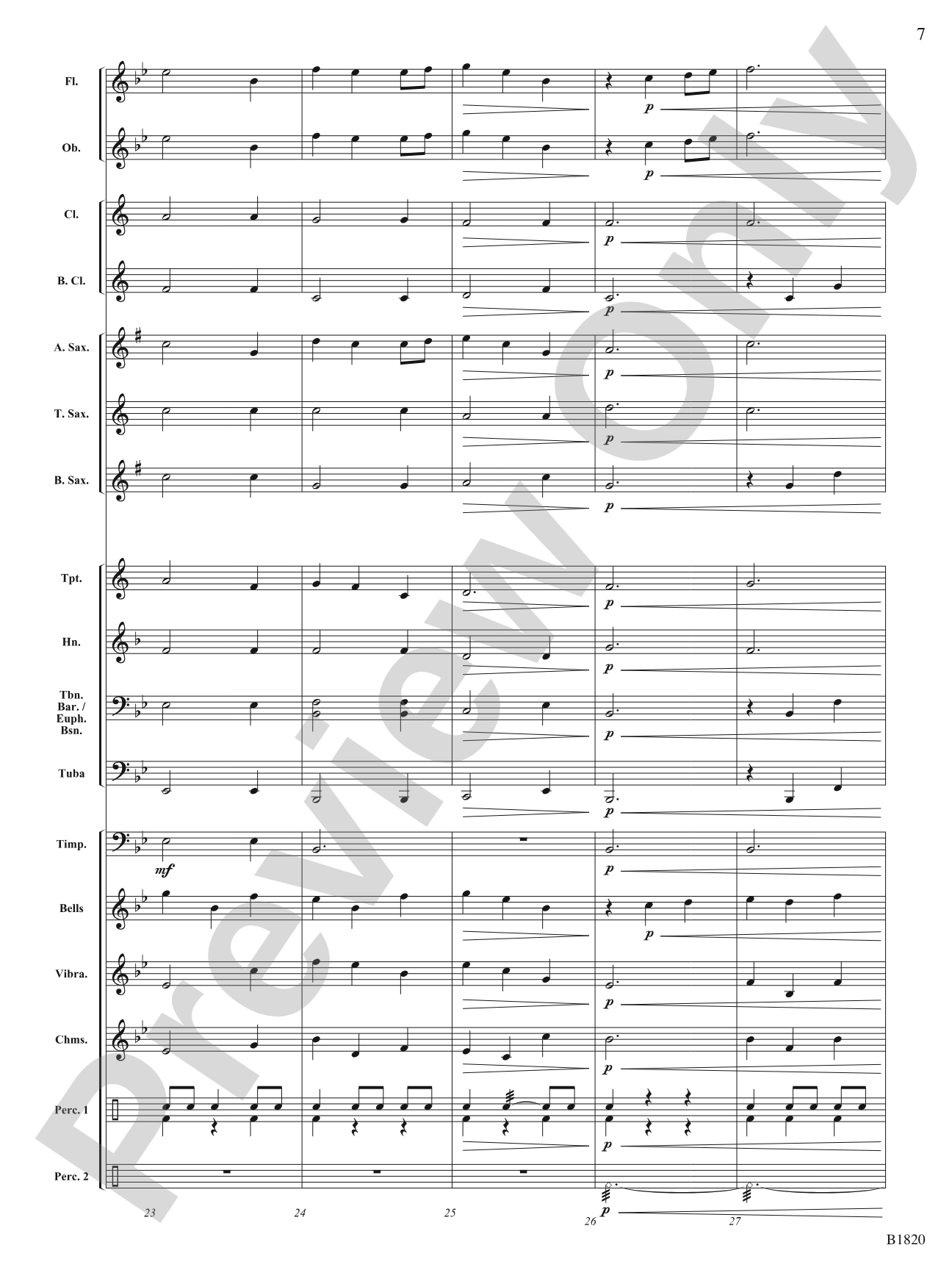
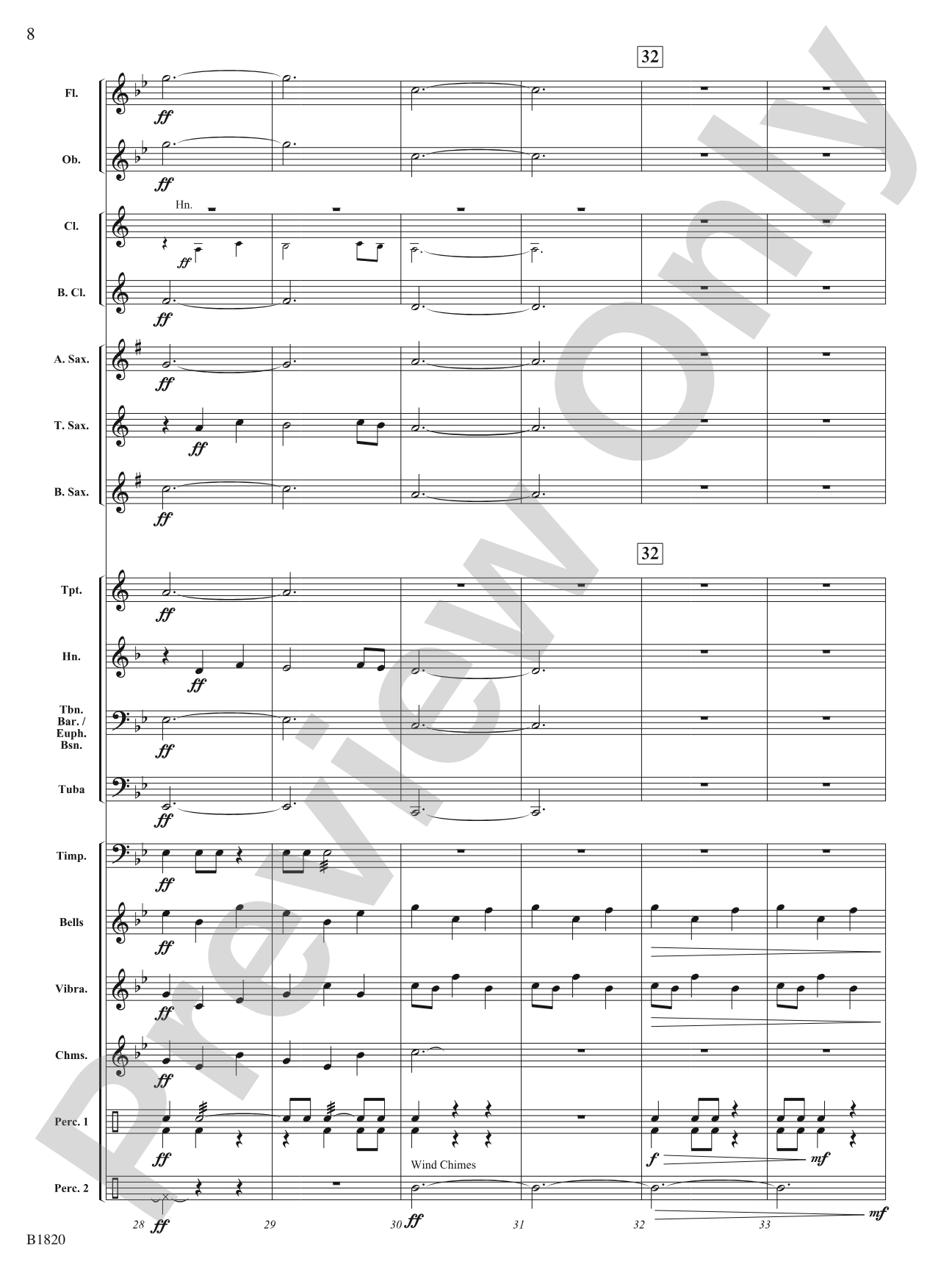
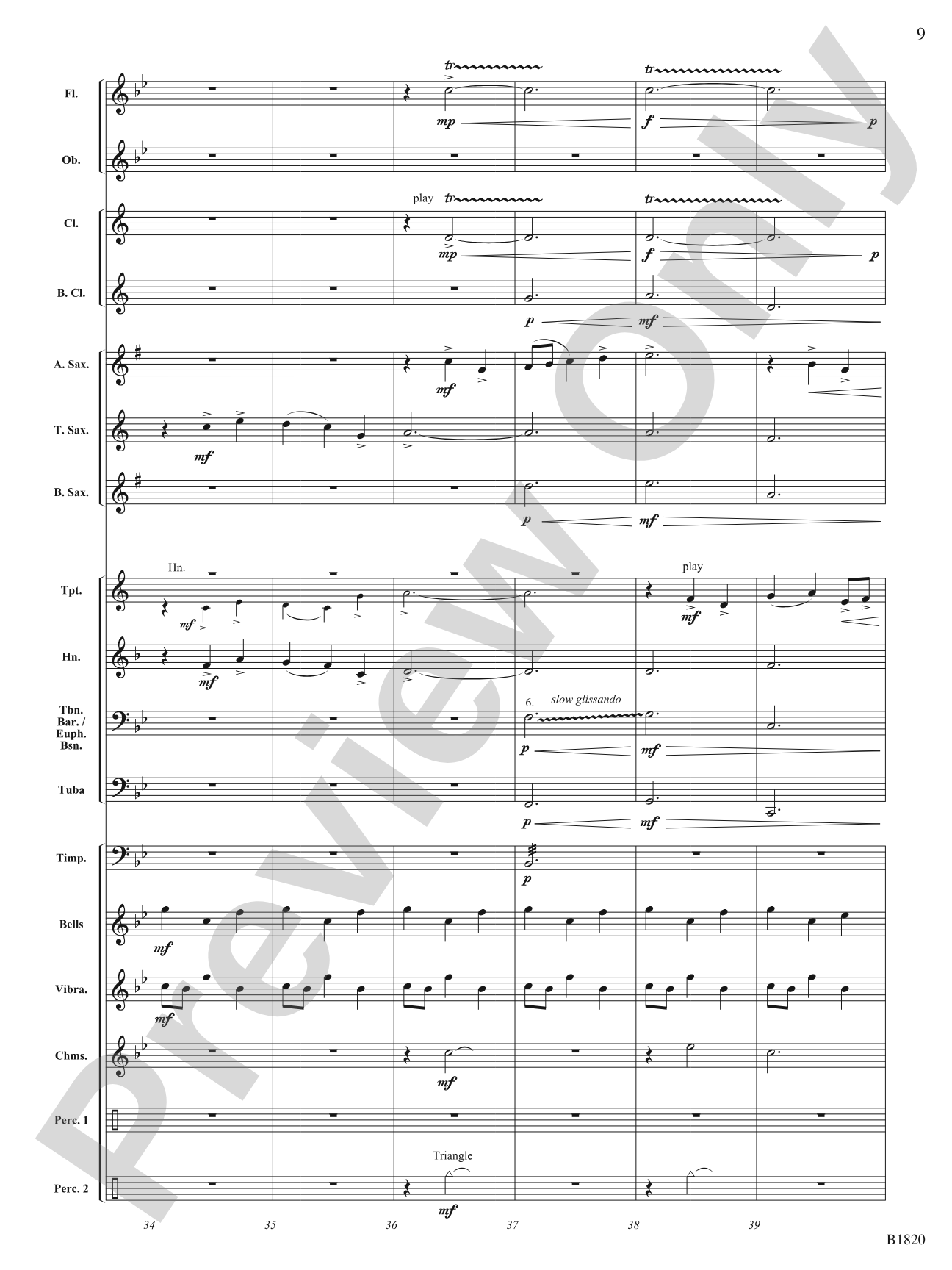
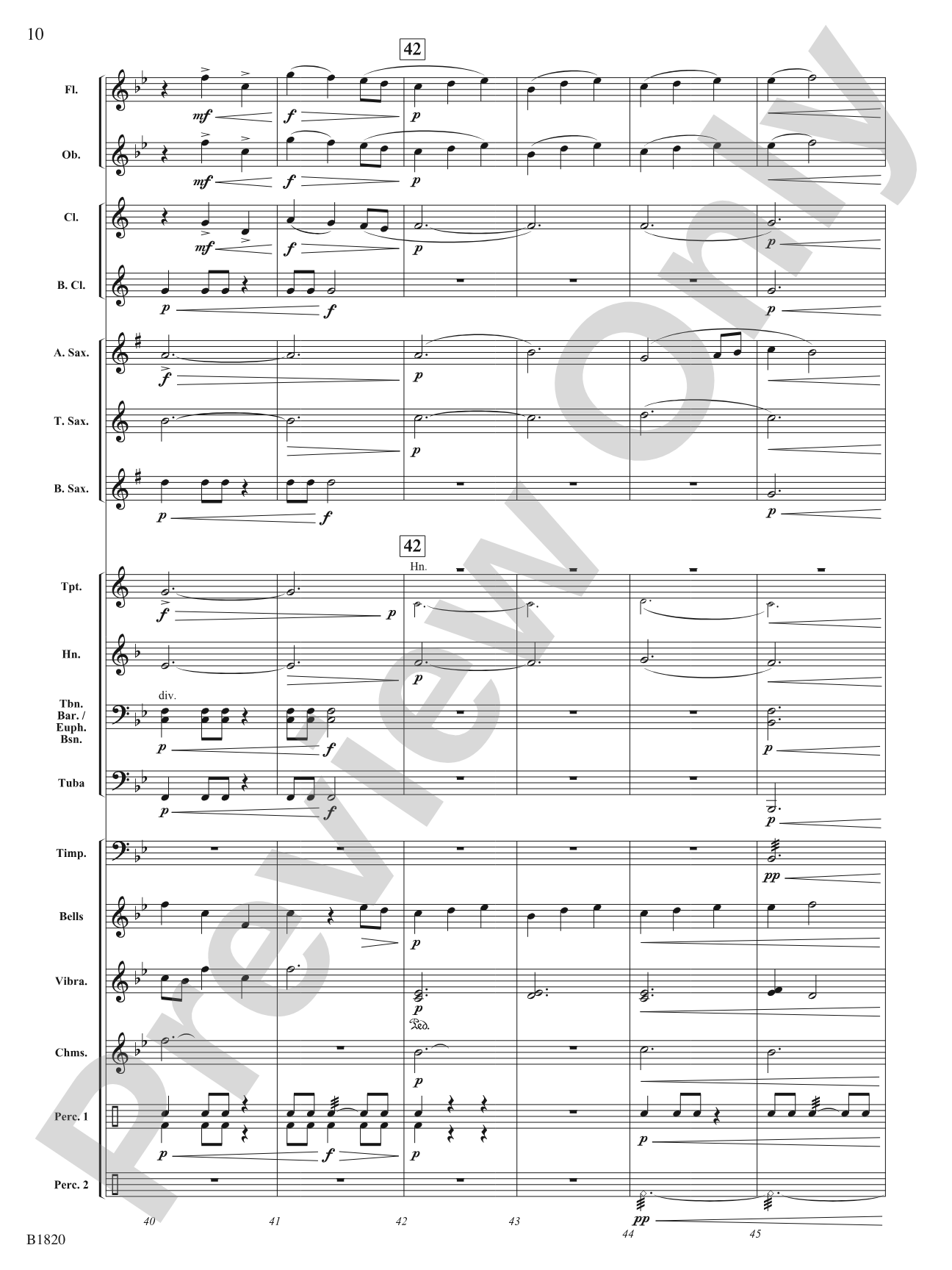
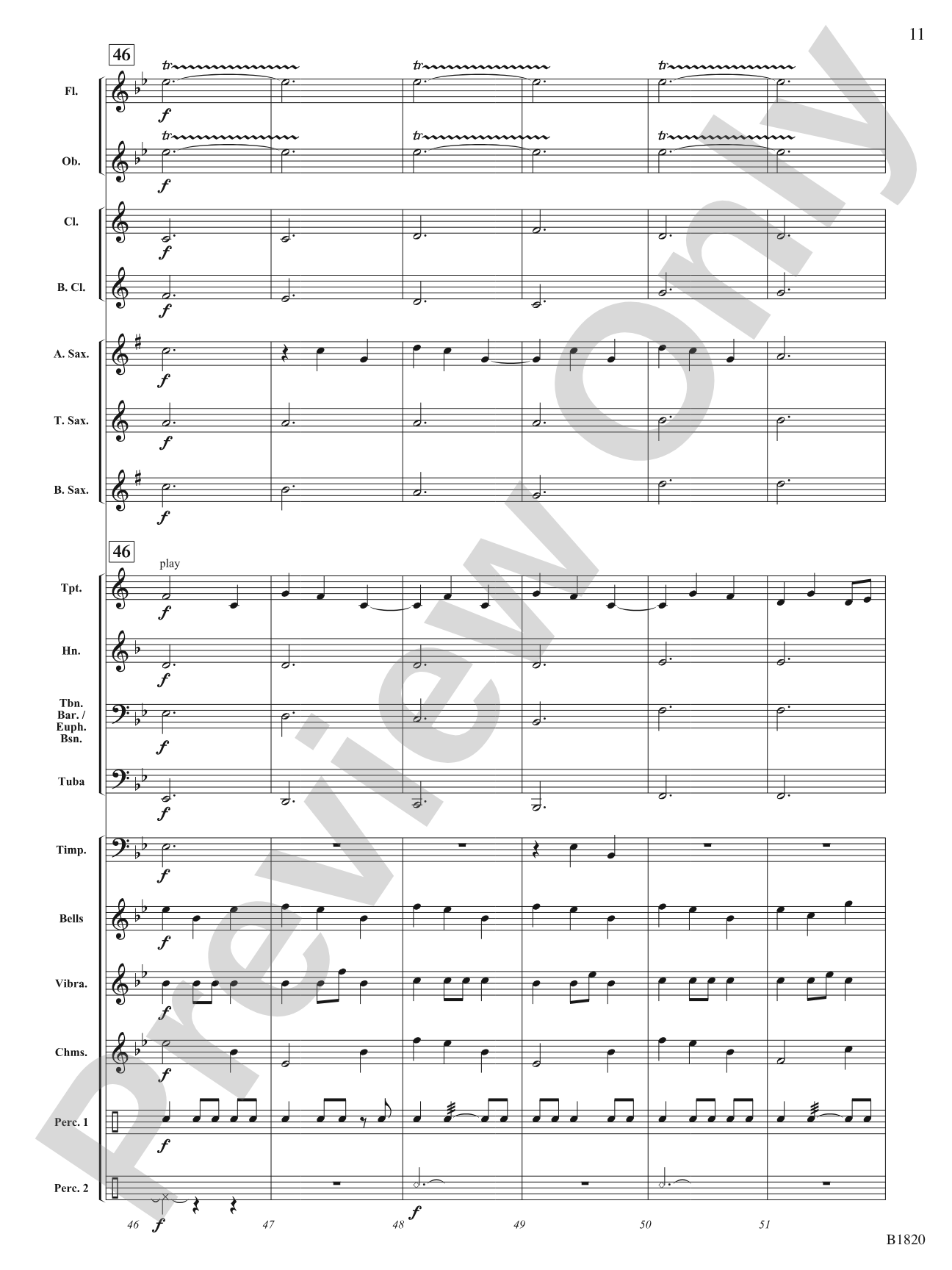
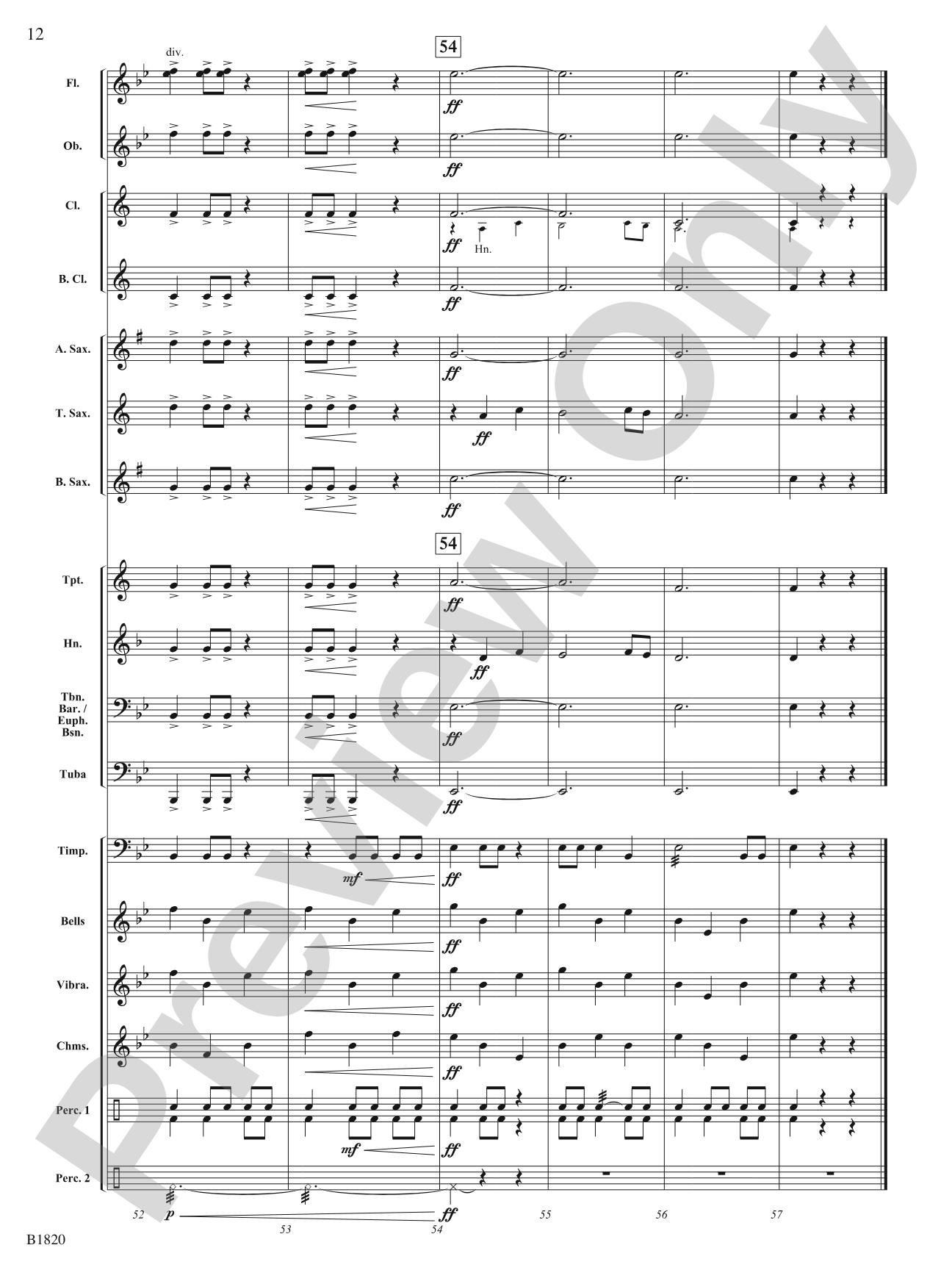
This pop-inflected fanfare uses only six notes to create a heartfelt, compelling opener for your next concert. Students will love exploring a variety of dynamics, styles, and articulations as they race toward a rousing conclusion. No leap of faith required to program this one!


Leap of Faith (Fanfare): Concert Band Conductor Score & Parts isn't in MakeMusic Cloud just yet...but it could be. Let us know you'd like to see it, and you'll help shape what comes next. In the meantime, start a free trial and dive into thousands of interactive titles your students can play along with today.
Request This Title
Tell us you want it.
Start Your Free Trial
Explore everything that's ready to play right now.
Sample Audio
1
Audio File
--:--
0:00
0:00
Sample Video
No sample videos found.
Additional Details
Series:
FJH Starter Series
Publisher:
The FJH Music Company, Inc.
SKU:
98-DB1820
More about this title
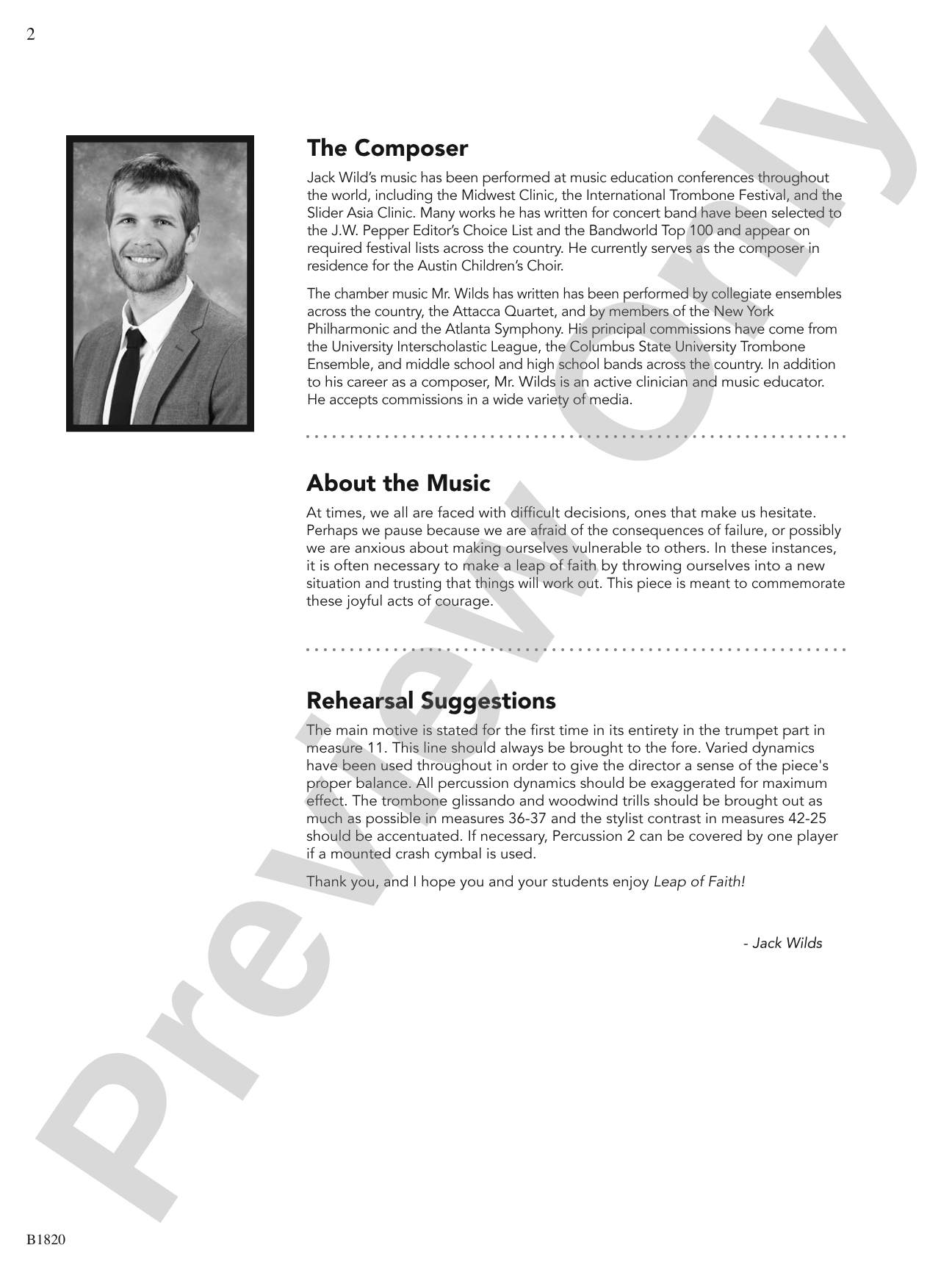
About the Composer: Jack Wilds

Jack Wilds brings deep experience across the full spectrum of musical life, from elementary choirs to professional ensembles. His catalog reflects this range: over 40 works for developing musicians, commissions from collegiate wind ensembles, and chamber music performed by groups including members of the New York Philharmonic and the Atlanta Symphony. His compositions draw inspiration from visual art, philosophy, poetry, and pure musical thinking to create pieces that meet performers authentically while pushing them toward growth.
A former public school band director, Wilds now teaches composition, theory, ear training, and music technology at Texas State University while serving as Co-Director of Music at First Presbyterian Church in San Marcos. His wind band works appear regularly on festival required repertoire lists across multiple continents and have been heard at the Midwest Clinic and major educator conferences. He is an active clinician and adjudicator nationally, and has studied composition with Michael Ippolito, Chris Trapani, and Donald Grantham.
Why we love this
Wilds strips the fanfare form down to six pitches and builds something genuinely engaging from that constraint. The result feels fresh and modern without losing the ceremonial weight a strong opener needs. For a half-level piece, the variety in dynamics, style, and articulation keeps both conductor and ensemble engaged throughout.
What to expect
A modern fanfare that opens with sincerity and builds toward celebration. The pop-inflected language gives it contemporary energy while the constraint of six notes creates an almost hymn-like quality at quieter moments. The rousing conclusion arrives earned rather than sudden.
Who it's for
This piece works perfectly for developing concert bands working at the half-level range, whether as a season opener, festival entry, or program centerpiece. It's equally at home in contest/festival settings and regular concert programs, and the six-note palette makes it accessible while the musical demands keep it rewarding.
How to get the most out of it
- Highlight the color changes between sections by bringing different instrument groups forward. The pop-inflected style rewards clarity of texture, so listen for places where you can let a particular color shine.
- Shape the conclusion deliberately. The piece races toward a rousing finish, but that momentum is most effective if you build it gradually rather than simply speeding up.
- Balance the heartfelt character with rhythmic precision. The dynamic shifts are meaningful only if the ensemble holds steady time while responding to your conducting.
How to use it
Open a concert with this and you immediately signal that the ensemble has both musicality and precision. It's brief enough to serve as an overture to a larger work, but substantial enough to stand alone. The heartfelt opening and rousing finish make it an effective bookend as well, particularly for festival programs where you want to leave a strong final impression.
Skills your students will build
- Dynamic contrast within a simple harmonic framework
- Articulation variety (distinguishing legato, staccato, and accent)
- Balancing individual voice leading with ensemble blend
- Building momentum and pacing toward a climax