Lean On Me (arr. Gitika Partington) Sheet Music Preview

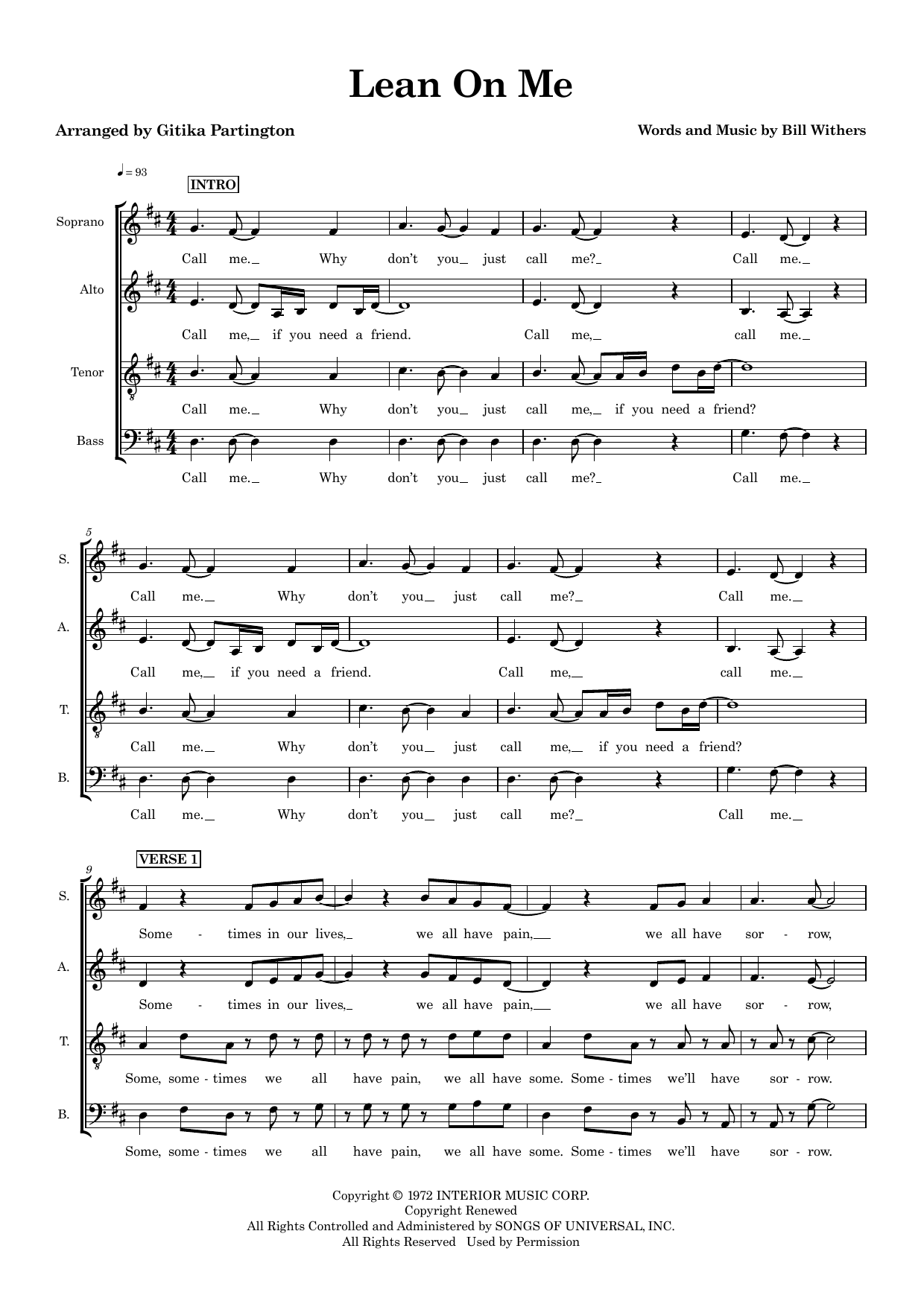
Lean On Me (arr. Gitika Partington): SATB Choral Octavo

By Bill Withers / Arranged by Gitika Partington

Item: 35-DS01732756

Digital Download
$1.99
Description

Lean On Me (arr. Gitika Partington): SATB Choral Octavo isn't in MakeMusic Cloud just yet...but it could be. Let us know you'd like to see it, and you'll help shape what comes next. In the meantime, start a free trial and dive into thousands of interactive titles your students can play along with today.

Sample Audio
No sample audio found.
Sample Video
Additional Details
Publisher: Hal Leonard
Page Count: 9
SKU: 35-DS01732756

More about this title

About the Composer: Bill Withers

Bill Withers emerged from the soul and R&B landscape of the 1970s with a gift for writing songs that felt like conversations between friends. His music combined folkish sincerity with groove-based arrangements, creating work that was both emotionally direct and musically sophisticated. "Lean On Me" became one of his signature pieces, a testament to his ability to articulate human connection through deceptively simple melodies and profound lyrics.

Withers' influence on popular music extends well beyond his own recordings. His songs have been covered, sampled, and reinterpreted across genres because they tap into something universal about vulnerability and community. For choral directors, his catalog represents some of the most singable popular material available, with harmonies that feel natural rather than imposed.

Why we love this

Gitika Partington's arrangement unlocks the communal warmth that makes "Lean On Me" resonate across generations. The SATB voicing allows each section to carry melody at key moments while maintaining the song's essential groove, creating a piece that feels contemporary in the rehearsal room but works beautifully on concert programs alongside both spiritual traditions and modern pop settings. This is music that reminds singers why they joined choir in the first place.

What to expect

Warm and grounded, with the comfortable quality of sitting with someone who truly listens. The arrangement breathes with a gentle funk underneath, keeping the song's humanity intact while giving it the vocal color that SATB harmony provides. This is intimate music that happens to be sung by four parts.

Who it's for

Choirs looking to program repertoire that resonates with audiences of all ages while building ensemble cohesion. The accessible melodic material and straightforward rhythmic framework make this suitable for intermediate-level choirs while offering enough musical depth to engage more experienced singers.

How to get the most out of it

  • Anchor the rhythm section (or recorded accompaniment) early in rehearsal so singers understand the groove rather than fighting it. Once the pulse locks, the arrangement comes alive.
  • Shape the melody through dynamic contrast within phrases rather than with sudden level changes. The quiet vulnerability of this song depends on singers understanding where each phrase breathes.
  • Emphasize the interplay between voice parts during overlapping sections. Partington has written moments where different sections echo or answer each other, and these create the communal quality the text demands.
  • Pay attention to diction clarity on the key phrases ("lean on me," "when you're not strong"). Clarity here serves the message without sacrificing the groove.

How to use it

Consider programming this in a concert that celebrates community or connection, where it can sit naturally alongside spirituals, folk arrangements, or other song-cycle material. Its bridge between classical choral writing and contemporary popular idiom makes it an excellent piece for demonstrating the full range of what a choir can do.

Skills your students will build

  • Singing with rhythmic precision in a groove-based harmonic setting
  • Balancing part independence with blend across four-part texture
  • Shaping phrases that prioritize text clarity and emotional communication
  • Understanding how contemporary vocal scoring differs from traditional choral writing
  • Connecting to the historical and cultural roots of soul and R&B music

You May Also Like