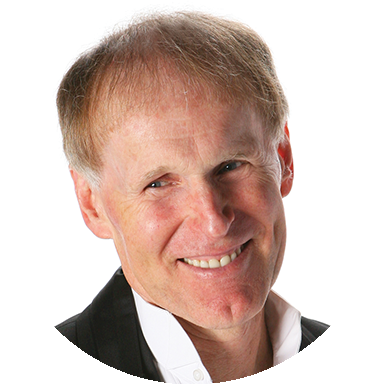
Kirby Shaw brings decades of choral leadership across North America and Europe, earning his degrees in Music Education and Choral Composition from San Jose State University before completing a DMA in Choral Conducting at the University of Washington. His career spans directing award-winning vocal jazz ensembles at College of the Siskiyous, Colorado State University, and the University of Missouri at Kansas City, and he currently leads the Jefferson State Choral Coalition at Southern Oregon University.
With over 2500 choral arrangements and compositions in print, Shaw has built a reputation for music that speaks to singers and audiences alike. Nearly 20 million copies of his work circulate globally, and his prolific output has earned him multiple ASCAP awards. Beyond arranging, Shaw has studied jazz vocal technique directly with legends including Bobby McFerrin, Al Jarreau, and Jon Hendricks, infusing his arrangements with both technical depth and infectious musicality.
Why we love this
Shaw's SAB writing strikes a balance that's genuinely hard to find: the harmony is sophisticated enough to engage your singers' ears, yet the ranges and voice leading respect the realities of mixed choirs with developing lower voices. The sacred text anchors the arrangement in something meaningful, while his musical instincts keep the four pages from feeling heavy or dated.
What to expect
The arrangement draws singers inward with a sense of spiritual seeking and trust. Shaw's harmonies feel modern without losing the reverence the text demands, creating a moment that feels both intimate and substantial within a concert or service.
Who it's for
Directors seeking a four-page sacred octavo with real musical substance for mixed choirs that include developing male voices. This works for choirs ready to handle three-part writing with harmonic interest, from mature high school groups through community and church ensembles.
How to get the most out of it
Shape the phrase arc across the full length rather than sitting too heavily on individual chords. The arrangement rewards forward motion and breath placement that follows the text's emotional arc.
Listen for where the outer voices (soprano and baritone) define the harmonic color most clearly. Having those lines sing with confidence and independence will clarify Shaw's voice leading for the entire ensemble.
Balance the middle voices so the alto part doesn't disappear when it carries harmonic weight. SAB writing can hide the alto's importance if dynamics aren't managed thoughtfully.
How to use it
Slot this into a concert's second half when you want to shift the energy toward reflection without dropping into a slow ballad. It also works effectively in church services where the scriptural foundation adds resonance, or as part of a sacred choral series that explores different harmonic languages.
Skills your students will build
Singing independent harmonic lines within three-part SAB texture
Balancing inner voice parts to support overall sonority
Shaping longer phrases across multiple sections without losing focus
Navigating moderate harmonic complexity in a concert setting
You May Also Like
Scan to Complete Your Purchase
Use your phone's camera to scan the code below
You'll log in on your phone and the order will be added to your account