Le visage de l'amour Sheet Music Preview

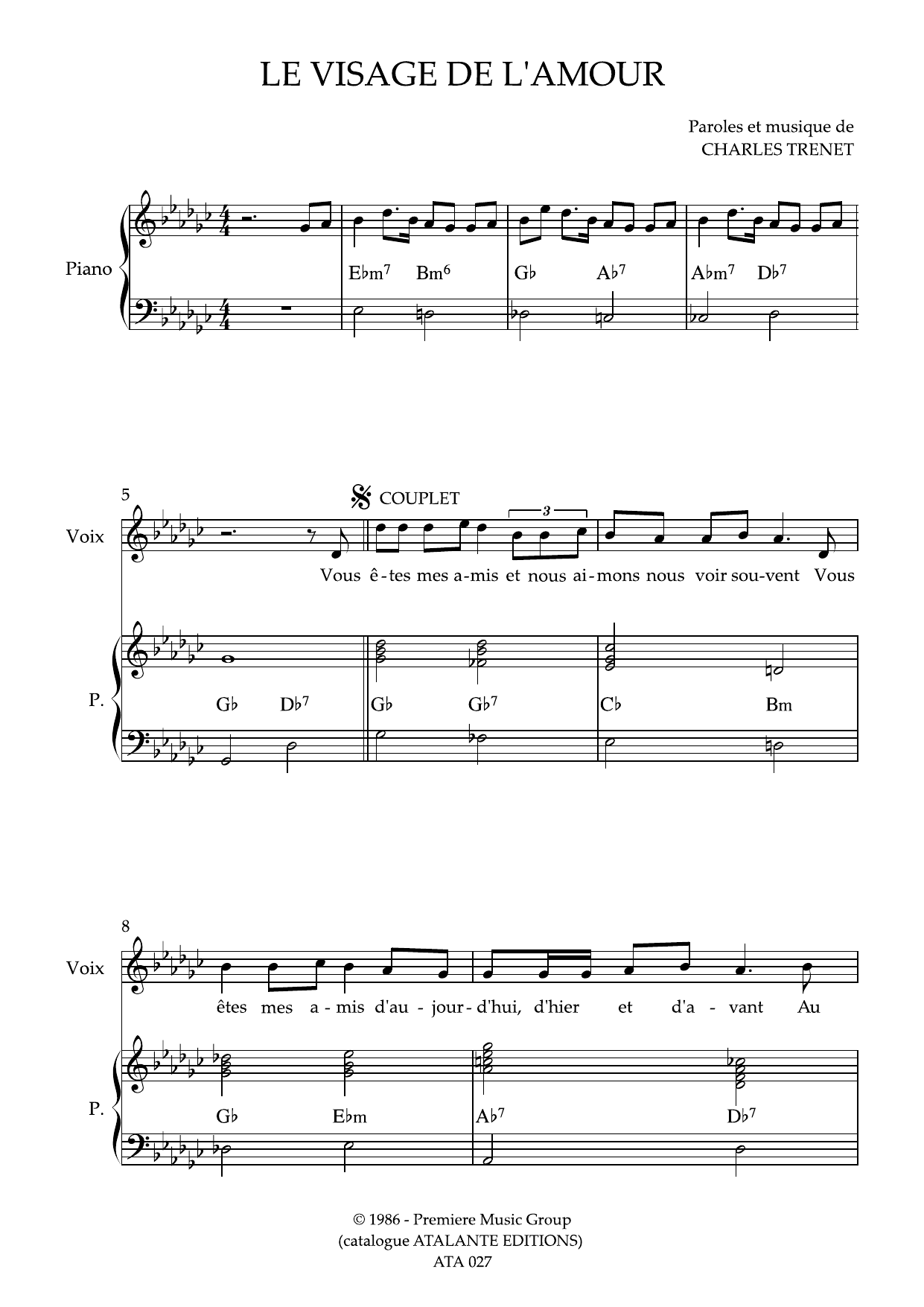
Le visage de l'amour: Piano Vocal

As performed by Charles Trenet

Item: 35-DS01953020

Digital Download
$5.99
Description

Le visage de l'amour: Piano Vocal isn't in MakeMusic Cloud just yet...but it could be. Let us know you'd like to see it, and you'll help shape what comes next. In the meantime, start a free trial and dive into thousands of interactive titles your students can play along with today.

Sample Audio
No sample audio found.
Sample Video
Additional Details
Publisher: Hal Leonard
Page Count: 5
SKU: 35-DS01953020

More about this title

About the Artist: Charles Trenet

Charles Trenet (1913–2001) was a French singer, songwriter, and pianist whose whimsical charm and melodic gift made him one of the most beloved entertainers of the twentieth century. His light, conversational vocal style and sophisticated harmonic sensibilities influenced generations of French pop and cabaret musicians, and his songs remain staples for vocalists studying the intersection of popular song and classical elegance.

Why we love this

Trenet's melodies sit perfectly in the voice without feeling manufactured. The piano part is idiomatic and supportive rather than showy, making this accessible for student pianists while remaining musically substantive. It's an excellent way to introduce singers to French popular song without the weight of operatic demands.

What to expect

Tender and reflective, with a gentle sophistication that evokes an intimate moment rather than a grand declaration. The music feels like conversation set to melody, unhurried and genuinely felt.

Who it's for

Vocalists developing their French song repertoire and pianists seeking accessible but musically rewarding accompaniment material. This works well for singers exploring cabaret or art song contexts beyond classical art song traditions.

How to get the most out of it

  • Lean into the conversational quality of the melody. Trenet's gift was making complex emotions feel effortless, so resist the urge to oversell the sentiment.
  • Let the piano accompaniment breathe between vocal phrases rather than rushing to fill silence. The space is part of the charm.
  • Pay attention to the French text and its natural rhythm. Setting the words correctly will unlock the phrasing far more effectively than imposing an English translation's meter.

How to use it

Pair this with other French popular song standards for a recital section that celebrates twentieth-century chanson, or use it as a bridge piece between classical vocal repertoire and contemporary music in a mixed program. Its modest length and intimate character make it ideal for opening a set or offering a moment of contrast.

Skills your students will build

  • French diction and its relationship to musical line
  • Balancing vocal melody with piano accompaniment in intimate settings
  • Interpretation of twentieth-century popular song traditions
  • Pedal control for sustaining harmonic color without muddying clarity

You May Also Like