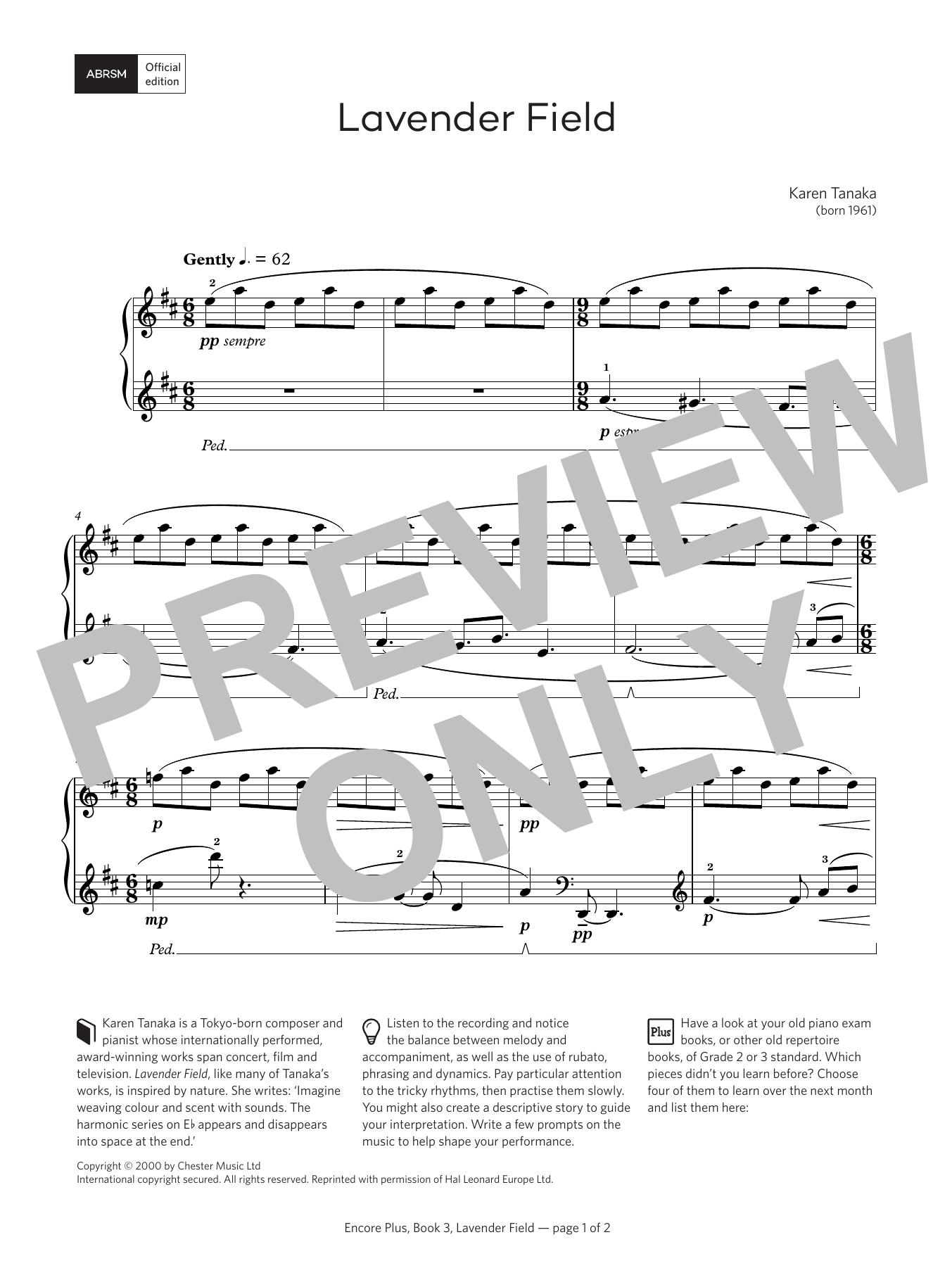
Karen Tanaka is a contemporary composer whose works blend lyrical melodic writing with accessible harmonic language, making her pieces particularly valuable for piano pedagogues seeking repertoire that engages intermediate students without overwhelming them technically. Her compositional voice consistently emphasizes the singing quality of the piano, encouraging students to think beyond note-playing toward genuine musical expression.
Why we love this
Tanaka captures something genuinely poetic here without requiring virtuosic fingerwork, which means Grade 6 students can focus entirely on color, phrasing, and the subtle emotional arc of the piece. The two-page format respects young pianists' stamina while delivering a complete musical thought that feels substantial enough to program confidently in recitals.
What to expect
Evocative and calm, evoking the gentle sway of flowers in a breeze. The piece creates an impressionistic landscape through repetition and subtle harmonic shifts, encouraging the pianist to paint with tone color rather than dramatic gesture.
Who it's for
Grade 6 pianists ready to explore character-driven repertoire that rewards sensitive interpretation. This piece suits students who play securely at the intermediate level but may still be building confidence in pedal technique and rubato.
How to get the most out of it
Build the dynamic shape gradually across the opening section; resist the urge to rush into the piece's fuller passages before establishing the quieter landscape.
Listen for the interplay between melody and accompaniment patterns; they should feel like a conversation rather than separate elements competing for attention.
Pay attention to pedal changes at phrase boundaries to avoid muddiness while preserving the sustained harmonic wash the title suggests.
Shape smaller moments of rubato within a steady overall pulse; let the music breathe without becoming unclear rhythmically.
How to use it
This works beautifully as a recital opener or a quiet interlude between more energetic pieces; its lyrical character serves composers like Kabalevsky or Burgmüller well when programmed alongside their works. It also fits naturally into late-spring studio recitals, particularly in themed programs exploring nature or twentieth-century miniatures.
Skills your students will build
Pedal technique and sustain control
Shaping longer lines with minimal harmonic change
Color variation through touch and voicing
Rubato within a steady underlying pulse
Reading and performing contemporary compositional language
You May Also Like
Scan to Complete Your Purchase
Use your phone's camera to scan the code below
You'll log in on your phone and the order will be added to your account