
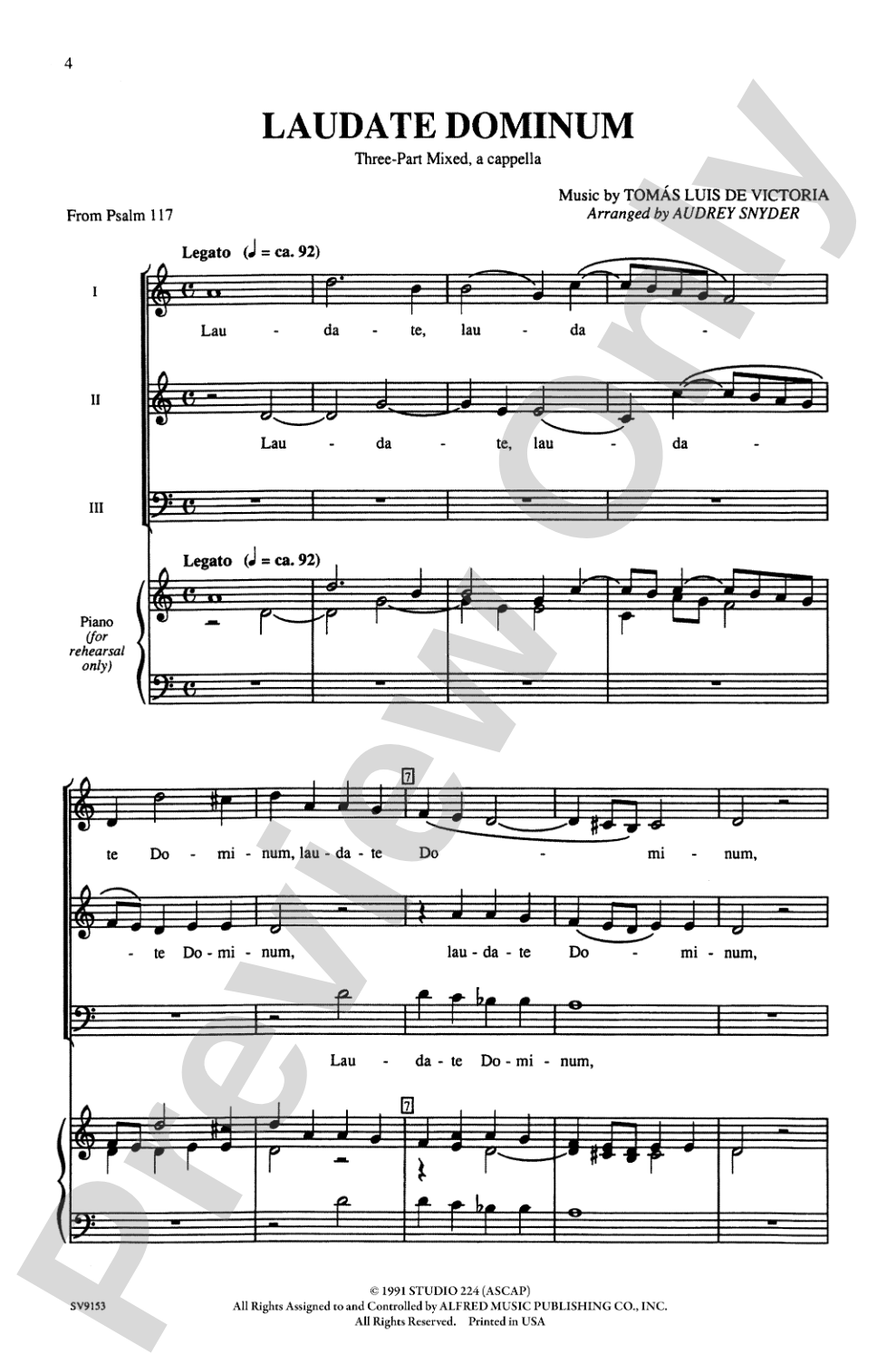

Laudate Dominum: 3-Part Mixed, a cappella Choral Octavo
By Tomás Luis de Victoria / arr. Audrey Snyder
Level: Moderately Easy
Item: 00-PO-0005224
$2.25
Minimum order quantity: 20 copies
Pickup currently not available
Related Items
Laudate Dominum: 3-Part Mixed, a cappella Choral Octavo |
$2.25
|
View |
Description
Victoria, one of Spain's finest composers of the Renaissance, has been immortalized for his combination of melodic lines which weave beautiful tonal tapestries. This work, in our Easy Choral Masterworks series, is very short and accessible for young voices. Perfect for concert or contest.


Laudate Dominum: 3-Part Mixed, a cappella Choral Octavo isn't in MakeMusic Cloud just yet...but it could be. Let us know you'd like to see it, and you'll help shape what comes next. In the meantime, start a free trial and dive into thousands of interactive titles your students can play along with today.
Request This Title
Tell us you want it.
Start Your Free Trial
Explore everything that's ready to play right now.
Sample Audio
No sample audio found.
Sample Video
No sample videos found.
Additional Details
Series:
Alfred Archive Edition: Studio PR Catalog
Publisher:
Alfred Music
Page Count:
8
SKU:
00-PO-0005224
More about this title
About the Composer: Tomás Luis de Victoria
Tomás Luis de Victoria (1548-1611) stands among the towering figures of Renaissance sacred music, a Spanish master whose output rivaled that of his better-known contemporaries Palestrina and Lassus. Working primarily in Rome and later in Madrid, Victoria developed a compositional language of remarkable emotional depth, blending technical mastery with spiritual directness. His music shaped Catholic liturgical practice for generations and remains a touchstone for understanding how Renaissance polyphony could achieve both intellectual rigor and profound accessibility.
Victoria's genius lay in his gift for vocal writing. His melodic lines sing naturally across any voice type, his harmonic progressions feel inevitable yet fresh, and his structural choices never waste a note. For music educators, his works offer students a gateway into masterwork-level composition without requiring the leaping vocal ranges or harmonic complexity that can intimidate young singers. Every piece teaches something true about how music works.
Why we love this
Audrey Snyder's arrangement respects Victoria's melodic integrity while landing the piece squarely in the reach of young choirs. The 3-part voicing keeps textures transparent, letting singers hear how each line contributes to the whole. At eight pages with a length that fits easily into any concert program, this is the kind of masterwork that builds singers' ears without overextending rehearsal time.
What to expect
Serene and luminous. The three-part texture creates an open, almost translucent sound world where each voice line shines without clashing. There is no heaviness here, only the cool clarity of Renaissance spirituality rendered in a manageable, modern arrangement.
Who it's for
Young mixed choirs at the Grade 2 level who have developed basic blend and pitch control but benefit from guided repertoire exploration. This arrangement works equally well in middle school honor choirs, high school sight-reading festivals, and community or church choirs seeking Sacred music that challenges without intimidating.
How to get the most out of it
- Balance the melodic line across all three parts. Victoria weaves his musical ideas through different voices, so no single part should dominate; rotate attention during rehearsal to ensure singers understand when they carry the theme.
- Shape phrases through subtle dynamic shaping rather than obvious swells. A cappella singing can feel static if every phrase gets the same energy; let the text and musical line guide your rise and release.
- Tune the thirds and sixths carefully. Without instrumental support, intonation challenges reveal themselves immediately in Renaissance harmony; consider pausing to check vertical sonorities during rehearsals.
- Let silence speak. The space between phrases is part of Victoria's design; resist the urge to rush or breathe collectively in ways that diminish the stillness he creates.
How to use it
Place this among contrasting sacred or secular pieces to showcase your choir's range. At Grade 2, it's sophisticated enough to anchor a festival set or concert program and brief enough to leave room for pops, contemporary work, or longer dramatic pieces. It also translates beautifully into a liturgical or chapel service context.
Skills your students will build
- Reading three-part voicing in SAB configuration
- Singing with Renaissance harmonic language (thirds, sixths, open fifths)
- Maintaining intonation without instrumental support
- Sustaining phrase shapes through breath placement
- Balancing independent melodic lines within a unified texture