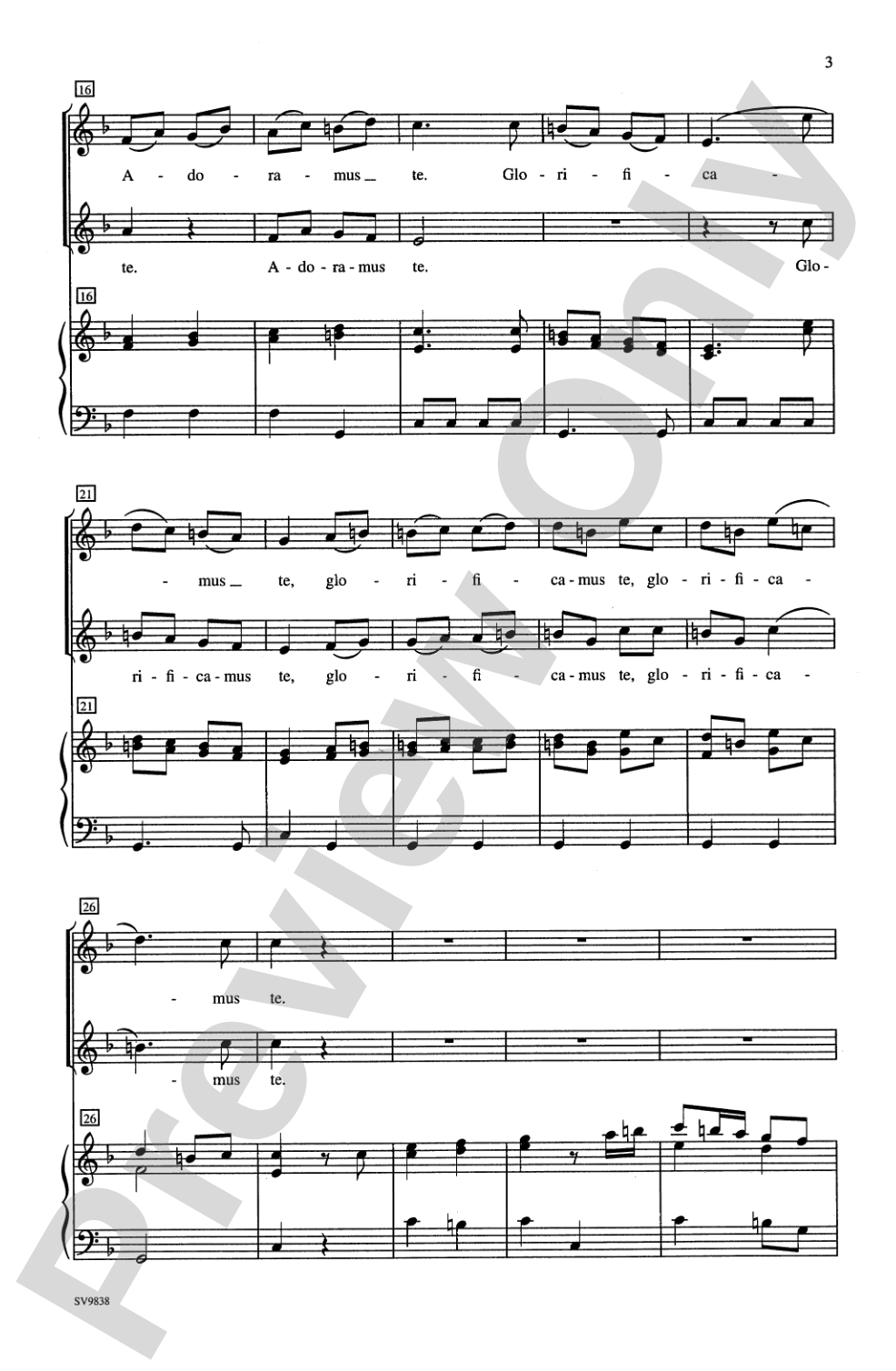
Laudamus Te (from <I>Gloria</I>) Sheet Music Preview

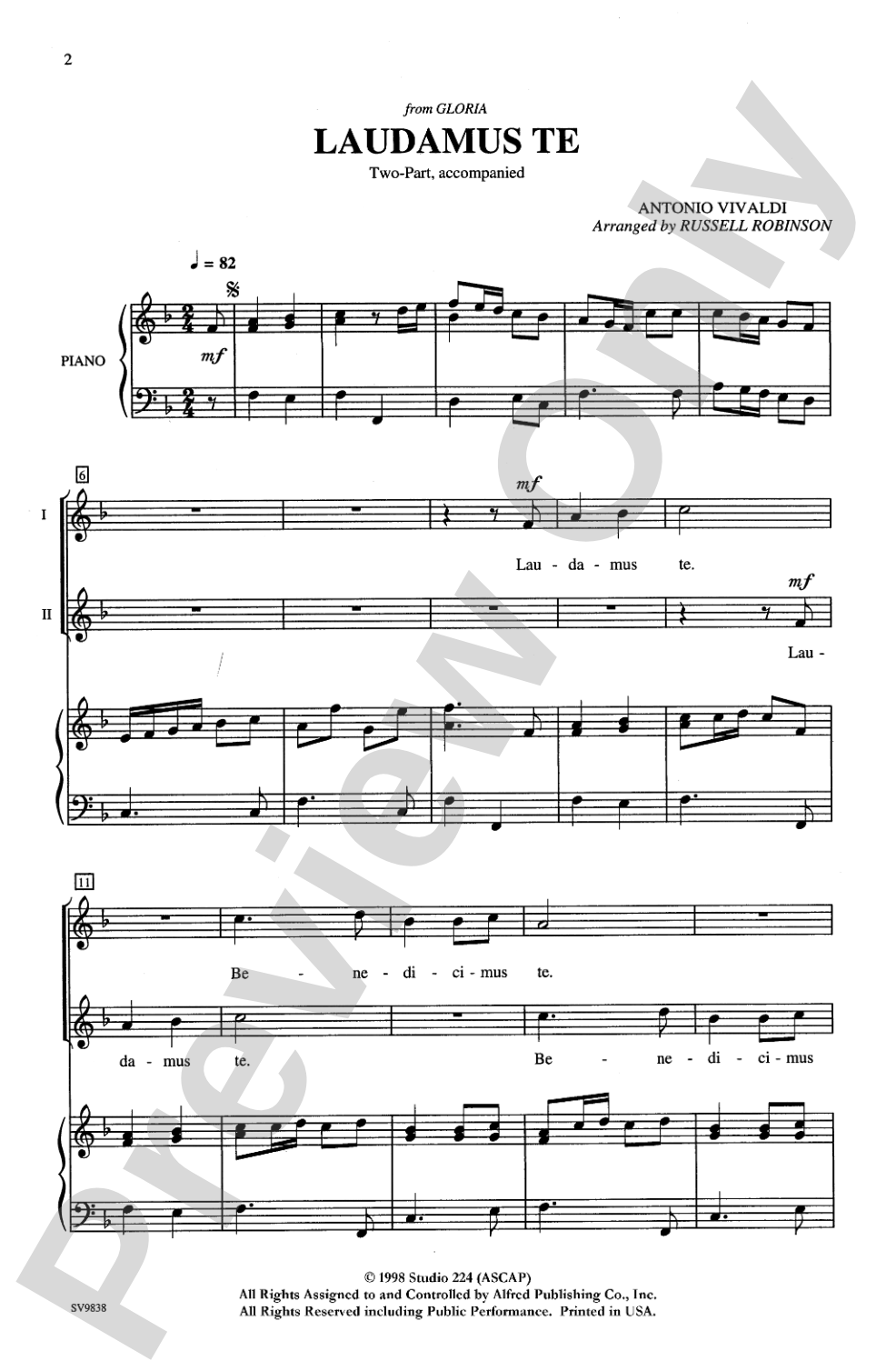
Laudamus Te (from Gloria): 2-Part Choral Octavo

From Gloria

By Antonio Vivaldi / arr. Russell Robinson

Item: 00-PO-0005286

Digital Download
$2.25

Minimum order quantity: 20 copies

Description
Dr. Russell Robinson has contributed this Vivaldi classic to our Easy Choral Masterworks series. Now young choirs (and even developing older choirs) can perform this staple of choral repertoire. A great performance choice while exposing your young students to the great works!

Laudamus Te (from Gloria): 2-Part Choral Octavo isn't in MakeMusic Cloud just yet...but it could be. Let us know you'd like to see it, and you'll help shape what comes next. In the meantime, start a free trial and dive into thousands of interactive titles your students can play along with today.

Sample Audio
No sample audio found.
Sample Video
Additional Details
Series: Alfred Archive Edition: Studio PR Catalog
Publisher: Alfred Music
Page Count: 8
SKU: 00-PO-0005286

More about this title

About the Composer: Antonio Vivaldi

Antonio Vivaldi (1678–1741) was a Venetian priest and virtuoso violinist whose prolific output shaped the Baroque concerto and established many conventions of instrumental writing that composers still follow today. His rhythmic vitality, harmonic clarity, and gift for memorable melody made his works instantly popular across Europe, and they remain central to music education because they demonstrate how to balance structural logic with immediate appeal.

Vivaldi composed over 500 works across nearly every genre of his era. His Four Seasons stands as perhaps the most recognizable Baroque music ever written, but his sacred vocal works, including the Gloria, reveal an equally masterful hand at writing for the human voice. The Gloria in particular showcases his ability to set Latin liturgical text with both dignity and exuberance, making it a natural choice for choirs seeking to build repertoire rooted in genuine musical tradition.

Why we love this

Russell Robinson's 2-part setting gives young singers immediate access to a work that typically requires more advanced choral skills, yet preserves the musical substance and character of Vivaldi's original. The arrangement maintains enough textural interest and harmonic color to feel like genuine Vivaldi rather than a watered-down version, making this a genuine stepping stone to the complete Gloria rather than a shortcut.

What to expect

Jubilant and ceremonial, with the brightness and forward energy characteristic of Baroque sacred music at its most festive. The piece moves with purpose and lift; even in moments of gentler texture, there is a sense of celebration and formal dignity that lifts singers' musicianship beyond the page.

Who it's for

Young choirs and developing singers seeking a Baroque masterwork that sits comfortably within their technical range, as well as conductors building a diverse choral library that includes genuine repertoire rather than only simplified teaching pieces. The 2-part voicing makes it accessible to middle school singers and to high school ensembles early in the fall rehearsal season.

How to get the most out of it

  • Shape each phrase with forward motion; Baroque phrasing thrives on gentle crescendos that build through the measure rather than sudden shifts in volume.
  • Balance the two parts so that neither dominates; young singers often push the melody too hard at the expense of harmonic support, which weakens the overall texture.
  • Articulate consonants clearly without losing legit singing tone, especially on repeated text syllables. This clarity is essential to the Baroque style.
  • Listen carefully to the harmonic rhythm beneath the melody line. When your singers understand where the chord changes happen, entrances and releases become more confident.

How to use it

This works beautifully as a concert opener or as a bridge between contemporary choral works and the larger Baroque repertoire your ensemble may tackle later. It also fills a natural programming slot for school festivals, competitions, and sacred music programs where you want something recognized and substantial without overwhelming developing singers.

Skills your students will build

  • Baroque articulation and phrasing conventions
  • Two-part harmonic listening and blend
  • Latin diction in a liturgical context
  • Reading accidentals and navigating minor key signatures
  • Sustaining longer melodic lines with appropriate breath placement

You May Also Like