

Laudamus Canon: 2-Part Choral Octavo
Music by Donald Moore
Item: 00-PO-0006522
$2.25
Minimum order quantity: 20 copies
Pickup currently not available
Description
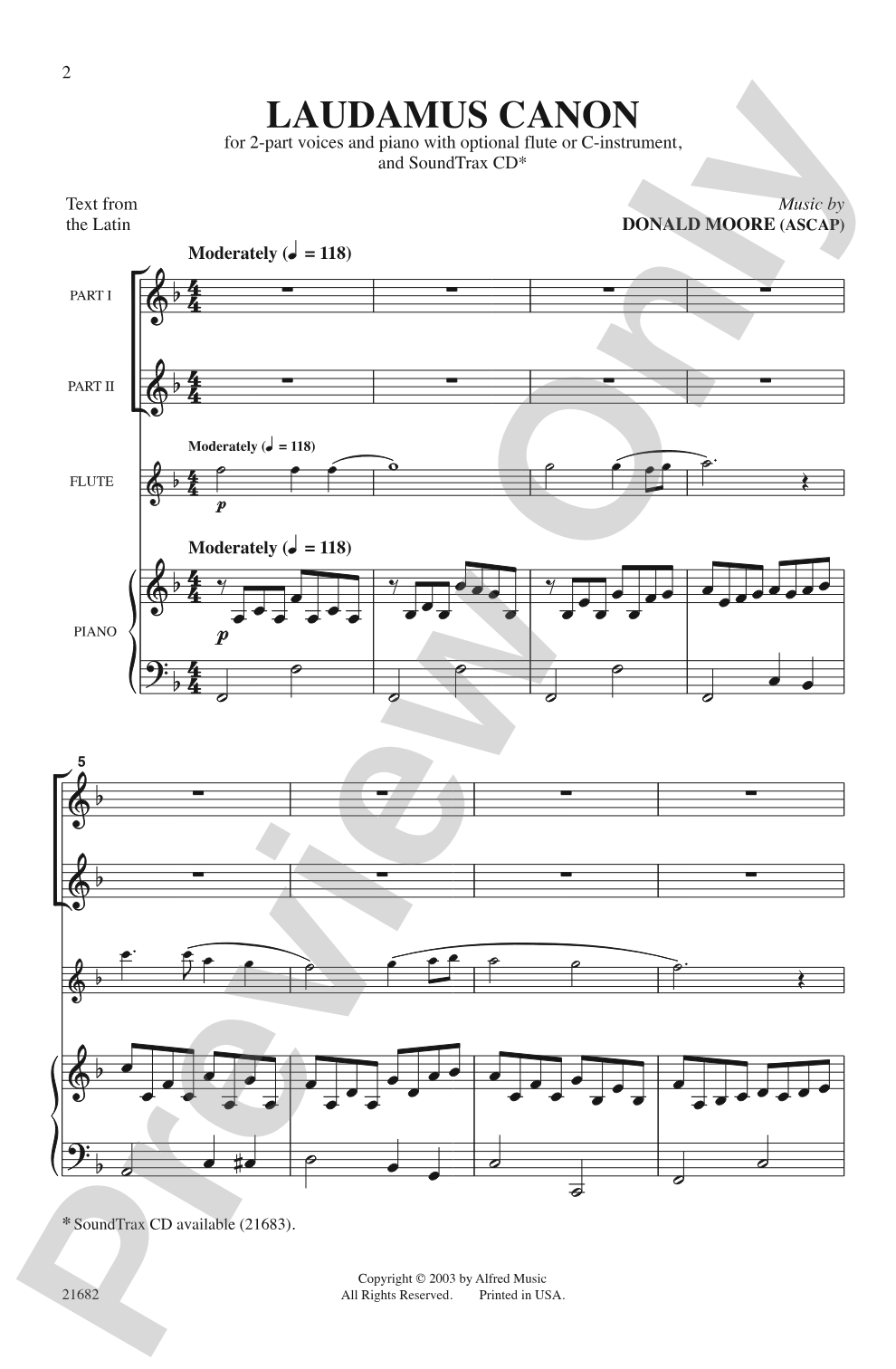
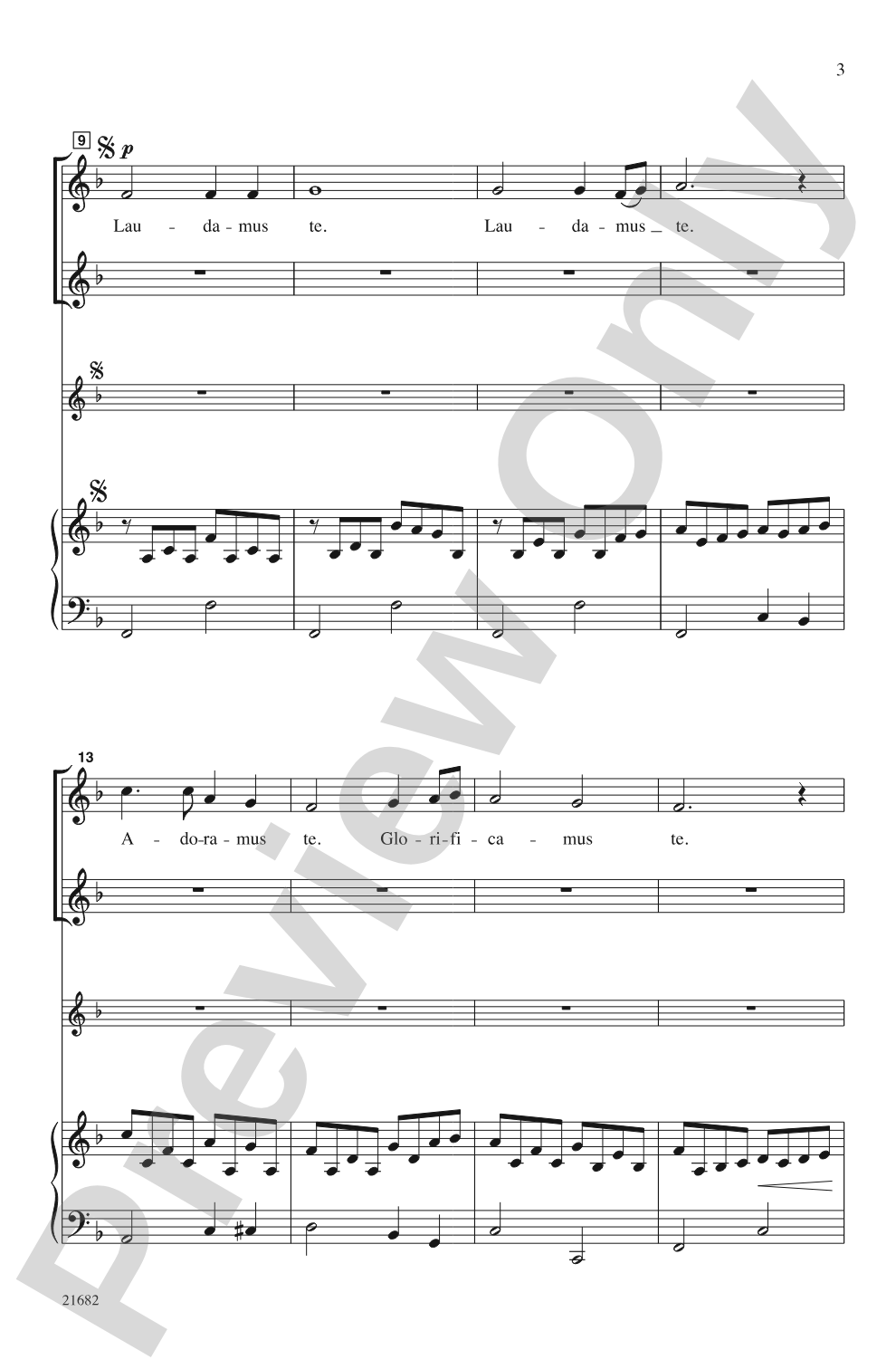
One of the most effective ways to develop part singing to your choir is through canon singing. And here is a lovely tune by Donald Moore that will not only build skills, but is also a terrific performance piece year round. The simple melody is first stated in the optional C-instrument (a gentle flute in our SoundTrax) and then passed through the independent voice parts, creating a light, graceful weave. Easy to learn with three simple Latin phrases (translation and pronunciation guide included), moderate vocal ranges, and a flowing, supportive piano accompaniment.


Laudamus Canon: 2-Part Choral Octavo isn't in MakeMusic Cloud just yet...but it could be. Let us know you'd like to see it, and you'll help shape what comes next. In the meantime, start a free trial and dive into thousands of interactive titles your students can play along with today.
Request This Title
Tell us you want it.
Start Your Free Trial
Explore everything that's ready to play right now.
Sample Audio
1
Audio File
--:--
0:00
0:00
Sample Video
No sample videos found.
Additional Details
Series:
Alfred Archive Edition: Alfred Choral Designs
Publisher:
Alfred Music
Page Count:
8
SKU:
00-PO-0006522
More about this title
About the Composer: Donald Moore

Donald Moore earned his Bachelor of Music in organ performance and Master of Arts in Teaching from Kent State University. He serves as Organist-Choirmaster at Pilgrim United Church of Christ in Cuyahoga Falls, Ohio, and has established himself as one of the most prolific composers working in choral music today, with over 500 published works across sacred, secular, educational, and pop genres.
Moore's compositions appear regularly at state and national music festivals and competitions. He has received the ASCAP Composers Standard Award seventeen times and was recognized by the American Choral Directors Association as one of 400 historically significant American choral composers. His catalog spans choral octavos, organ and piano works, and eight instructional books published through Alfred Music, Hal Leonard, Heritage Music Press, and other major houses.
Why we love this
Canon singing builds part independence faster than almost any other technique, and Moore's graceful tune makes the learning process genuinely musical rather than mechanical. The optional C-instrument introduction eases singers into their independent lines while the flowing piano accompaniment maintains confidence, making this effective for choirs still developing their ensemble blend.
What to expect
Light and buoyant, with a graceful weave of melody passing between voices. The simple Latin text and moderate range create an accessible entry point into sacred canon literature without sacrificing musical elegance or emotional presence.
Who it's for
Two-part choirs ready to tackle part independence but still developing confidence in singing separately. This works equally well in middle school treble choirs, adult volunteer ensembles, and high school two-part sections, provided singers have basic music reading skills.
How to get the most out of it
- Start with the optional C-instrument (or recorded flute) to establish the melody aurally before dividing into parts. Let singers hear the complete phrase they'll eventually sing independently.
- Work each voice part separately through the canon structure before attempting full performance. Mark the entry points clearly in each singer's score so no one misses their entrance.
- Use the Latin text pronunciation guide during rehearsal to ensure clear, unified vowel sounds across both voice parts, especially important since the piece relies on harmonic blend.
- Keep the tempo steady and slightly flowing; canon singing demands rhythmic confidence from every singer, so a supportive accompanist makes the difference between awkward and elegant.
How to use it
Program this as a filler or opening piece on any concert where you want to showcase growing part-singing skills without overwhelming the audience. The short length and joyful character make it ideal for variety within a longer concert, or as a standalone piece for spring or festival programming.
Skills your students will build
- Independent voice part singing and sustained line awareness
- Canon entry technique with rhythmic precision
- Latin diction and pronunciation
- Harmonic listening and blend within a two-part texture
- Confidence singing alone without relying on the other voice part