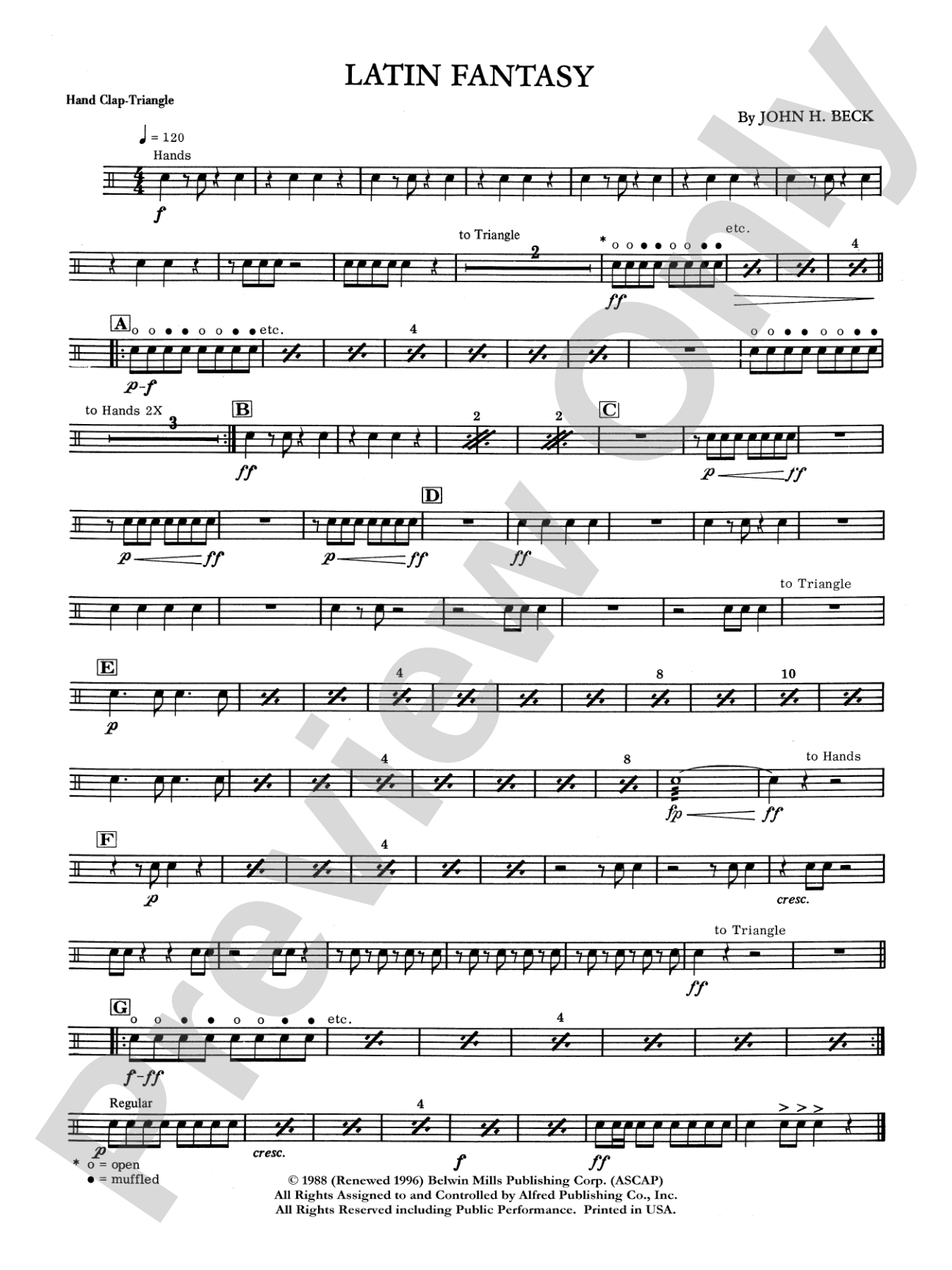
Latin Fantasy: Triangle Sheet Music Preview

Latin Fantasy: Triangle

For 6 Players

By John H. Beck

Level: Intermediate

Item: 00-PC-0016631_TRI

Digital Download
$3.00
Description
For six players. Instrumentation: bells, maracas, triangle, guiro, snare drum, timpani, hand claps.

Don't just read it, hear it, play along with it, and watch your students grow with it. In MakeMusic Cloud, Latin Fantasy: Triangle comes alive with professional accompaniment, adjustable tempo, and built-in practice tools that turn solo practice into real progress.

Sample Audio
No sample audio found.
Sample Video
Additional Details
Series: Percussion Ensemble Series
Publisher: Alfred Music
Page Count: 32
SKU: 00-PC-0016631_TRI

More about this title

About the Composer: John H. Beck

John H. Beck is a prolific composer and arranger with a distinguished career in music education. His extensive catalog spans instrumental and percussion ensemble literature, where he has become known for writing accessible yet musically rewarding pieces that engage students across ability levels.

Why we love this

Beck captures the infectious energy of Latin percussion without sacrificing musical substance. The piece balances rhythmic complexity with clear ensemble roles, giving every player meaningful material while keeping rehearsal time focused and productive.

What to expect

Latin Fantasy radiates joy and rhythmic vitality. The writing brings out the bright, percussive character of bells and maracas against the steady pulse of timpani and snare drum, creating a piece that feels celebratory without being simplistic.

Who it's for

This piece works well for intermediate percussion ensembles seeking vibrant, energetic material that showcases Latin styles. It suits programs looking to build rhythmic precision and ensemble cohesion while performing music with strong audience appeal.

How to get the most out of it

  • Establish the clave rhythm as your ensemble's heartbeat. Designate one player (typically guiro or maracas) to lead this foundation, and have everyone else lock into it during early rehearsals before layering additional parts.
  • Record a run-through at tempo and listen back as a group. Uneven rhythmic entrances often become obvious to student ears when they hear themselves, sparking self-correction without constant teacher intervention.
  • Balance the pitched percussion (bells and timpani) prominently in the opening sections. These voices carry melodic interest and help less experienced players track harmonic movement alongside the rhythm section.
  • Rehearse hand claps as a unified ensemble element, not a casual addition. Tight, synchronized claps anchor the groove and demonstrate to players how every voice contributes to the overall sound.

How to use it

This belongs on a spring or end-of-year concert where energy and variety matter. It pairs effectively with both classical percussion repertoire and contemporary pieces, and its accessible ensemble layout makes it a strong choice for showcasing a developing program to families and community.

Skills your students will build

  • Latin rhythmic patterns and clave-based thinking
  • Ensemble balance between melody, harmony, and rhythm
  • Coordination of different mallet techniques (mallets for bells, hands for timpani, brushes for snare)
  • Reading multiple percussion parts simultaneously and tracking ensemble entries
  • Call-and-response phrasing and rhythmic independence within a groove

You May Also Like