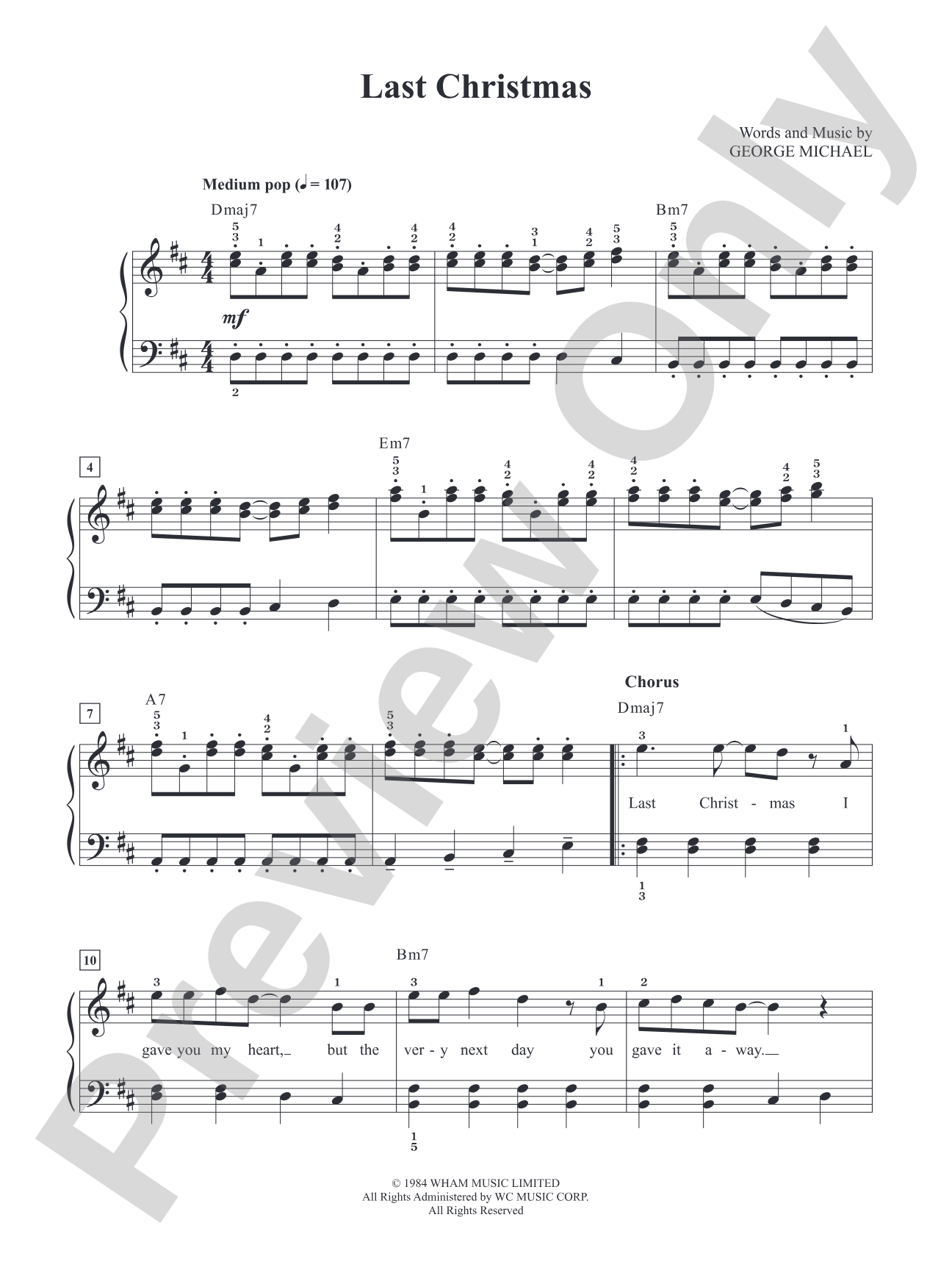
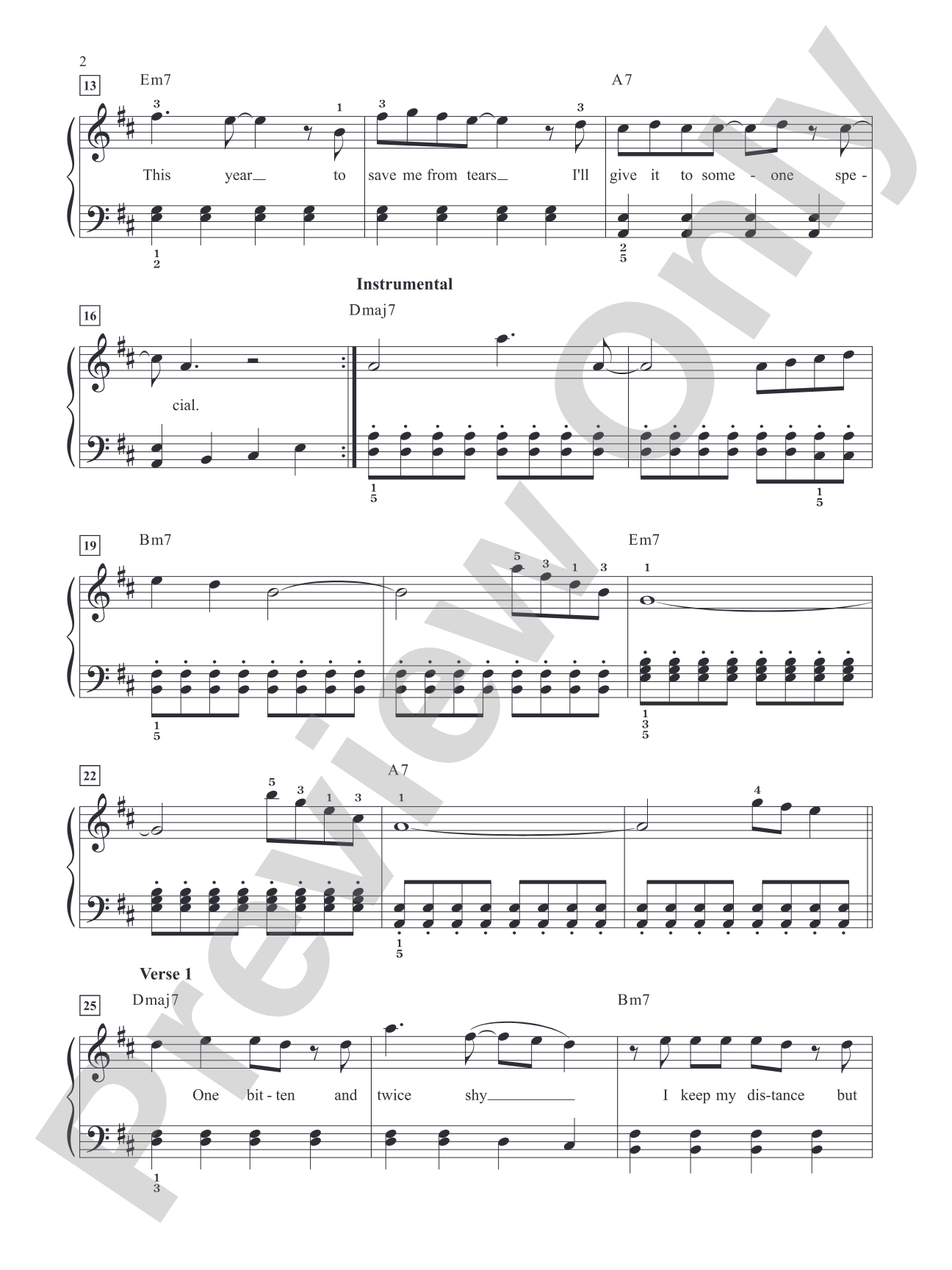
Classic holiday tune by English pop duo Wham!, from the single released in 1984. Correlates with Alfred's Basic Piano Library Level 3 and Premier Piano Course Level 3.
Discover MakeMusic Cloud: thousands of interactive titles your students can play along with today.
George Michael emerged as one of pop music's most distinctive voices, first gaining prominence as the lead vocalist of Wham! before establishing himself as a solo artist. His songwriting combined pop sensibility with genuine harmonic sophistication, and his vocal control set a standard for the genre. For music educators, his work offers students the chance to study how commercial pop songs can be constructed with real musicianship and integrity.
Why we love this
This arrangement captures the pop-rock energy of the original while staying true to intermediate pianists' technical capacity. The song's infectious melodic hook and straightforward harmonic movement make it engaging to learn, yet the arrangement preserves enough of the production's character that students feel they're playing a real song, not a simplification. It's the kind of piece that keeps students motivated during winter break work.
What to expect
Bright and propulsive, with an undeniable forward momentum that captures the single's radio appeal. The arrangement brings out the song's genuine melodic warmth while keeping things rhythmically playful, creating that blend of pop polish and human energy that made the original memorable.
Who it's for
Piano students in their second or third year of lessons benefit most from this piece, as do singers working with a pianist accompanist. It's equally useful for classroom ensembles or student performers preparing a winter concert.
How to get the most out of it
Anchor the rhythm section feel early in rehearsal. The groove drives the song, so lock in the kick-snare pattern before layering melody and vocal line.
Balance the vocal line so it sits naturally above the piano without drowning the accompaniment. This arrangement works best when there's conversation between the two, not dominance.
Let the repeated rhythmic figures breathe slightly. Resist over-pedaling the accompaniment; clarity matters more than wash in a pop context.
Bring warmth to the bridge section. This is where the arrangement typically opens up, so take a small breath and give it room to expand before returning to the main groove.
How to use it
Reserve this for a winter concert's lighter, more contemporary segment. It works particularly well when programmed between art-song arrangements or traditional carols, offering students and audiences a stylistic contrast that feels intentional rather than jarring. This arrangement also functions well as a confidence builder for intermediate students in a final-semester showcase.