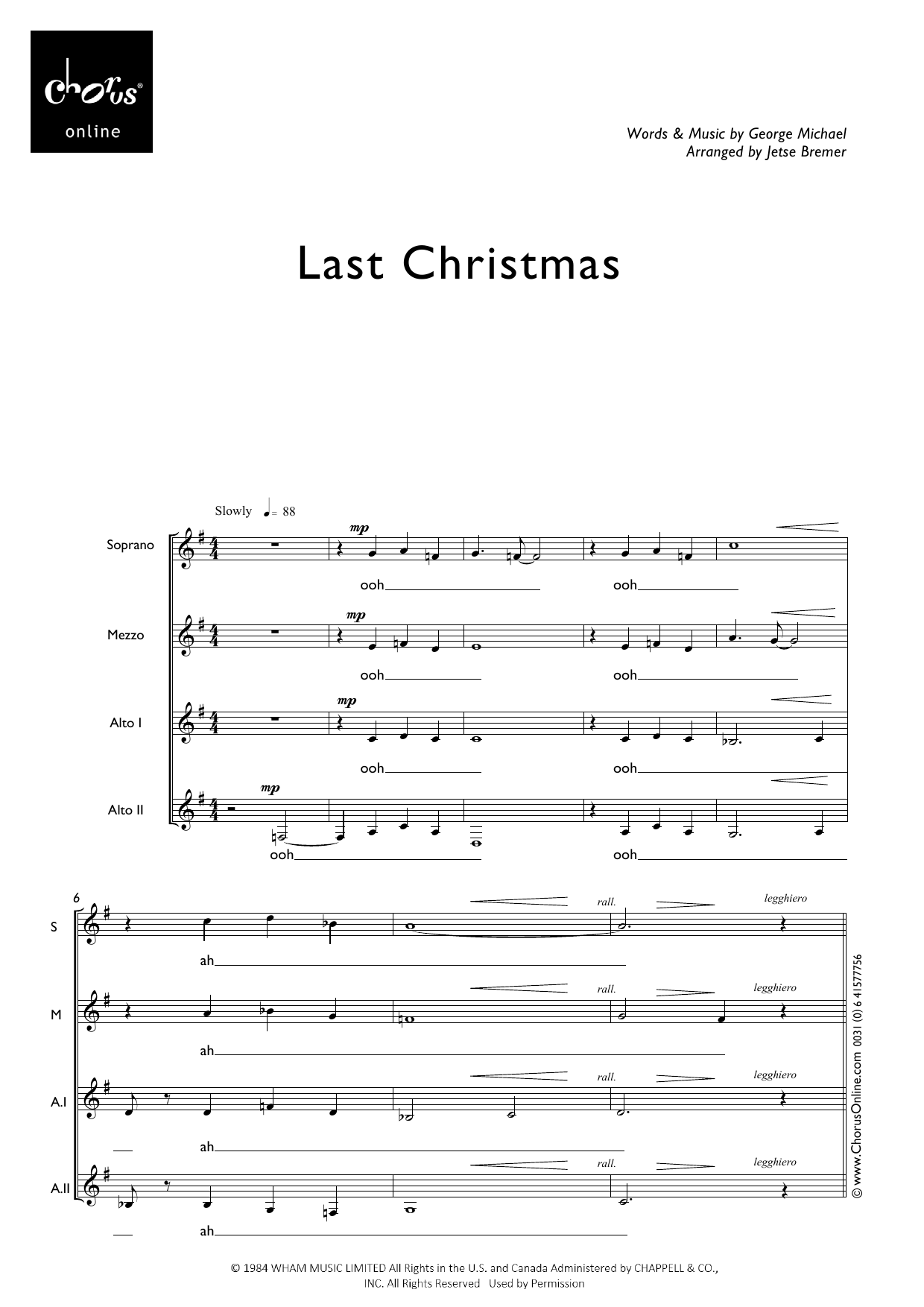
Last Christmas (arr. Jetse Bremer) Sheet Music Preview

Last Christmas (arr. Jetse Bremer): SSMMAA Choral Octavo

As performed by Wham! / Arranged by Jetse Bremer

Item: 35-DS00481509

Digital Download
$2.99

One moment…

Description

Last Christmas (arr. Jetse Bremer): SSMMAA Choral Octavo isn't in MakeMusic Cloud just yet...but it could be. Let us know you'd like to see it, and you'll help shape what comes next. In the meantime, start a free trial and dive into thousands of interactive titles your students can play along with today.

Sample Audio
No sample audio found.
Sample Video
Additional Details
Publisher: Hal Leonard
Page Count: 12
SKU: 35-DS00481509

More about this title

About the Artist: Wham!

Wham! emerged from the early 1980s British new wave scene as a duo that bridged pop accessibility with genuine musicianship. The group's infectious melodies and polished production became touchstones of 1980s pop, influencing generations of songwriters who followed. In music education, their catalog represents the best of melodically driven pop: hooks that stick with students, straightforward harmonic structures that serve arrangement well, and cultural relevance that validates popular music study in the classroom.

"Last Christmas" in particular has become a secular holiday standard, appearing in countless holiday concerts and seasonal programming. The song's enduring popularity makes it an ideal teaching tool for exploring how a well-crafted pop arrangement can maintain the integrity of an original while creating new challenges and opportunities for young singers.

Why we love this

Jetse Bremer's approach respects the song's iconic melody while creating genuine voicing challenges across six distinct parts. The arrangement avoids the trap of oversimplifying a pop standard, instead using the SSMMAA voicing to build harmonic depth that keeps singers engaged throughout a piece they already love.

What to expect

The piece carries the bittersweet warmth of the original song. That nostalgic, slightly melancholic undertone persists beneath the cheerful surface, making the arrangement feel sophisticated rather than novelty, and giving singers something emotionally genuine to sink into.

Who it's for

Holiday choirs preparing a secular Christmas concert will find this arrangement both accessible and musically substantial. Directors seeking pop arrangements that don't compromise musical rigor, combined with a piece their singers actually want to perform, will appreciate what Bremer has created here.

How to get the most out of it

  • Anchor the piece with the middle voices first. Once the two M parts lock the harmonic foundation, blend the upper sopranos and lower altos around that center, preventing the arrangement from sounding thin or overly breathy.
  • Shape the melody through strategic dynamic emphasis rather than uniform loudness. Identify which voice carries the primary tune in each section and let that voice breathe slightly forward without the others backing away entirely.
  • Rehearse the two soprano and two alto lines as separate sectionals before combining all six parts. The similar ranges can blur together in full-choir rehearsal, making it harder to hear balance problems.
  • Establish a clear articulation plan for sustained notes that recur across measures. Decide early whether singers refresh the attack or sustain cleanly through fermatas, then commit to it consistently.

How to use it

Slot this into a holiday concert to bridge your more traditional choral repertoire and contemporary pop selections. The 12-page length and SSMMAA voicing make it a substantial closer or opener that demonstrates your singers' versatility without requiring a full orchestration or accompaniment track.

Skills your students will build

  • Balancing independent melodic lines within a six-part texture
  • Identifying and sustaining harmonic function across spread voicings
  • Interpreting pop repertoire with musical intent rather than imitation
  • Blending multiple soprano and alto parts with distinct registers
  • Maintaining musical shape and phrasing in a cappella performance

You May Also Like