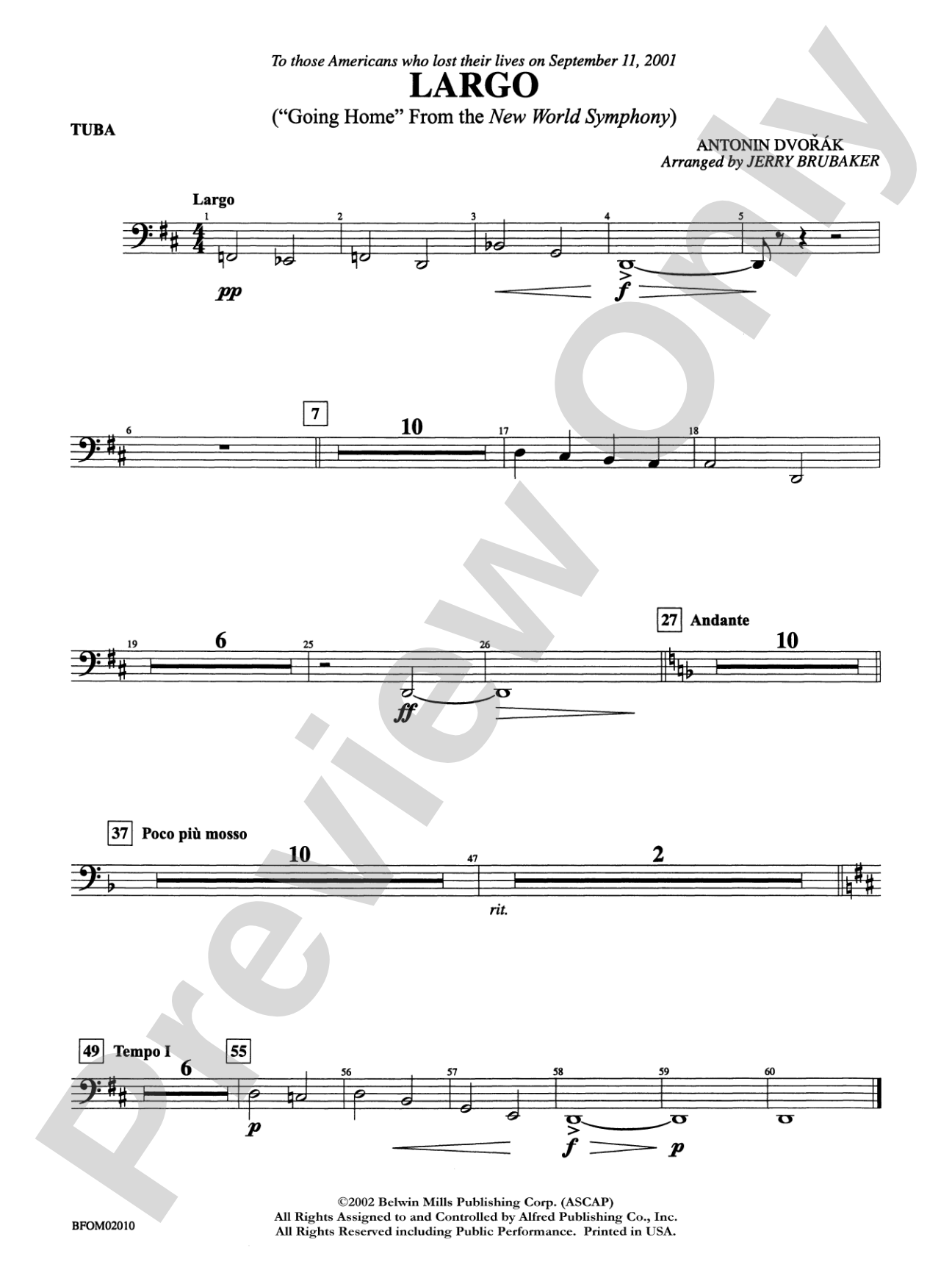
Largo ("Going Home" from the New World Symphony): Tuba Sheet Music Preview

Largo ("Going Home" from the New World Symphony): Tuba

By Antonín Dvorák / arr. Jerry Brubaker

Grade: 2.5

Item: 00-PC-0002233_TB1

Digital Download
$3.00
Description
Everyone remembers this Antonín Dvorák tune by its subtitle, "Going Home." This lush song is creatively scored with your intermediate orchestra in mind. Although there appear to be some exposed woodwind passages in this familiar melody, they are generously cross-cued so that the work is playable solely with strings and piano. A very warm rendition to be cherished for years to come. (5:35)

Don't just read it, hear it, play along with it, and watch your students grow with it. In MakeMusic Cloud, Largo ("Going Home" from the New World Symphony): Tuba comes alive with professional accompaniment, adjustable tempo, and built-in practice tools that turn solo practice into real progress.

Sample Audio
No sample audio found.
Sample Video
Additional Details
Series: Belwin Intermediate String/Full Orchestra
Publisher: Alfred Music
Page Count: 116
SKU: 00-PC-0002233_TB1

More about this title

About the Composer: Antonin Dvorák

Antonín Dvořák (1841, 1904) stands as one of the most successful composers of the Romantic era, bridging European classical tradition with the musical idioms of his native Bohemia. His gift for melody was unmatched; even his orchestral works sing with the directness and warmth of folk song, which made him beloved across concert halls in America and Europe alike.

Dvořák's time in the United States (1892, 1895) as director of the National Conservatory in New York produced some of his most enduring works, including the Symphony No. 9 in E minor, "From the New World." This symphony captures both the expansiveness of American landscape and the composer's homesickness for his homeland, a duality that continues to resonate with audiences and student musicians more than a century later.

Why we love this

This arrangement by Jerry Brubaker captures the emotional core of Dvořák's most recognizable melody while solving a genuine rehearsal problem: intermediate orchestras often lack the depth of wind players to tackle the original scoring. The intelligent cross-cueing means you can perform this with confidence regardless of your ensemble's instrumentation, and the result feels complete rather than compromised. Your students will connect immediately to music they already know, and audiences will leave the concert humming.

What to expect

Warm, introspective, and gently eloquent. The melody unfolds like a memory being shared; there's no rush, no urgency, just the simple beauty of a tune that feels both timeless and intimately personal. The orchestration gives the work breathing room, allowing each phrase to settle before moving to the next.

Who it's for

Grade 2.5 orchestras ready for repertoire with genuine emotional substance. This works equally well for ensembles with full wind sections and those relying primarily on strings, making it flexible across different program sizes. It's an excellent choice for conductors who want their students to engage with a masterwork without technical overreach.

How to get the most out of it

  • Balance the exposed woodwind solos carefully even though they're doubled; let them breathe and sing without excessive dynamic push from the strings underneath.
  • Shape the phrasing across longer arcs rather than stopping at obvious cadence points; Dvořák's melody begs for continuous line and gentle momentum.
  • Allow the piano part genuine presence in passages where strings are thinner; it anchors harmony and adds warmth to the texture.
  • Take time with the opening measures to establish the reflective character; resist the urge to move forward until the ensemble settles into the song's nostalgic mood.

How to use it

Position this as a concert centerpiece rather than filler; audiences respond powerfully to music they recognize. It pairs naturally with other Romantic-era works or can stand alone as a thoughtful contrast to more energetic selections. Consider programming it late in the second half of a concert, where its reflective character will land with full impact.

Skills your students will build

  • Sustaining long melodic lines across phrase boundaries
  • Balancing ensemble sound when principal voices shift between sections
  • Reading flexible cross-cues and selecting appropriate instrumental doublings
  • Responding to subtle dynamic and tempo nuance without losing structural clarity
  • Coordinating between strings and woodwinds in an arrangement that values both equally

You May Also Like