
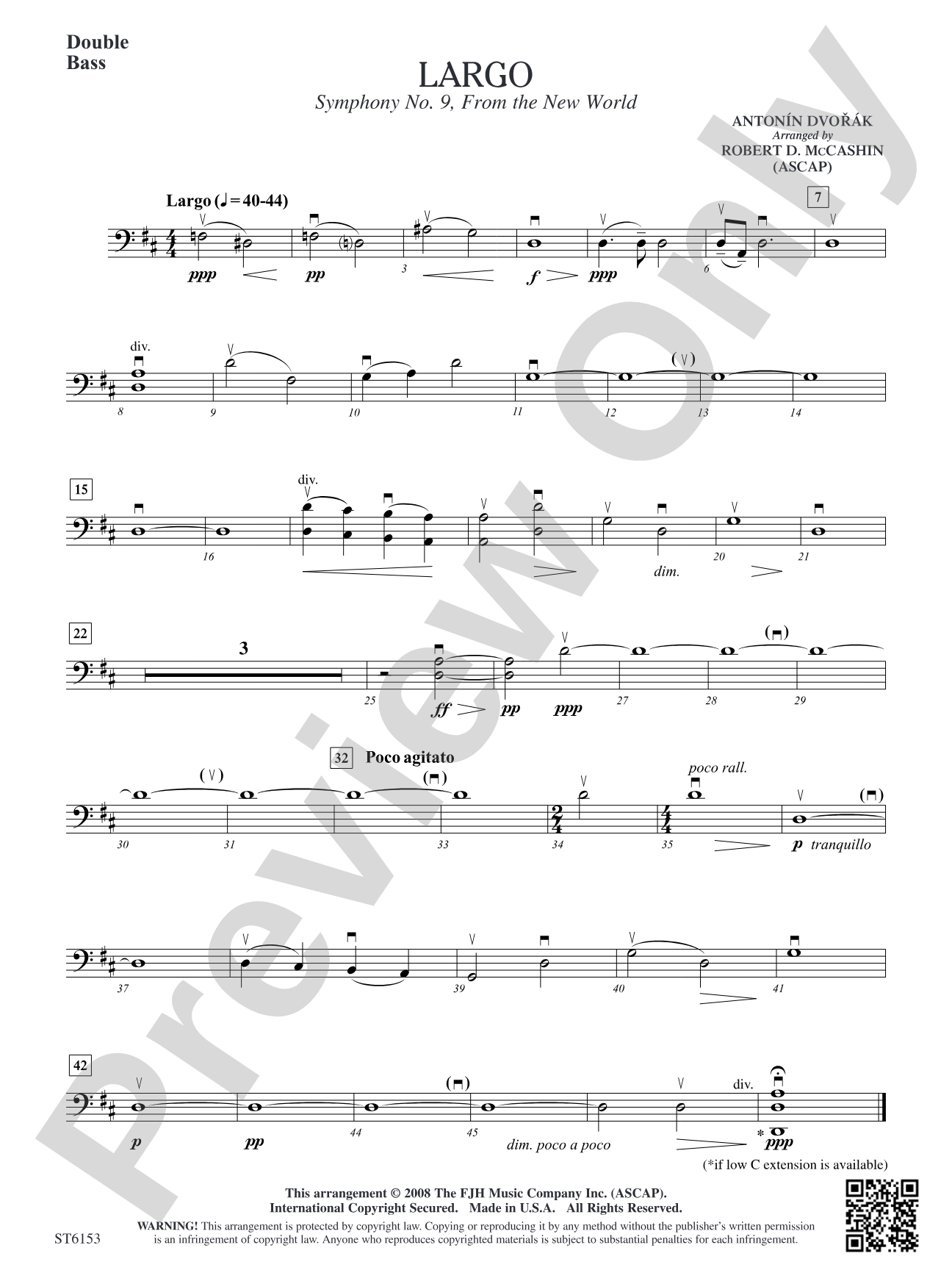

Largo (from Symphony No. 9, "From the New World"): Double Bass
from Symphony No. 9, "From the New World"
By Antonín Dvorák / arr. Robert D. McCashin
Grade: 3.5
Item: 98-PC-DST6153_SB
$7.00
Pickup currently not available
Description
This unique and thorough arrangement now fills the need of directors who have been looking for a more substantial yet playable version of Dvorák's beloved Largo. As always, McCashin has put a great deal of effort into making sure that other sections of the movement have been included in addition to the opening theme. The result is a wonderful and sonically rich arrangement that truly resembles the original yet is very approachable at the medium level. Lush!


Largo (from Symphony No. 9, "From the New World"): Double Bass isn't in MakeMusic Cloud just yet...but it could be. Let us know you'd like to see it, and you'll help shape what comes next. In the meantime, start a free trial and dive into thousands of interactive titles your students can play along with today.
Request This Title
Tell us you want it.
Start Your Free Trial
Explore everything that's ready to play right now.
Sample Audio
1
Audio File
--:--
0:00
0:00
Sample Video
No sample videos found.
Additional Details
Series:
FJH String Orchestra
Publisher:
The FJH Music Company, Inc.
SKU:
98-PC-DST6153_SB
More about this title
About the Composer: Antonin Dvorák
Antonín Dvořák (1841-1904) was a Czech composer whose gift for memorable melody and sophisticated orchestration made him one of the most performed symphonists of the late 19th century. His symphonies, chamber works, and concertos draw deeply from Czech folk traditions while maintaining the structural rigor of the Austro-German symphonic tradition, giving him rare appeal across musical cultures.
The "New World" Symphony, written during Dvořák's time in America (1892-1895), stands as his most universally recognized work. The famous Largo movement has become a touchstone for music education because it combines immediate emotional accessibility with genuine compositional sophistication, making it an ideal gateway to serious orchestral repertoire.
Why we love this
McCashin's arrangement respects the harmonic and melodic integrity of Dvořák's original while scaling the orchestration to a size your players can actually manage. Rather than strip the movement down to its most famous tune, this version includes substantial thematic material from the broader movement, giving students the experience of playing a real compositional arc instead of an isolated excerpt.
What to expect
Meditative and spacious, with the kind of warm, singing quality that comes from Dvořák's genius for sustained melody. The harmonic language suggests depth and longing without asking for technical virtuosity; this is music that rewards patience and attention to tone quality from every stand.
Who it's for
Intermediate string orchestras (Grade 3.5) that want substantial concert repertoire without sacrificing playability. This arrangement works well for directors seeking to expose developing string players to authentic symphonic masterworks and for programs needing a centerpiece that earns the audience's attention.
How to get the most out of it
- Shape the opening melody with gentle dynamic waves; the Largo thrives on breath and phrase rather than relentless uniformity. Let the first violins lead, and respond with complementary dynamic support from the lower voices.
- Balance is critical when multiple sections carry thematic material. Use rehearsal markings to identify where the primary theme lives at any moment, and remind players of their accompanying role when they're not leading.
- Work the harmonic progression deliberately. This piece's emotional power comes from Dvořák's rich chord movement, so make sure inner voices are audible and sustained with steady tone.
- Establish a clear, unhurried tempo at the start and maintain consistency; rushing the slow sections undermines the contemplative character that makes this movement resonate with audiences.
How to use it
Program this as a concert anchor or finale. The Largo commands the listener's full attention and benefits from quiet, focused programming around it. It also works beautifully as a bridge between contrasting sections of a concert, offering a moment of genuine reflection that resets the emotional temperature of the evening.
Skills your students will build
- Sustaining long phrases with consistent vibrato and tone quality
- Reading and responding to subtle dynamic shadings and harmonic movement
- Following the melody through ensemble redistributions (recognizing when the theme moves to a different section)
- Playing inner voices with presence and clarity rather than as mere accompaniment
- Understanding the relationship between phrase structure and breathing in slow movements