Largo from Symphony No. 9: B-flat Clarinet 1 Sheet Music Preview

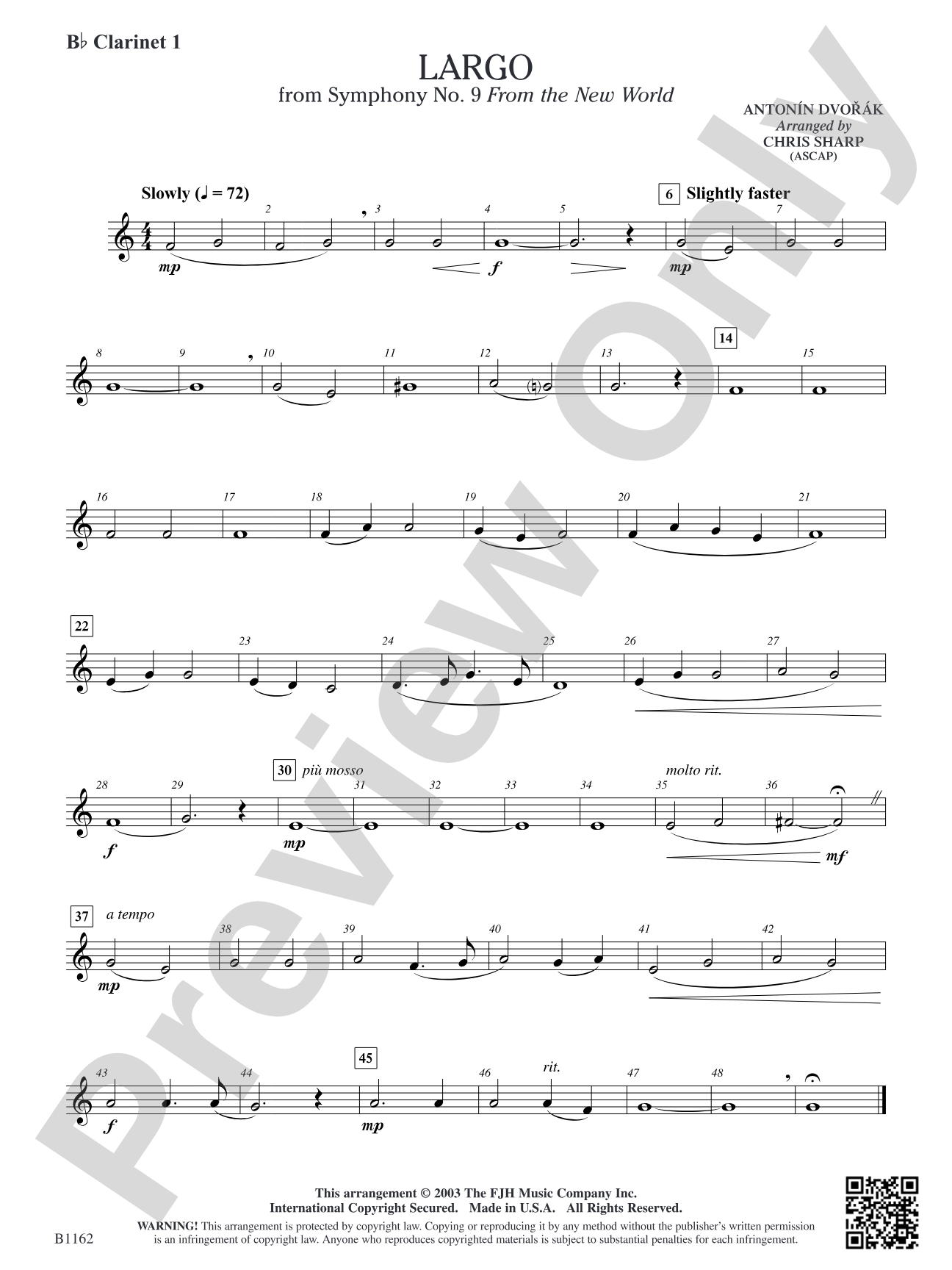
Largo from Symphony No. 9: B-flat Clarinet 1

By Antonín Dvorák / arr. Chris Sharp

Grade: 1

Item: 98-PC-DB1162_C1

Digital Download
$7.00
Description
The largo theme from Dvorák's New World Symphony is arguably one of the most famous melodies in classical literature. This delightful setting by Chris Sharp is appropriate for bands at any level, and is ideal for teaching literature and musicality with the same piece. An outstanding work at the beginning band level that you will want to hear.

Largo from Symphony No. 9: B-flat Clarinet 1 isn't in MakeMusic Cloud just yet...but it could be. Let us know you'd like to see it, and you'll help shape what comes next. In the meantime, start a free trial and dive into thousands of interactive titles your students can play along with today.

Sample Audio
0:00
0:00
Sample Video
Additional Details
Series: FJH Beginning Band
Publisher: The FJH Music Company, Inc.
SKU: 98-PC-DB1162_C1

More about this title

About the Composer: Antonín Dvorák

Antonín Dvorák spent much of his career in Prague but found himself drawn to America, where he served as director of the National Conservatory of Music in New York from 1892 to 1895. During this period, he absorbed American musical idioms, folk traditions, and the spiritual music he encountered, channeling them into some of his most enduring works. His Symphony No. 9 in E minor, subtitled "From the New World," stands as his most frequently performed symphony and remains central to the concert repertoire.

Dvorák's gift for melody runs through everything he wrote. His ability to craft themes that feel both sophisticated and immediately accessible made him one of the most performed composers of his era, and his work continues to anchor music education because it demonstrates how serious compositional craft can speak to listeners of any age or experience level.

Why we love this

This arrangement captures one of classical music's most recognizable melodies in a setting that respects both the source material and the capabilities of early ensembles. Sharp's orchestration allows each section to carry the tune at different moments, building ownership across your band while maintaining the warmth and dignity of the original. It's the kind of piece that reminds students why they started playing music in the first place.

What to expect

Serene and introspective, with the quality of a folk tune that feels ancient even on first hearing. The melody unfolds with gentle inevitability, inviting players to listen to themselves and each other rather than race through the page.

Who it's for

Beginning band students ready to experience standard orchestral literature without struggling with technical demands. This works equally well for adult community bands, all-city groups, or any ensemble building a foundation in tone and phrasing. Directors often return to this piece because it teaches musicality as effectively as rhythm and fingering.

How to get the most out of it

  • Shape the phrase in longer arcs rather than chopping it into smaller segments. Even at Grade 1, students can sustain a lyrical line by thinking ahead to where the phrase wants to resolve.
  • Balance the melody against the accompaniment carefully; the inner voices should support without overwhelming. A light touch in the harmonies lets the tune breathe.
  • Keep the tempo steady and unhurried. Resist the urge to slow down as students focus on intonation or precision; a confident pulse actually helps both.
  • Use dynamic contrast to shape the architecture. If the piece peaks once or twice, let those moments register by pulling back slightly elsewhere.

How to use it

Open a concert with this to establish a reflective mood, or pair it with other Dvorák arrangements to show his range. It also serves as an excellent literature study piece, giving students access to symphonic thinking without the complexity of a full reduction.

Skills your students will build

  • Sustaining long melodic phrases with consistent air support
  • Balancing written dynamics to support harmonic movement
  • Listening across the section to maintain ensemble blend
  • Recognizing and interpreting legit articulation in early band context
  • Connecting melodic shape to harmonic function

You May Also Like