
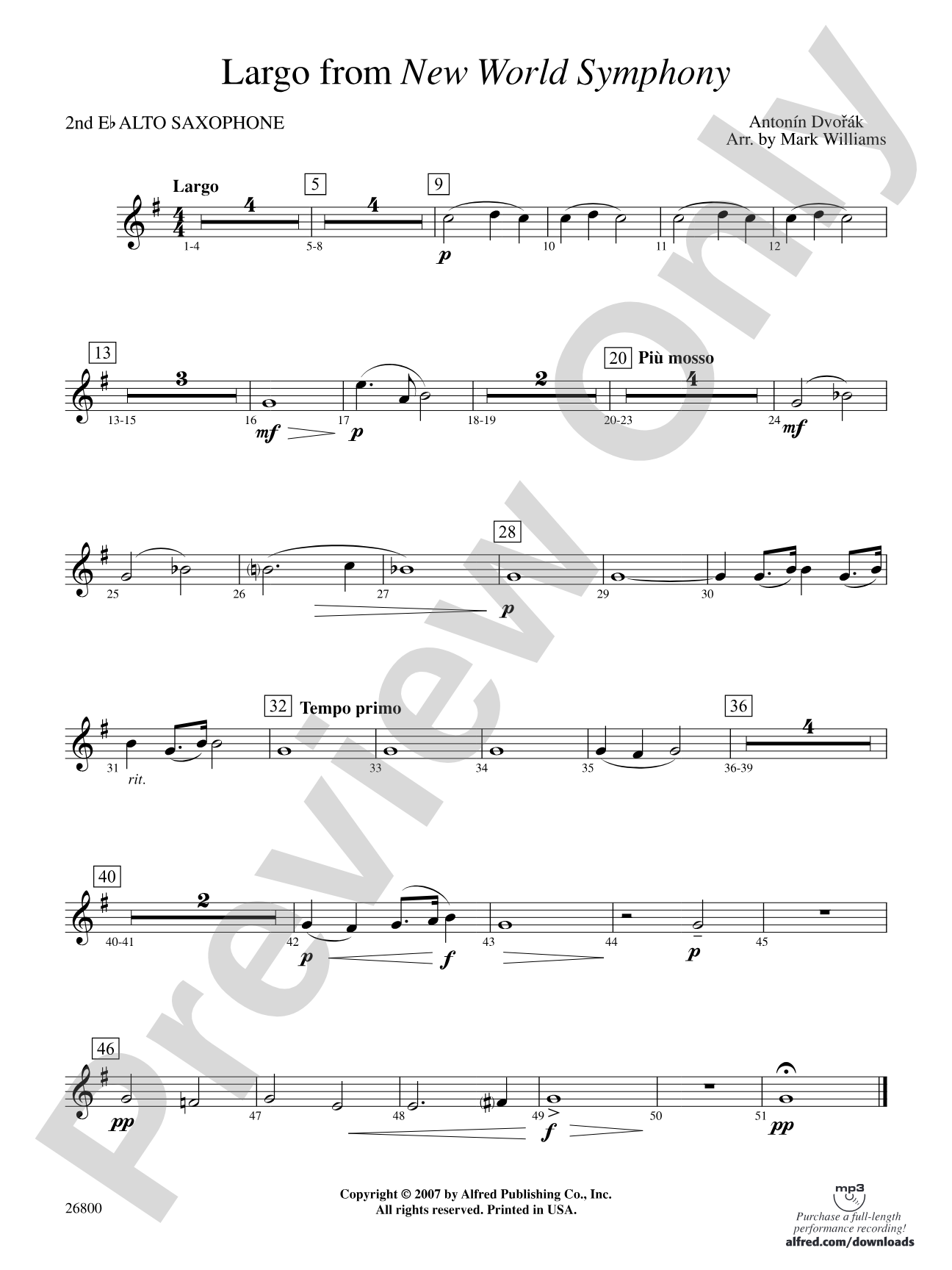

Largo from New World Symphony: 2nd E-flat Alto Saxophone
By Antonín Dvorák / arr. Mark Williams
Grade: 1.5 (Easy)
Item: 00-PC-0001238_AX2
$3.00
Pickup currently not available
Description
Here's the famous symphonic theme from Dvorák's Symphony No. 9 (known with added lyrics as "Goin' Home") artfully arranged for young bands. Colorful percussion writing and melodic opportunities for the low brass make this a first-class choice for expanding your students' knowledge of the classical repertoire. Highly recommended! This title is available in MakeMusic Cloud.


Don't just read it, hear it, play along with it, and watch your students grow with it. In MakeMusic Cloud, Largo from New World Symphony: 2nd E-flat Alto Saxophone comes alive with professional accompaniment, adjustable tempo, and built-in practice tools that turn solo practice into real progress.
Open in the Player
Jump straight in and assign it today.
Start Your Free Trial
Open this title and explore the full library in minutes.
Sample Audio
1
Audio File
--:--
0:00
0:00
Sample Video
No sample videos found.
Additional Details
Series:
Challenger Band Series
Publisher:
Alfred Music
Page Count:
62
SKU:
00-PC-0001238_AX2
More about this title
About the Composer: Antonin Dvorák
Antonin Dvorák (1841-1904) stands as one of the Romantic era's most gifted melodists, a Czech composer whose gift for lyrical writing secured his place in concert halls worldwide. His ability to weave folk idioms and singable themes into large-scale forms made him especially valued by educators; his symphonies, concertos, and chamber works remain teaching staples because they balance accessibility with genuine artistic depth.
Dvorak spent much of his career bridging European and American musical traditions. His time in the United States (1892-1895) produced some of his most enduring works, including the Symphony No. 9, from which this Largo emerges. The melody's later pairing with the text "Goin' Home" speaks to its universal appeal; students recognize it immediately, and that recognition opens doors to deeper engagement with classical form and orchestration.
Why we love this
Mark Williams captures the lyrical soul of this iconic melody while keeping the scoring transparent and rewarding for Grade 1.5 players. The colorful percussion writing adds sophistication without overcomplicating, and distributing the theme across low brass ensures that your less-experienced players get moments to shine rather than sit silent through a familiar masterpiece.
What to expect
The Largo unfolds with the unhurried grace of a hymn, its melody soaring above gentle harmonic support. There's warmth and openness throughout, a quality that invites the listener to settle in and simply listen. The orchestration never crowds the tune; instead, it creates space around the melody so the line can breathe and sing naturally.
Who it's for
This arrangement belongs in the repertoire of any beginning or intermediate concert band. It works equally well for young students encountering a classical masterwork for the first time and for more advanced ensembles looking to add a proven crowd-pleaser to a concert program.
How to get the most out of it
- Establish a singing tone in the opening statement of the melody. Even at this grade level, students should hear and feel the breadth of this theme; it's not a march-like figure, and the tempo should reflect its hymn-like character.
- Balance the low brass solos carefully against supporting harmonies. The trombone and euphonium passages are melodically important, so check that accompaniment voices stay subordinate during these moments.
- Shape phrase endings with slight ritardando and dynamic tapering, especially before section returns. Dvorák's melodic writing rewards gentle breath and space.
- Use the percussion writing as a guide for overall ensemble texture. Where percussion marks a transition or provides rhythmic punctuation, the winds should lighten their articulation to let those colors emerge.
How to use it
Pair this with other classical or Romantic-era transcriptions to build a thematic concert segment, or use it as a bridge between a set of lighter opening pieces and more energetic selections later in the program. The familiarity of the melody makes it an excellent choice for community pops concerts or educational outreach events where the audience benefits from recognizing the piece immediately.
Skills your students will build
- Singing melodic lines with long phrase shapes
- Balancing solo melody against harmonic accompaniment
- Reading and executing colorful percussion parts in a classical context
- Understanding orchestration and arranging principles through a masterwork
- Maintaining consistent tone and intonation in slower tempos