Largo Sheet Music Preview

Largo: Really Easy Piano

As performed by George Frideric Handel

Item: 35-DS01587923

Digital Download
$4.99
Description

Discover MakeMusic Cloud: thousands of interactive titles your students can play along with today.

Sample Audio
No sample audio found.
Sample Video
Additional Details
Publisher: Hal Leonard
Page Count: 2
SKU: 35-DS01587923

More about this title

About the Artist: George Frideric Handel

George Frideric Handel (1685-1759) was a German-born composer who became one of the defining figures of the Baroque era, eventually settling in England where he shaped the musical life of London for decades. His gift for melody and dramatic expression made him equally comfortable writing grand operas, instrumental concertos, and sacred music; his ability to craft lines that sing naturally while supporting harmonic sophistication remains a masterclass in composition. For music educators, Handel's works offer students access to genuine musicality rooted in clear harmonic language and architectural form, making his pieces invaluable for building both technical skill and interpretive sensitivity.

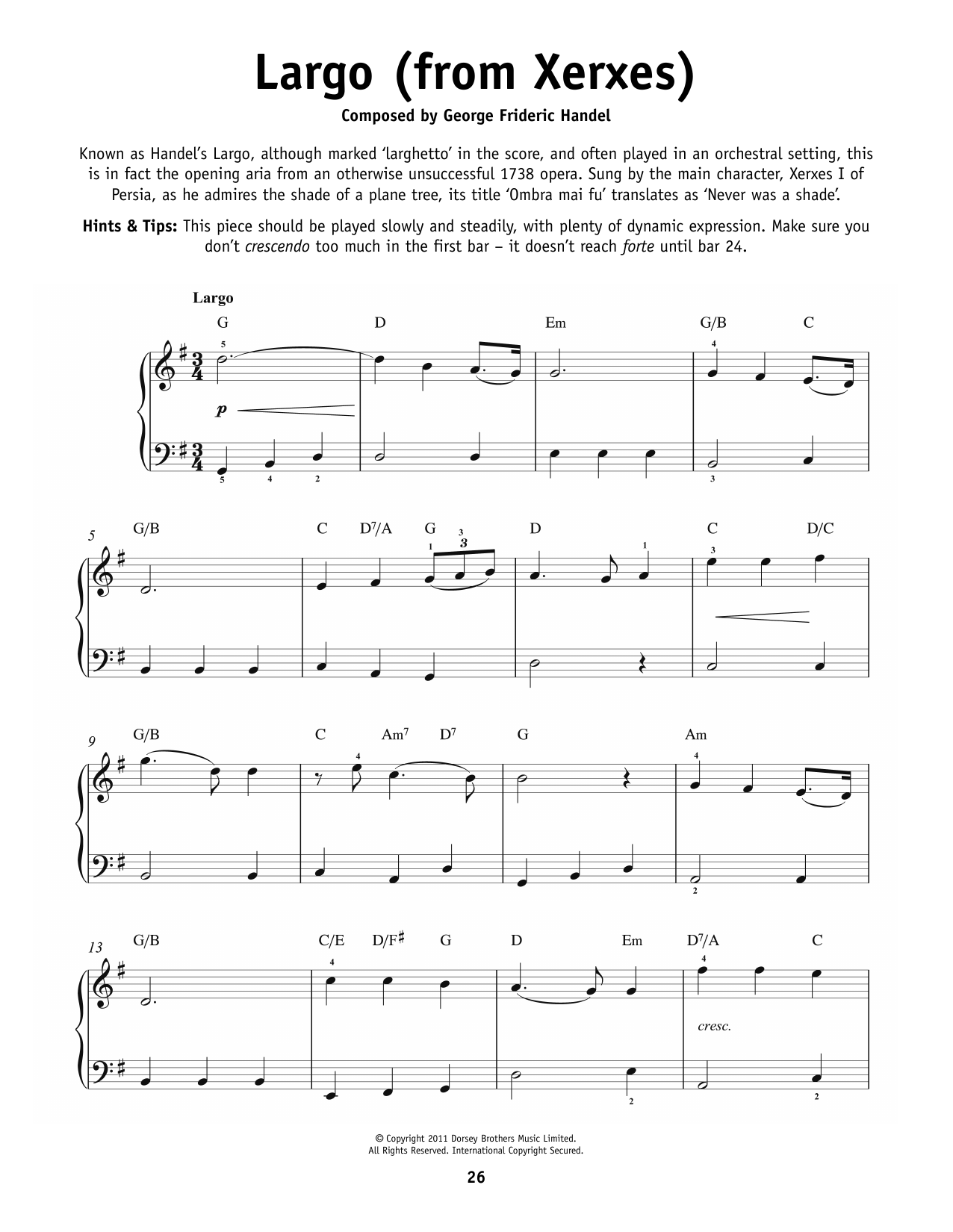
Why we love this

This Largo sits at the heart of Handel's gift for conveying profound emotion through elegant simplicity. The piece works beautifully as a processional or reflective moment in any program, offering performers the chance to explore what Baroque composers understood about pacing and stillness. It's a legitimate alternative to the overused contemporary wedding repertoire without sacrificing the gravity the occasion demands.

What to expect

The Largo unfolds with the unhurried grace of candlelight, each phrase given room to settle and resonate. There is tenderness in the writing, but not neediness; the piece trusts its own harmonic movement and melodic shape to carry the listener forward without excessive ornamentation or plea.

Who it's for

This arrangement suits vocalists and instrumentalists preparing repertoire for ceremonies, recitals, or auditions where composers of substance are expected. It works equally well as a solo vehicle or as part of a larger program where a moment of contemplative beauty strengthens the architecture.

How to get the most out of it

  • Shape the phrase arcs with subtle dynamic swells rather than aggressive crescendos; Baroque lines breathe through articulation and harmonic rhythm, not volume changes.
  • Pay attention to how the supporting voices move beneath the melody. The inner voices often carry independent rhythmic or melodic ideas that prevent the texture from becoming static.
  • Consider the character as stately rather than sentimental. Reserve expressive depth for harmonic moments of slight surprise or chromaticism rather than layering constant emotion onto every note.

How to use it

Open a recital with this piece when you want to establish a reflective mood before shifting to brighter material. It pairs naturally with other Baroque sacred or ceremonial works, and offers an elegant interlude between more virtuosic or dramatic selections. The conciseness of two pages makes it ideal for fill-in moments or as a thematic anchor in a program exploring Baroque approaches to intimacy.

Skills your students will build

  • Long-line phrasing without heavy breathing points
  • Baroque articulation and ornamentation conventions
  • Harmonic analysis of functional bass movement
  • Balancing melodic independence with ensemble cohesion

You May Also Like