Largo: 1st Violin Sheet Music Preview

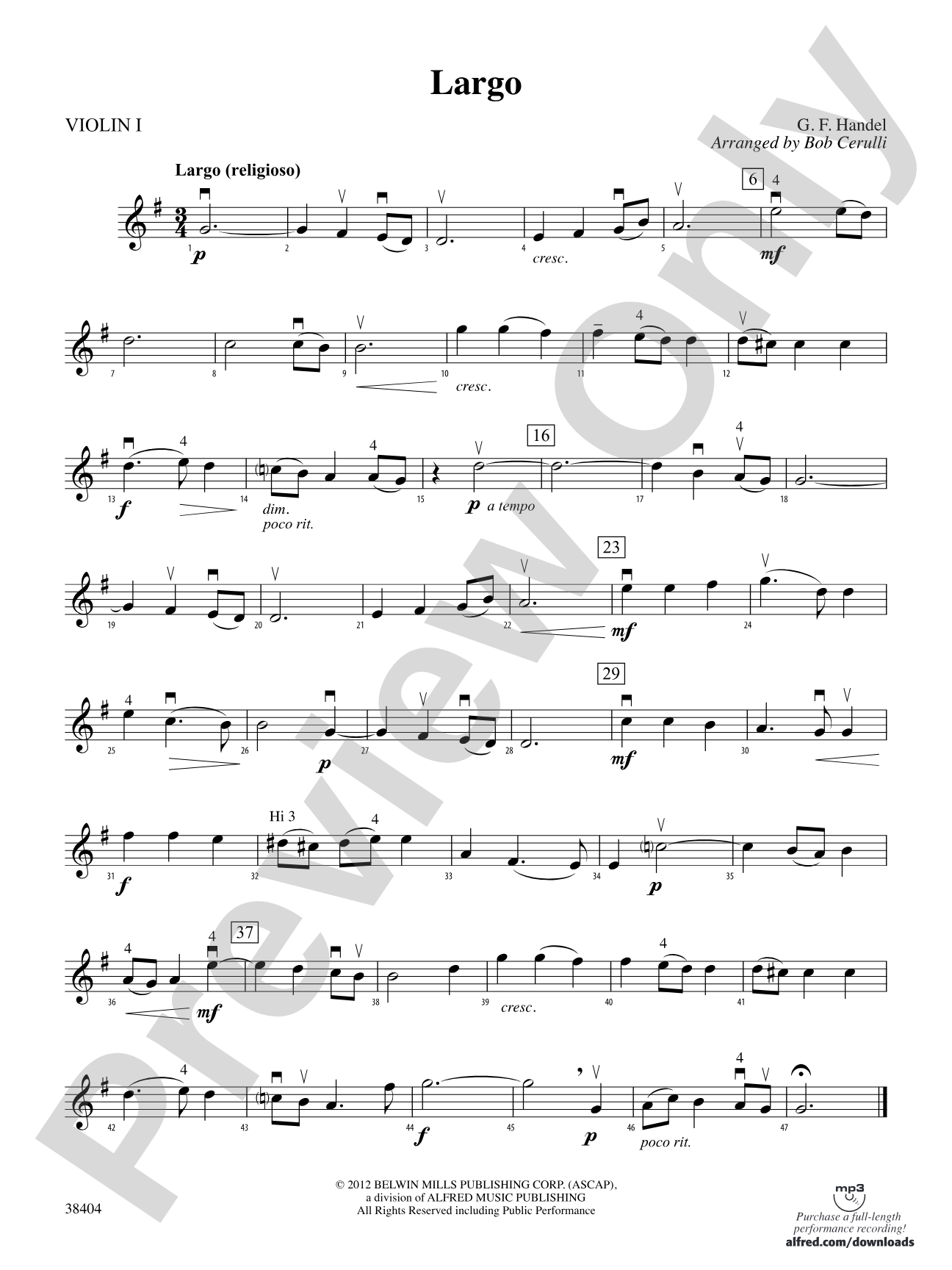
Largo: 1st Violin

By George Frideric Handel / arr. Bob Cerulli

Grade: 2

Item: 00-PC-0015472_VN1

Digital Download
$5.99
Description
Beautiful, and a bowing study, all in one! The slow tempo allows the performer to listen to the intonation while focusing on bow control. A perfect piece for contest or festival.

Don't just read it, hear it, play along with it, and watch your students grow with it. In MakeMusic Cloud, Largo: 1st Violin comes alive with professional accompaniment, adjustable tempo, and built-in practice tools that turn solo practice into real progress.

Sample Audio
0:00
0:00
Sample Video
Additional Details
Series: Belwin Beginning String Orchestra
Publisher: Alfred Music
Page Count: 72
SKU: 00-PC-0015472_VN1

More about this title

About the Composer: George Frideric Handel

George Frideric Handel (1685-1759) was a master of vocal and instrumental music who shaped the Baroque era across multiple genres. His gift for melody and structural clarity made his works ideal for music education, particularly his instrumental pieces that reward careful listening and technical refinement.

Why we love this

This arrangement gives young string players access to genuine Baroque craftsmanship without overwhelming them technically. The slow tempo creates an ideal teaching environment where intonation problems become obvious and correctable, while bow control naturally improves through sustained, singing lines.

What to expect

Serene and dignified, with the unhurried quality of a meditation. The piece invites introspection and patience; its beauty emerges gradually through focused ensemble listening rather than dramatic gesture.

Who it's for

String orchestras at Grade 2 level who are ready to move beyond purely rhythmic repertoire and develop musicality through sustained playing. Directors preparing students for festival or contest will find this a natural choice that builds technique while avoiding technical hurdles.

How to get the most out of it

  • Shape the phrase across the bar line rather than pausing at notated rests; this keeps the line breathing and prevents the piece from feeling static.
  • Balance the melodic voice among your first violins while ensuring lower strings support with steady, singing tone rather than mechanical accompaniment.
  • Rehearse intonation by having players listen to harmonic content within chords, not just individual notes; this trains ears to hear vertically.
  • Establish a clear, unwavering pulse before rehearsals begin so players can focus entirely on bow quality and tone production.

How to use it

Open a concert with this to establish an attentive audience and showcase your ensemble's musical maturity. Its formal elegance works equally well in contest settings where judging panels value tone quality and intonation awareness.

Skills your students will build

  • Sustained bow control and tone production in slow tempos
  • Listening for and correcting intonation within harmonic structures
  • Phrase shaping and breath placement across bar lines
  • Maintaining ensemble balance between melodic and accompaniment voices
  • Baroque stylistic conventions (articulation, phrasing, ornamentation interpretation)

You May Also Like