Antonio Vivaldi (1678-1741) was a Venetian priest and virtuoso violinist whose prolific output shaped the Baroque concerto form. His compositions emphasize brilliant passagework, clear harmonic architecture, and idiomatic writing for strings. Vivaldi's influence on music education remains significant; his works appear consistently in curricula because they reward both technical development and musical storytelling.
Why we love this
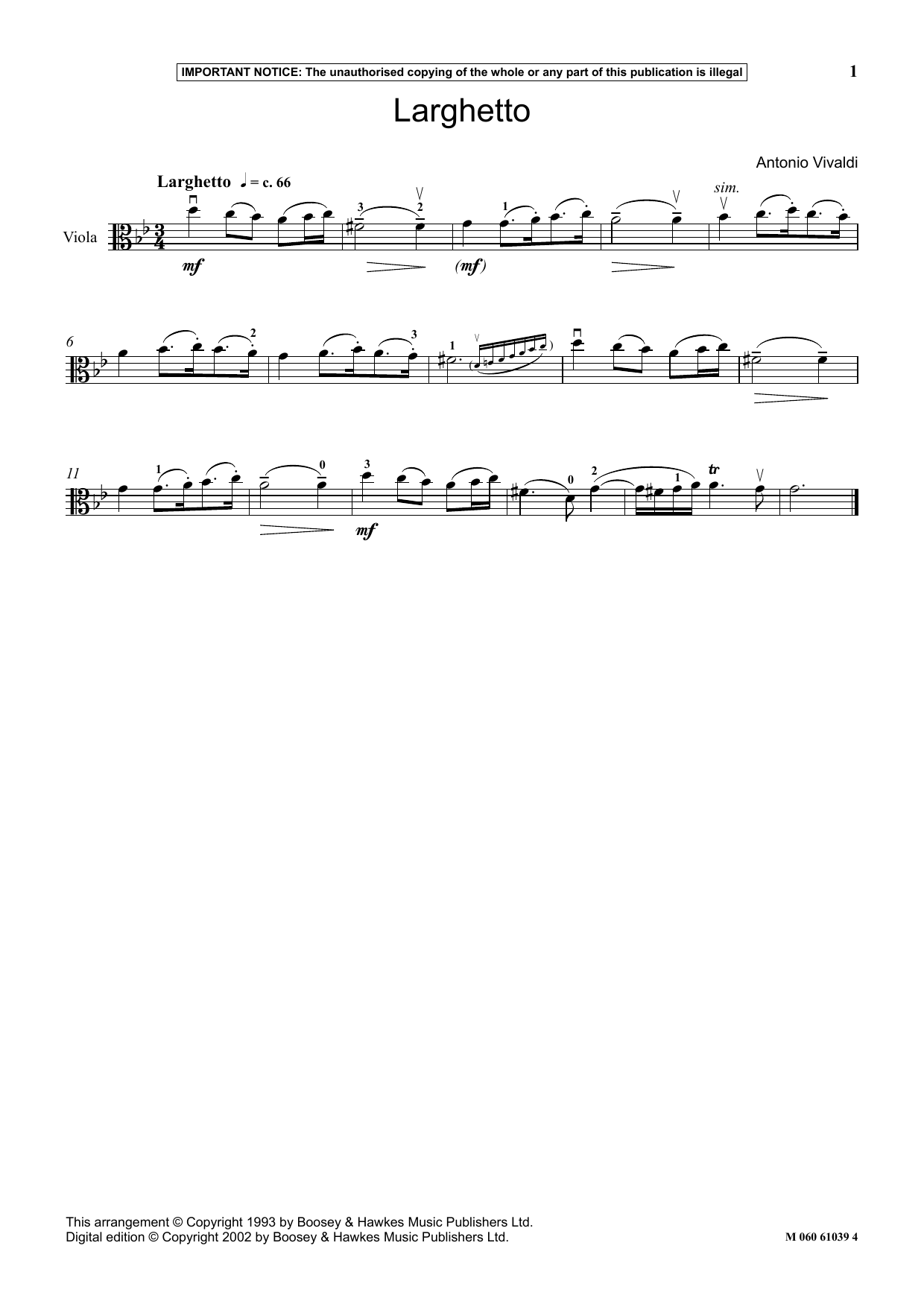
This Larghetto showcases Vivaldi's gift for writing sustained lines that breathe naturally without sacrificing structural integrity. Students hear how restraint and simplicity can carry as much weight as virtuosity, making it an excellent teaching moment about phrase architecture and lyrical expression within the Baroque idiom.
What to expect
The Larghetto unfolds with unhurried elegance, asking performers to sustain long lines and shape phrases with grace. Its harmonic language is direct and purposeful, creating moments of quiet eloquence that feel both accessible and profound.
Who it's for
This piece suits intermediate to advanced singers, violinists, and woodwind players seeking repertoire that demands musical maturity over technical flash. It works well for solo performers preparing recital programs or for ensemble reading when you want to emphasize control and musical intelligence.
How to get the most out of it
Shape the line through dynamic inflection rather than tempo manipulation; a steady pulse with subtle swells at phrase peaks maintains Baroque dignity.
Listen for the harmonic rhythm underneath the melody; understanding the chord progression helps singers or players land naturally on structural points.
Balance textural transparency if you're performing with accompaniment; the melody should emerge without drowning in harmonic support.
How to use it
Pair this with other Baroque slow movements to create a thematic concert section exploring the language of repose and reflection. It serves equally well as an opener that establishes an atmosphere of musical sophistication before moving into more energetic works.
Skills your students will build
Sustaining tone quality over extended phrases
Baroque phrasing and articulation conventions
Reading and interpreting figured bass implications
Dynamic control and musical shaping without tempo shifts
You May Also Like
Scan to Complete Your Purchase
Use your phone's camera to scan the code below
You'll log in on your phone and the order will be added to your account