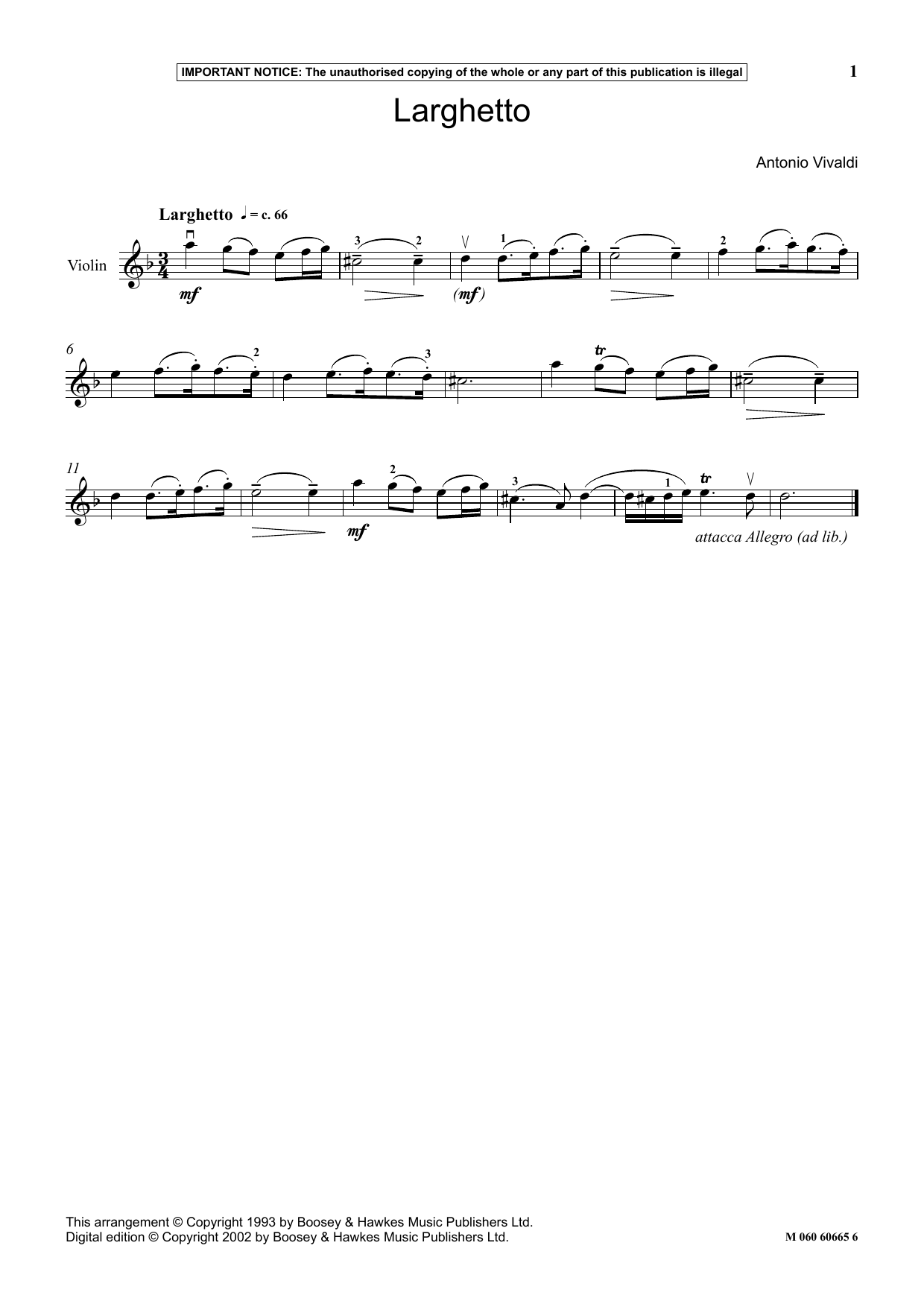
Antonio Vivaldi (1678-1741) was a Venetian priest and composer whose prolific output shaped the Baroque concerto and influenced instrumental music for generations. His mastery of melody and orchestration made him one of the most performed composers of his era, and his works remain central to music education for their clarity of form and expressive range.
Why we love this
Vivaldi's Larghetto movements exemplify the kind of singing, lyrical writing that develops a student's capacity for sustained phrasing and emotional control. This intimate two-page score sits perfectly between technical showpiece and genuine musical statement, making it ideal for recitals where students need to demonstrate maturity without excessive technical demands.
What to expect
Unhurried and contemplative, this movement unfolds with the gentle inevitability of a well-crafted melody supported by warm harmonic underpinning. The writing invites introspection without demanding virtuosity, creating space for genuine musical communication.
Who it's for
This work suits advanced elementary through intermediate students who have developed foundational technique and are ready to explore expressive depth within a shorter, focused score. It works equally well for high school or college singers preparing art song and chamber repertoire.
How to get the most out of it
Shape the phrase in long, connected lines rather than breaking at obvious cadence points; let the melody breathe as a single arc across multiple measures.
Establish a stable, unhurried tempo that allows the harmonic rhythm to unfold naturally without rushing toward the next section.
Balance accompaniment voices so the solo line remains the clear focus; secondary parts should support without competing.
Attend to Baroque articulation conventions for your instrument; consult period-appropriate style guides for your specific voice type or instrument family.
How to use it
Pair this with other Baroque or early Classical chamber works on a recital to build a thematic program around lyrical expression, or feature it as a standalone encore that showcases melodic artistry. It also serves as an excellent study piece for singers preparing to tackle longer Vivaldi operatic arias or concerto movements.
Skills your students will build
Long-phrase singing and sustained musical line
Baroque style conventions and ornamentation placement
Balance between solo and accompaniment in small ensemble contexts
Emotional expression within a conservative harmonic framework
You May Also Like
Scan to Complete Your Purchase
Use your phone's camera to scan the code below
You'll log in on your phone and the order will be added to your account