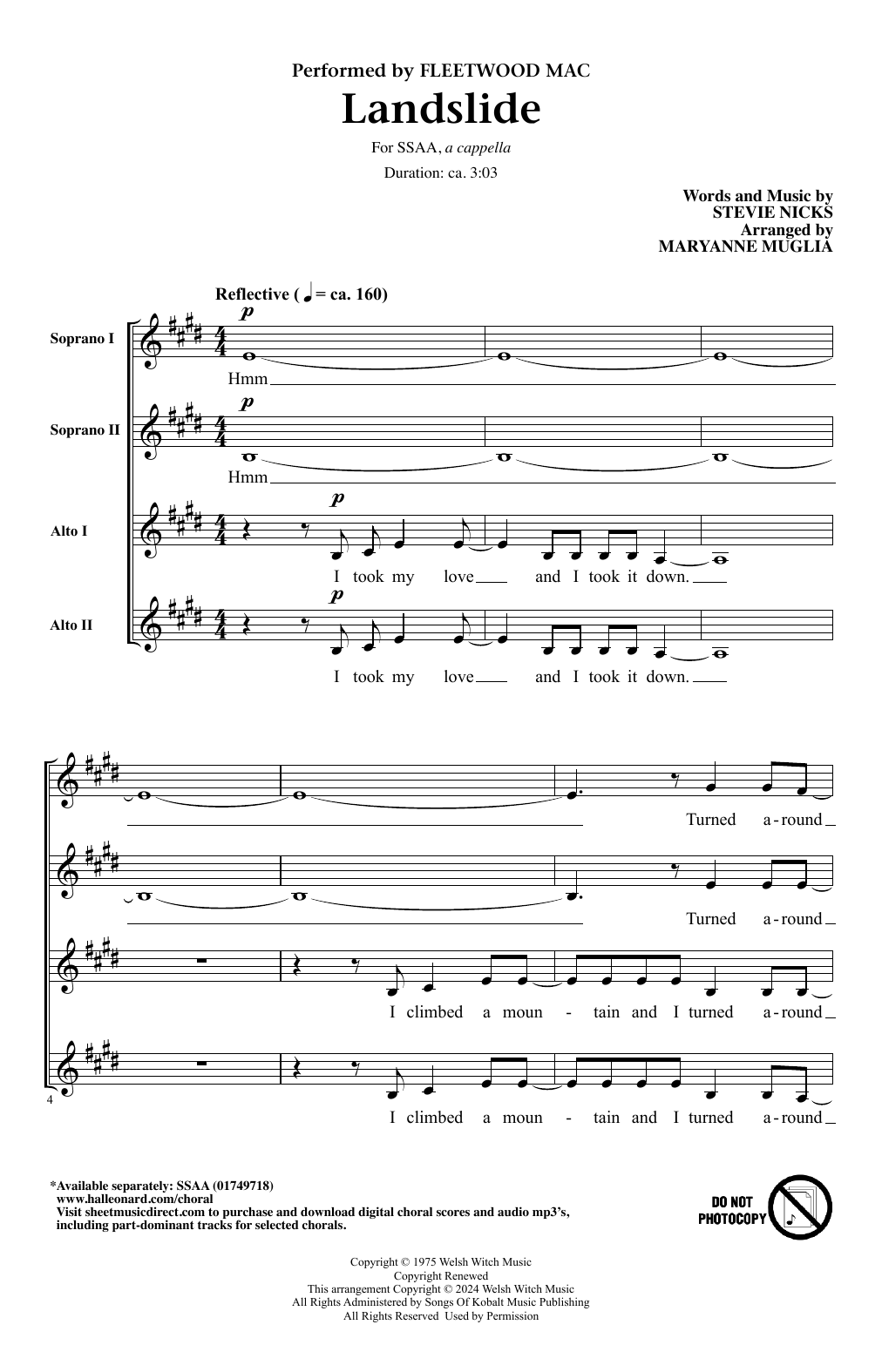
Landslide (arr. MaryAnne Muglia) Sheet Music Preview

Landslide (arr. MaryAnne Muglia): SSAA Choral Octavo

As performed by Fleetwood Mac / Arranged by MaryAnne Muglia

Item: 35-DS01553083

Digital Download
$2.50
Description

Landslide (arr. MaryAnne Muglia): SSAA Choral Octavo isn't in MakeMusic Cloud just yet...but it could be. Let us know you'd like to see it, and you'll help shape what comes next. In the meantime, start a free trial and dive into thousands of interactive titles your students can play along with today.

Sample Audio
No sample audio found.
Sample Video
Additional Details
Publisher: Hal Leonard
Page Count: 10
SKU: 35-DS01553083

More about this title

About the Artist: Fleetwood Mac

Fleetwood Mac emerged from the British blues scene in 1967 before relocating to Los Angeles and reinventing themselves as architects of sophisticated pop and rock. The band's 1977 album Rumours became a cultural phenomenon, selling over 40 million copies worldwide and establishing them as masters of melody, harmony, and emotionally resonant songwriting. Their influence on contemporary music education extends beyond pop repertoire; their harmonic language and vocal arrangements offer rich material for choral directors seeking to engage students with repertoire that feels current and musically substantive.

Frontwoman Stevie Nicks and bassist John McVie's contributions to Fleetwood Mac's sound shaped an entire generation of musicians. The band's catalog demonstrates how accessible melodies can support sophisticated arrangements, making their work especially valuable for choirs building skills in contemporary music literacy and performance.

Why we love this

Muglia's arrangement respects the song's intimate emotional core while creating genuine vocal independence across four parts. This is a piece that works equally well in a concert setting or as a crowd-pleasing finale because it trusts the universality of the original without relying on rock production to carry it.

What to expect

Vulnerability wrapped in understated strength. The arrangement holds space for individual singers to shine while building moments of lush four-part harmony that feel earned rather than showy. There's intimacy here, the quality of hearing someone share a genuine confession rather than deliver a performance.

Who it's for

Choirs with solid blend and basic part independence will find this accessible and rewarding. It works for high school to early college ensembles, community choirs seeking contemporary repertoire with emotional depth, and smaller groups (10-20 singers) where each voice can maintain clarity.

How to get the most out of it

  • Anchor the opening with supported, warm tone from the soprano section. This melody carries the entire emotional weight of the arrangement, and it needs breath and presence even in the softest passages.
  • Balance the lower voices carefully during moments when they sustain underneath the soprano line. They should never recede into background wash; each part remains visible and contributes to harmonic color.
  • Shape phrases around the text rather than bar lines. Listen for where Nicks would breathe in the original recording and allow your singers to find similar natural inflection points.
  • Pay attention to the transition points between sections. Small tempo adjustments or dynamic shifts here will make the architecture of the arrangement clearer to your audience.

How to use it

Pair this with other introspective contemporary pop arrangements for a concert section on personal reflection and resilience. Alternatively, position it as a bridge piece between classical and contemporary repertoire, demonstrating that choral versatility includes this idiom. It also serves beautifully as a concert closer when you want to send audiences out thoughtfully rather than energetically.

Skills your students will build

  • Sustaining lyrical line integrity across phrase lengths without loss of tone quality
  • Balancing four independent vocal lines while maintaining overall ensemble blend
  • Navigating contemporary text underlay and natural speech rhythms within notated meter
  • Building dynamic sensitivity and control in the middle and lower voice ranges
  • Creating harmonic resonance through accurate intonation in sus chords and modal harmonies

You May Also Like