
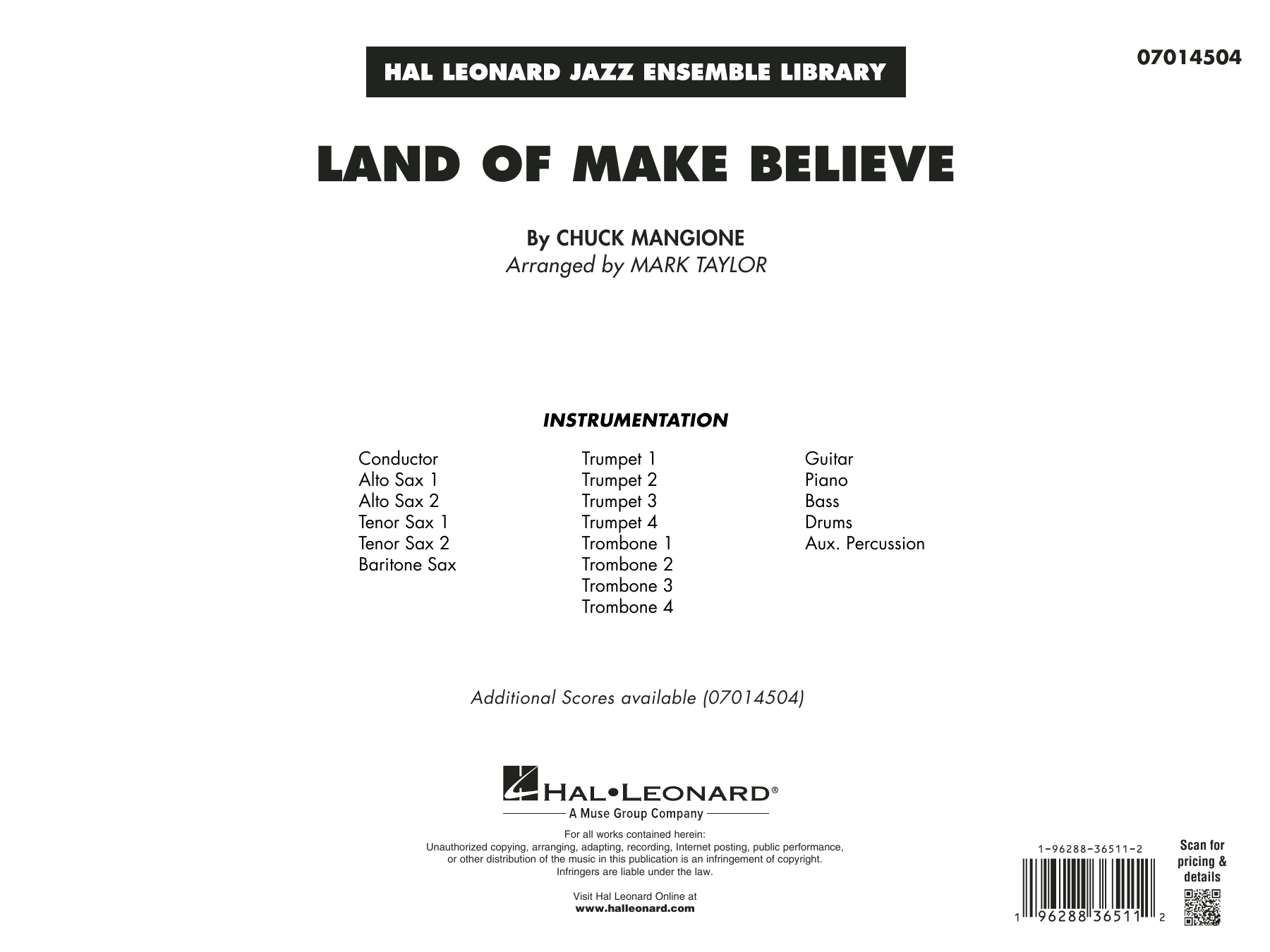

Land of Make Believe (arr. Mark Taylor): Jazz Ensemble Conductor Score & Parts
By Chuck Mangione / Arranged by Mark Taylor
Grade: 4
Item: 35-PK01808098
$55.00
Pickup currently not available
Buy Extra Parts (Digital PDF Download)
Parts Added to Cart!
Description
This arrangement of the classic favorite brilliantly captures the genius of Chuck Mangione. Solo changes for Trumpet. Lead Trumpet plays high C, Trombone 1-3 play high G.


Land of Make Believe (arr. Mark Taylor): Jazz Ensemble Conductor Score & Parts isn't in MakeMusic Cloud just yet...but it could be. Let us know you'd like to see it, and you'll help shape what comes next. In the meantime, start a free trial and dive into thousands of interactive titles your students can play along with today.
Request This Title
Tell us you want it.
Start Your Free Trial
Explore everything that's ready to play right now.
Sample Audio
No sample audio found.
Sample Video
No sample videos found.
Additional Details
Publisher:
Hal Leonard
SKU:
35-PK01808098
More about this title
About the Composer: Chuck Mangione
Chuck Mangione built his career on a simple principle: accessible music with genuine sophistication. A flugelhorn virtuoso and composer who emerged from the 1970s fusion scene, Mangione became known for writing melodies that lodge themselves in listeners' ears while maintaining harmonic and rhythmic depth. His work bridges jazz, pop, and classical sensibilities in ways that reward serious musicians while remaining approachable to general audiences.
For music educators, Mangione's catalog offers something rare: pieces that engage students musically without talking down to them. His compositions balance technical interest with emotional directness, making them ideal for ensembles developing their jazz vocabulary.
Why we love this
Mark Taylor's arrangement captures the melodic warmth and rhythmic groove that made the original resonate across multiple genres, then layers in jazz ensemble textures that feel organic rather than forced. The trumpet solo opportunities and designated high passages create natural challenges for advancing players without requiring virtuosic gymnastics. You'll find this works equally well as a concert closer or a program bridge between straight-ahead jazz and something more contemporary.
What to expect
Warm, lyrical, and groove-centered. The melody carries an unhurried quality that lets you settle into the Latin feel rather than rushing, while the harmonic language provides just enough color to keep ears engaged. There's an optimistic, almost wistful character throughout that audiences respond to immediately.
Who it's for
Grade 4 jazz ensembles with developing soloists and solid section balance. This works well for programs that want substantive jazz writing but aren't quite ready for dense harmonic complexity or advanced rhythmic figures. Directors seeking crossover appeal will appreciate that this engages serious listeners while remaining accessible.
How to get the most out of it
- Shape the melody through ensemble balance rather than soloist dominance. The lead trumpet's high C passages should cut through clearly, but the backing voices need enough presence to establish harmonic context.
- Lock the Latin feel into your rhythm section's pocket first. Once drums and bass establish that groove, the horns section will sit naturally into the pocket without forcing.
- Build dynamic contrast across the form. Allow ensemble sections to breathe at a lighter dynamic level, which makes the solo sections feel more prominent by contrast.
- Work the trumpet solo changes as a section before releasing soloists. Having the section internalize harmonic movement creates better support for whoever takes the improvisation.
How to use it
This belongs on a program where you want to shift emotional gears without losing musical substance. Try it after a demanding classical or contemporary piece to give your ensemble (and audience) a chance to exhale. It also serves as an excellent vehicle for introducing jazz soloing to ensembles transitioning into the jazz idiom.
Skills your students will build
- Reading lead sheet notation and improvising over jazz changes
- Balancing melody against harmonic accompaniment in jazz voicings
- Playing Latin rhythm feels with precision and relaxation
- Trading sections and responding to solo content
- Managing dynamic shape in ensemble contexts
- Executing high register passages with control