
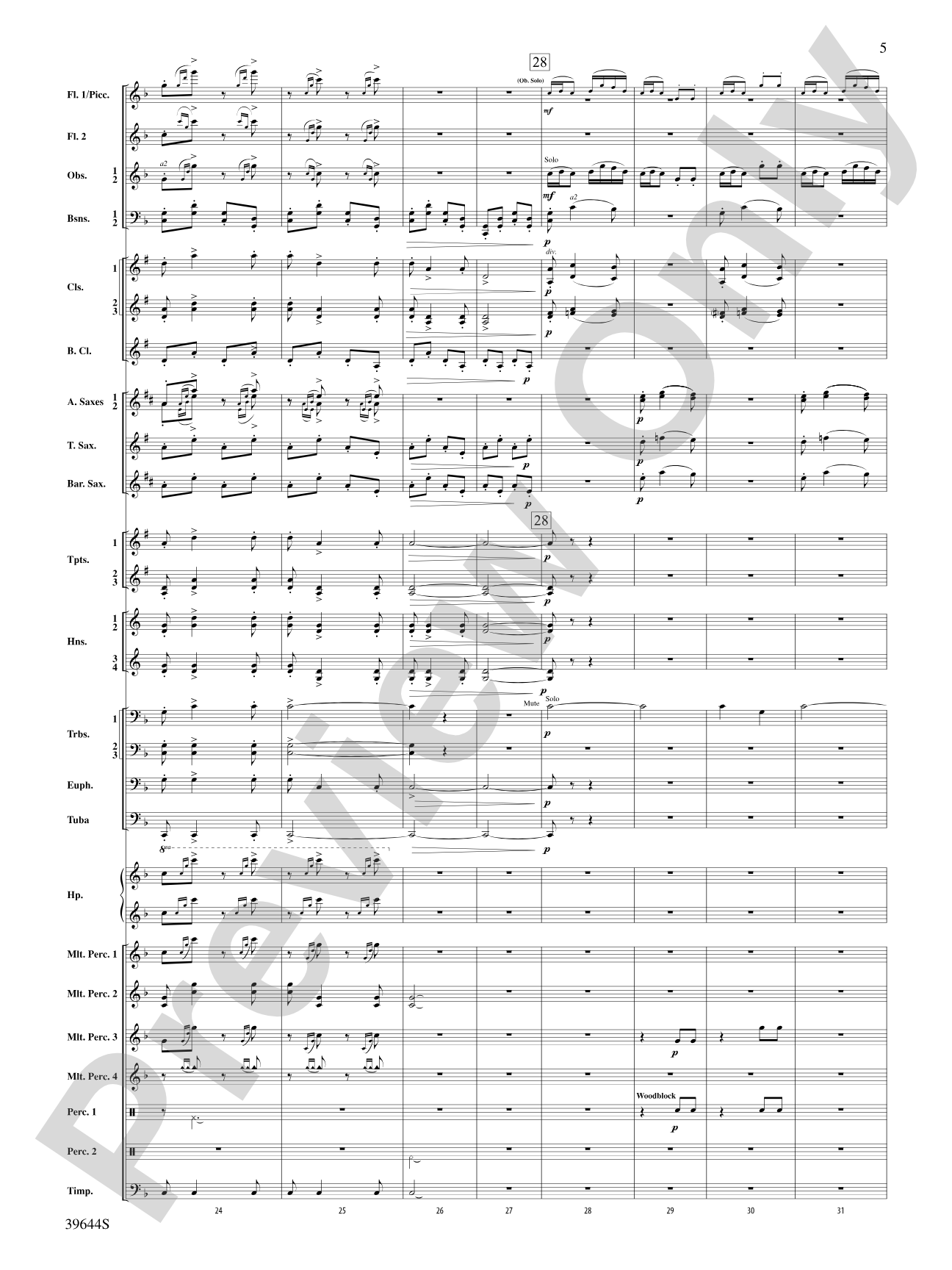
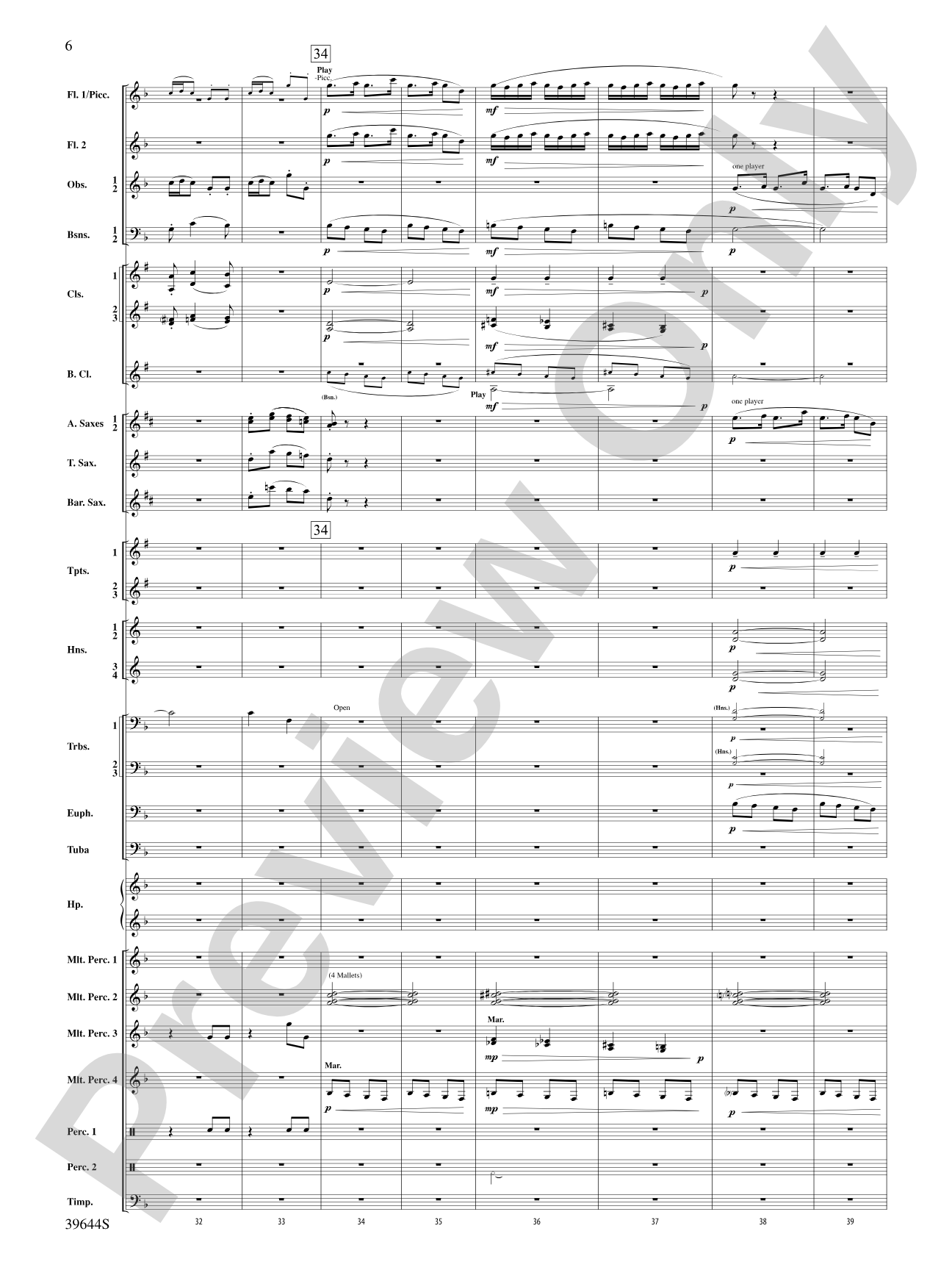
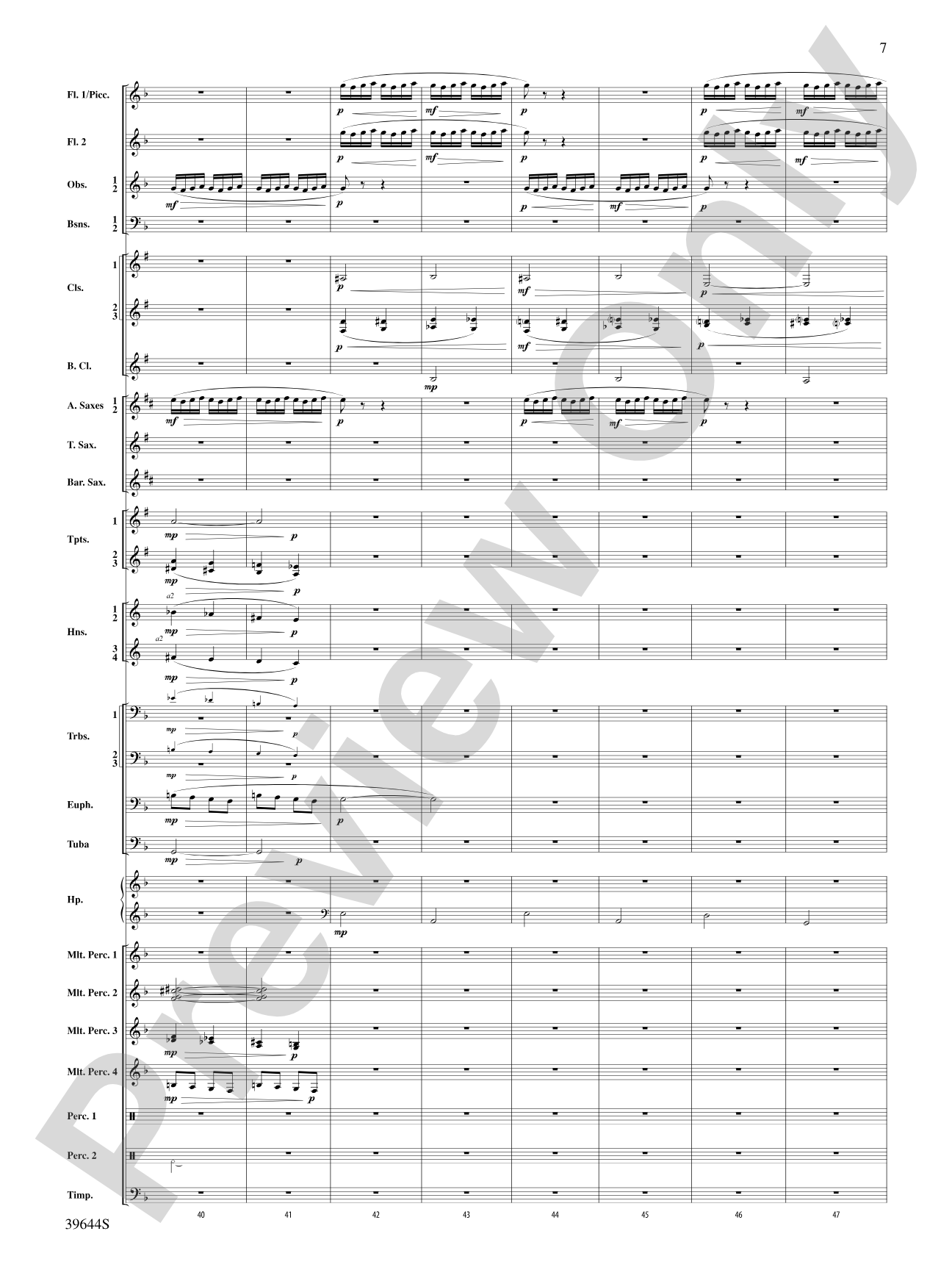
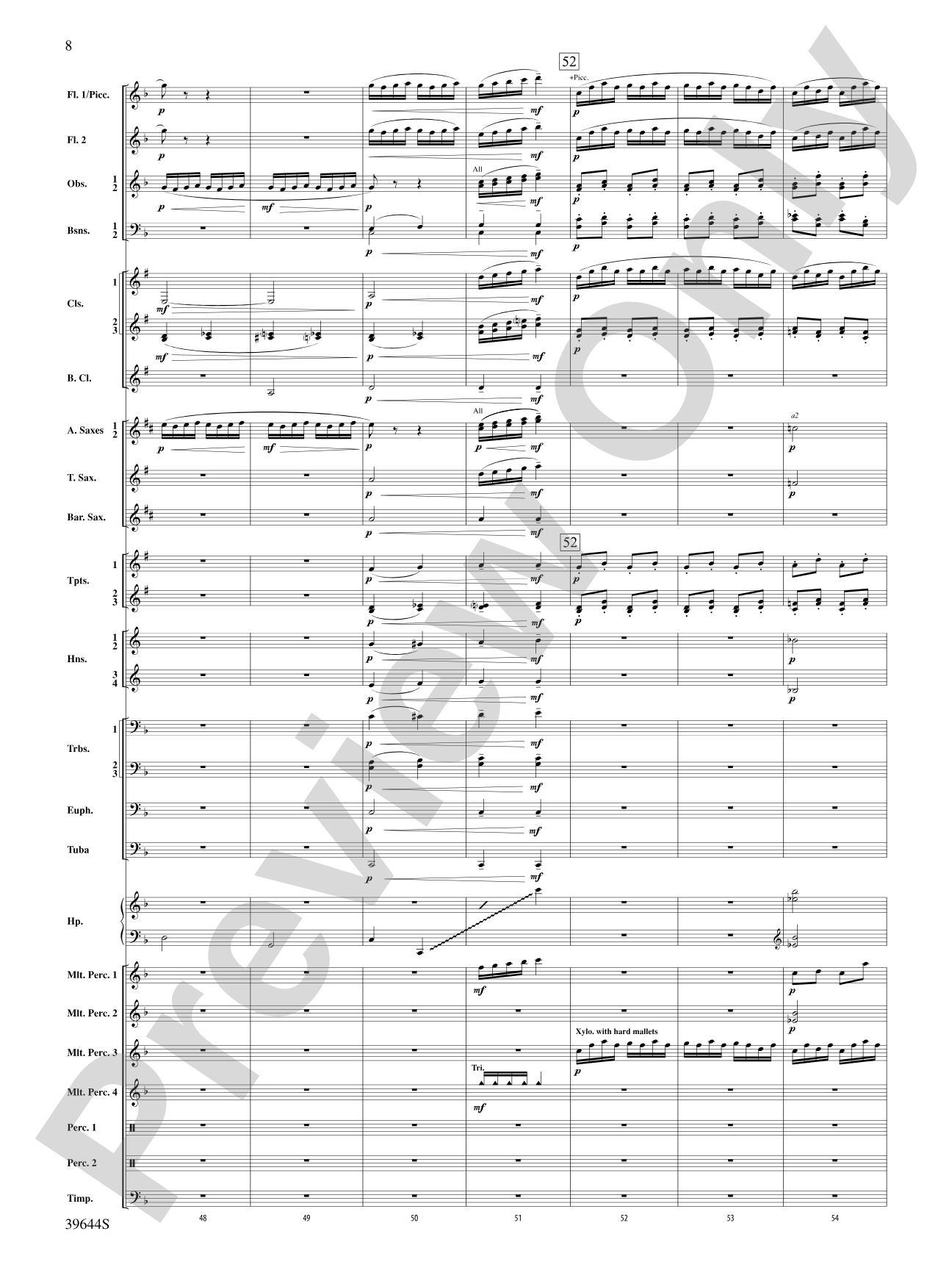
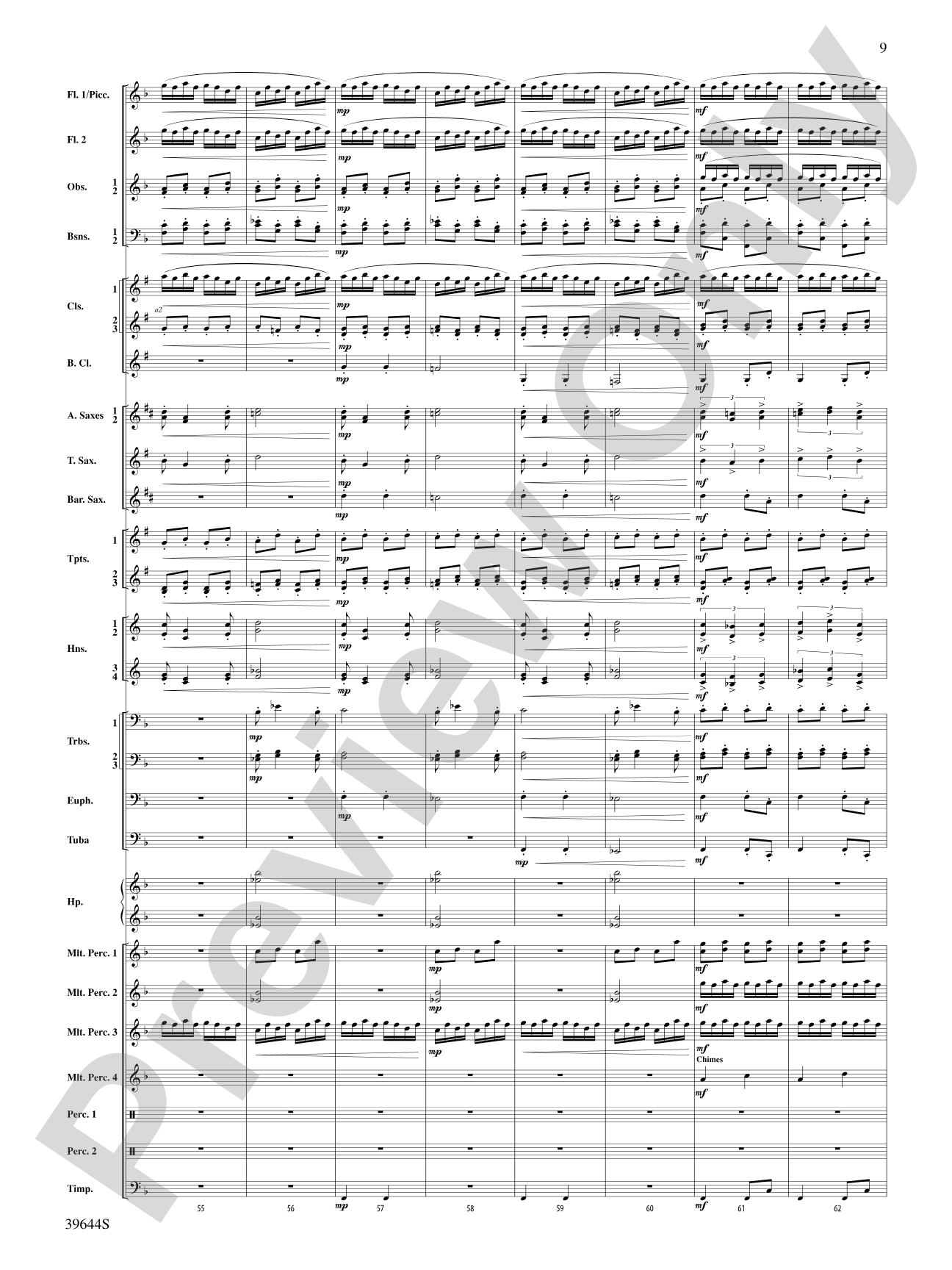
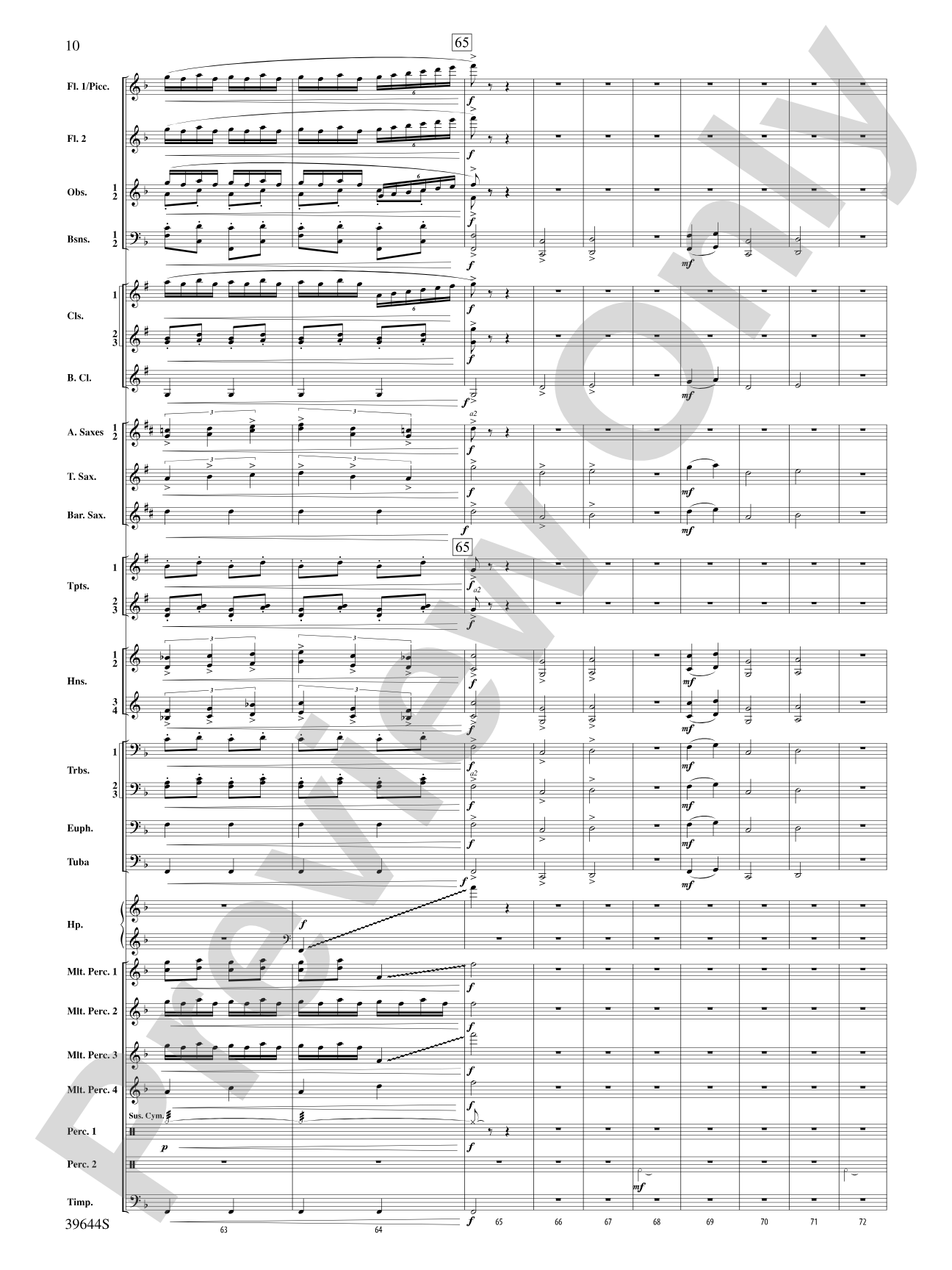
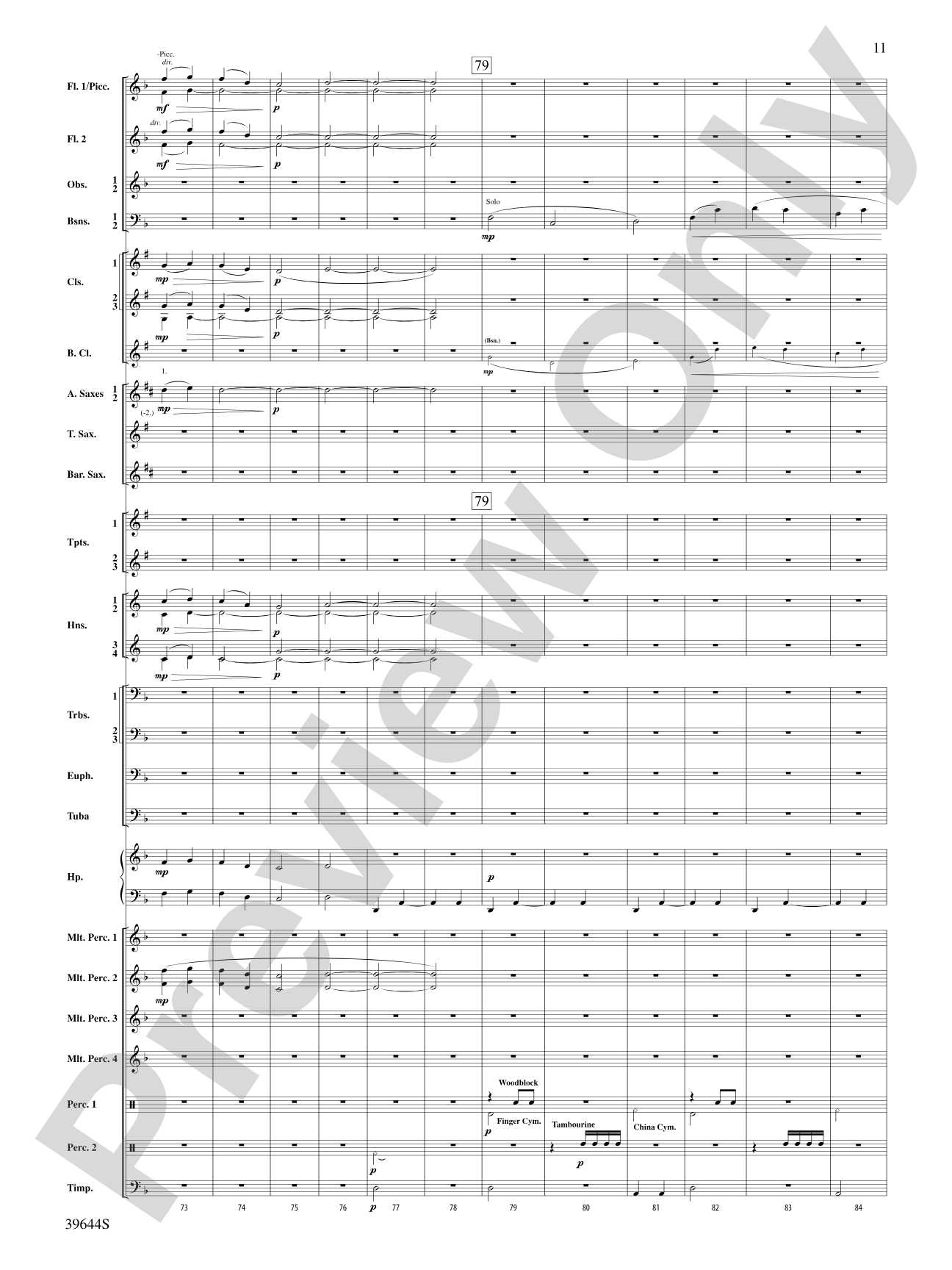
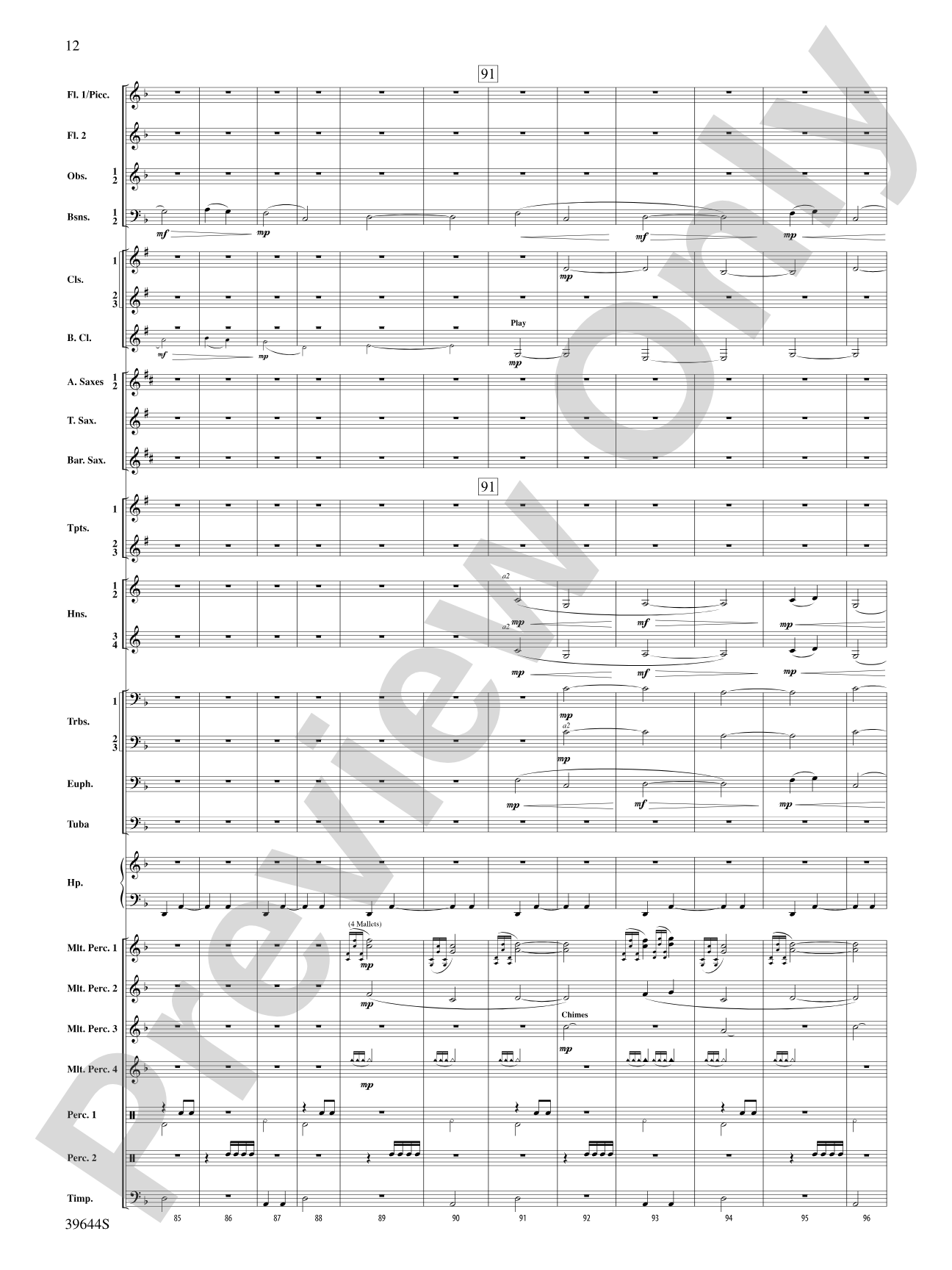
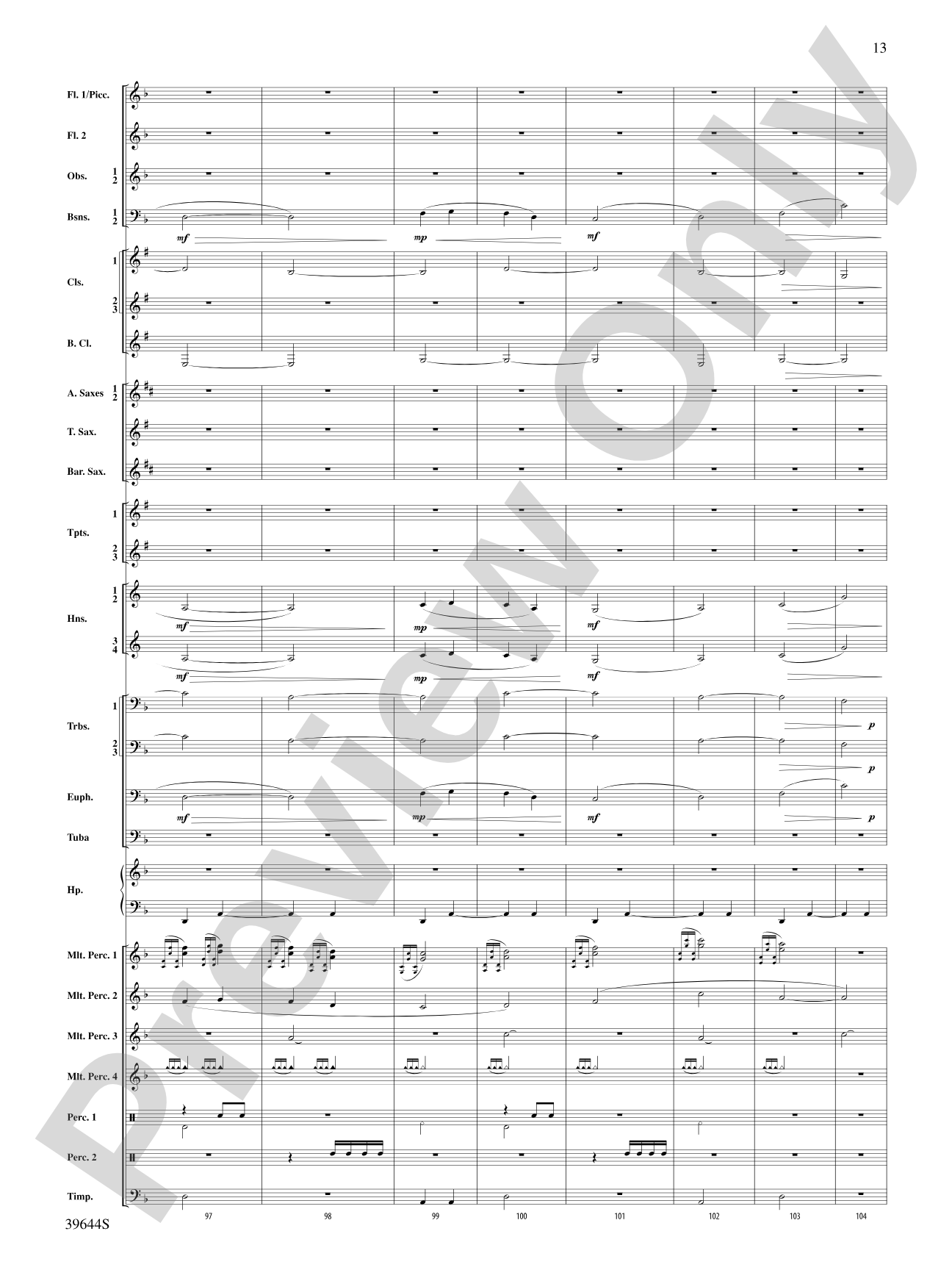
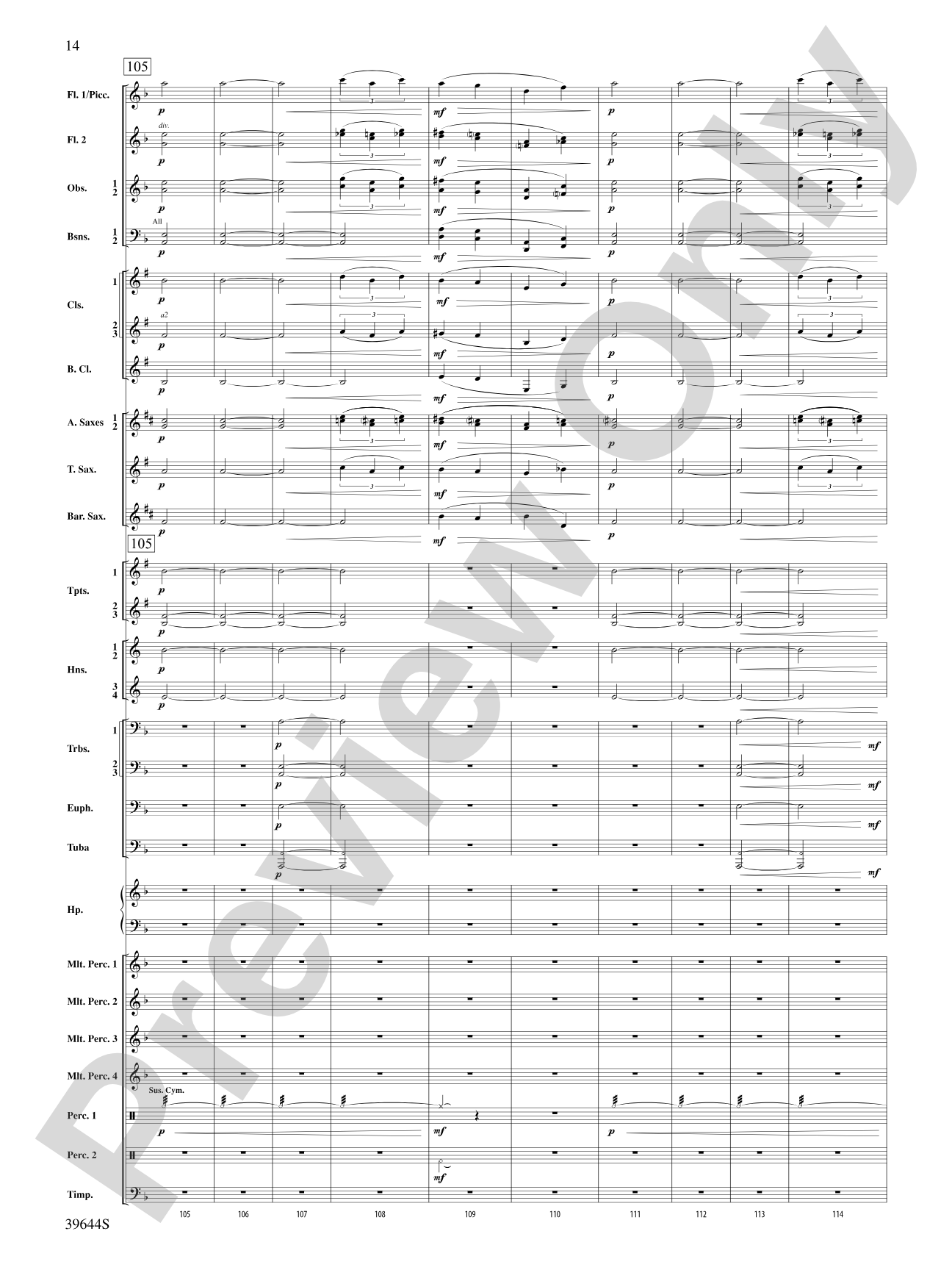
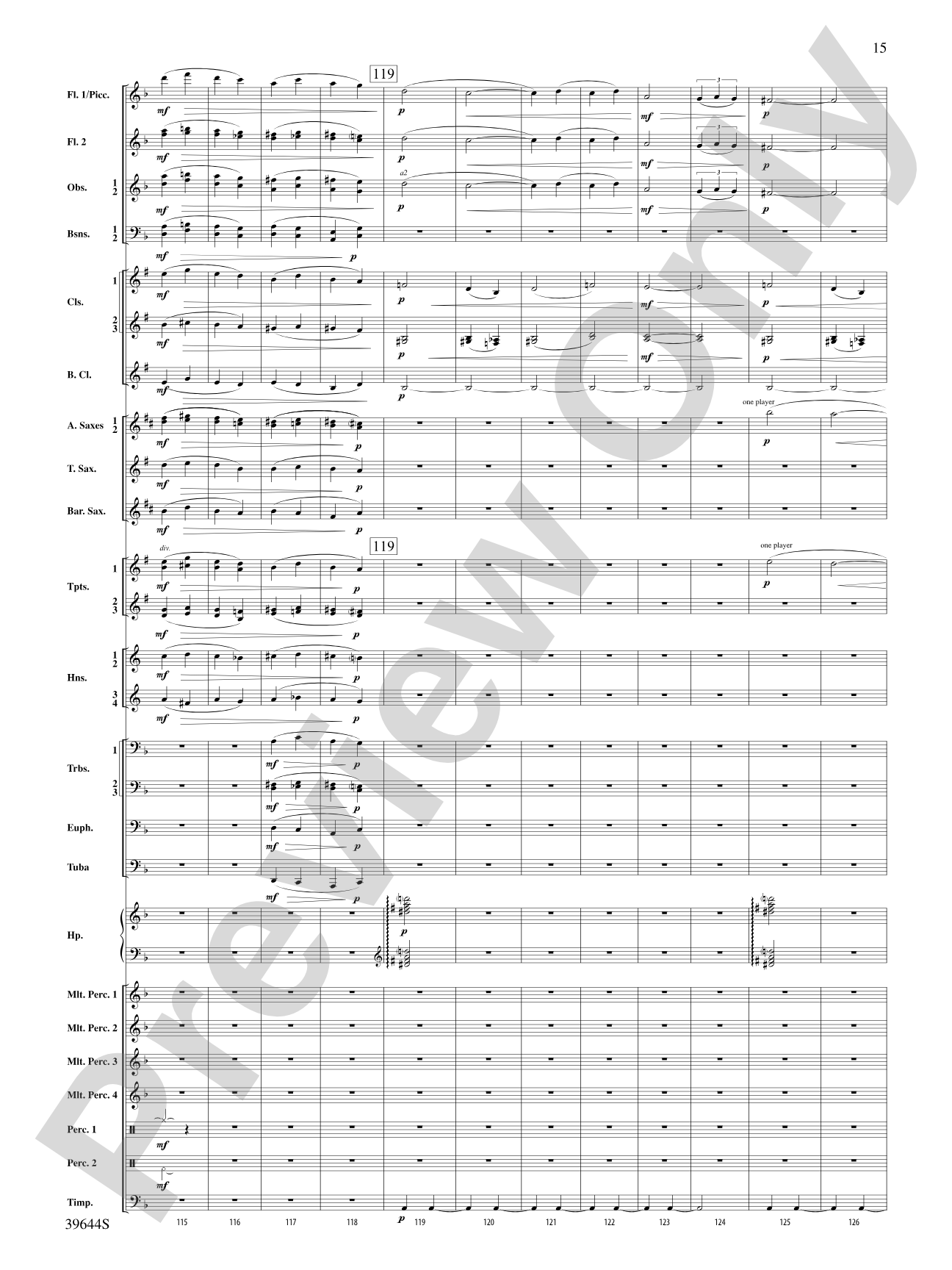
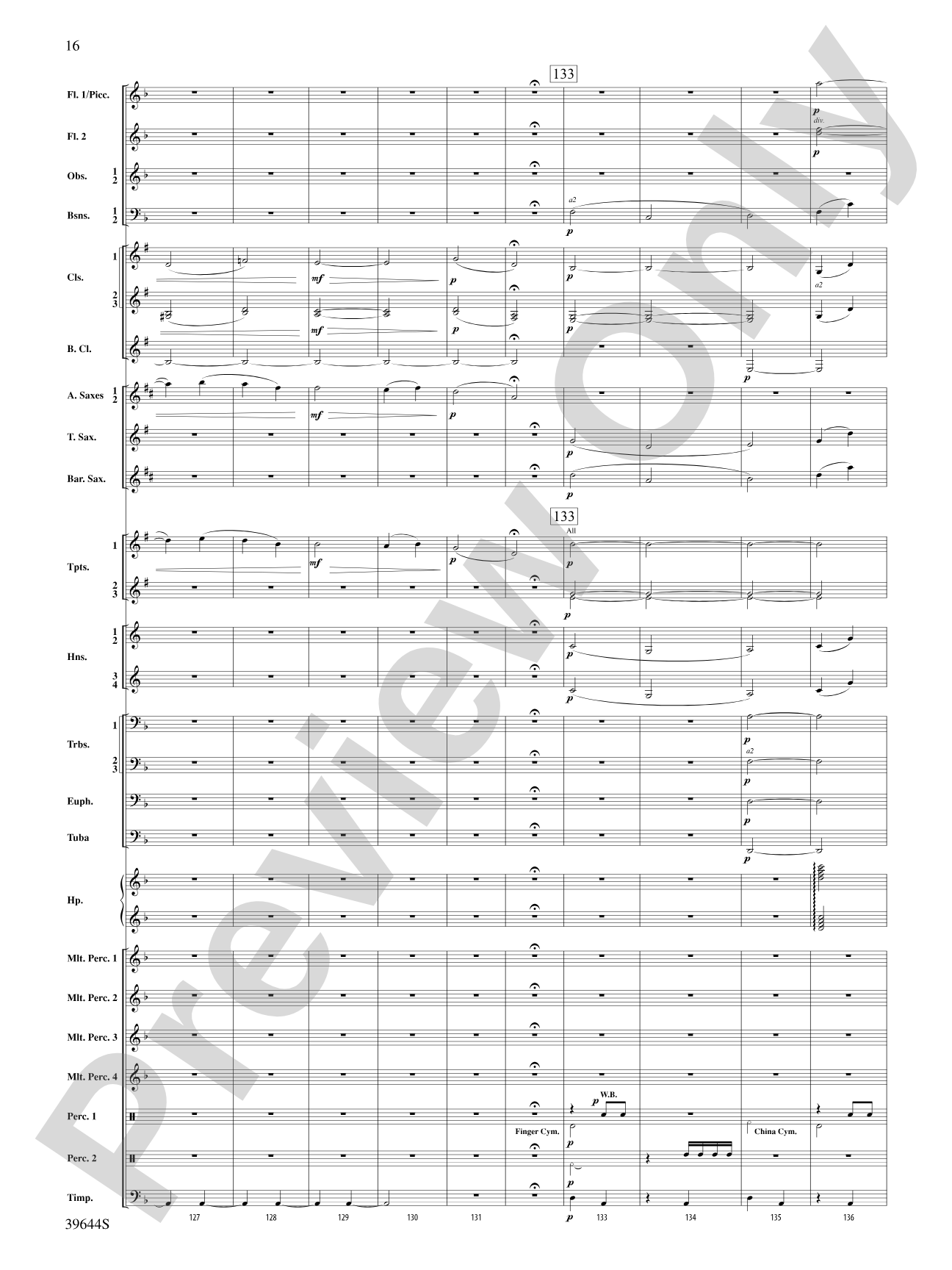
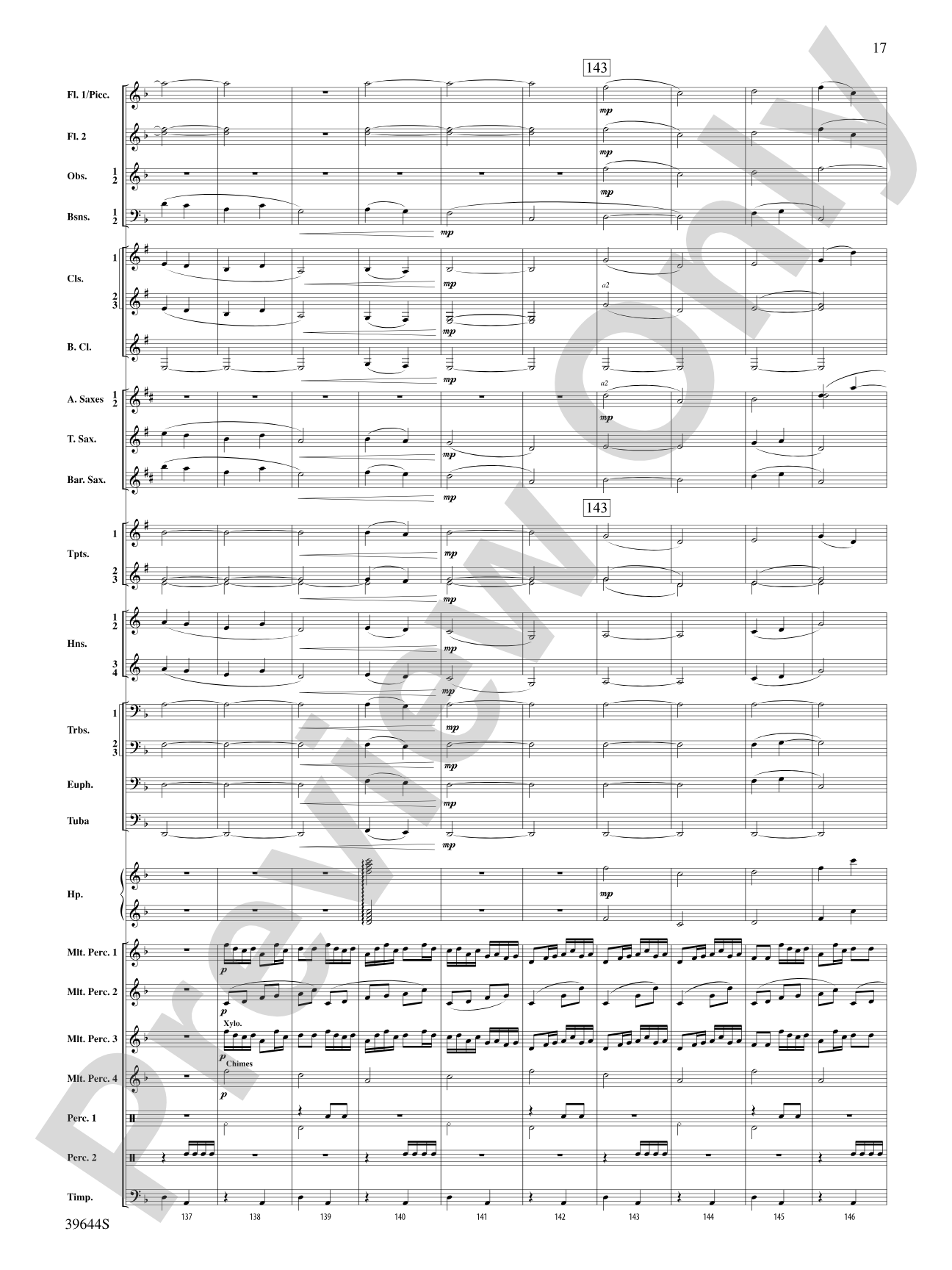
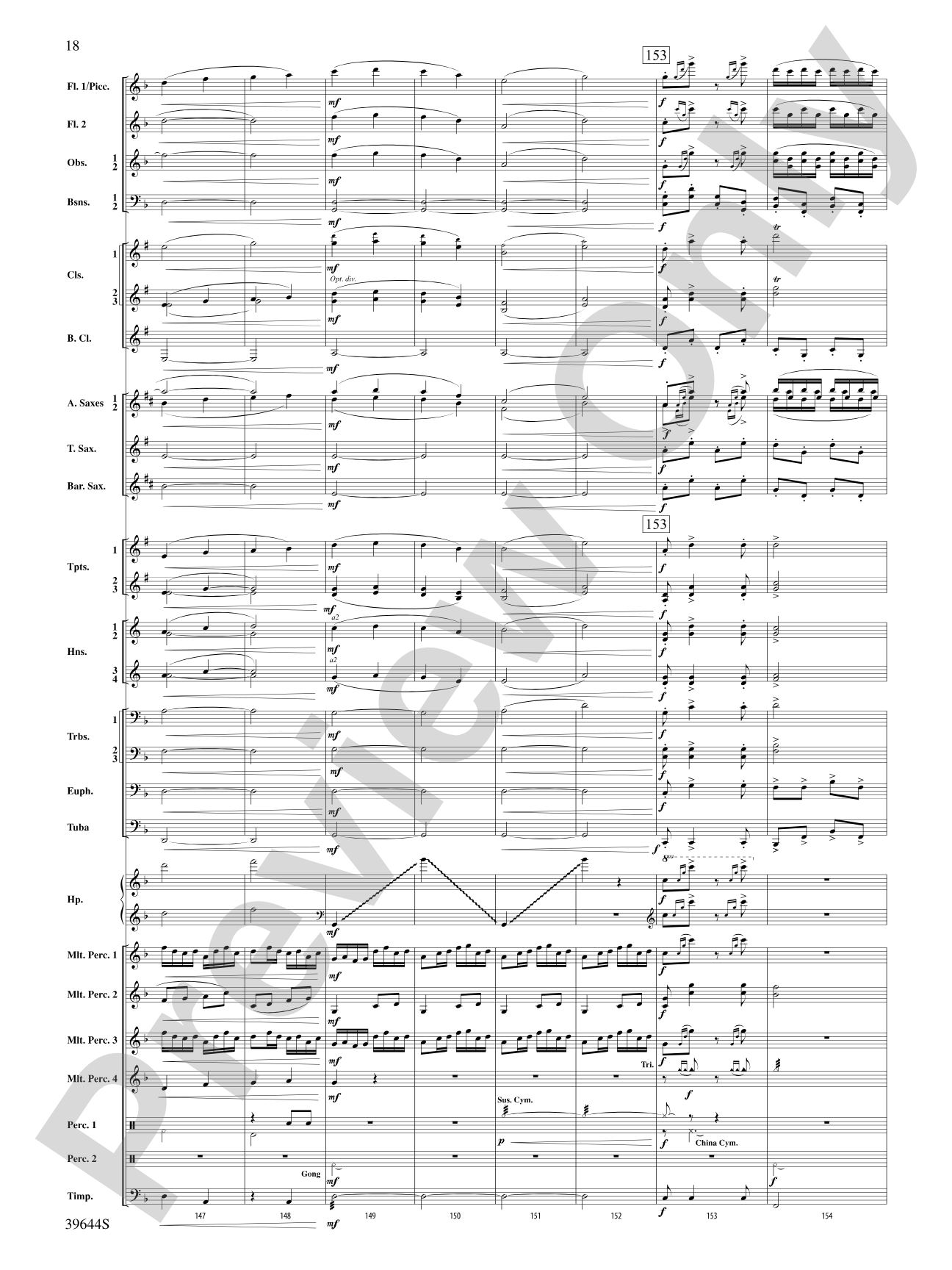
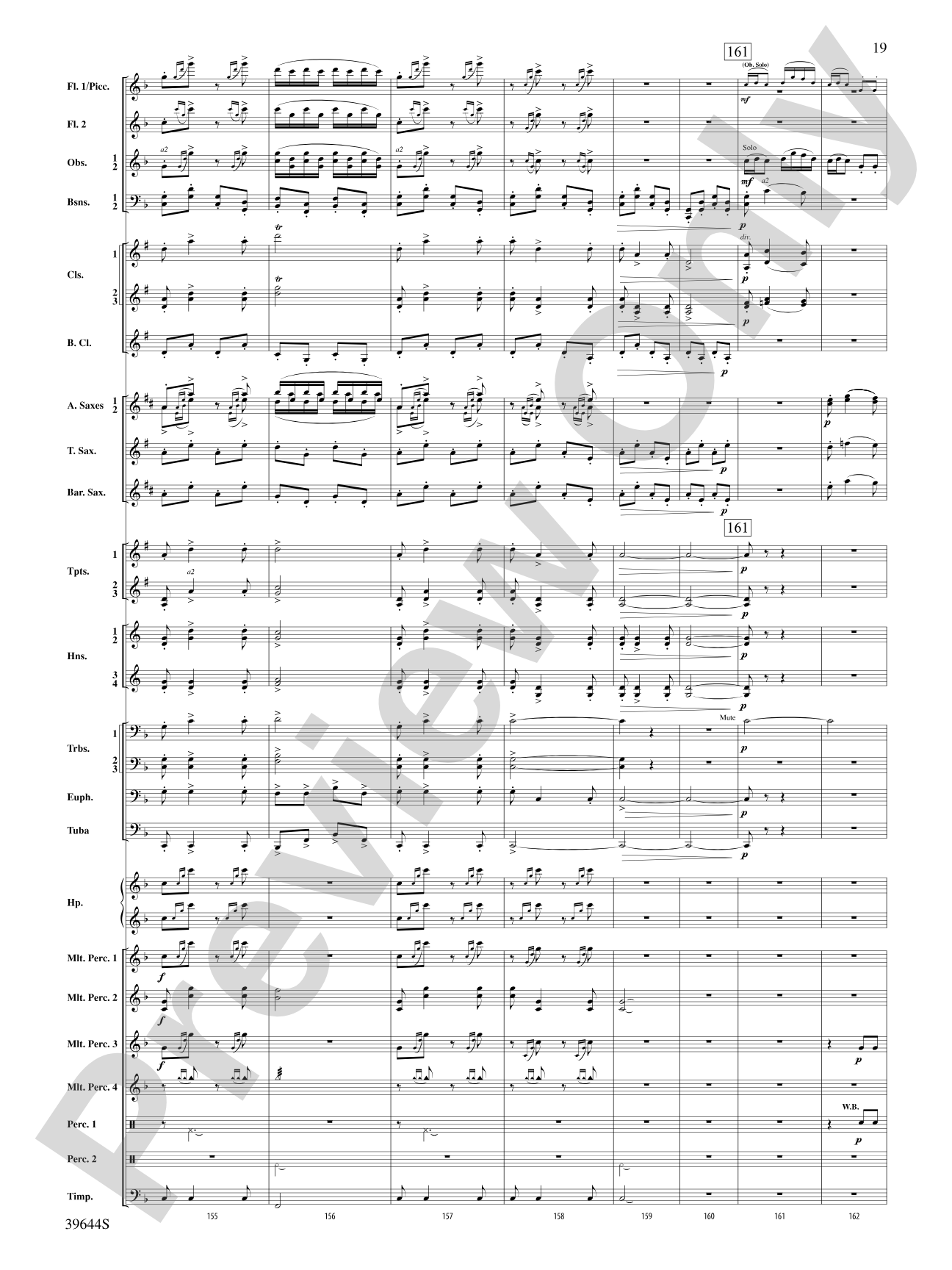
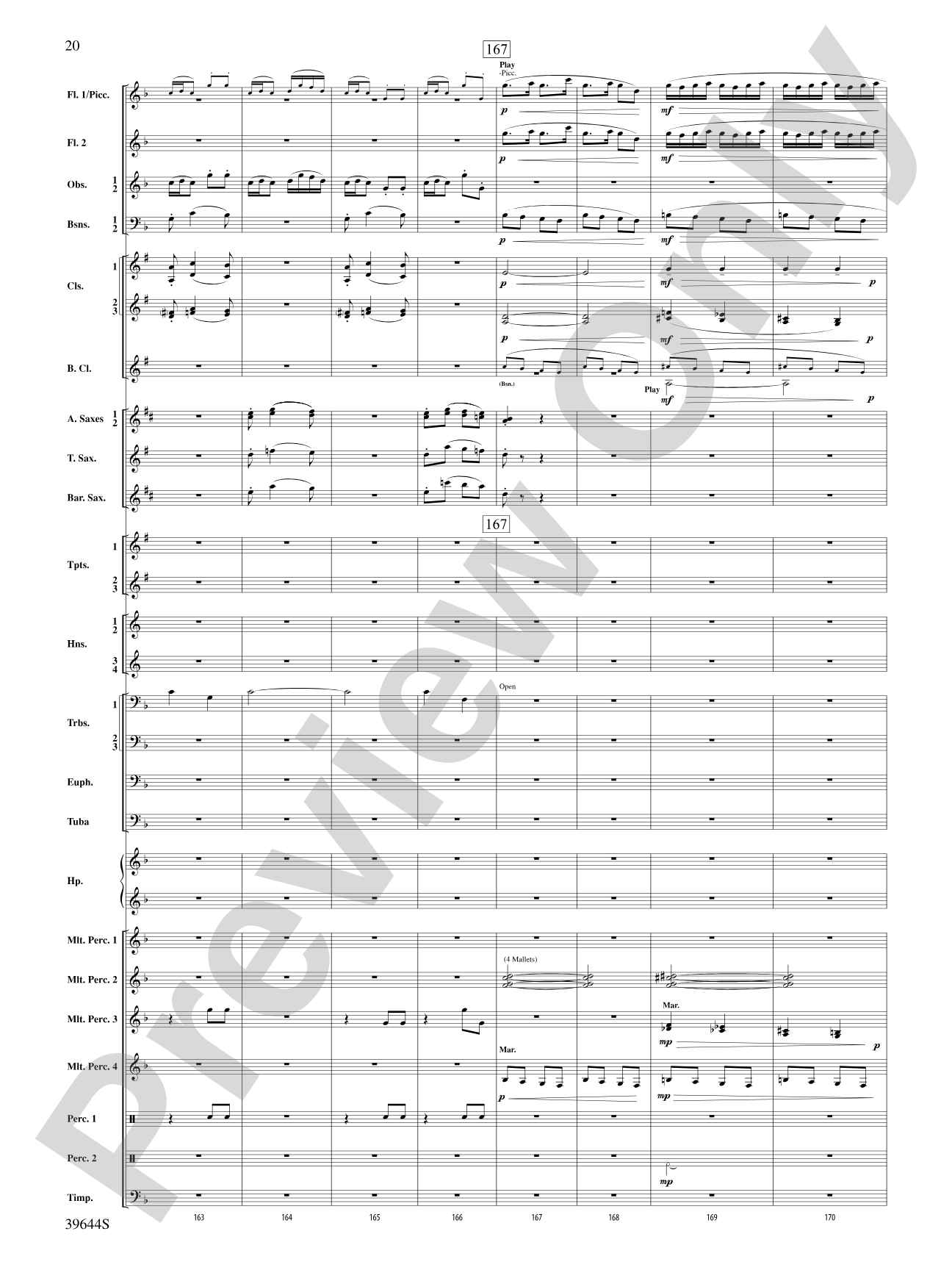
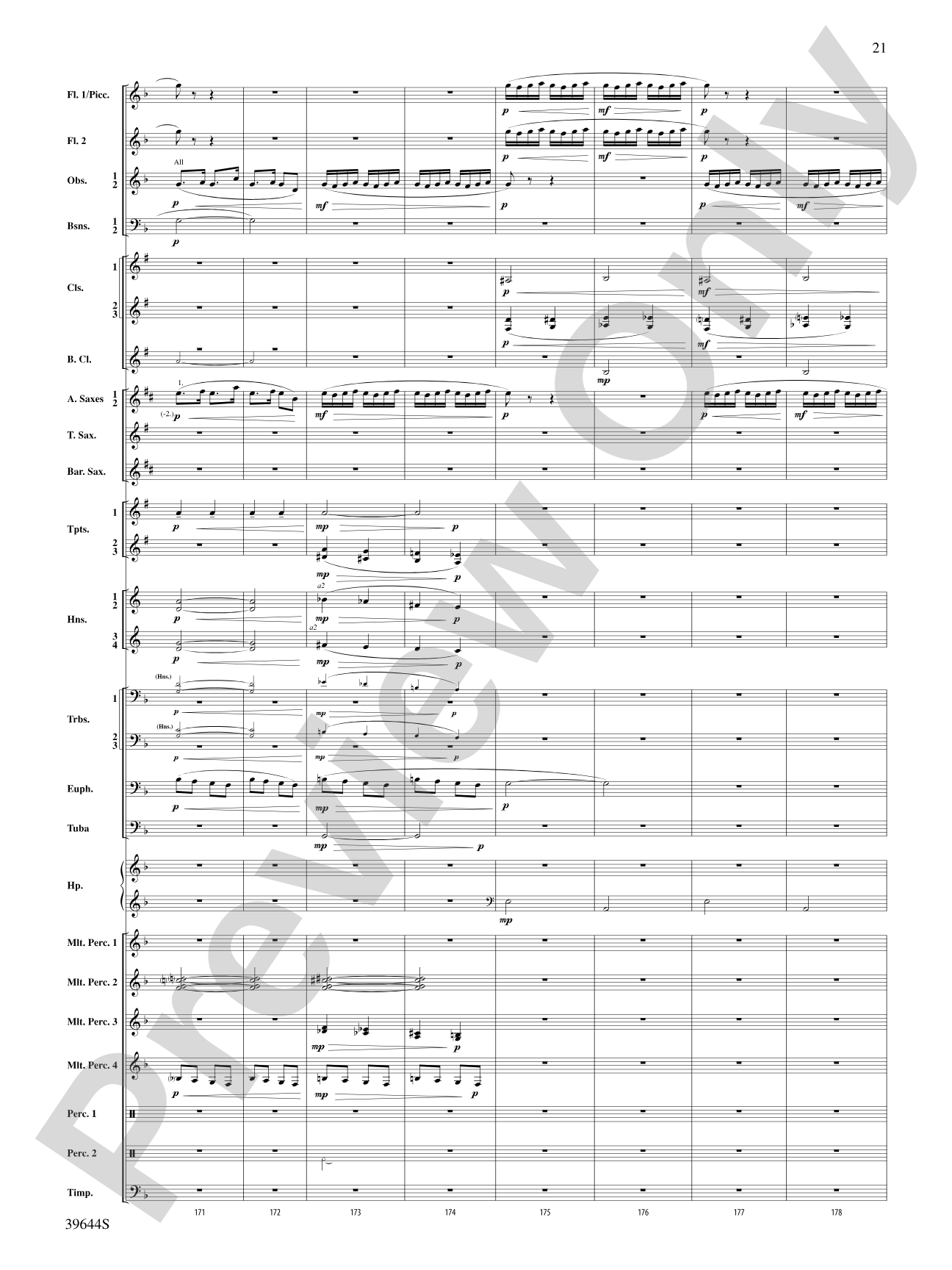
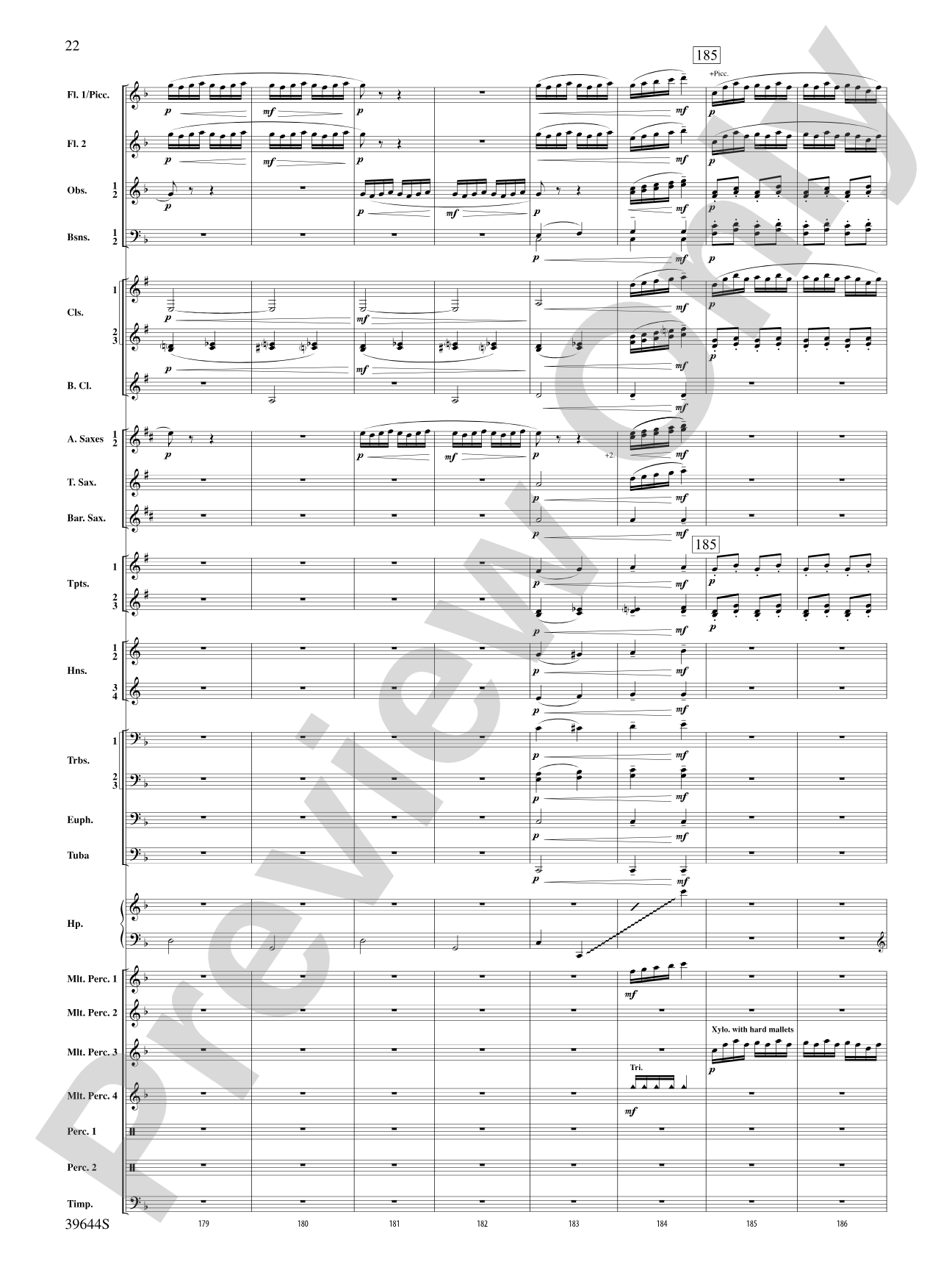
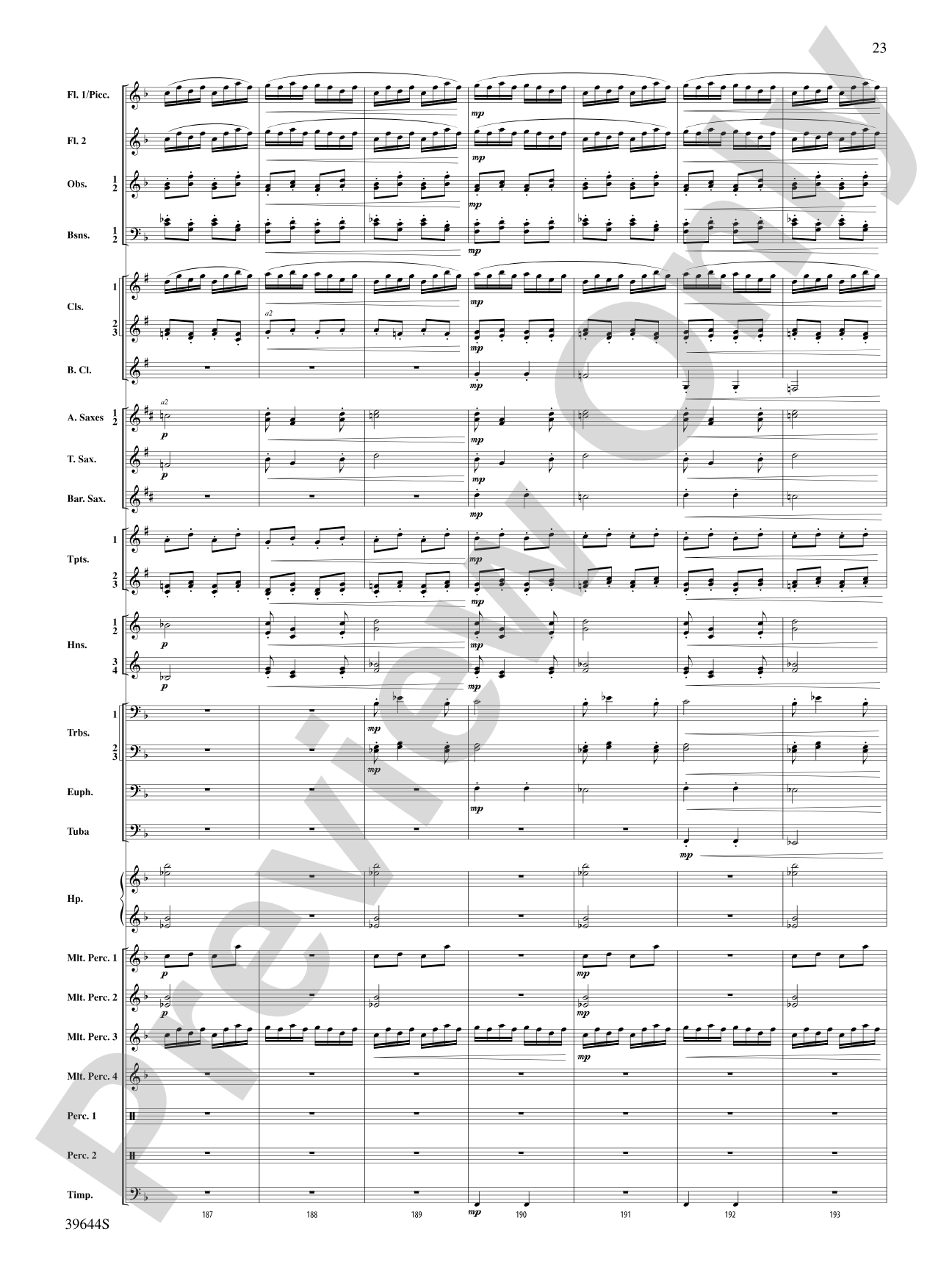
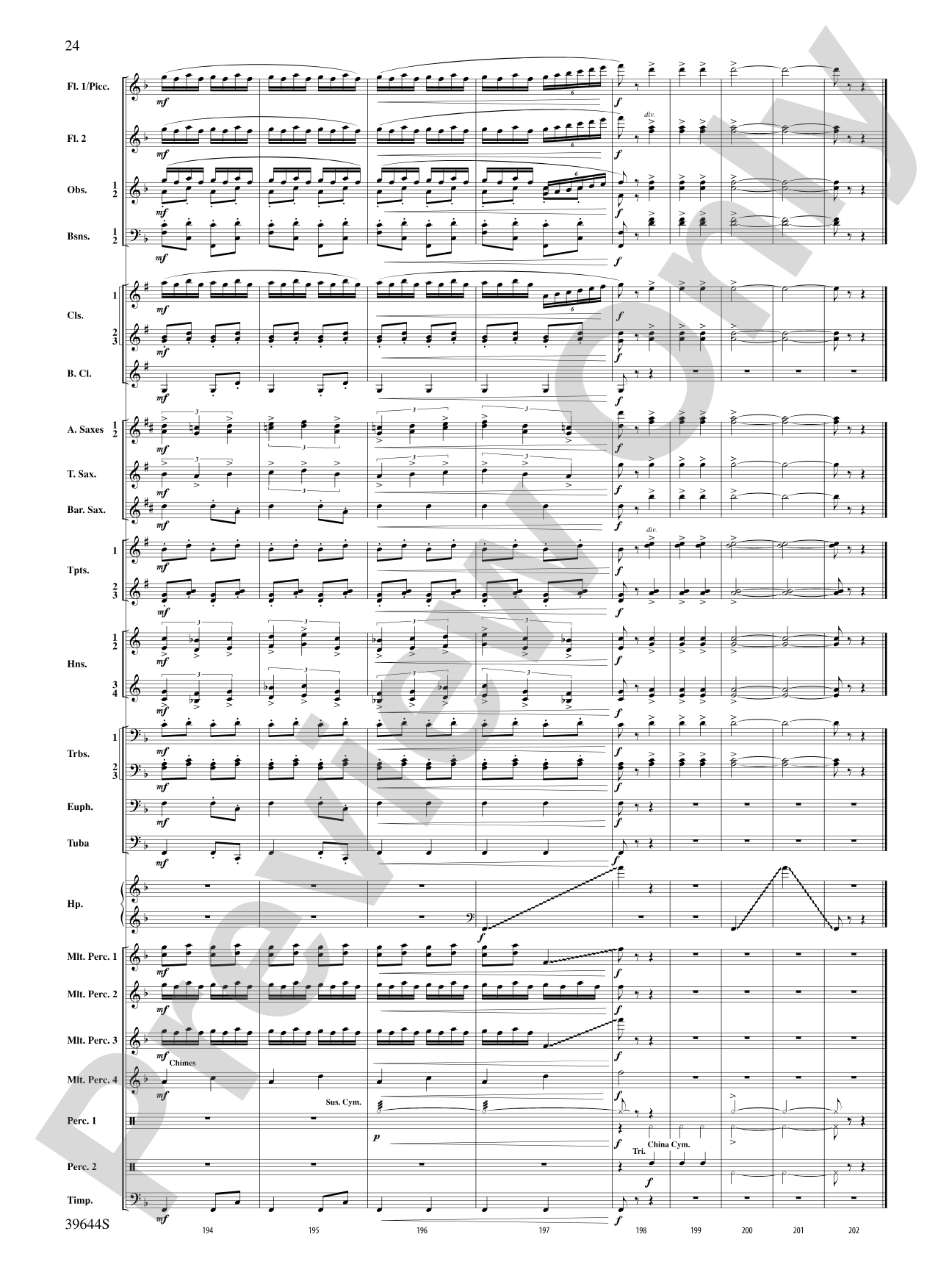

Laideronnette: Impératrice des Pagodes (from Ma mère l'oye ): Score
By Maurice Ravel / arr. Brian Beck
Grade: 4 (Medium Difficult)
Item: 00-PR-0004231
$11.00
Pickup currently not available
Description
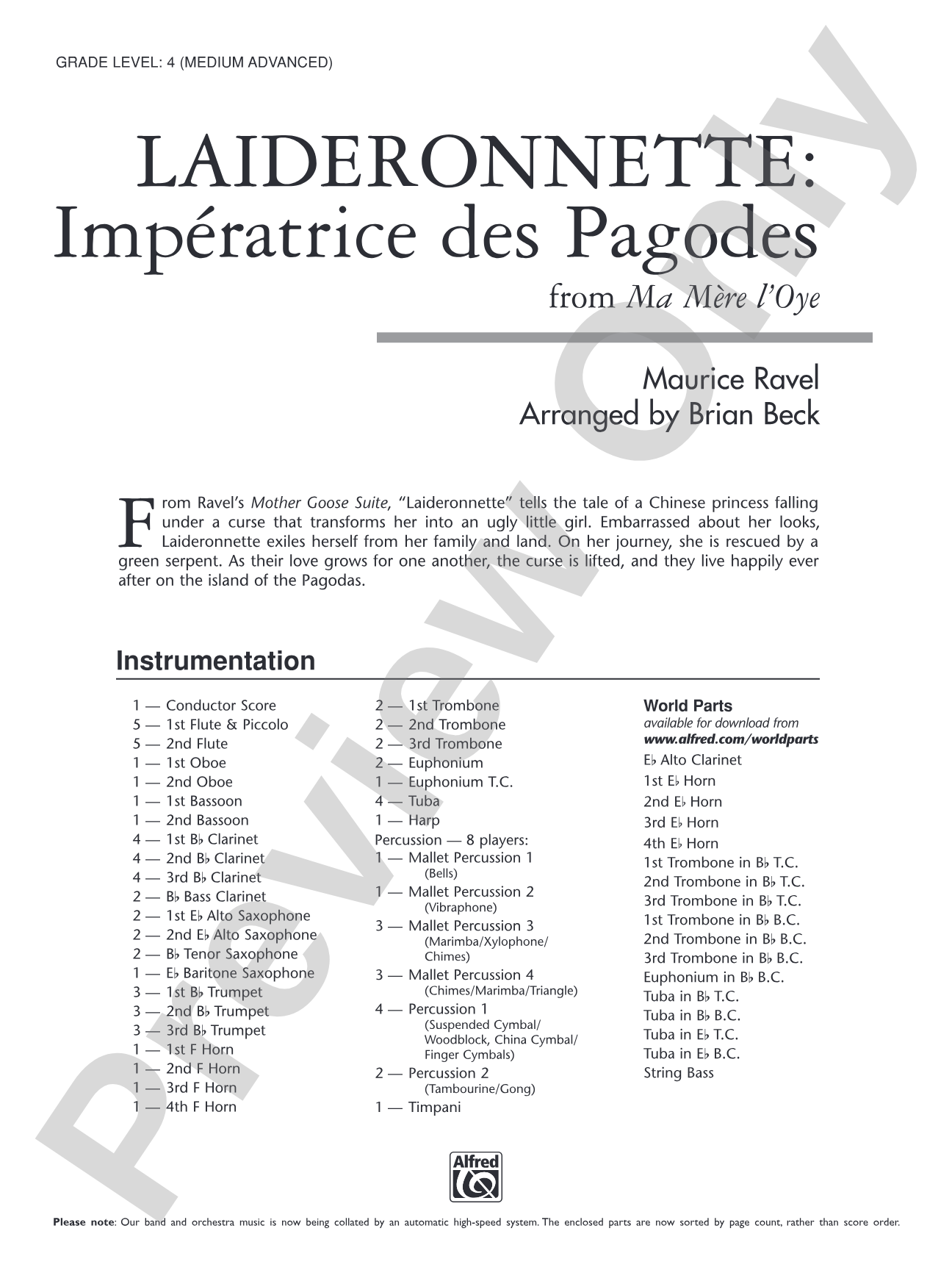
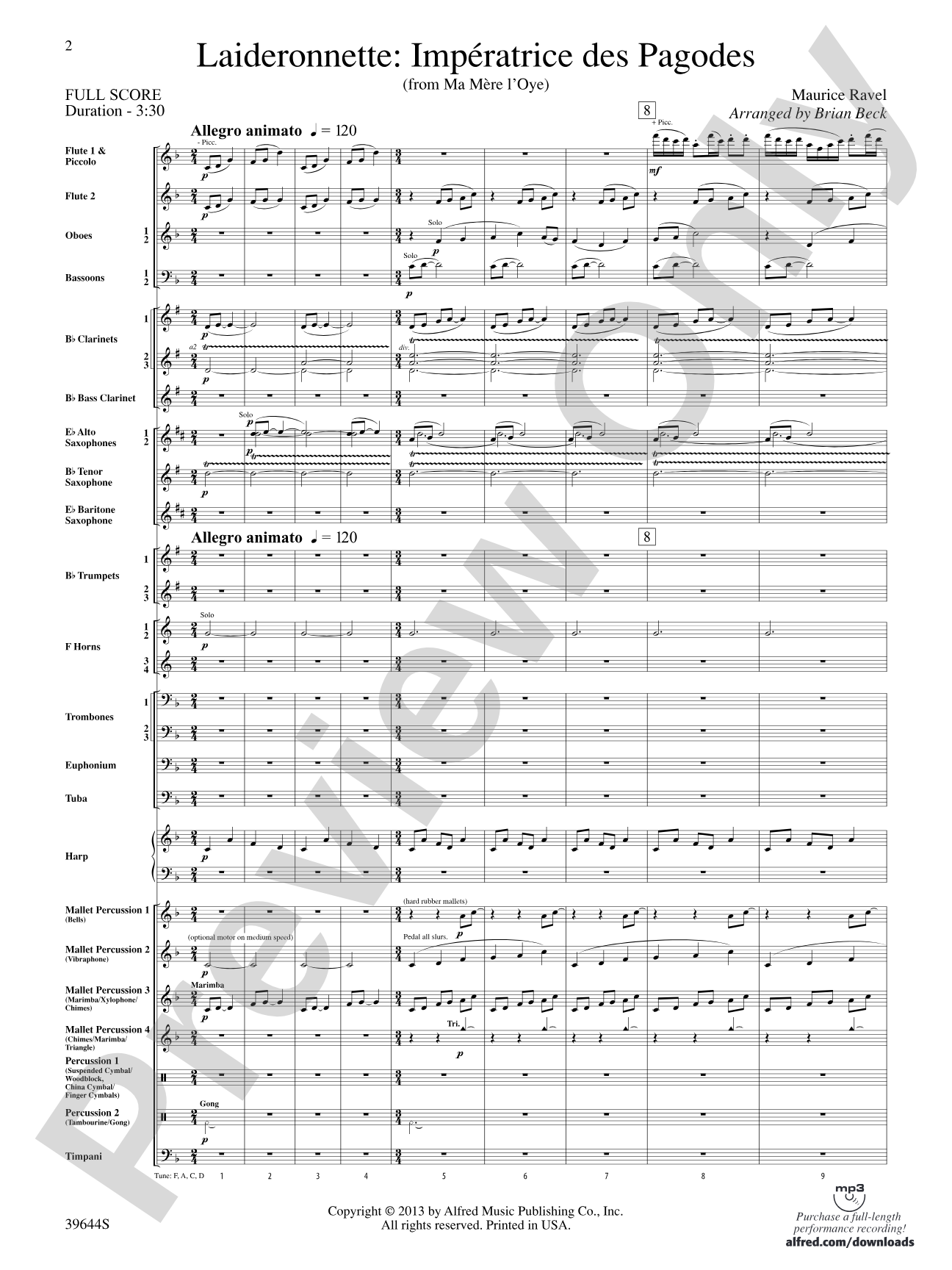
From Ravel's Mother Goose Suite, this piece tells the tale of a Chinese princess falling under a curse that transforms her into an ugly little girl. Laideronnette exiles herself from her family and land but is rescued by a green serpent. As their love grows for one another, the curse is lifted, and they live happily ever after on the island of the Pagodas. (3:30) This title is available in MakeMusic Cloud.


Don't just read it, hear it, play along with it, and watch your students grow with it. In MakeMusic Cloud, Laideronnette: Impératrice des Pagodes (from Ma mère l'oye ): Score comes alive with professional accompaniment, adjustable tempo, and built-in practice tools that turn solo practice into real progress.
Open in the Player
Jump straight in and assign it today.
Start Your Free Trial
Open this title and explore the full library in minutes.
Sample Audio
1
Audio File
--:--
0:00
0:00
Sample Video
No sample videos found.
Additional Details
Series:
Alfred Concert Band
Publisher:
Alfred Music
Page Count:
284
SKU:
00-PR-0004231
More about this title
About the Composer: Maurice Ravel
Maurice Ravel (1875-1937) was a French composer whose harmonic innovations and orchestral brilliance shaped early 20th-century music. His fascination with exotic scales, jazz rhythms, and impressionistic color made him a natural architect of ensemble textures, and his orchestrations remain benchmarks for how wind and string instruments can blend and shimmer. Ma mère l'oye (Mother Goose) emerged from his 1908 piano duet suite and grew into a masterpiece of orchestration, each movement a musical fairy tale rich enough to reward years of teaching and performing.
Why we love this
Brian Beck's arrangement captures Ravel's shimmering orchestral palette with clarity and color that speaks directly to concert band instrumentation. This is a piece that challenges musicians to execute refined articulation, balance transparent textures, and respond to harmonic sophistication typically reserved for advanced youth ensembles—all without requiring the technical extremes of Grade 5 repertoire.
What to expect
A shimmering, story-driven journey through exotic soundscapes. Ravel wraps the narrative of transformation in glittering whole-tone harmonies, delicate percussion, and modal melodies that feel both mysterious and tender. The piece moves from unsettling strangeness into warmth and resolution, with orchestral textures that sparkle like light catching on water.
Who it's for
Directors programming a concert band that has mastered fundamental rhythm reading and intonation and is ready to explore impressionistic harmony and orchestral color. Bands at the Grade 4 level with strong reed and brass sections will find this both rewarding and genuinely performable without compromise.
How to get the most out of it
- Shape the principal melodies with a singing tone; the solo lines (flute, oboe, and clarinet passages) need to soar over the shimmering background without forcing.
- Pay attention to dynamic layers and orchestral transparency. Ravel's colors depend on hearing each instrumental choir distinctly, so resist the urge to let any section bloom too loudly.
- Conduct the slower middle sections with attention to phrase length and rubato. These moments are where the curse transforms Laideronnette; let the tempo breathe slightly to honor the emotional journey.
- Resolve suspensions and whole-tone harmonic movements deliberately. The harmonic language is impressionistic, not diatonic, so your students will benefit from understanding how these chords sit and resolve.
How to use it
Program this as a centerpiece for a concert exploring musical storytelling or French impressionism. Its moderate 3:30 length and programmatic clarity make it an ideal pairing with other coloristic works or as a bridge between lighter Grade 3 fare and more demanding concert repertoire. It also suits thematic concerts celebrating adaptations and orchestrations of beloved classical works.
Skills your students will build
- Executing transparent, balanced ensemble textures in impressionistic harmony
- Responding to whole-tone and modal melodic writing
- Balancing solo lines over shimmer and accompaniment figures
- Sustaining longer phrasing in slower sections with rubato
- Articulation and dynamic control in lyrical passages across multiple sections