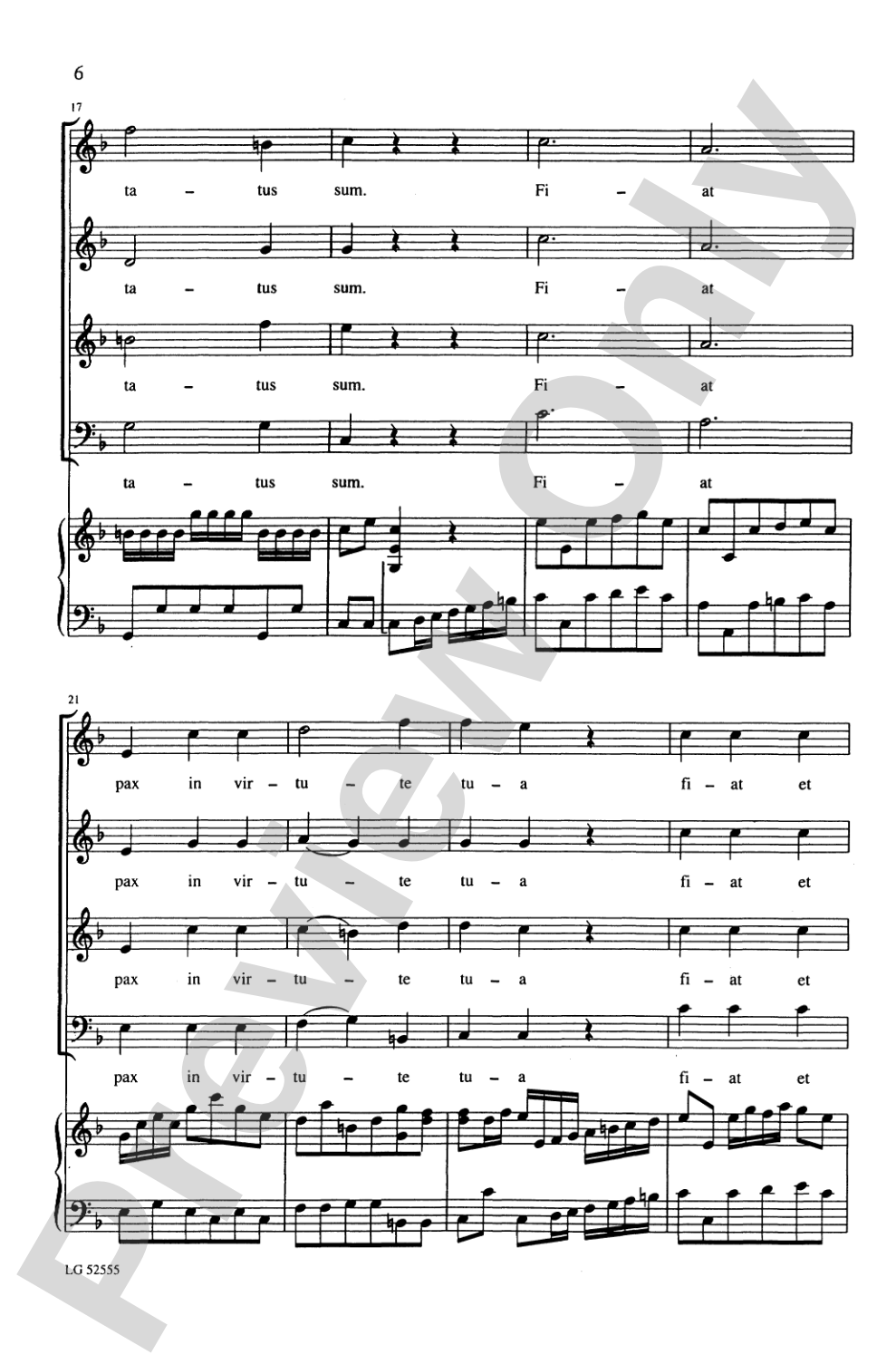
Laetatus Sum Sheet Music Preview

Laetatus Sum: SATB Choral Octavo

By Johann Michael Haydn / ed. Martin Banner

Item: 00-PO-0005069

Digital Download
$3.99

Minimum order quantity: 20 copies

Description

Laetatus Sum: SATB Choral Octavo isn't in MakeMusic Cloud just yet...but it could be. Let us know you'd like to see it, and you'll help shape what comes next. In the meantime, start a free trial and dive into thousands of interactive titles your students can play along with today.

Sample Audio
No sample audio found.
Sample Video
Additional Details
Series: Alfred Archive Edition: Lawson-Gould Music Publishers
Publisher: Alfred Music
Page Count: 24
SKU: 00-PO-0005069

More about this title

About the Composer: Johann Michael Haydn

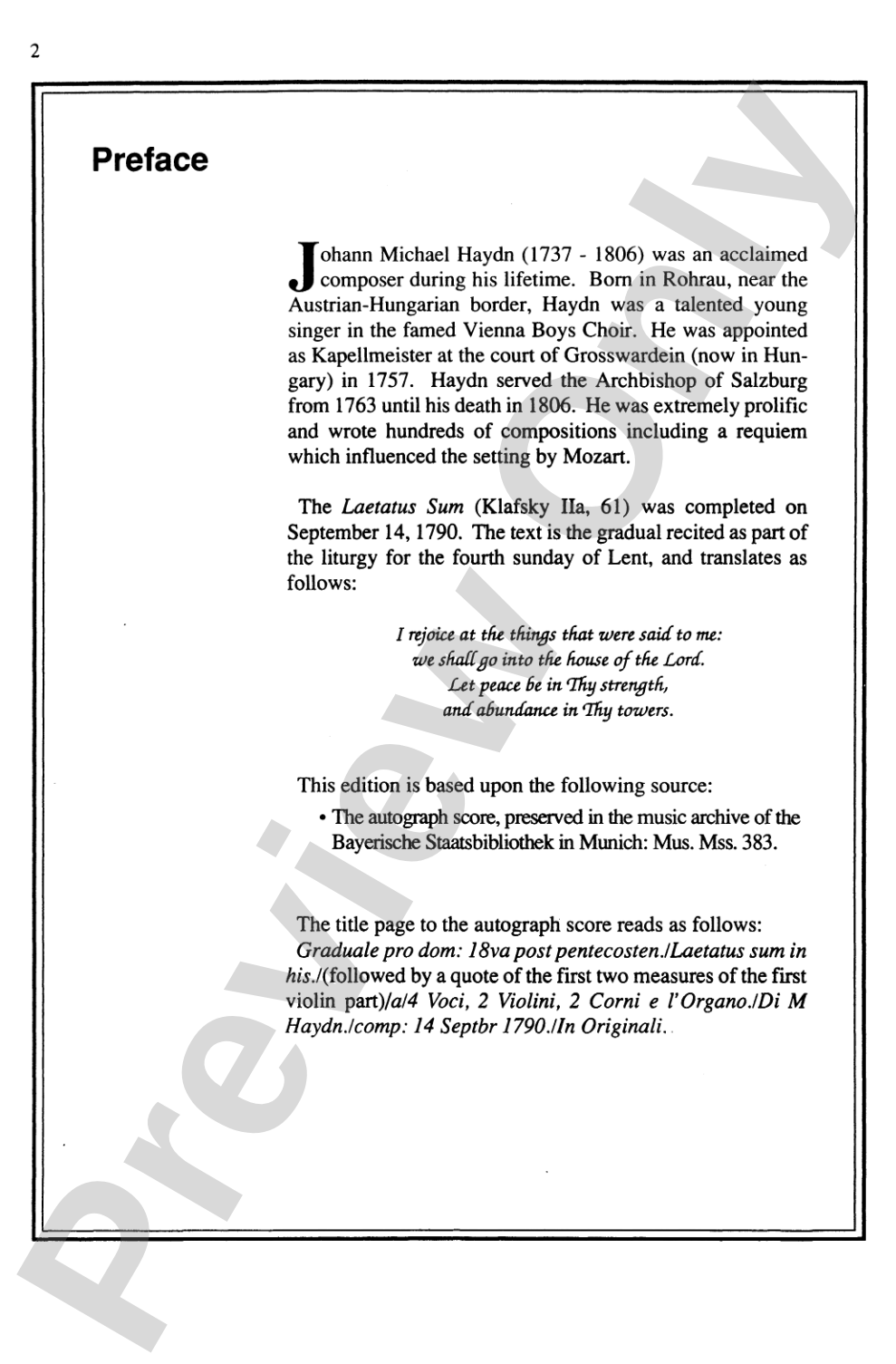
Johann Michael Haydn (1737-1806) was the younger brother of Franz Joseph Haydn and carved out his own significant career as a composer and church musician. He served as Kapellmeister at the Salzburg Cathedral for much of his life, a position that shaped his prolific output of sacred music. Though overshadowed by his brother's fame, Michael Haydn's sacred works demonstrate sophisticated counterpoint, lyrical gift, and deep understanding of liturgical context.

His choral music reflects the classical sensibilities of his era while maintaining the spiritual gravity demanded by the church. Pieces like Laetatus Sum showcase his ability to set sacred texts with both dignity and accessibility, making his work enduring repertoire for choirs seeking substantive classical sacred literature.

Why we love this

Haydn's setting of this psalm text combines classical structural clarity with genuine spiritual warmth, giving singers meaningful material that never feels academic. The piece rewards careful attention to line and phrase while remaining performable by intermediate choirs, striking that rare balance between musical substance and accessibility.

What to expect

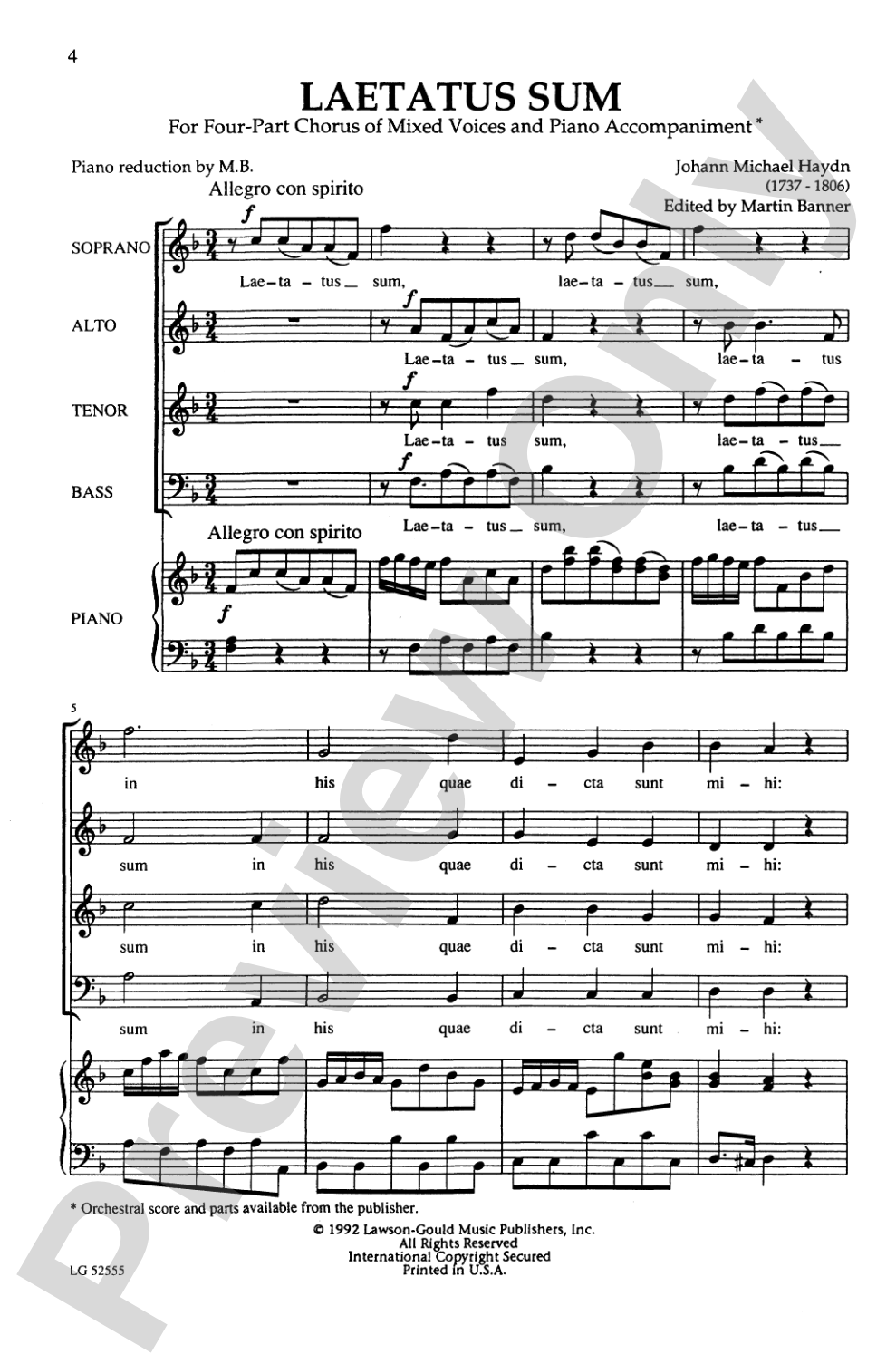
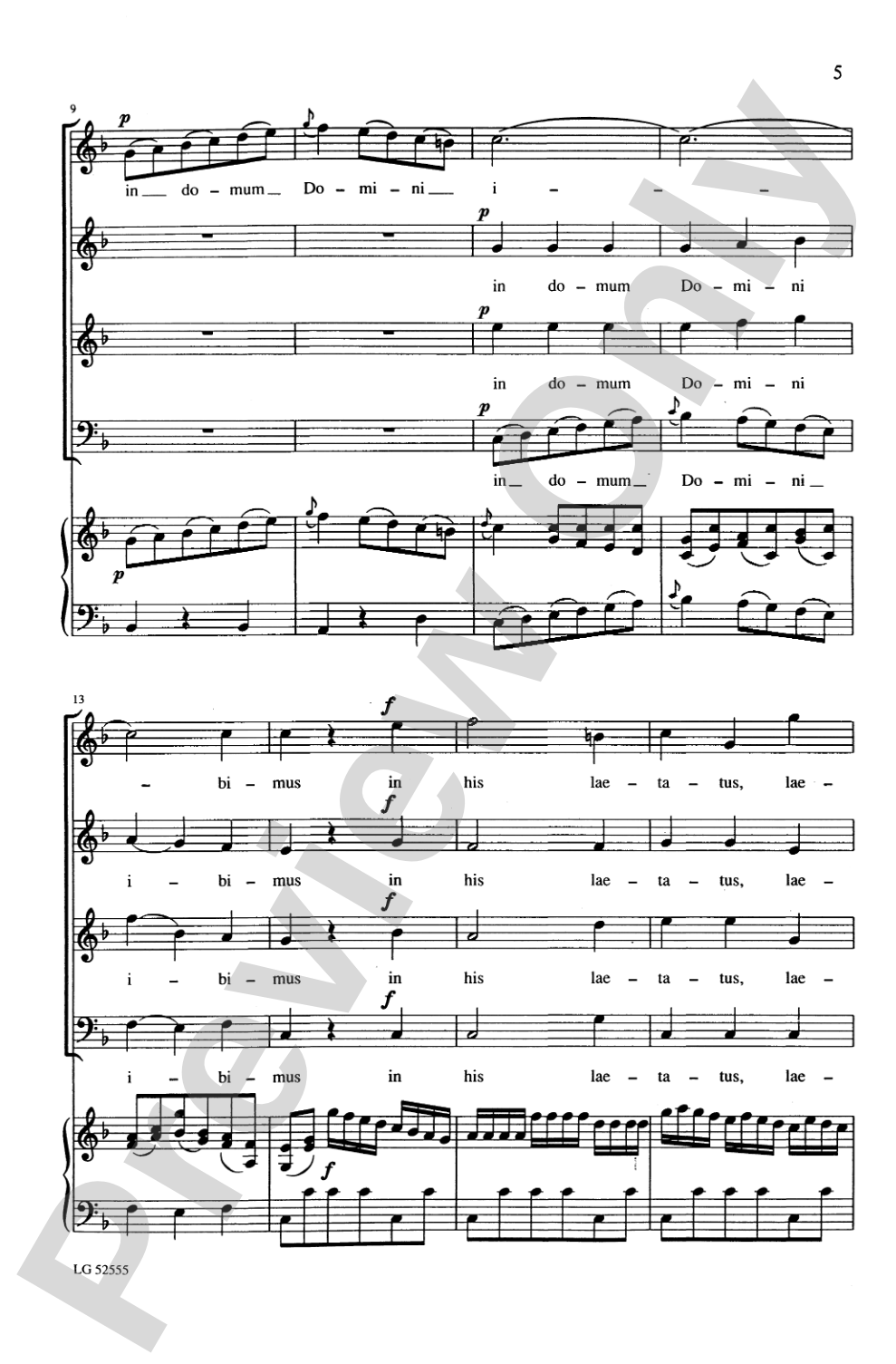
The music radiates the measured confidence of Viennese classicism, with transparent four-part writing that feels both elegant and sincere. Haydn's setting balances contrapuntal interest with homophonic sections, creating a gentle architectural logic that unfolds naturally across the 24 pages. The sacred text emerges clearly through the musical fabric, inviting singers to connect with both the technical demands and devotional character of the piece.

Who it's for

This octavo works well for intermediate to advanced SATB choirs with secure musicianship and comfort reading classical harmonic language. Directors programming sacred classical literature for concert or liturgical settings will find a work substantial enough for serious preparation yet accessible without excessive difficulty.

How to get the most out of it

  • Shape the harmonic rhythm carefully; Haydn's voice leading becomes transparent when each chord receives its proper weight rather than hurried through passages.
  • Treat text articulation as part of the overall line, not as rhythmic punctuation. The clarity of enunciation serves the musical phrase, not the reverse.
  • Balance the soprano and alto lines in dialogue passages. These upper voices often carry the essential melodic content and must remain audible without dominating the texture.
  • Allow time for breath at Haydn's natural phrase endings rather than subdividing longer lines. This respects the classical proportions he composed.

How to use it

Program this as a concert centerpiece in a classical or sacred repertoire set, where its dignity and craftsmanship can anchor the program. It works particularly well in liturgical contexts, where its substantial length and spiritual character suit the demands of actual service use rather than concert novelty.

Skills your students will build

  • Reading and executing classical four-part voice leading
  • Sustaining long musical phrases across multiple measures
  • Balancing homophonic and contrapuntal textures within a single work
  • Coordinating text declamation with harmonic rhythm
  • Navigating classical phrase structure and harmonic syntax

You May Also Like