Lady in the Water: Oboe Sheet Music Preview

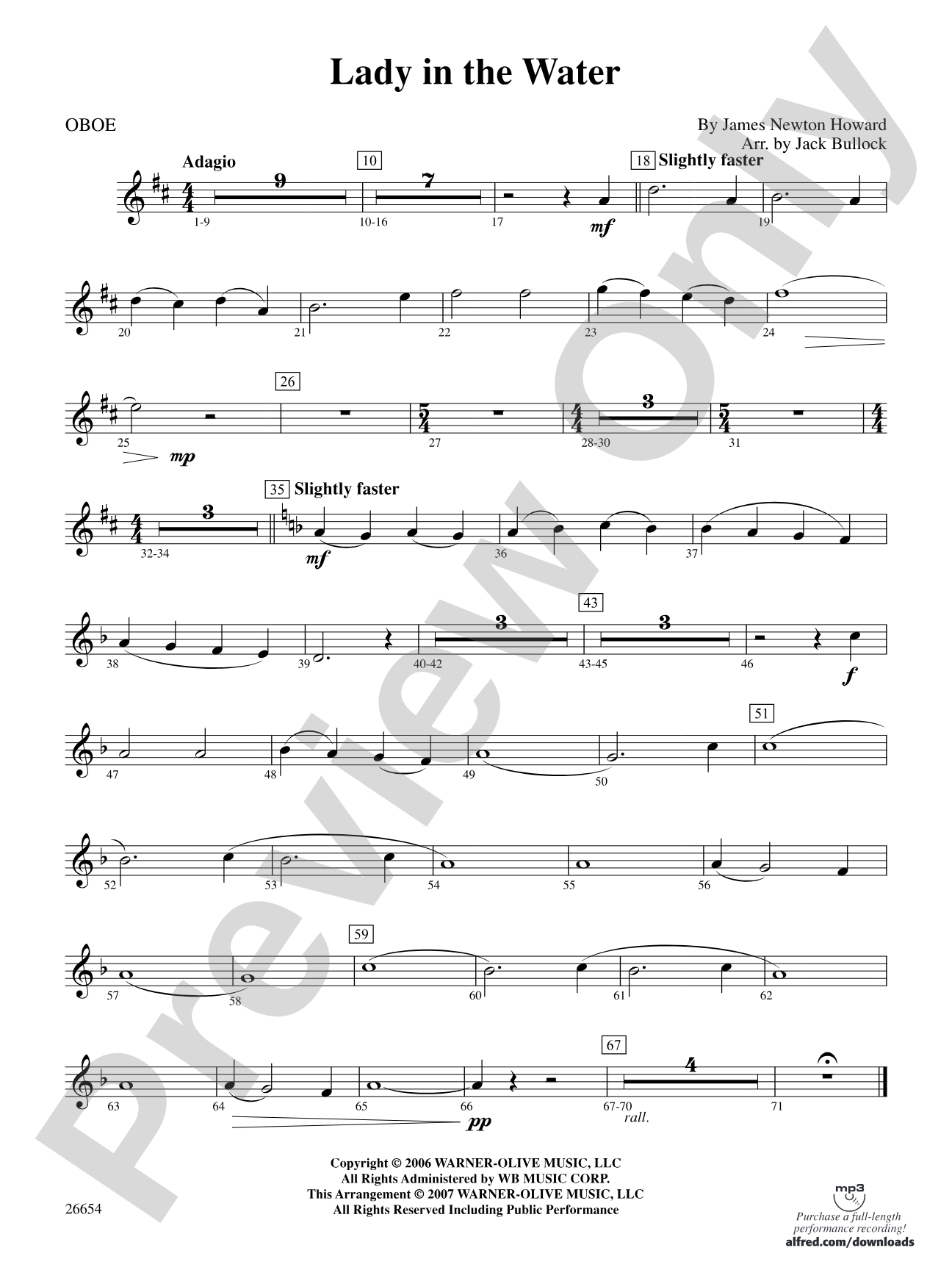
Lady in the Water: Oboe

By James Newton Howard / arr. Jack Bullock

Grade: 2.5

Item: 00-PC-0001149_O1

Digital Download
$3.00
Description
The suspenseful and lovely themes from this thrilling film by M. Night Shyamalan will delight your students. An equally great arrangement when played by strings alone or with any combination of winds. The musical themes appear in short clusters creating serene musical moments in a very refined setting. This title is available in MakeMusic Cloud.

Don't just read it, hear it, play along with it, and watch your students grow with it. In MakeMusic Cloud, Lady in the Water: Oboe comes alive with professional accompaniment, adjustable tempo, and built-in practice tools that turn solo practice into real progress.

Sample Audio
0:00
0:00
Sample Video
Additional Details
Series: Pop Intermediate String/Full Orchestra
Publisher: Alfred Music
Page Count: 56
SKU: 00-PC-0001149_O1

More about this title

About the Composer: James Newton Howard

James Newton Howard is a prolific composer whose film scores span genres from action thrillers to intimate dramas. His work demonstrates a gift for melody that serves emotional storytelling, making his music accessible to student orchestras while maintaining sophisticated harmonic language. Howard has collaborated with major studios and directors for over three decades, creating music that resonates with both film audiences and music educators seeking engaging, contemporary concert material.

Why we love this

Jack Bullock's arrangement captures the film's atmospheric tension and beauty in writing that sits comfortably at Grade 2.5, giving orchestras the thrill of playing recognizable, cinematic music without overreaching technically. The short thematic clusters make this work flexible for mixed instrumentation, so you can perform it exactly as your ensemble is configured that night. Students connect immediately to material they may know from film, which builds engagement across all sections.

What to expect

Graceful and unsettling in equal measure. The orchestration glides through serene passages that feel almost ethereal, then pivots to moments charged with quiet dread. Playing it creates a sense of being inside a suspenseful narrative, where beauty and tension coexist without one overwhelming the other.

Who it's for

Orchestras at the intermediate level seeking contemporary repertoire with immediate appeal and manageable technical demands. This score works equally well for directors building a program around film music or for ensembles wanting a standalone thriller piece that showcases both refinement and drama.

How to get the most out of it

  • Balance the serene moments by having players think about dynamic restraint; these gentle passages gain power through clarity, not volume. Conductor-led rehearsals focusing on phrase shaping will help students avoid pushing into the suspenseful sections too early.
  • If performing with strings alone, ensure the string section has marked their own dynamic peaks and valleys before adding winds. The arrangement's flexibility works best when the core ensemble commits fully to its own sound first.
  • Attend to tempo consistency across thematic transitions; the shift between serene and suspenseful material requires precise ensemble communication, especially at the conductor's downbeats that signal mood changes.
  • Record a rehearsal and listen together as an ensemble. Hearing the full orchestration reveals which voices carry the theme and where individual sections blend into texture, helping players make intentional tonal choices.

How to use it

Open a concert with this piece to set a sophisticated, mysterious tone, or place it mid-program as a palate-cleanser between heavier classical works and upbeat contemporary selections. Its cinematic nature also makes it an excellent choice for film music themed concerts, pops concerts, or school assemblies where students want to perform something that connects to entertainment they know.

Skills your students will build

  • Balancing lyrical phrasing with rhythmic precision
  • Managing dynamic range in extended soft passages
  • Coordinating sectional entries during tempo transitions
  • Sustaining tone quality at low dynamic levels
  • Responding to conductor cues across multiple thematic shifts

You May Also Like