
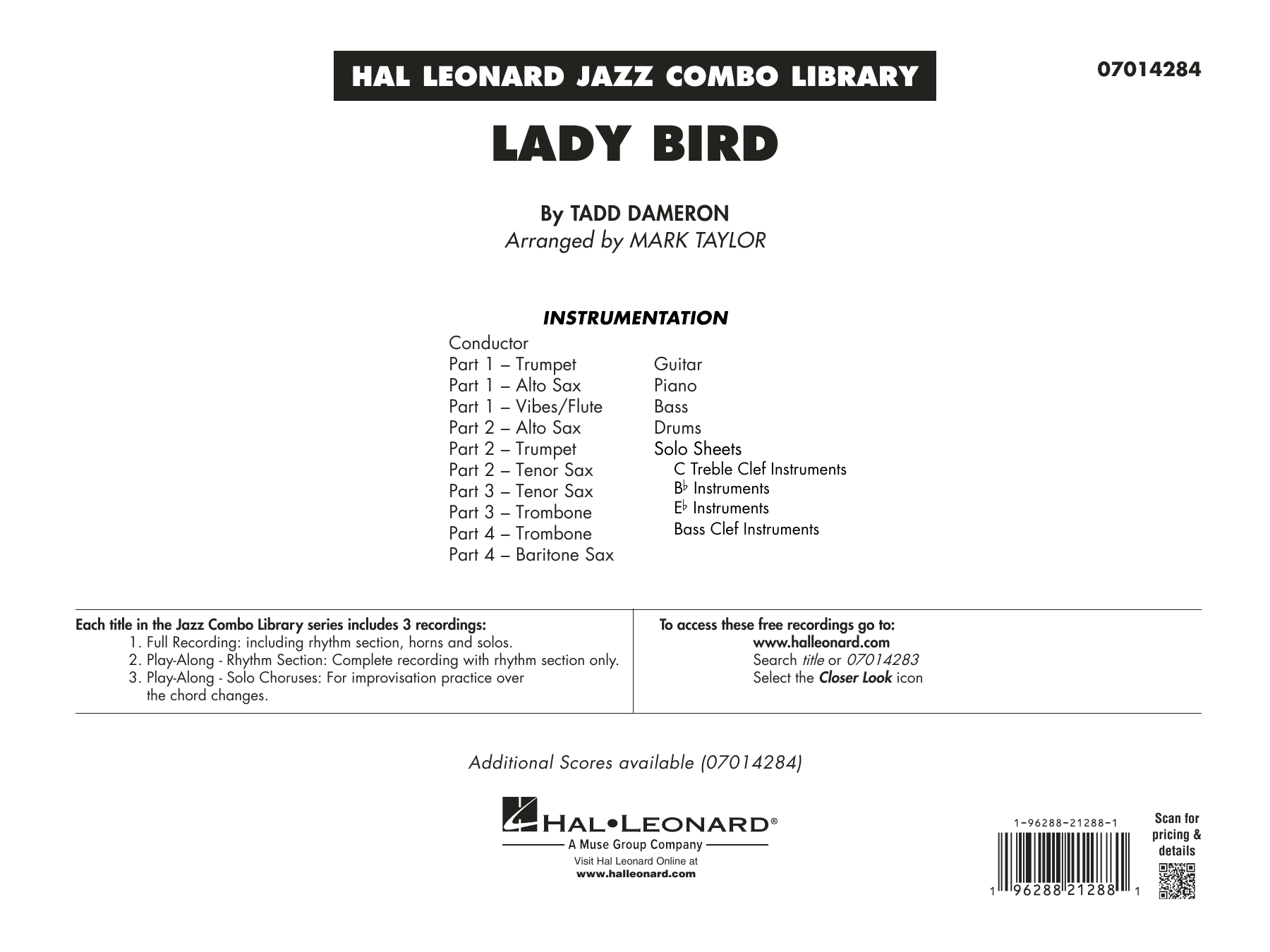

Lady Bird (arr. Mark Taylor): Jazz Ensemble Conductor Score & Parts
By Tadd Dameron / As performed by Miles Davis / Arranged by Mark Taylor
Grade: 4
Item: 35-PK01528176
$40.00
Pickup currently not available
Buy Extra Parts (Digital PDF Download)
Parts Added to Cart!
Description
This medium up tempo standard by bebop composer Tadd Dameron is one of the most recorded tunes by jazz artists. With a 16-bar form and scored here for a 4-horn combo, this is a great addition to your library.


Lady Bird (arr. Mark Taylor): Jazz Ensemble Conductor Score & Parts isn't in MakeMusic Cloud just yet...but it could be. Let us know you'd like to see it, and you'll help shape what comes next. In the meantime, start a free trial and dive into thousands of interactive titles your students can play along with today.
Request This Title
Tell us you want it.
Start Your Free Trial
Explore everything that's ready to play right now.
Sample Audio
No sample audio found.
Sample Video
No sample videos found.
Additional Details
Publisher:
Hal Leonard
SKU:
35-PK01528176
More about this title
About the Composer: Tadd Dameron
Tadd Dameron shaped bebop through composition rather than virtuosic playing. His tunes became standards precisely because they balance harmonic sophistication with melodic accessibility, making them ideal vehicles for both soloists and ensemble work. His influence runs through jazz education because his pieces demand musicianship without sacrificing the joy of playing jazz.
Why we love this
Mark Taylor's arrangement respects the tune's elegant simplicity while giving each section of your ensemble something to voice. The 4-horn combo texture lets younger players hear how jazz voicings work without overwhelming them, and because this tune has been recorded hundreds of times, students arrive already knowing the melody in their bones.
What to expect
Breezy and sophisticated at once. The medium tempo and straightforward form invite confident playing, while the harmonic language underneath keeps things interesting for your better readers. It swings without strain.
Who it's for
Jazz ensembles at the grade 4 level who want to dig into a standard with real history and recorded reference points. Directors building a repertoire of classic bebop heads will find this arrangement accessible yet substantial enough to develop ensemble musicianship.
How to get the most out of it
- Balance the horn blend by asking your players to match vowel shapes on sustained chords; a closed 'oh' sound sits better than an open 'ah' in close voicings.
- Keep the rhythm section locked in on the groove before adding horn parts; the 16-bar form repeats, so consistency in feel matters more than strict tempo.
- Feature your soloists in the head-out, letting them hear how the tune sits comfortably over the changes after the ensemble intro.
- Mark phrase endings clearly so horn players know where to breathe and release together.
How to use it
Pair this with other bebop standards of similar length to build a jazz set, or program it as a palate cleanser between larger classical works. It works equally well as a rehearsal staple for developing reading skills or as a performance piece that audiences recognize immediately.
Skills your students will build
- Voicing jazz chords in close harmony
- Phrasing over a walking bass line
- Following a 16-bar form through multiple choruses
- Balancing ensemble blend in small combo textures
- Reading jazz articulation and rhythmic figures consistently