
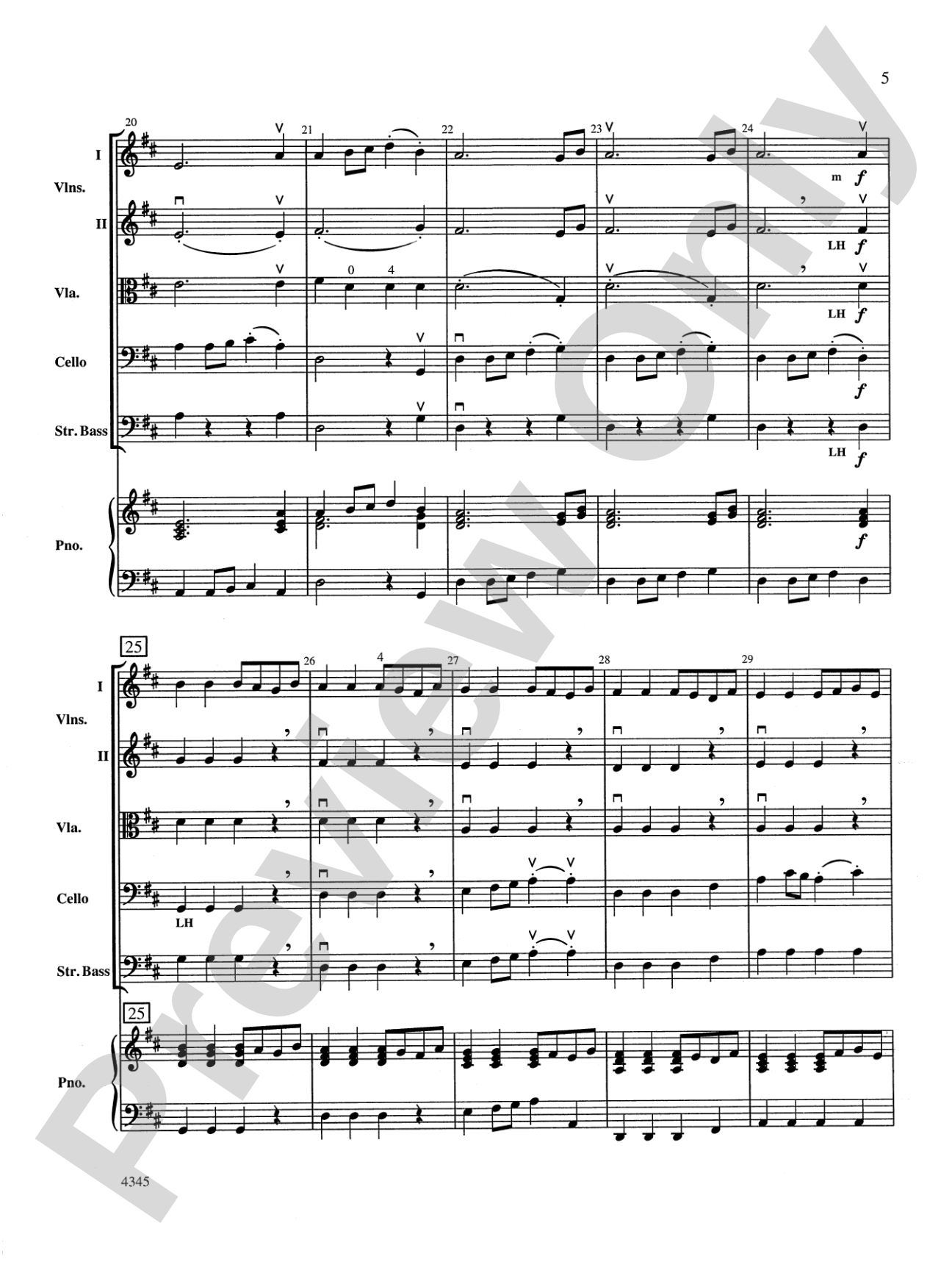
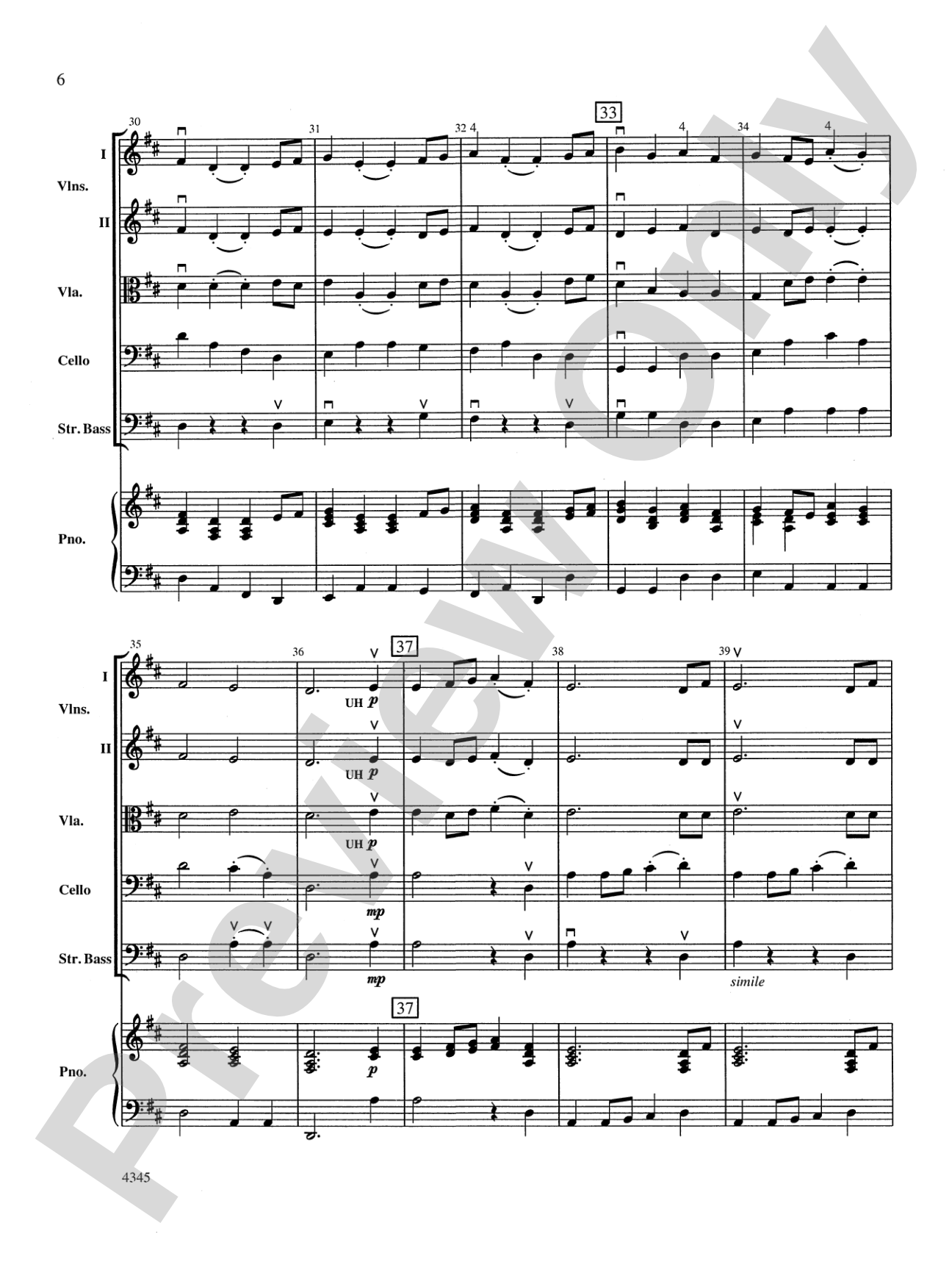
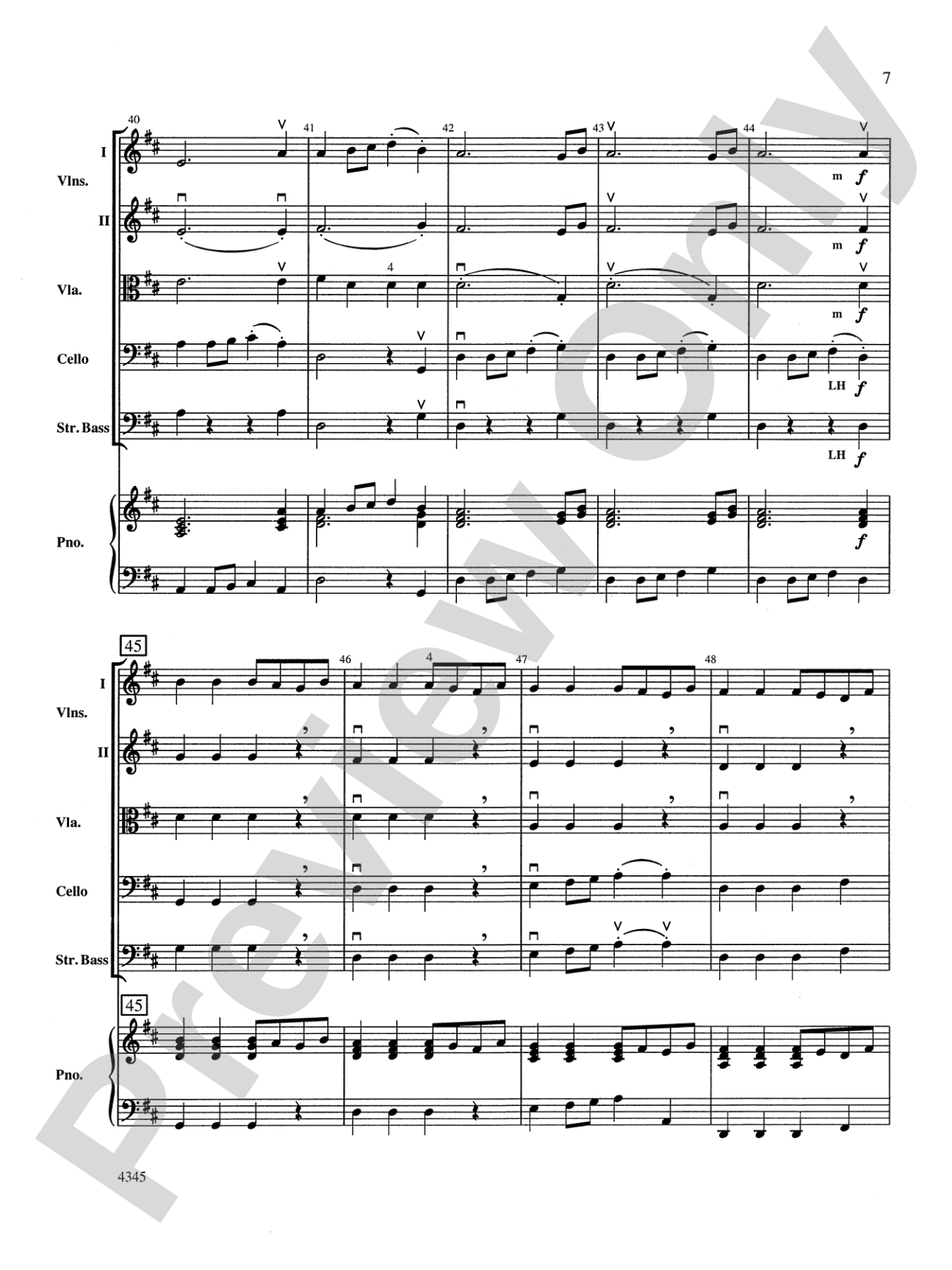
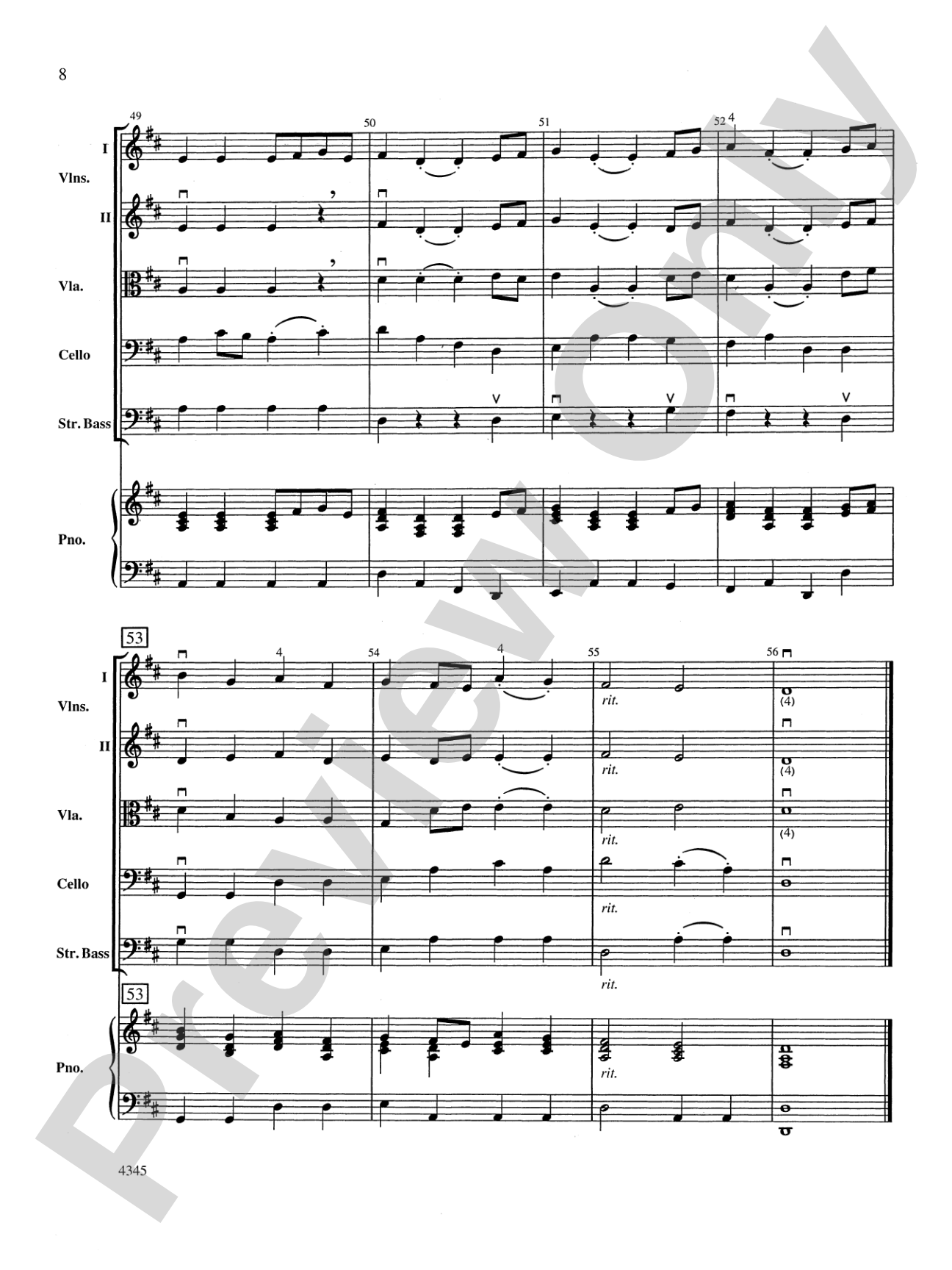

La Rejouissance from the "Royal Fireworks Music": String Orchestra Conductor Score & Parts
(from Royal Fireworks Music)
By George Frideric Handel / arr. Richard Meyer
Grade: 1
Item: 00-PK-0001866

$42.00
Pickup currently not available
Buy Extra Parts (Digital PDF Download)
Parts Added to Cart!
Description
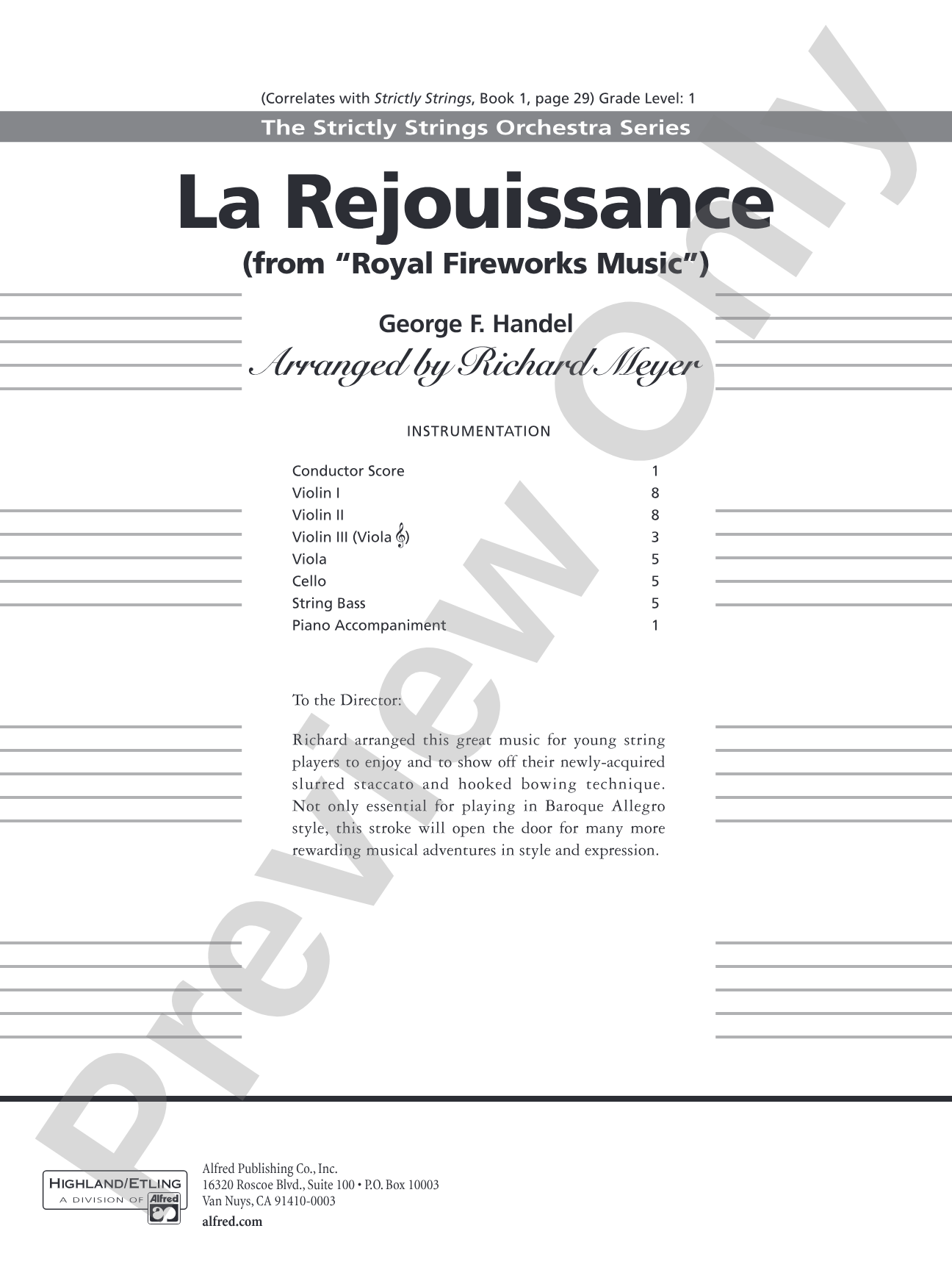
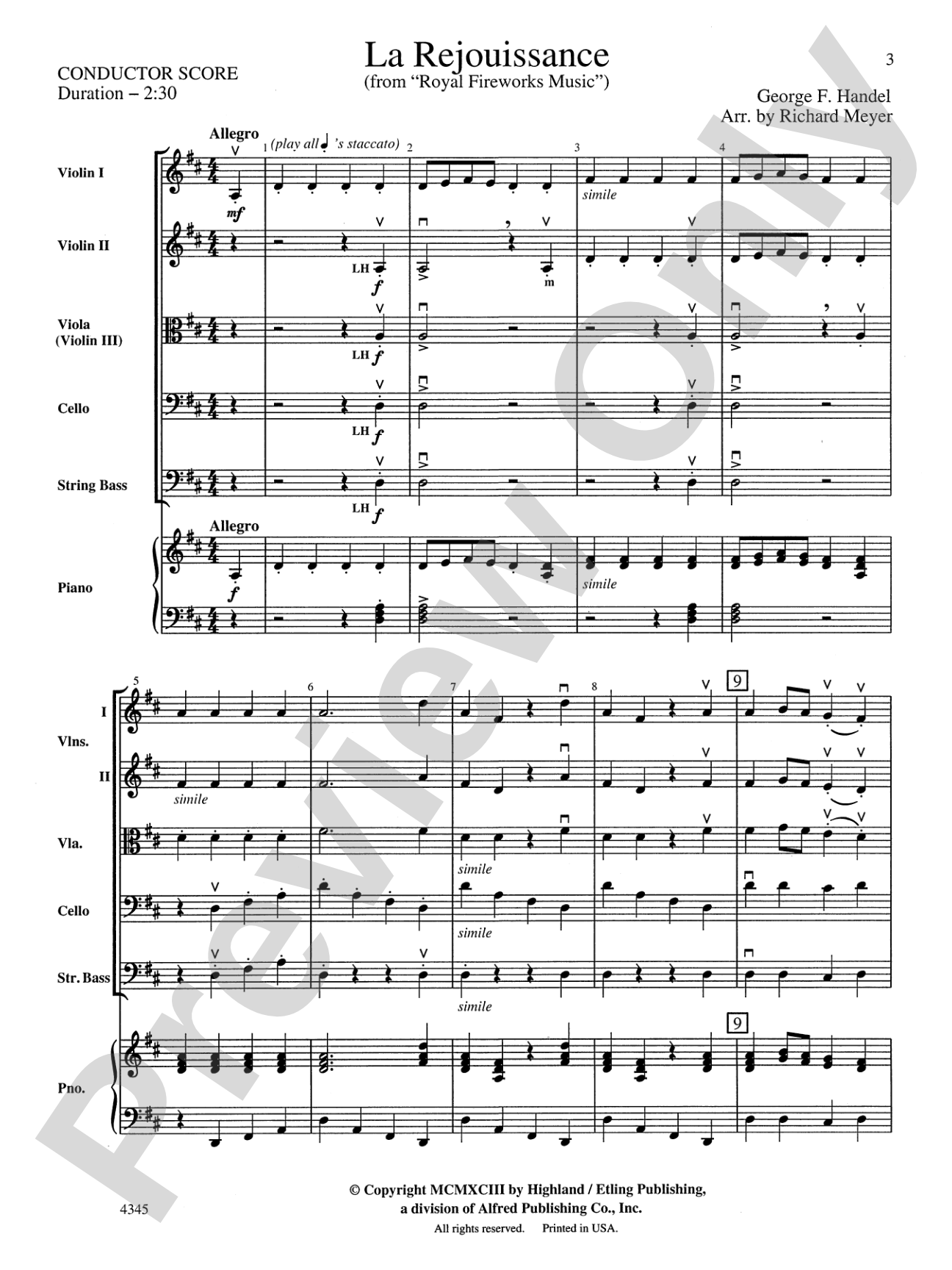
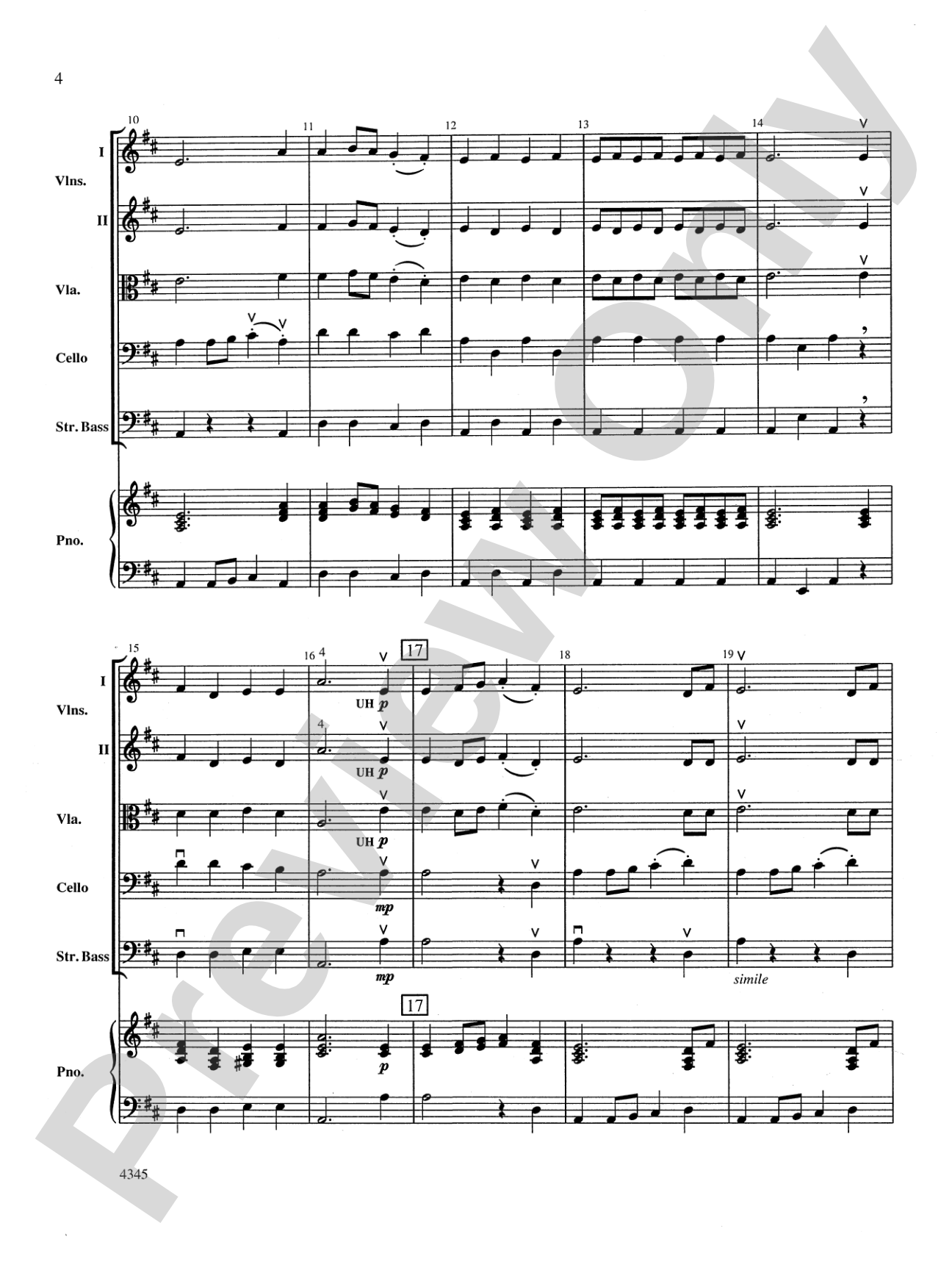
Richard arranged this great music for young string players to enjoy and to show off their newly-acquired slurred staccato and hooked bowing technique. Not only essential for playing in Baroque Allegro style, this stroke will open the door for many more rewarding musical adventures in style and expression. (2:03) This title is available in MakeMusic Cloud.


Don't just read it, hear it, play along with it, and watch your students grow with it. In MakeMusic Cloud, La Rejouissance from the "Royal Fireworks Music": String Orchestra Conductor Score & Parts comes alive with professional accompaniment, adjustable tempo, and built-in practice tools that turn solo practice into real progress.
Open in the Player
Jump straight in and assign it today.
Start Your Free Trial
Open this title and explore the full library in minutes.
Sample Audio
1
Audio File
--:--
0:00
0:00
Sample Video
No sample videos found.
Additional Details
Series:
Highland/Etling Strictly Strings
Publisher:
Alfred Music
Page Count:
72
SKU:
00-PK-0001866
More about this title
About the Composer: George Frideric Handel
George Frideric Handel (1685-1759) was a German-born composer who spent most of his creative life in England, where he became a dominant force in Baroque music. He excelled across multiple genres: opera, oratorio, instrumental concertos, and ceremonial music. His ability to craft memorable melodies and employ bold orchestration made his work accessible to both court audiences and the broader public.
Handel's "Royal Fireworks Music" was composed in 1749 for a grand celebration marking the Treaty of Aix-la-Chapelle. The suite showcases his gift for festive, energetic writing that combines French Baroque elegance with Italian flair. For string players, this music offers an ideal introduction to the harmonic language and stylistic features that define the Baroque era.
Why we love this
Meyer's arrangement captures the ceremonial brilliance of Handel's original without overwhelming young players. The Grade 1 setting makes this iconic music genuinely achievable while preserving the slurred staccato and hooked bowing techniques that give Baroque style its essential character. Your ensemble will perform recognizable, substantial repertoire and gain real stylistic foundation rather than oversimplified versions.
What to expect
Festive and ceremonial, with stately elegance. The writing propels forward with rhythmic energy and clear harmonic movement, evoking the pageantry of royal celebration. There's a sense of occasion and grandeur that young players can feel in every phrase, even at an accessible level.
Who it's for
String directors seeking repertoire that builds foundational Baroque technique while maintaining student engagement. Young orchestras at the Grade 1 level will find a piece that sounds significant and rewarding to perform, with authentic stylistic demands that stretch their artistic growth without requiring advanced technique.
How to get the most out of it
- Shape the slurred staccato articulation with clear separation between notes while maintaining legato within each bow stroke. The character depends on the precision of this technique, so practice the bowings slowly and deliberately before increasing tempo.
- Balance the ensemble so that the melody line projects clearly over the harmonic foundation. At Grade 1, younger players benefit from hearing which part carries the primary phrase.
- Approach the Allegro tempo as energetic but not rushed. Allow the stately character of the original ceremonial music to breathe, especially in phrase endings.
How to use it
Program this as a concert opener to establish energy and style, or pair it with other Baroque string selections to build a thematic program. The 2:03 duration makes it ideal for festival competitions and concert pacing. Consider pairing it with Renaissance or early Classical pieces to create a mini-era program that demonstrates stylistic growth.
Skills your students will build
- Slurred staccato bowing with crisp articulation
- Hooked bowing technique
- Baroque articulation and phrasing conventions
- Ensemble balance and rhythmic precision in Allegro style
- Reading and executing ornamental figures characteristic of the Baroque era