
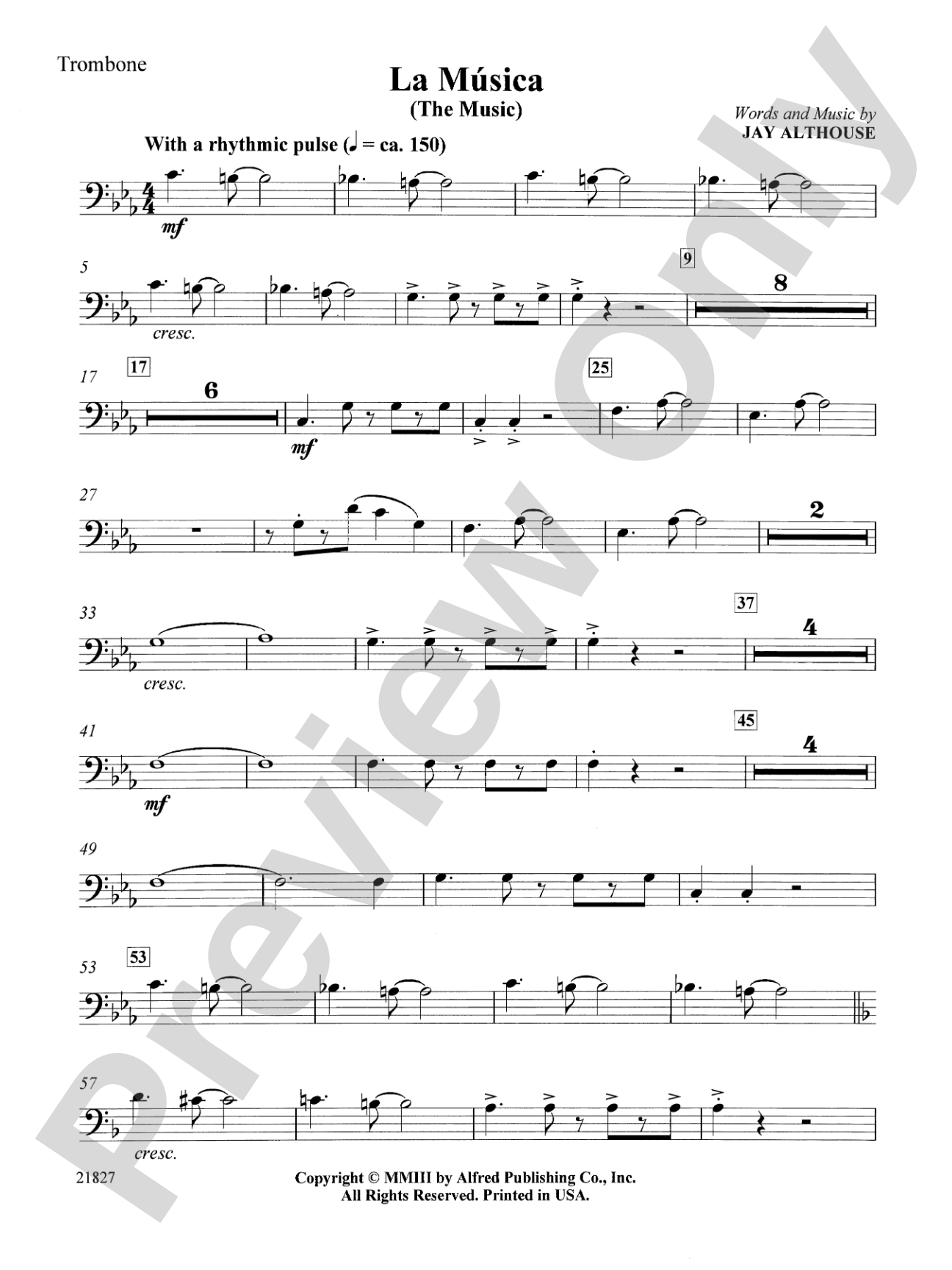

La Musica (The Music): 1st Trombone: Choral SoundPax
(The Music)
Music by Jay Althouse
Item: 00-PC-0000484_TN1
$3.00
Pickup currently not available
Description
Includes parts for 2 trumpet, 2 trombone, alto sax, tenor sax, percussion and rhythm.


Don't just read it, hear it, play along with it, and watch your students grow with it. In MakeMusic Cloud, La Musica (The Music): 1st Trombone: Choral SoundPax comes alive with professional accompaniment, adjustable tempo, and built-in practice tools that turn solo practice into real progress.
Open in the Player
Jump straight in and assign it today.
Start Your Free Trial
Open this title and explore the full library in minutes.
Sample Audio
1
Audio File
--:--
0:00
0:00
Sample Video
No sample videos found.
Additional Details
Series:
Alfred Choral Designs
Publisher:
Alfred Music
Page Count:
40
SKU:
00-PC-0000484_TN1
Instrumentation:
SoundPax
More about this title
About the Composer: Jay Althouse

Jay Althouse studied music education and music at Indiana University of Pennsylvania, where he later received the Distinguished Alumni award. His career spans both the publishing and composing sides of choral music: he spent eight years as a rights and licenses administrator at a major educational publisher and served on the Executive Board of the Music Publishers Association of America. As a composer, he has over 800 choral works in print across all ability levels, performed regularly in English-speaking countries worldwide.
Althouse is a writer member of ASCAP and a consistent recipient of the ASCAP Special Award for his compositions. Beyond individual pieces, he has co-written children's musicals with his wife Sally K. Albrecht, assembled vocal solo collections including Folk Songs for Solo Singers, and authored influential classroom resources such as The Complete Choral Warm-up Book, Accent on Composers, Ready to Read Music, and Sixty Music Quizzes. He has also served on the board of the North Carolina Master Chorale and currently advises the National Advisory Board of the Folk Art Society of America.
Why we love this
Althouse brings authentic Latin flavor to an ensemble piece that actually works with what most choirs have access to, including jazz band instrumentation. The SoundPax format gives you recorded accompaniment support while keeping the focus on your singers and the brightness of the brass and saxophone sound, making this feel more like a celebration than a sidelined novelty number.
What to expect
Vibrant and approachable, with the warmth of Spanish language text paired against bright horn colors and contemporary rhythm. The energy feels inclusive and modern while still grounded in authentic Latin musical sensibility, inviting both singers and instrumentalists into the same musical conversation.
Who it's for
Choirs at the middle school through early high school level who have access to a jazz ensemble, pep band, or instrumental section. This works particularly well for groups programming multicultural repertoire or looking to engage students who play jazz and contemporary instruments alongside traditional choral singers.
How to get the most out of it
- Lock in the rhythm section early; the percussion and rhythm parts establish the groove that everything else hangs on, so rehearse them separately before bringing the full ensemble together.
- Balance the brass and saxophone voicings against your choir rather than burying them. These instruments should feel like partners in the texture, not buried support.
- Shape the phrasing across the choral sections with the same attention you would give to a pop arrangement: think contemporary and energetic rather than classical and restrained.
- Record a rehearsal run-through against the accompaniment track to identify where your ensemble is rushing or dragging relative to the recorded tempo.
How to use it
Perfect for a spring or end-of-year concert where you want to shift the mood from classical to contemporary, or for a concert celebrating diverse cultures and languages. Place it after a set of traditional repertoire to show range, or program it alongside other world music selections to build a thematic concert arc.
Skills your students will build
- Singing in Spanish with rhythmic precision and clear diction
- Balancing vocal parts with jazz and contemporary instrumental textures
- Reading and responding to a recorded accompaniment track for ensemble cohesion
- Understanding Latin rhythm patterns and percussion roles in ensemble arrangements