
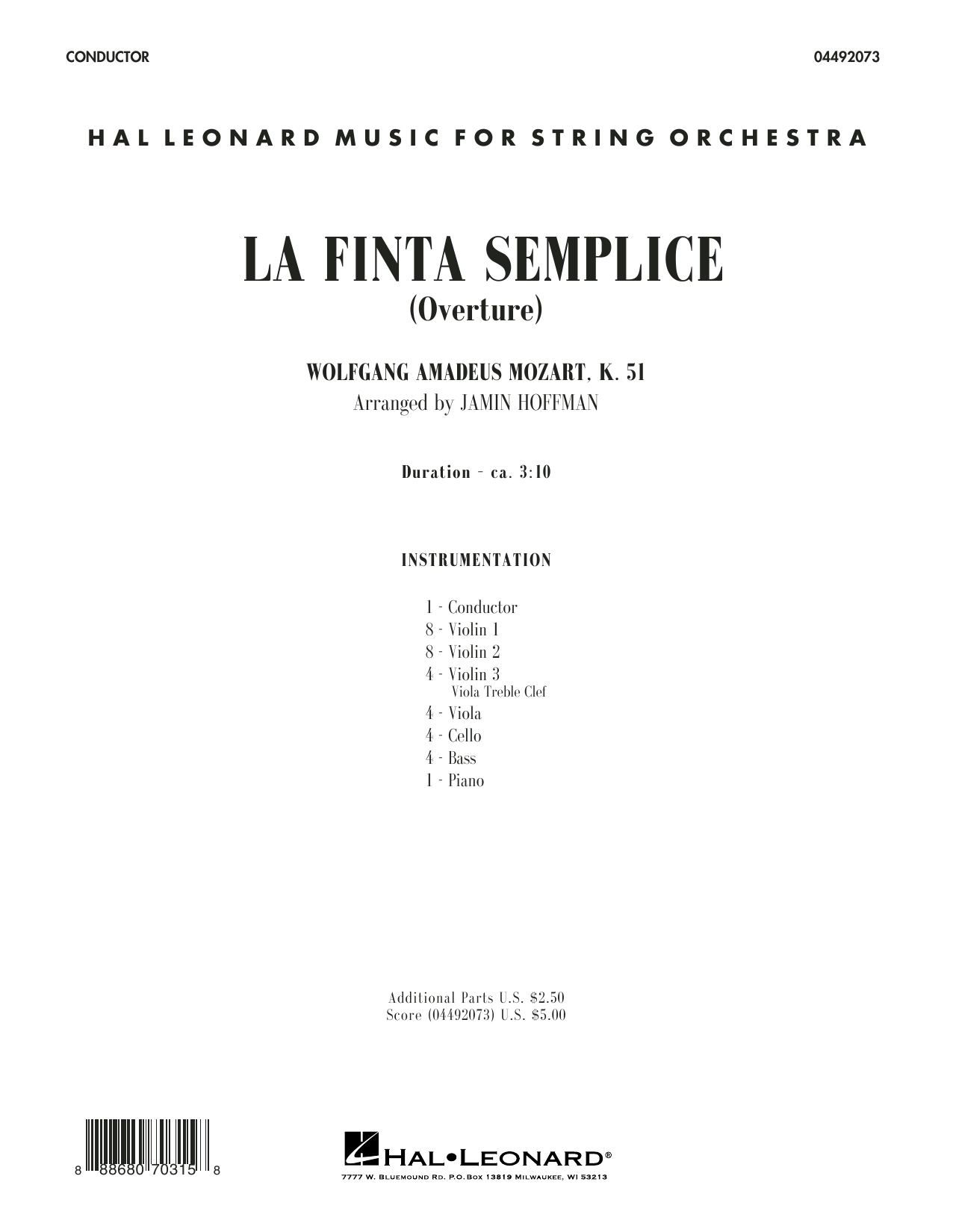

La Finta Semplice (Overture): String Orchestra Conductor Score & Parts
Arranged by Jamin Hoffman
Grade: 3-4
Item: 35-PK00398718
$50.00
Pickup currently not available
Buy Extra Parts (Digital PDF Download)
Parts Added to Cart!
Description
Written in 1768 when he was just 12 years old, Mozart's first opera was a marvel to many, but suspect to others (jealous composers) who claimed it was actually written by his mentoring father, Leopold. This overture is a wonderful way for today's students to perform and learn about the work of the young genius. Dur: 3:10


La Finta Semplice (Overture): String Orchestra Conductor Score & Parts isn't in MakeMusic Cloud just yet...but it could be. Let us know you'd like to see it, and you'll help shape what comes next. In the meantime, start a free trial and dive into thousands of interactive titles your students can play along with today.
Request This Title
Tell us you want it.
Start Your Free Trial
Explore everything that's ready to play right now.
Sample Audio
No sample audio found.
Sample Video
No sample videos found.
Additional Details
Publisher:
Hal Leonard
SKU:
35-PK00398718
More about this title
Why we love this
This overture captures everything that makes Mozart's precocious talent remarkable: harmonic sophistication wedded to genuine melodic charm. Hoffman's arrangement opens the work to string orchestras that may lack the winds needed for traditional performance, making an 18th-century masterpiece genuinely accessible to Grade 3-4 ensembles without compromising the music's character.
What to expect
Bright and energetic, yet genuinely melodic. There's a buoyant confidence running through this overture, a sense of purpose and forward motion that reflects Mozart's own precocious energy at twelve years old. The writing sits comfortably on strings, letting them breathe and phrase naturally.
Who it's for
String orchestras working at the Grade 3-4 level who want exposure to early Classical style and Mozart's compositional voice. This is equally valuable for ensembles building a concert program that spans historical periods or teaching young musicians how opera opens with instrumental storytelling.
How to get the most out of it
- Balance the first violin line carefully against inner voices so the melody sings without drowning the accompaniment that supports it.
- Keep the tempo steady through quick passage work; letting the bow control the articulation rather than rushing will preserve clarity.
- Shape the longer phrases with subtle dynamic breathing to avoid the piece feeling static, even when the harmonic rhythm settles.
How to use it
Pair this with other Classical-era overtures or operatic excerpts to explore how composers introduced dramatic works. Its compact length makes it an excellent opening number for a concert or a palate-cleansing interlude between weightier pieces.
Skills your students will build
- Classical phrasing and articulation in period style
- Maintaining steady tempo through contrasting sections
- Voice leading awareness in multi-part string writing
- Familiarity with sonata-form exposition in miniature