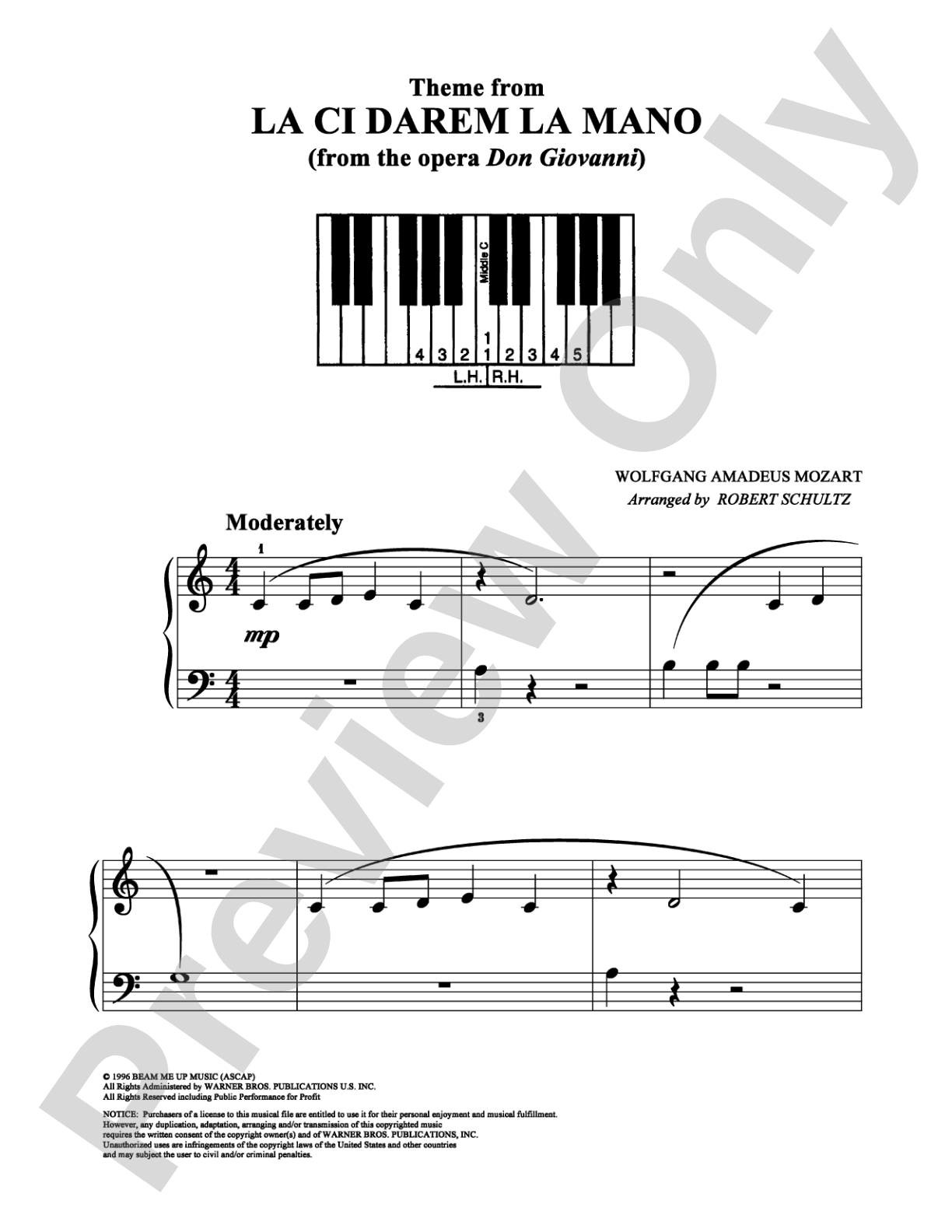
La Ci Darem La Mano (from the opera "Don Giovanni"): Easy Piano Digital Sheet Music

La Ci Darem La Mano (from the opera "Don Giovanni"): Easy Piano Digital Sheet Music

Wolfgang Amadeus Mozart

Item: 00-PS-0009662

Digital Download
$3.99
Description

La Ci Darem La Mano (from the opera "Don Giovanni"): Easy Piano Digital Sheet Music isn't in MakeMusic Cloud just yet...but it could be. Let us know you'd like to see it, and you'll help shape what comes next. In the meantime, start a free trial and dive into thousands of interactive titles your students can play along with today.

Sample Audio
No sample audio found.
Sample Video
Additional Details
SKU: 00-PS-0009662

More about this title

About the Composer: Wolfgang Amadeus Mozart

Wolfgang Amadeus Mozart (1756-1791) composed Don Giovanni in 1787, creating one of the most performed operas in the standard repertoire. This Salzburg-born prodigy wrote across every musical genre with astonishing fluency; Don Giovanni stands as a masterwork of dramatic storytelling through music, blending comic and tragic elements with unprecedented sophistication.

Why we love this

This duet captures one of opera's most iconic moments in a form your students can actually play. The melody is instantly recognizable, the accompaniment patterns are manageable, and the interplay between the two voices teaches real ensemble awareness without requiring two advanced pianists.

What to expect

Charming and flirtatious, with an elegant simplicity that belies its sophistication. The melody glides with a gentle inevitability, the rhythm rocks with an understated dance-like quality, and the whole texture feels like a conversation between two characters on stage.

Who it's for

Intermediate pianists exploring opera repertoire and classical vocal writing adapted for solo keyboard. This works well for students preparing their first recital or those building confidence with two-handed melodic independence.

How to get the most out of it

  • Keep the left-hand accompaniment steady and rhythmically secure; it anchors the entire texture and allows the melody to sing freely above it.
  • Shape the melody with long, connected phrasing rather than clipping each phrase. Mozart's lines want to breathe and unfold naturally.
  • Balance the two melodic voices so they converse with each other. One voice leading doesn't mean the other disappears; both need to sing.
  • Maintain a moderate, conversational tempo that allows clarity without rushing. The seduction happens in the nuance, not in speed.

How to use it

Pair this with other operatic excerpts or classical favorites for a recital themed around famous melodies, or use it as a bridge between lyrical classical repertoire and larger operatic works. It's substantial enough for a full recital piece yet accessible enough to include in a studio group performance.

Skills your students will build

  • Playing two independent melodic lines simultaneously with clarity
  • Executing consistent Alberti bass and waltz-like accompaniment patterns
  • Shaping Mozart-era phrasing with appropriate breath points
  • Balancing melody and accompaniment without losing either voice
  • Reading and performing operatic vocal music adapted for keyboard

You May Also Like