La Catedral Sheet Music Preview

La Catedral: Solo Guitar

By Agustín Barrios Mangoré / ed. Richard Stover

Item: 00-PB-0002003

Digital Download
$8.99
Description
A three-movement work. The greatest Barrios composition for solo guitar.

La Catedral: Solo Guitar isn't in MakeMusic Cloud just yet...but it could be. Let us know you'd like to see it, and you'll help shape what comes next. In the meantime, start a free trial and dive into thousands of interactive titles your students can play along with today.

Sample Audio
No sample audio found.
Sample Video
Additional Details
Publisher: Alfred Music
Page Count: 12
SKU: 00-PB-0002003

More about this title

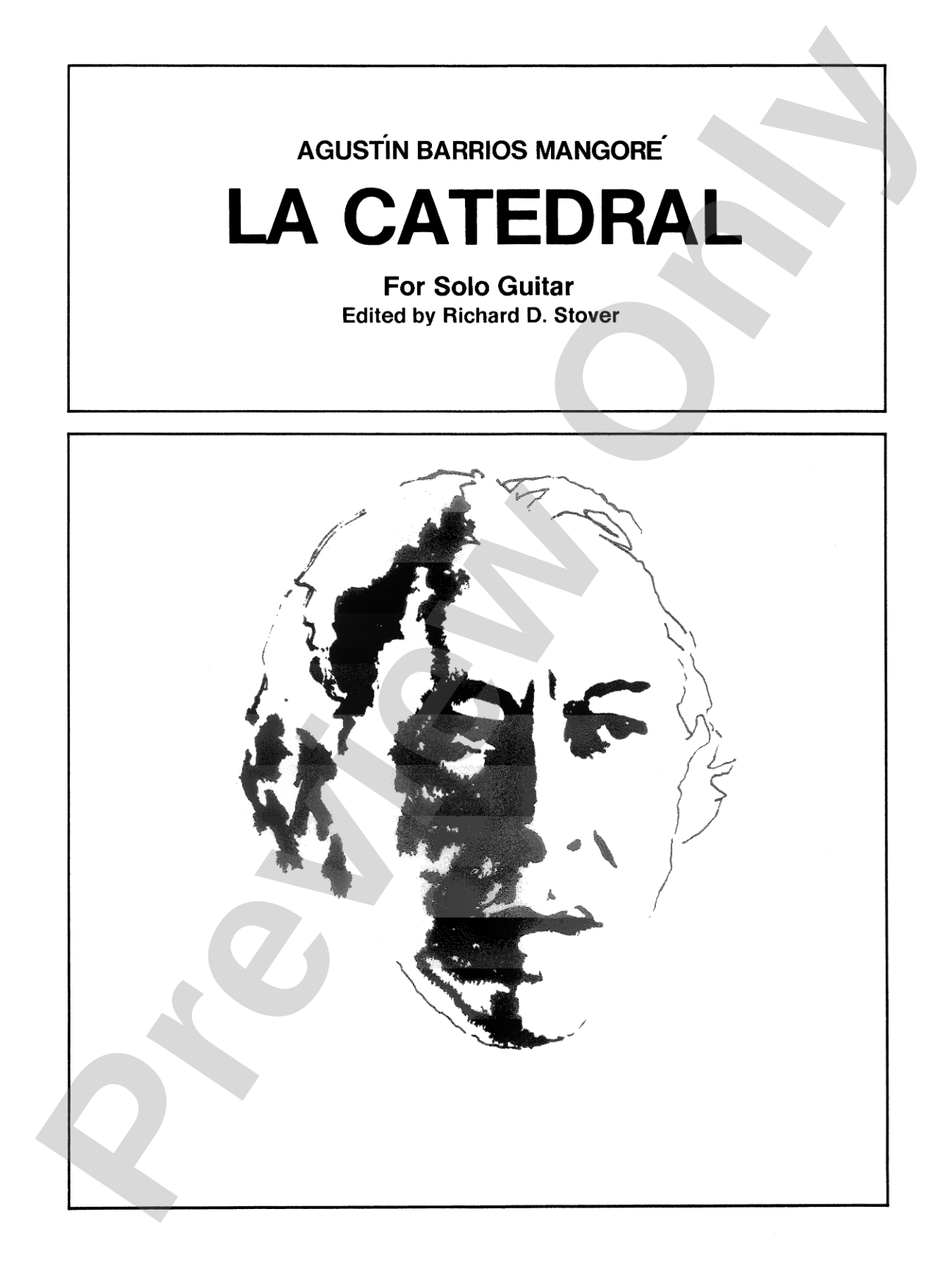
About the Composer: Agustín Barrios Mangoré

Agustín Barrios Mangoré (1885–1944) was a Paraguayan guitarist and composer who fundamentally expanded the classical guitar repertoire during the early 20th century. Working across three continents, he elevated the instrument from salon accompaniment to concert stage centerpiece, composing works that demand technical virtuosity while celebrating the guitar's lyrical and dramatic possibilities.

Barrios wrote over 100 pieces for solo guitar, many inspired by South American landscapes, indigenous themes, and spiritual reflection. His compositional voice bridged Romantic piano idioms with guitar-specific writing, creating music that feels both intimately personal and architecturally ambitious. Teachers and students value his catalog for its blend of accessibility and artistry; his pieces reward careful interpretation while remaining musically direct.

Why we love this

La Catedral stands as Barrios's most fully realized work for the instrument. The three-movement structure mirrors a classical sonata, yet the musical language feels entirely of the guitar; the piece never sounds arranged or adapted from another medium. Performers discover that it demands technical facility across the entire range while rewarding interpretive choices that extend far beyond note-perfect execution.

What to expect

Cathedral music that rises from quiet contemplation into moments of genuine grandeur, then settles into acceptance. The work moves through meditation, ascent, and resolution across its three movements, with the guitar singing like a human voice throughout. It feels both personal and universal; the Romantic sensibility is genuine rather than nostalgic.

Who it's for

Advanced classical guitarists seeking substantial, repertoire-defining material. Teachers working with students ready to step beyond smaller character pieces into larger architectural thinking. Concert programmers wanting a centerpiece that honors the guitar's capabilities without apology.

How to get the most out of it

  • Approach the first movement's opening section with restraint; the melody should emerge with quiet spiritual weight rather than dramatic projection. This establishes the emotional foundation the work builds upon.
  • Balance the faster passagework in later sections against the contemplative material. Rushing the virtuosic elements will blur the architectural relationships between movements.
  • Attend carefully to the voicing in thicker chordal passages. Barrios's harmony is sophisticated, and clarity in the middle registers prevents the piece from becoming muddy.
  • Allow space for the work's dramatic climaxes. They arrive rarely enough that when they do, they should feel genuinely urgent rather than expected.

How to use it

Feature this as a recital anchor or competition showcase piece. It reads immediately as substantial without requiring program notes that explain its importance. Alternatively, pair it with smaller Barrios works to create a portrait program that traces his stylistic range across a single composer.

Skills your students will build

  • Sustaining lyrical lines across uneven harmonic terrain
  • Balancing multiple voices in polyphonic passages without losing melodic clarity
  • Executing extended passagework at tempo without sacrificing tone quality
  • Interpreting large-scale harmonic progressions and structural architecture
  • Managing dynamic contrast across three movements with unity of conception

You May Also Like