La Betaille (You Little Wild Thing): Cello Sheet Music Preview

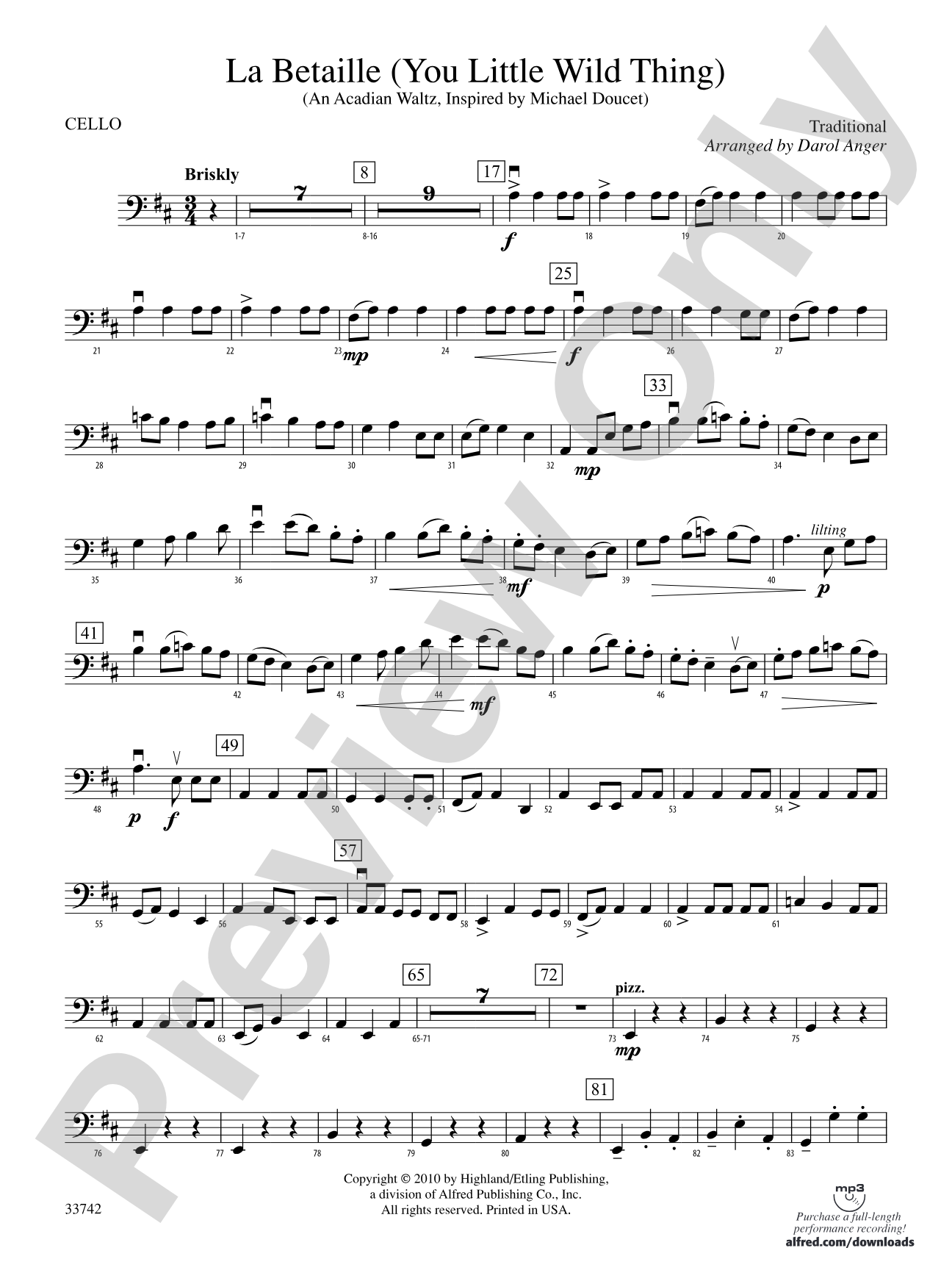
La Betaille (You Little Wild Thing): Cello

Traditional / arr. Darol Anger

Grade: 3

Item: 00-PC-0014526_VC1

Digital Download
$5.99
Description

Don't just read it, hear it, play along with it, and watch your students grow with it. In MakeMusic Cloud, La Betaille (You Little Wild Thing): Cello comes alive with professional accompaniment, adjustable tempo, and built-in practice tools that turn solo practice into real progress.

Sample Audio
0:00
0:00
Sample Video
Additional Details
Series: Highland/Etling String Alternatives
Publisher: Alfred Music
Page Count: 122
SKU: 00-PC-0014526_VC1

More about this title

About the Arranger: Darol Anger

Darol Anger is a virtuoso violinist and composer known for his work bridging classical training with folk and bluegrass traditions. His arrangements for string ensembles draw on his deep knowledge of American roots music, creating accessible yet musically substantial settings that engage young players in authentic musical storytelling.

Why we love this

This arrangement brings genuine folk character to a grade 3 orchestra without oversimplifying the music. Anger's setting gives every section something meaningful to play, and the piece builds natural ensemble cohesion through straightforward but effective scoring that respects both the melody and the rhythmic life of a traditional tune.

What to expect

Spirited and unpretentious. The tune has a playful character that draws listeners in immediately, with straightforward harmonic support and rhythmic clarity that gives young orchestras room to make music feel alive rather than mechanical.

Who it's for

String orchestras at the intermediate level who want to explore folk repertoire with solid musical substance. Teachers seeking pieces that combine technical accessibility with genuine cultural material will find this arrangement genuinely rewarding for both rehearsal and performance.

How to get the most out of it

  • Anchor the rhythmic pulse in the lower strings; their steady accompaniment patterns drive the energy of the tune and keep younger players locked together.
  • Shape the melody with light articulation and subtle dynamic peaks rather than dramatic swells. Folk tunes benefit from conversational phrasing that lets the tune breathe.
  • Balance the string section carefully in sectional rehearsals so that inner voices supporting the melody remain clear without overpowering the main line.
  • Encourage rhythmic precision in the accompaniment figures; even simple patterns require consistency to create the tight ensemble sound that makes folk music sparkle.

How to use it

This works beautifully in a concert exploring American or folk-influenced repertoire, or as a contrast piece alongside more formal classical selections. Its approachable length and joyful character also make it an ideal choice for pops concerts or community performances where you want immediate audience connection.

Skills your students will build

  • Rhythmic independence in supporting voice lines while tracking the primary melody
  • Stylistic interpretation of folk material and period-appropriate articulation
  • Balance and blend across string sections with varied textural roles
  • Reading multiple contrapuntal lines at moderate complexity
  • Ensemble cohesion and rhythmic lock in sections with rhythmic accompaniment figures

You May Also Like