L'harmonie des anges (Encore Plus, Book 2) Sheet Music Preview

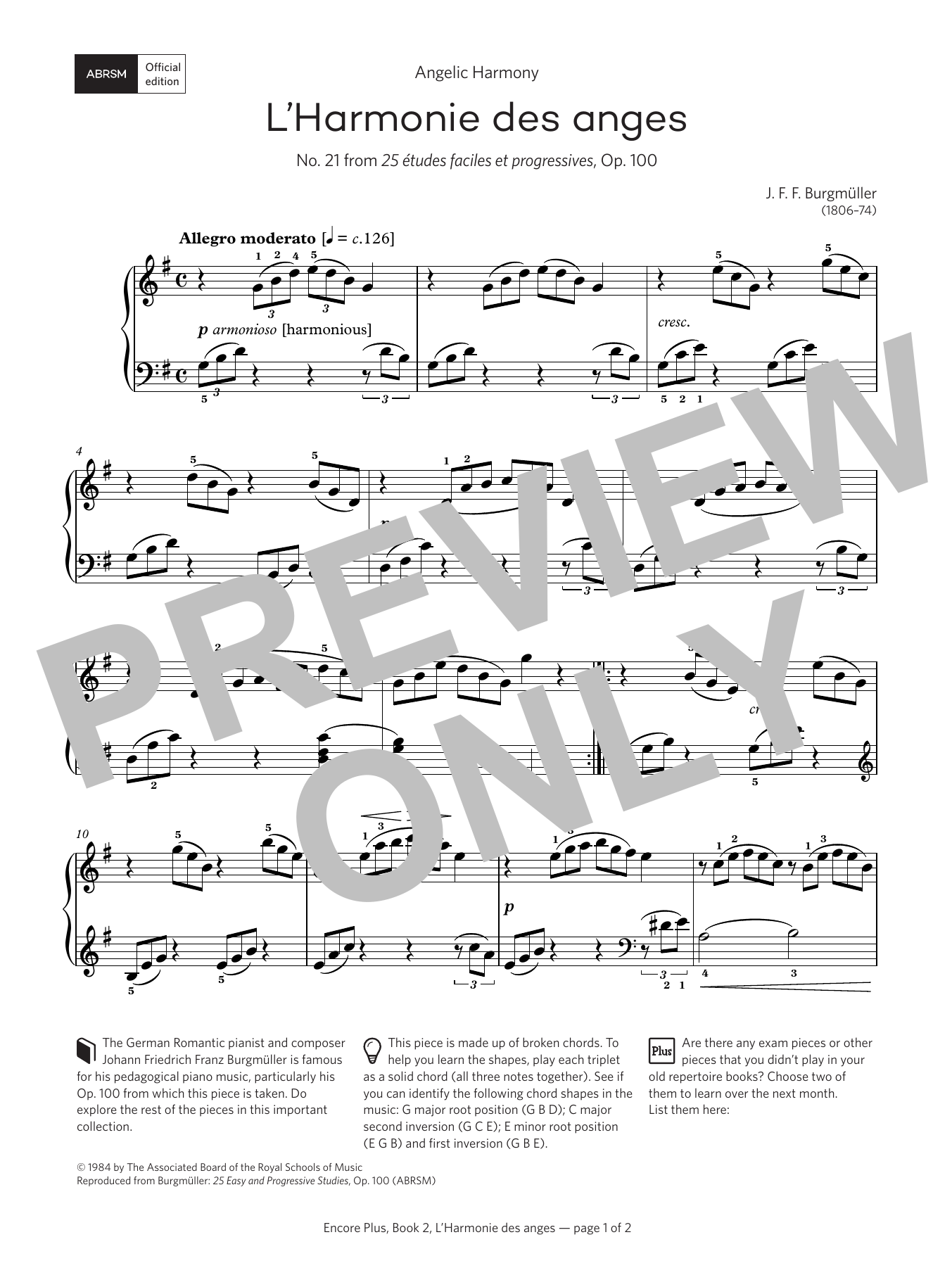
L'harmonie des anges (Encore Plus, Book 2): Piano Solo

By Johann Friedrich Franz Burgmüller

Grade: 3

Item: 35-DS01989418

Digital Download
$3.99
Description

Discover MakeMusic Cloud: thousands of interactive titles your students can play along with today.

Sample Audio
No sample audio found.
Sample Video
Additional Details
Publisher: Hal Leonard
Page Count: 2
SKU: 35-DS01989418

More about this title

About the Composer: Johann Friedrich Franz Burgmüller

Johann Friedrich Franz Burgmüller (1806–1874) was a German pianist and composer whose pedagogical works became foundational to piano instruction across Europe. His 25 Progressive Studies and numerous character pieces were written with the student performer in mind; he understood exactly how to balance musical substance with technical accessibility, making his compositions enduringly popular in conservatories and studios.

Burgmüller's gift was his ability to craft miniatures that sound mature and expressive without overwhelming developing pianists. His melodies sing naturally, his harmonies are thoughtfully chosen, and his textures invite genuine musical interpretation rather than mere technical execution.

Why we love this

This piece demonstrates how effective a simple harmonic palette can be when the melody is genuinely lovely. Grade 3 students often play accompaniment patterns and blocked chords; here, they get to shape a singing line supported by elegant but unobtrusive harmony, which builds their instinct for musical phrasing at a crucial developmental moment.

What to expect

Quiet reverence. The title evokes a sense of ethereal calm, and the music delivers exactly that. A simple, songlike melody unfolds over gently shifting harmonies, creating an atmosphere of calm contemplation that feels both intimate and timeless.

Who it's for

Grade 3 pianists ready to explore pieces that sound refined and complete, not 'just exercises.' This works equally well for students in their first or second year of lessons who thrive on melody-driven writing.

How to get the most out of it

  • Shape the melody from phrase to phrase rather than note to note. Listen to where each phrase naturally exhales, and allow your hand weight to follow that contour.
  • Keep the accompanying figures transparent. They should shimmer beneath the melody, not compete with it or sound rushed.
  • Pay attention to the harmonic rhythm. Burgmüller writes predictable progressions intentionally; use that predictability to stay relaxed and hear the chord changes clearly.

How to use it

Include this in a recital focused on Romantic character pieces or in a concert celebrating shorter repertoire alongside other Burgmüller selections. It also serves as an excellent 'reprieve piece' between technically demanding selections, since its musical payoff is immediate while its technical demands remain modest.

Skills your students will build

  • Sustaining a singing melodic line while managing accompaniment independence
  • Following harmonic movement and harmonic rhythm
  • Interpreting tempo and dynamic nuance within a diatonic framework
  • Pedal control to support harmonic colors without muddying texture

You May Also Like