
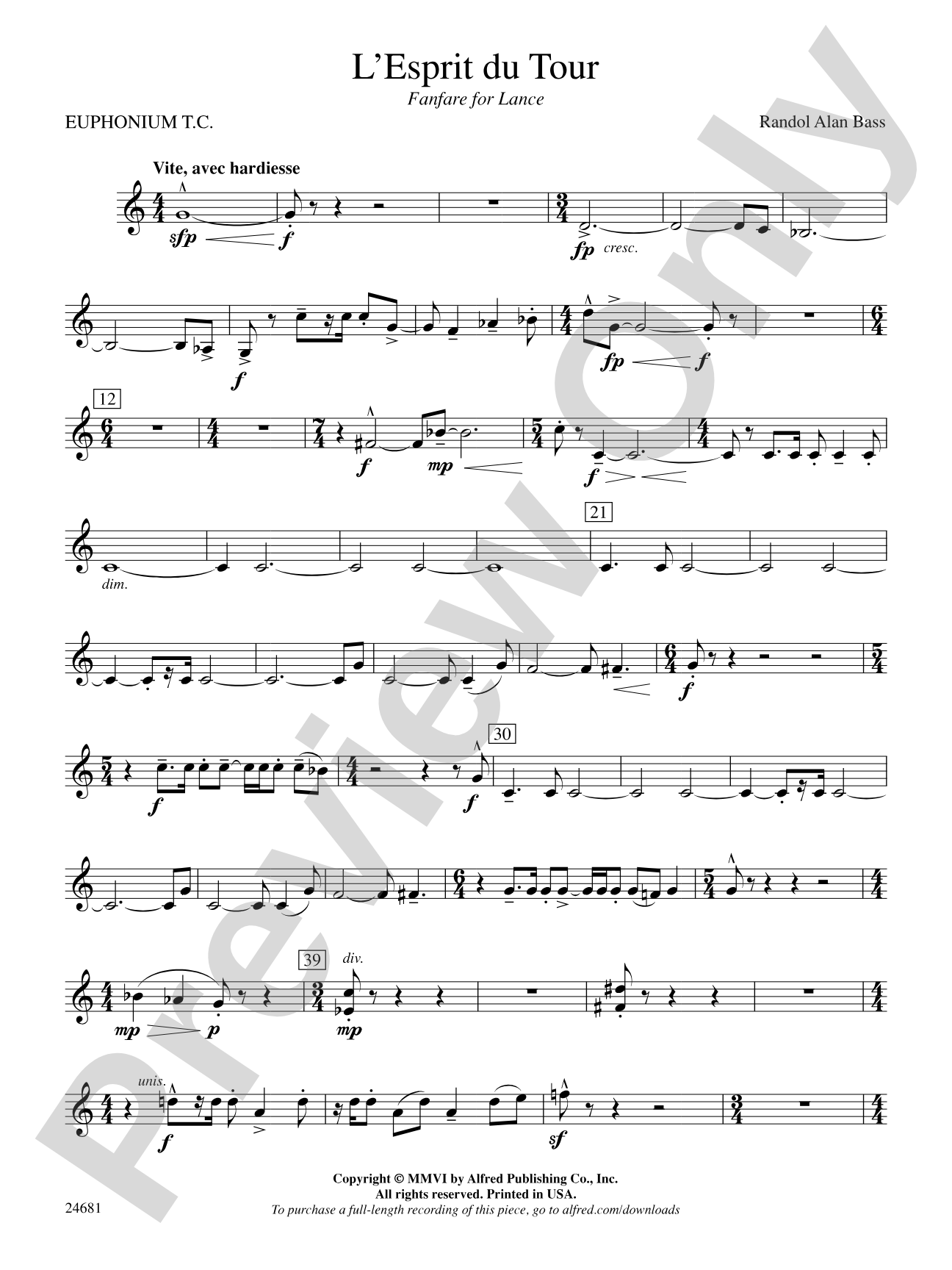

L'Esprit du Tour: A Fanfare for Lance: Baritone T.C.
By Randol Alan Bass
Grade: 5 (Difficult)
Item: 00-PC-0000848_BTC1
$3.00
Pickup currently not available
Description
This remarkable piece captures the excitement, physical challenge, intensity and, ultimately, the thrill and sense of accomplishment a rider might experience during such a grueling and demanding physical trial as Le Tour de France. Both tonal and non-tonal compositional materials, some indeterminate and serial techniques, special percussion (a six-tom-tom cluster, heavy chains and four metal plates) along with traditional and non-traditional development procedures are used --impressing upon listeners, through sound, a sense and feel of competitive bicycling, from the point of view of the athletes themselves. In hopes of imbuing the music with the flavor of the various cultures coming together for this contest, the composition contains extant source material as well -- including La Marsellaise, The Star-Spangled Banner and a brief reference to The Eyes of Texas.


Don't just read it, hear it, play along with it, and watch your students grow with it. In MakeMusic Cloud, L'Esprit du Tour: A Fanfare for Lance: Baritone T.C. comes alive with professional accompaniment, adjustable tempo, and built-in practice tools that turn solo practice into real progress.
Open in the Player
Jump straight in and assign it today.
Start Your Free Trial
Open this title and explore the full library in minutes.
Sample Audio
1
Audio File
--:--
0:00
0:00
Sample Video
No sample videos found.
Additional Details
Series:
Alfred Concert Band
Publisher:
Alfred Music
Page Count:
336
SKU:
00-PC-0000848_BTC1
More about this title
About the Composer: Randol Alan Bass
Randol Alan Bass is a composer and educator whose work bridges traditional and experimental compositional techniques. His pieces often explore programmatic narratives through sophisticated orchestration, combining tonal and non-tonal materials to create visceral musical experiences that challenge both performers and audiences.
Why we love this
Bass constructs a concert band piece that goes far beyond typical programmatic writing by embedding genuine compositional sophistication into the narrative arc. The integration of serial and indeterminate techniques alongside recognizable national themes creates a work that challenges advanced ensembles musically while delivering vivid storytelling about endurance, struggle, and human achievement.
What to expect
The piece surges with relentless kinetic energy punctuated by moments of respite and introspection, much like the physical and mental demands of endurance sport. Percussion textures create a visceral sense of grinding effort and metallic chaos, while harmonic shifts and cultural quotations evoke the international spectacle of the Tour itself, culminating in a sense of hard-won triumph.
Who it's for
Advanced concert bands and championship-level ensembles seeking contemporary repertoire with genuine musical substance and theatrical appeal. This work demands secure musicianship, comfort with twentieth-century compositional techniques, and the instrumentation and skill to execute complex rhythmic and textural effects.
How to get the most out of it
- Balance the special percussion effects (six-tom-tom cluster, heavy chains, metal plates) carefully in rehearsal; these sonorities demand precise volume control so they enhance rather than overwhelm the harmonic and melodic content.
- Identify the quotations of La Marseillaise, The Star-Spangled Banner, and The Eyes of Texas early in rehearsal and discuss how they appear, transform, and interact with the surrounding serial material; this awareness sharpens ensemble understanding of the piece's structural arc.
- Attend closely to the non-traditional development procedures; sections may not resolve as expected, so establish clear sectional landmarks and use rehearsal letters liberally to keep the ensemble oriented.
- Allow adequate time for students to acclimate to the tonal and non-tonal juxtapositions; the shifting harmonic language mirrors the unpredictability of competitive cycling itself.
How to use it
Position this as a centerpiece of a contemporary-focused concert where it can receive the rehearsal time and audience context it deserves. Its narrative clarity and visual percussion effects also make it compelling in concert settings where programmatic works are thematically grouped, or as a finale that rewards an audience's engagement with challenging modern writing.
Skills your students will build
- Reading and performing serial and non-tonal pitch materials
- Executing indeterminate notation and complex rhythmic structures
- Balancing traditional and non-traditional percussion effects
- Responding to programmatic intent through compositional analysis
- Maintaining ensemble cohesion across extended harmonic shifts
- Interpreting cultural musical quotations within atonal contexts