

Kyrie Kanon: 2-Part Choral Octavo
Music by Wolfgang Amadeus Mozart / arr. Donald Moore
Item: 00-PO-0004202
$2.25
Minimum order quantity: 20 copies
Pickup currently not available
Related Items
Kyrie Kanon: 2-Part Choral Octavo |
$2.25
|
View |
Description
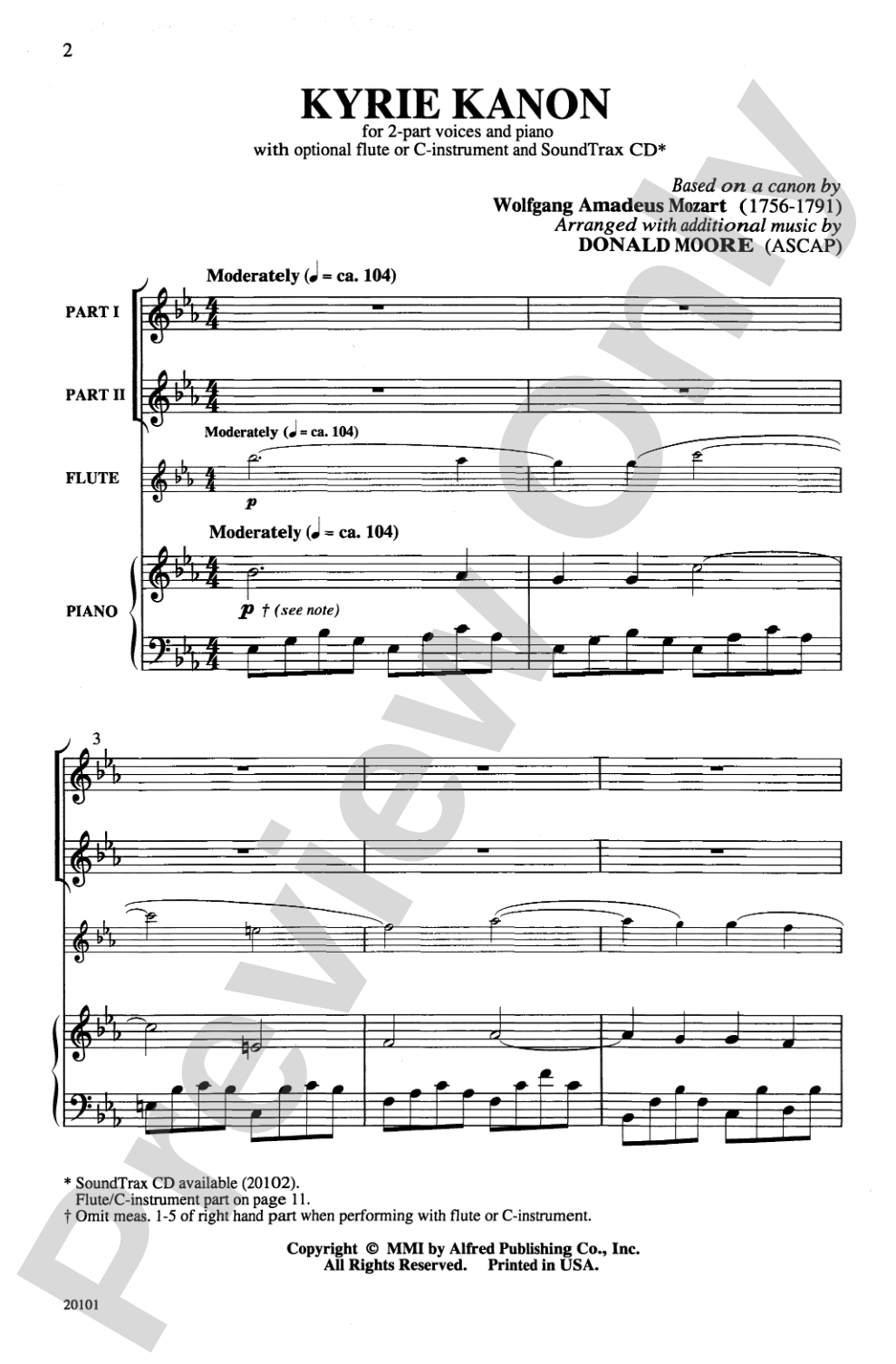
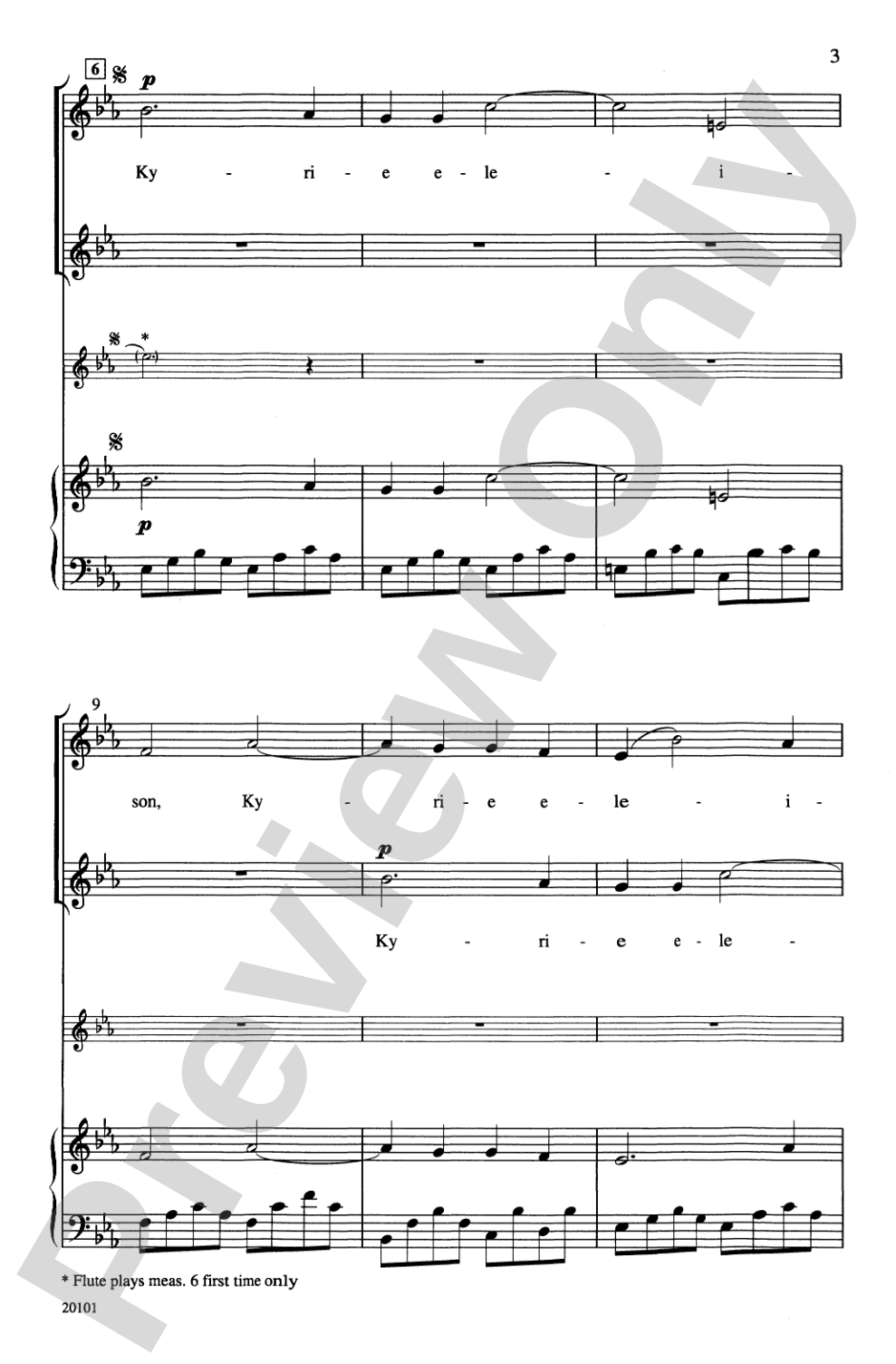
Want to develop and improve the part singing in your young choirs? Take a look at this Don Moore arrangement of a beautifully melodic and flowing Mozart canon. The melody is simple, singable, and easy to learn. Then it's a simple matter of singing it in canon, and your choral group is performing music of one of the great masters. Includes an optional flute part in the publication and an easy piano accompaniment.


Kyrie Kanon: 2-Part Choral Octavo isn't in MakeMusic Cloud just yet...but it could be. Let us know you'd like to see it, and you'll help shape what comes next. In the meantime, start a free trial and dive into thousands of interactive titles your students can play along with today.
Request This Title
Tell us you want it.
Start Your Free Trial
Explore everything that's ready to play right now.
Sample Audio
1
Audio File
--:--
0:00
0:00
Sample Video
No sample videos found.
Additional Details
Series:
Alfred Archive Edition: Alfred Choral Designs
Publisher:
Alfred Music
Page Count:
12
SKU:
00-PO-0004202
More about this title
About the Composer: Wolfgang Amadeus Mozart
Wolfgang Amadeus Mozart (1756-1791) composed across every major genre of his time and left an enormous catalog despite his short life. His melodic gift was immediate and inexhaustible; even his canons and rounds contain the clarity and elegance that made his work accessible to amateur musicians and professional virtuosos alike. For choral programs, Mozart's sacred works and canons offer clean part writing, singable lines, and the intellectual satisfaction of performing a master's music that still feels fresh.
Why we love this
This arrangement strips away the intimidation factor of Mozart while keeping the compositional integrity intact. Young singers experience canon as a living technique rather than a textbook concept, and they get to own a piece of classical repertoire that sounds polished and musical from the first rehearsal. The optional flute part and simple piano accompaniment give you flexibility to shape the piece to your ensemble's strengths.
What to expect
The melody flows with the grace typical of Mozart's vocal writing—scalewise, balanced, and singable without gymnastics. As the canon unfolds, the voices interweave in a gentle, almost meditative dialogue that feels both intellectually satisfying and emotionally warm. The whole piece carries the lightness and order of the Classical era.
Who it's for
Young choirs working on part independence and canon technique will find this arrangement immediately rewarding. It suits ensembles that can handle a full treble choir or mixed voices in two parts and want to build confidence with classical repertoire that doesn't require years of reading experience.
How to get the most out of it
- Teach the melody as a complete unit before introducing the canon structure. Singers who know the line inside and out will hear their own entrance point more clearly and stay secure when the second voice enters.
- Use the recorded accompaniment during rehearsals to anchor intonation while singers internalize the canon relationship. Once the parts are solid, the piano alone will suffice for performance.
- If you add the optional flute part, let it double the melody in early rehearsals so singers can lock onto the exact phrase shape and breathing points.
- Shape the melodic line with gentle dynamic shaping across phrases rather than forcing uniformity. Mozart's canons sing beautifully when the individual voice line receives attention.
How to use it
Program this as a bridge piece in a concert that balances lighter contemporary work with classical exposure. It works especially well on spring concerts or choral festivals where young singers need a moment of focused musicality without technical overwhelm. The sacred text and flowing character make it suitable for combined choral programs or interfaith contexts.
Skills your students will build
- Canon technique and independent part singing
- Phrasing and breath placement in vocal lines
- Listening to other voices while maintaining accurate pitch and rhythm
- Reading and performing Classical-era choral music
- Coordination with optional instrumental accompaniment