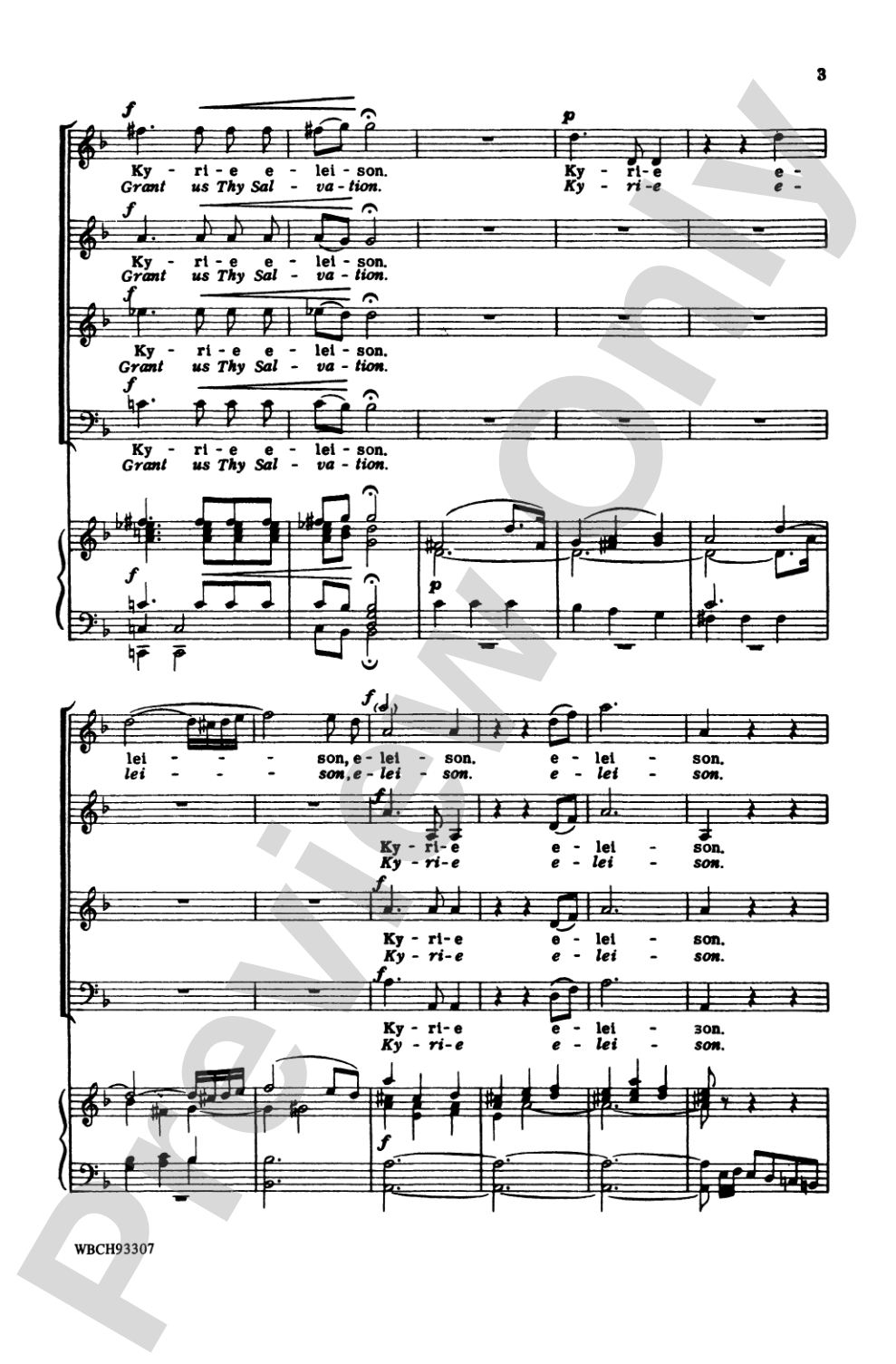
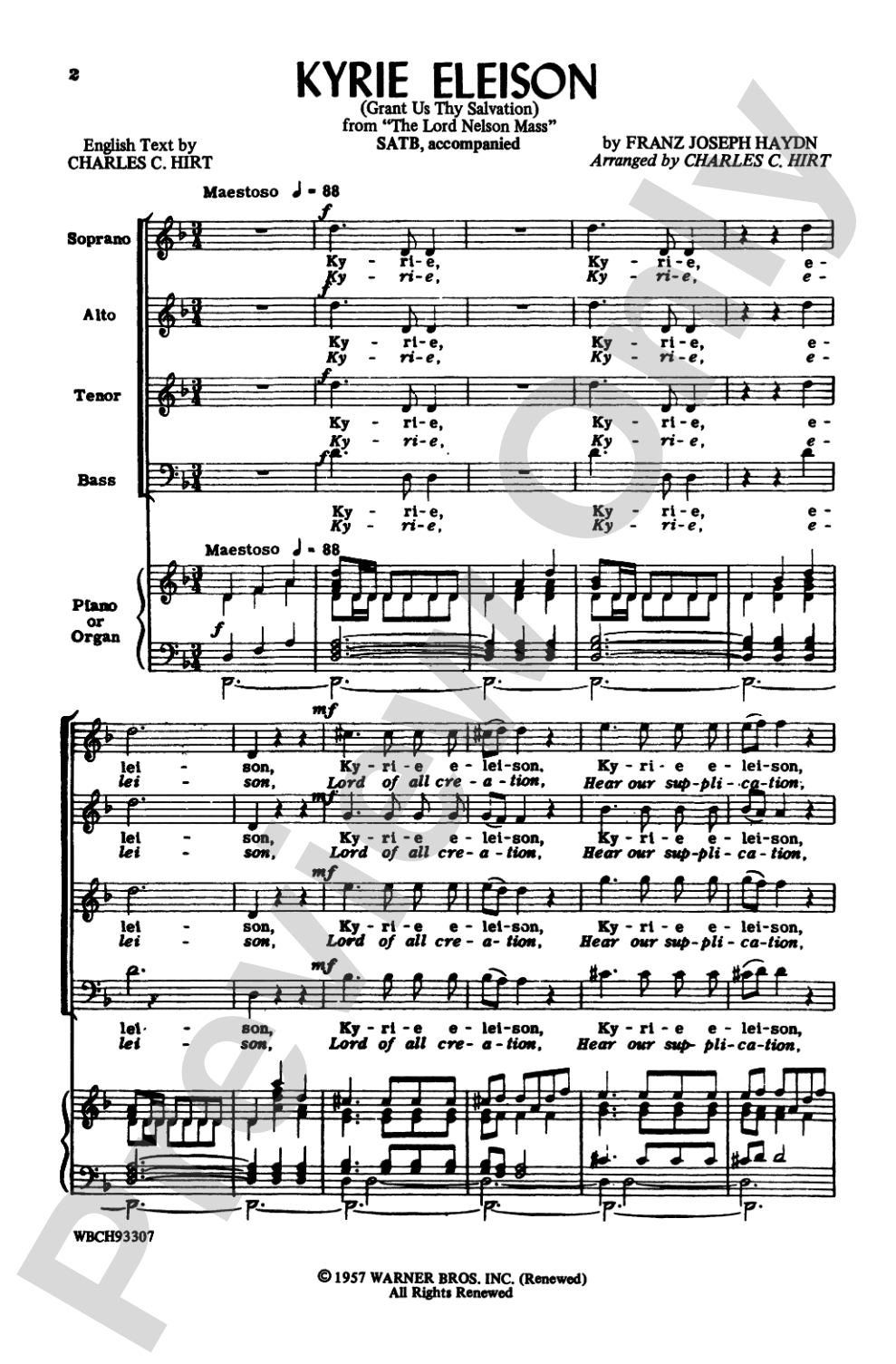
Kyrie Eleison (Grant Us Thy Salvation) (from <I>The Lord Nelson Mass</I>) Sheet Music Preview

Kyrie Eleison (Grant Us Thy Salvation) (from The Lord Nelson Mass): SATB Choral Octavo

From The Lord Nelson Mass

By Franz Joseph Haydn / arr. Charles C. Hirt

Item: 00-PO-0002825

Digital Download
$2.25

Minimum order quantity: 20 copies

One moment…

Description

Kyrie Eleison (Grant Us Thy Salvation) (from The Lord Nelson Mass): SATB Choral Octavo isn't in MakeMusic Cloud just yet...but it could be. Let us know you'd like to see it, and you'll help shape what comes next. In the meantime, start a free trial and dive into thousands of interactive titles your students can play along with today.

Sample Audio
No sample audio found.
Sample Video
Additional Details
Series: Alfred Archive Edition: Belwin Sacred Choral Series
Publisher: Alfred Music
Page Count: 12
SKU: 00-PO-0002825

More about this title

About the Composer: Franz Joseph Haydn

Franz Joseph Haydn (1732-1809) was a foundational figure of the Classical era whose prolific output shaped instrumental and vocal music for generations. His sacred works, including 14 masses, demonstrate his mastery of counterpoint and harmonic clarity alongside the formal elegance that defined his style. The Lord Nelson Mass, composed near the end of his life, represents Haydn at his most assured: confident in structure, rich in melodic invention, and balanced between devotional gravity and musical sophistication.

Why we love this

Haydn's Kyrie from the Nelson Mass gives choirs a genuinely rewarding Classical masterwork at an achievable level. Charles C. Hirt's arrangement preserves the elegance and structural integrity of the original while making it accessible to intermediate ensembles; the counterpoint is clear without being overwhelming, and the harmonic language remains authentic to Haydn's voice. This is the kind of piece that sounds impressive in performance and teaches singers something true about how music was actually written in the 18th century.

What to expect

Reverent and assured. Haydn's Kyrie unfolds with the formal grace of 18th-century prayer, moving between moments of intimate plea and collective affirmation. The writing feels both architecturally sound and genuinely moving, as if devotion and craftsmanship were never in conflict.

Who it's for

Intermediate SATB choirs with secure singers in each section and directors seeking substantive sacred repertoire for festivals, concert programs, or liturgical use. This arrangement works well for choirs ready to engage with Classical-era counterpoint and text painting without requiring extensive preparation time.

How to get the most out of it

  • Approach the text with liturgical restraint. The emotional weight comes from clarity and proportion, not volume; let the counterpoint speak by maintaining a relatively intimate dynamic even at fuller passages.
  • Shape phrases by the text and harmony rather than by breath marks alone. Haydn's phrase structures often span unexpected lengths, and respecting his line will yield better musicality than dividing at obvious points.
  • Balance the soprano and alto lines carefully in the imitative sections. Both voices carry important melodic material, and either one dominating will blur the texture Haydn designed.
  • Tune the root-position triads and seventh chords with precision. Classical harmony depends on clean intonation of fundamental sonorities; this is where careful rehearsal pays visible dividends.

How to use it

Program this as a centerpiece of a sacred or Classical-themed concert, where its textural clarity and moderate length (roughly 3-4 minutes) allow it to anchor a set without demanding a full evening. It pairs naturally with other Haydn movements or with motets and masses from the same era, and it works equally well in liturgical settings where the sacred text is primary.

Skills your students will build

  • Reading and executing Classical-era counterpoint and imitative writing
  • Singing melismatic passages and text-painting in a liturgical context
  • Balancing independent voice lines while maintaining harmonic unity
  • Tuning seventh chords and altered harmonies with precision
  • Phrasing according to harmonic structure rather than breath convenience

You May Also Like