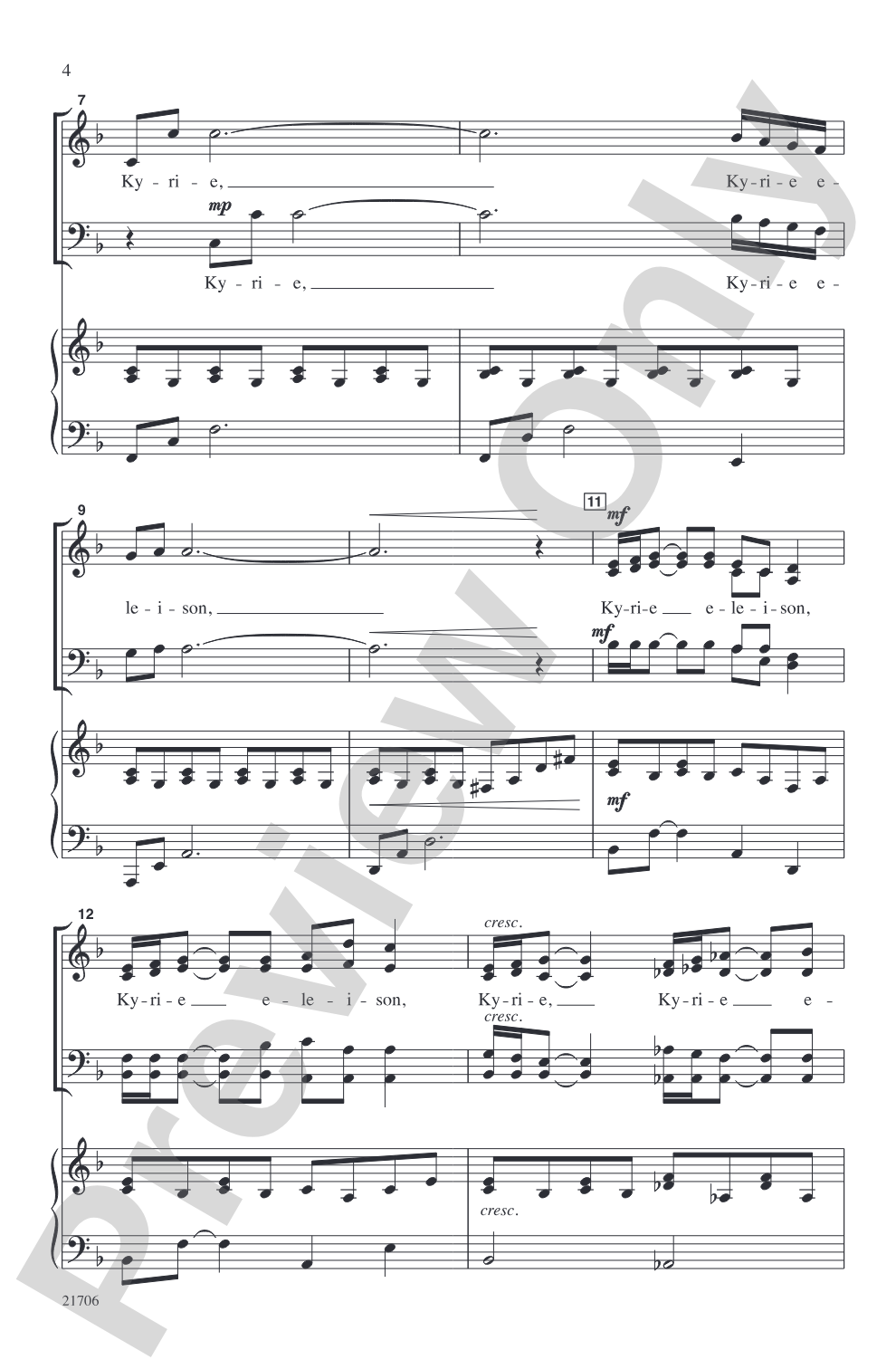
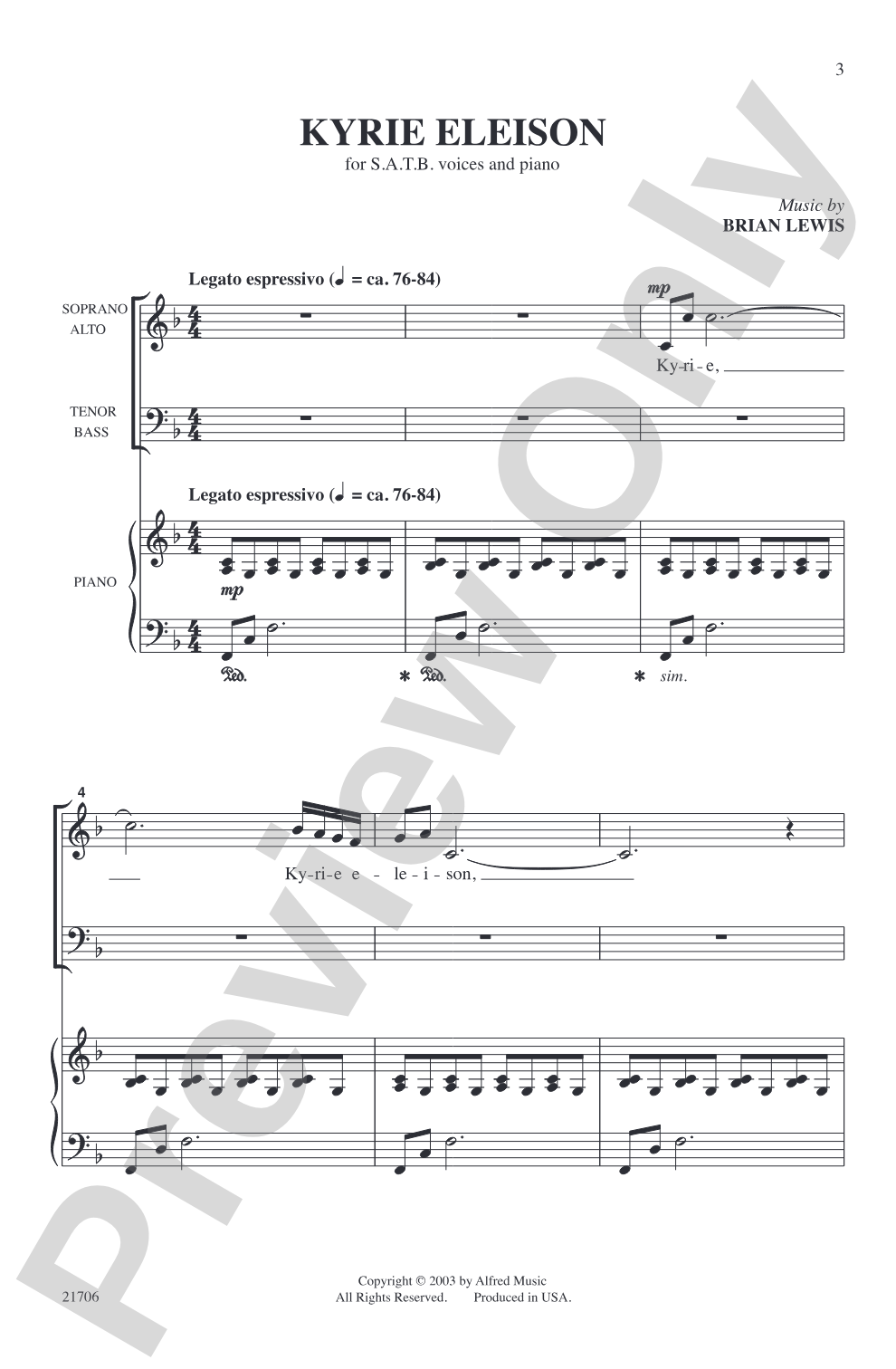
Kyrie Eleison Sheet Music Preview

Kyrie Eleison: SATB Choral Octavo

Music by Brian Lewis

Item: 00-PO-0006528

Digital Download
$2.25

Minimum order quantity: 20 copies

Description
Solid choral writing, expressive legato, and a breathtaking melodic theme can't be missed in this contemporary work appropriate for concerts, contests, and festivals. This gorgeous setting of the traditional Kyrie text begins with a molto expressivo A section, moves through a stunning piu mosso in the B section, and gracefully returns to the hushed opening theme that will gently float in the voices of your mixed choir. Elegant and effective.

Kyrie Eleison: SATB Choral Octavo isn't in MakeMusic Cloud just yet...but it could be. Let us know you'd like to see it, and you'll help shape what comes next. In the meantime, start a free trial and dive into thousands of interactive titles your students can play along with today.

Sample Audio
0:00
0:00
Sample Video
Additional Details
Series: Alfred Choral Designs
Publisher: Alfred Music
Page Count: 12
SKU: 00-PO-0006528

More about this title

About the Composer: Brian Lewis

Brian Lewis

Brian Lewis studied composition at Baldwin-Wallace Conservatory in Berea, Ohio, then pursued conducting and music education at Western Michigan University, where he earned his Master of Music degree and teaching certification. After several years teaching in Michigan public schools, he relocated to California to complete the USC Scoring for Motion Pictures and Television program, bringing both concert music and film scoring expertise to his compositional work. He has served as composer in residence at Portage Northern High School in Michigan, where his commissioned choral works have been performed by the school's ensembles.

Why we love this

This setting strikes an uncommon balance between accessibility and genuine artistic substance. The architecture is clean enough for mixed choirs at the intermediate level, yet the expressive legato writing and the contrast between the hushed opening and the driving piu mosso section give singers real interpretive work to do, making it equally rewarding for advanced ensembles.

What to expect

The opening unfolds with gentle reverence, inviting the voices to settle into a unified legato texture. When the piece shifts to the faster middle section, the energy lifts and brightens, creating genuine dramatic arc before dissolving back into that opening stillness, leaving the listener in a state of quiet contemplation.

Who it's for

Mixed choirs at the intermediate to advanced level who want substantial sacred repertoire beyond the standard hymn settings. Directors preparing for concert performances, festival competitions, or service music will find this piece serves each context effectively.

How to get the most out of it

  • Shape the molto expressivo A section with sustained breath support and careful attention to vowel consistency across the choir; the legato line will only float if every section breathes together and maintains tone quality through the phrase.
  • Let the piu mosso B section breathe differently from the opening: mark clear diction and forward energy, treating it as a true contrasting moment rather than simply singing faster.
  • Return to the hushed opening theme with precision in the final section; the effect depends on the ensemble's ability to establish that gossamer quality and hold it without losing pitch or shape.

How to use it

This works beautifully as a centerpiece in a sacred music concert or as the closer in a mixed repertoire program where you want to end thoughtfully. It also pairs well with other contemporary choral settings of liturgical texts, allowing you to explore how modern composers approach traditional language.

Skills your students will build

  • Sustaining legato lines across longer phrases with consistent vowel shapes
  • Executing tempo contrasts with clarity (molto expressivo to piu mosso transitions)
  • Balancing four-part SATB texture while maintaining a unified melodic line
  • Dynamic control in intimate, hushed ensemble singing
  • Textual expression and phrasing in Latin liturgical text

You May Also Like