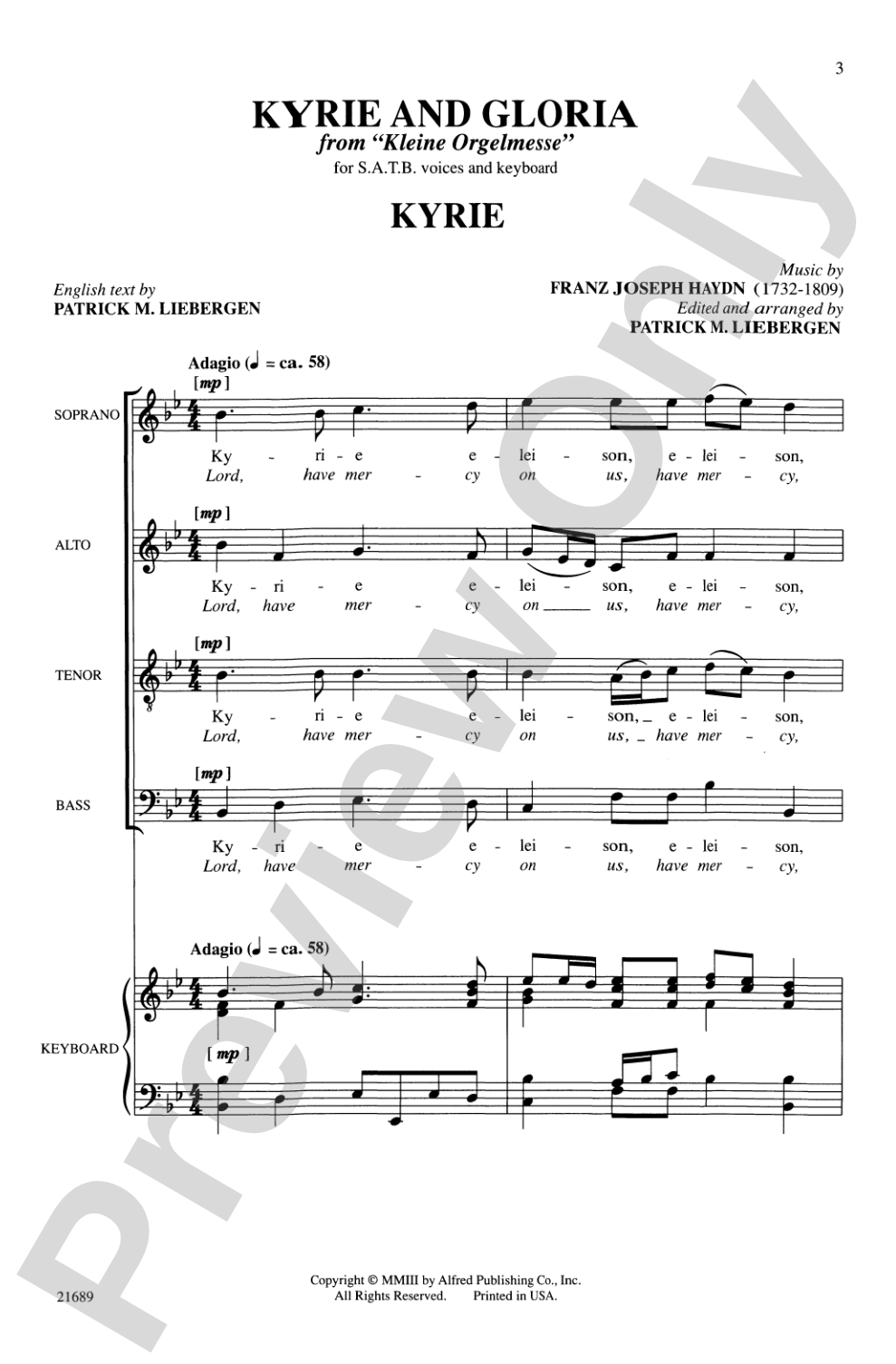
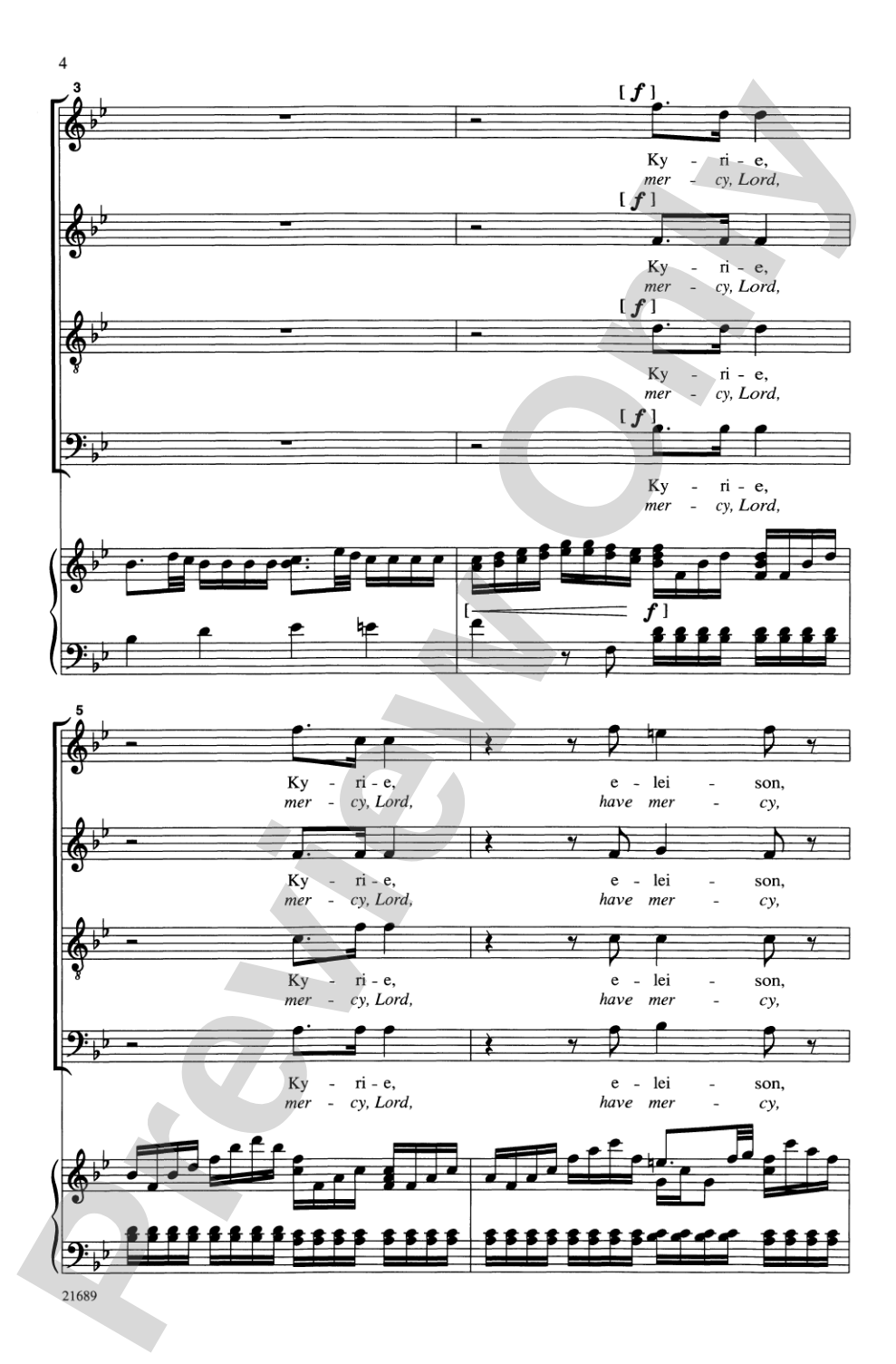
Kyrie and Gloria, from Haydn's <i>Kleine Orgelmesse</i> Sheet Music Preview

Kyrie and Gloria, from Haydn's Kleine Orgelmesse: SATB Choral Octavo

Arr. Patrick M. Liebergen

Item: 00-PO-0004283

Digital Download
$2.95

Minimum order quantity: 20 copies

Description
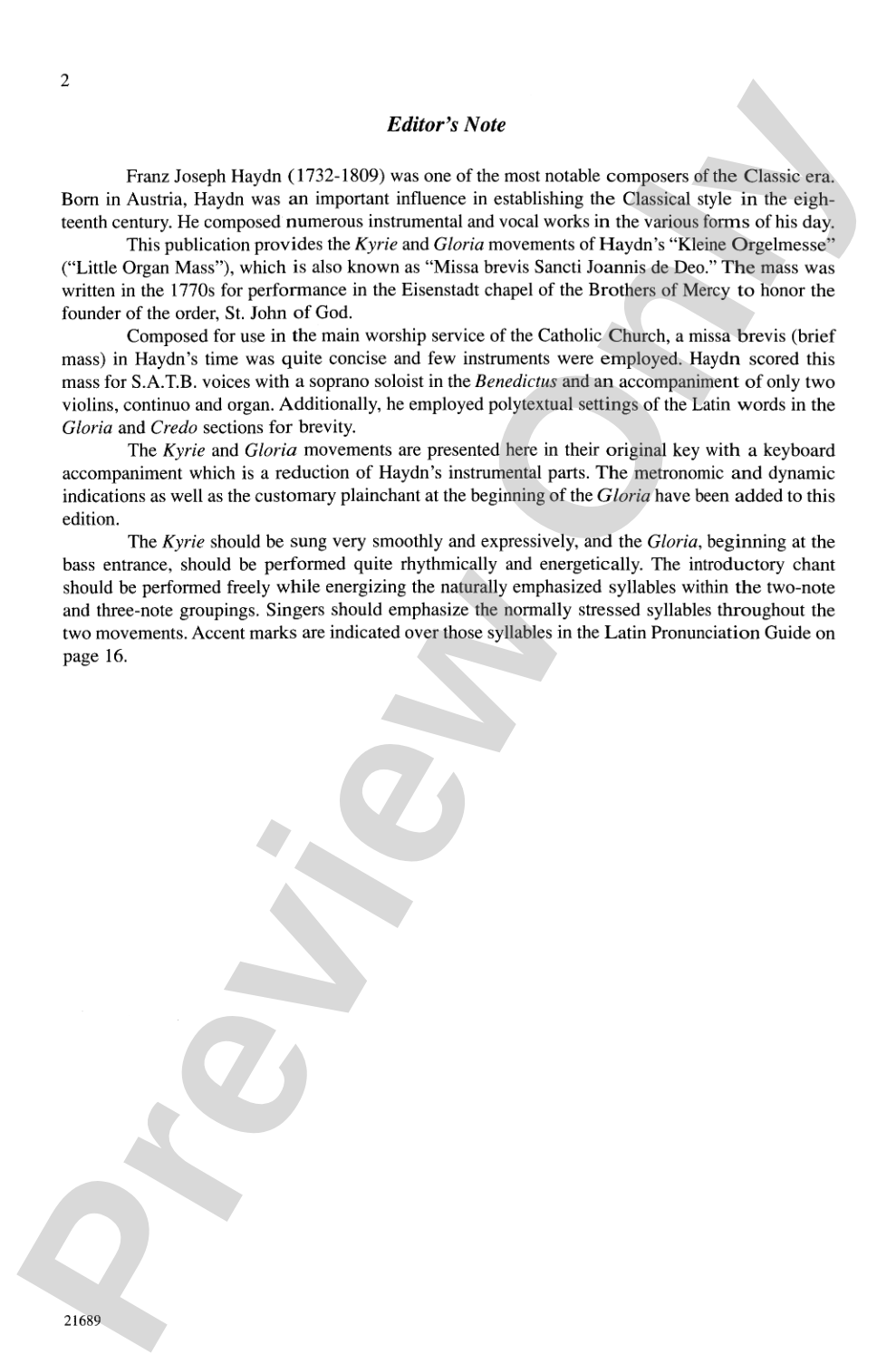
A classic edition of two choral masterpieces from Haydn's "Kleine Orgelmesse." Patrick Liebergen has skillfully edited these two movements into one contemporary octavo that is easy to read and enjoyable to sing. Perform the stately Kyrie alone, or follow it immediately with the polyphonic allegro of the Gloria. Editor's notes, translation, and a pronunciation guide are included in the publication, and a remarkable keyboard reduction will show off the skills of your accompanist at the piano or organ. Give your choir the opportunity to sing these fine masterworks from the choral literature of Haydn.

Kyrie and Gloria, from Haydn's Kleine Orgelmesse: SATB Choral Octavo isn't in MakeMusic Cloud just yet...but it could be. Let us know you'd like to see it, and you'll help shape what comes next. In the meantime, start a free trial and dive into thousands of interactive titles your students can play along with today.

Sample Audio
0:00
0:00
Sample Video
Additional Details
Series: Alfred Archive Edition: Alfred Choral Designs
Publisher: Alfred Music
Page Count: 16
SKU: 00-PO-0004283

More about this title

About the Arranger: Patrick M. Liebergen

Patrick M. Liebergen is a respected choral editor and arranger whose work for Alfred Music has made classical and sacred repertoire accessible to school and community choirs. His editions prioritize clarity and singability without compromising the integrity of the original compositions, earning him recognition in music education circles for his thoughtful approach to adapting masterworks for contemporary ensembles.

Why we love this

Liebergen's editing preserves the architectural beauty of Haydn's writing while making these two movements genuinely performable by intermediate SATB choirs. The inclusion of a keyboard reduction that challenges your accompanist transforms what could be a simple support part into a featured element of the performance, and the thoughtful translation and pronunciation guide mean your singers can engage meaningfully with the text.

What to expect

These movements embody the clarity and formal elegance of the Classical era, with the Kyrie unfolding as a measured supplication and the Gloria bursting into exuberant polyphonic dialogue. Singing them feels like stepping into the architectural language of 18th-century devotion.

Who it's for

Intermediate to advancing SATB choirs seeking access to genuine liturgical masterworks without oversimplification. Directors preparing singers for repertoire that demands musicality, ensemble discipline, and stylistic awareness will find this edition particularly useful for building choral maturity.

How to get the most out of it

  • Shape the Kyrie's stately phrases with careful attention to breath placement; let the longer note values speak rather than pressing through them.
  • Balance the four voices throughout the polyphonic sections of the Gloria, using dynamics to highlight the motivic interplay rather than letting one line dominate.
  • Work closely with your accompanist on the keyboard reduction well before rehearsal; the part requires secure voicings that should feel conversational with the choir.

How to use it

Perform the Kyrie alone as a concert opener or during a sacred music program, or combine both movements for a complete liturgical statement within a longer choral concert. They pair naturally with other Classical sacred works or work equally well as a standalone set that demonstrates your choir's ability to navigate historical style with confidence.

Skills your students will build

  • Singing in Classical style with appropriate phrasing and restraint
  • Balancing four independent voice lines in polyphonic texture
  • Accurate intonation and vowel consistency in Latin text
  • Responsiveness to keyboard accompaniment and conductor direction
  • Reading and interpreting editor's notes and historical context

You May Also Like