

Kyrie: SSAA Choral Octavo
By Jay Althouse
Item: 00-PO-0000762
$1.75
Minimum order quantity: 20 copies
Pickup currently not available
Description
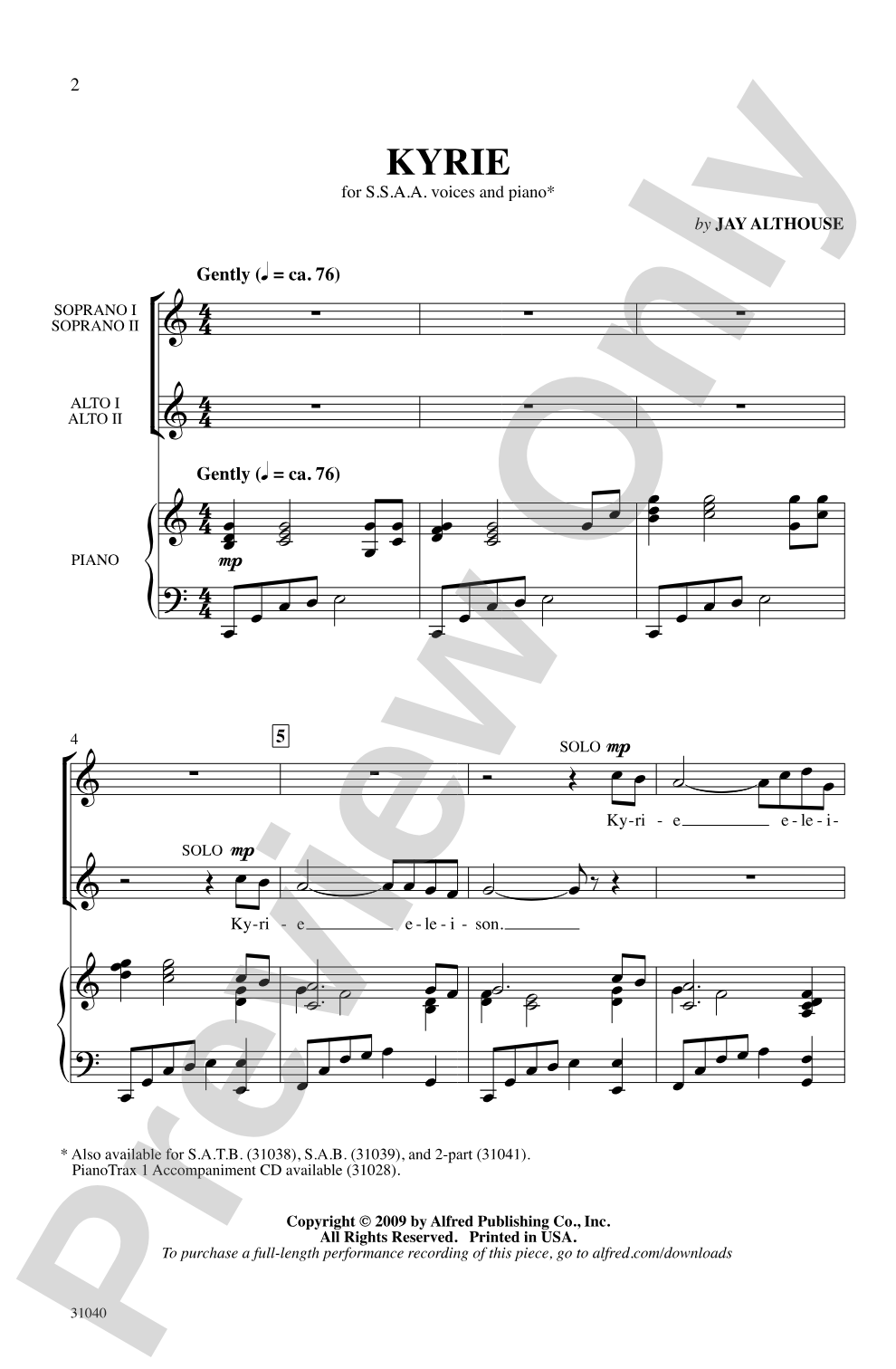
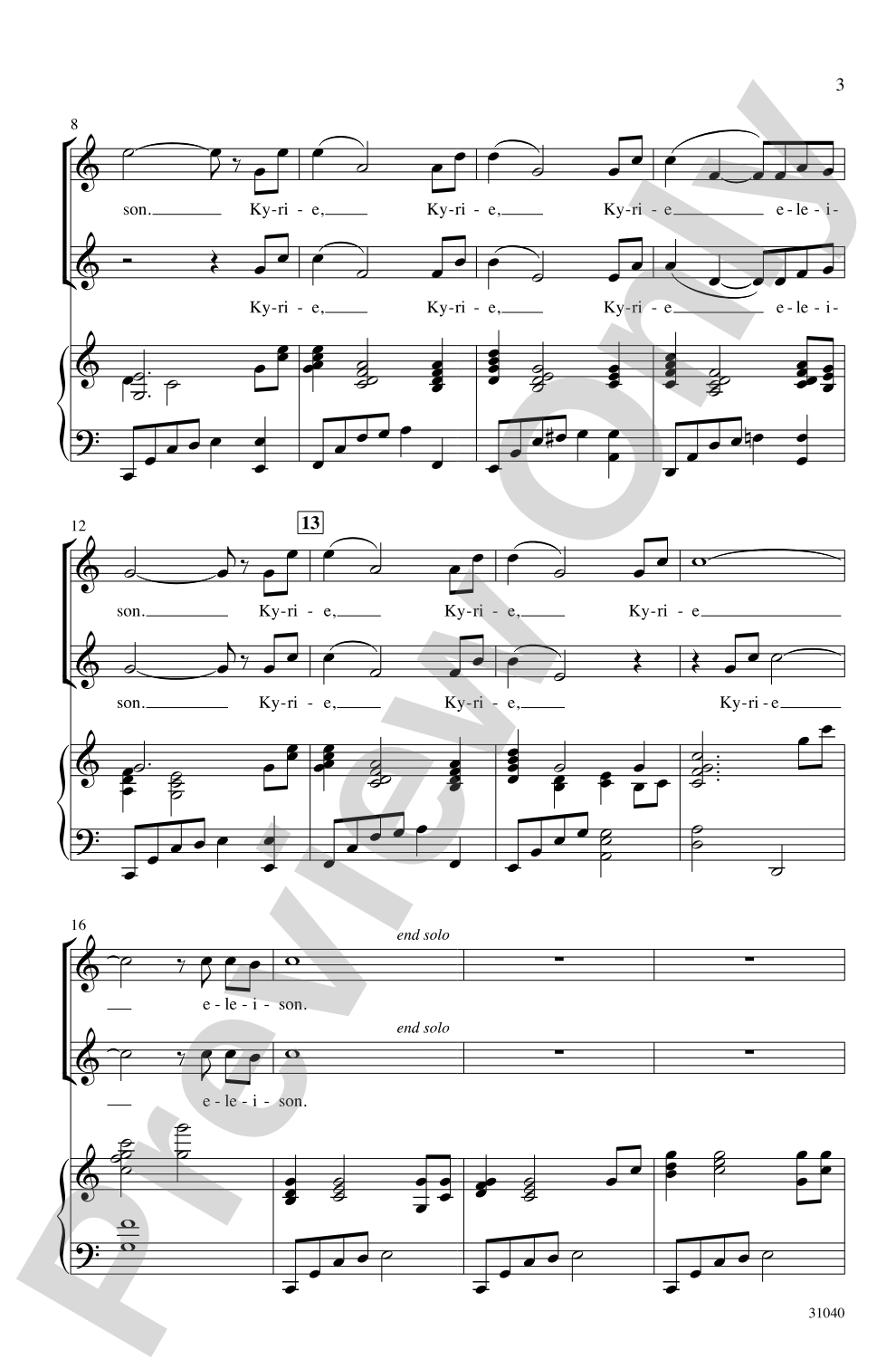
An opening duet leads the way into this lush and musical concert setting of the traditional "Kyrie" text. Beautiful melodies and rich harmonies will make this a favorite any time of year. Excellent choice for festival and contest use. Accompaniment included on PianoTrax 1 CD (00-31028).


Kyrie: SSAA Choral Octavo isn't in MakeMusic Cloud just yet...but it could be. Let us know you'd like to see it, and you'll help shape what comes next. In the meantime, start a free trial and dive into thousands of interactive titles your students can play along with today.
Request This Title
Tell us you want it.
Start Your Free Trial
Explore everything that's ready to play right now.
Sample Audio
1
Audio File
--:--
0:00
0:00
Sample Video
No sample videos found.
Additional Details
Series:
Alfred Choral Designs
Publisher:
Alfred Music
Page Count:
8
SKU:
00-PO-0000762
More about this title
About the Composer: Jay Althouse

Jay Althouse holds degrees in Music Education and Music from Indiana University of Pennsylvania, where he later received the Distinguished Alumni award. His extensive background in music publishing gave him eight years of experience administering rights and licenses at a major educational publisher, during which he also served on the Executive Board of the Music Publishers Association of America.
As a composer, Althouse has created more than 800 choral works performed across the English-speaking world. He is a writer member of ASCAP and a regular recipient of the ASCAP Special Award for his compositions. Beyond his choral output, he has collaborated with his wife Sally K. Albrecht on children's musicals and vocal collections, co-authored influential resources like The Complete Choral Warm-up Book and Accent on Composers, and written classroom materials including Ready to Read Music and One-Page Composer Bios. Althouse resides in North Carolina and serves on the National Advisory Board of the Folk Art Society of America.
Why we love this
The opening duet creates an intimate entry point before the full SSAA voicing blossoms, giving singers a moment to establish the piece's lyrical character before building to richer textures. Althouse's gift for memorable melody and cohesive harmonic movement means this setting rewards both technical precision and genuine musical expression, making it equally satisfying for festival adjudicators and concert audiences.
What to expect
Lush and contemplative, with a sense of spaciousness created by the overlapping melodic lines and warm harmonic colors. The opening's gentle intimacy gradually expands into fuller textures that feel inevitable rather than sudden, drawing listeners into a moment of quiet reflection.
Who it's for
SSAA choirs at the high school through adult level seeking a concert piece that combines accessibility with genuine musical substance. Directors programming festivals and contests will find a work that impresses adjudicators while remaining manageable within typical rehearsal schedules.
How to get the most out of it
- Balance the opening duet carefully so it registers with quiet confidence rather than strain; these two voices set the musical and emotional foundation for everything that follows.
- Shape the harmonic progressions with slight dynamic nuance even within sustained passages; the richness comes partly from how thoughtfully singers voice each shift.
- Use the PianoTrax accompaniment to anchor intonation during sectional rehearsals, then work toward independence so the choir's blend drives the piece in performance.
How to use it
Program this as a centerpiece of a sacred or secular choral concert, particularly effective as an opening or closing piece. It pairs well with other settings of traditional texts and works especially effectively in spring or holiday concert contexts where sustained, lyrical music anchors the program.
Skills your students will build
- Balancing melody and harmony across multiple voice parts
- Sustaining legit singing through longer phrases while maintaining intonation
- Blending SSAA sonorities in traditional four-part voicing
- Responding to piano accompaniment while maintaining choral independence
- Interpreting dynamic and expressive markings within a reverent text