
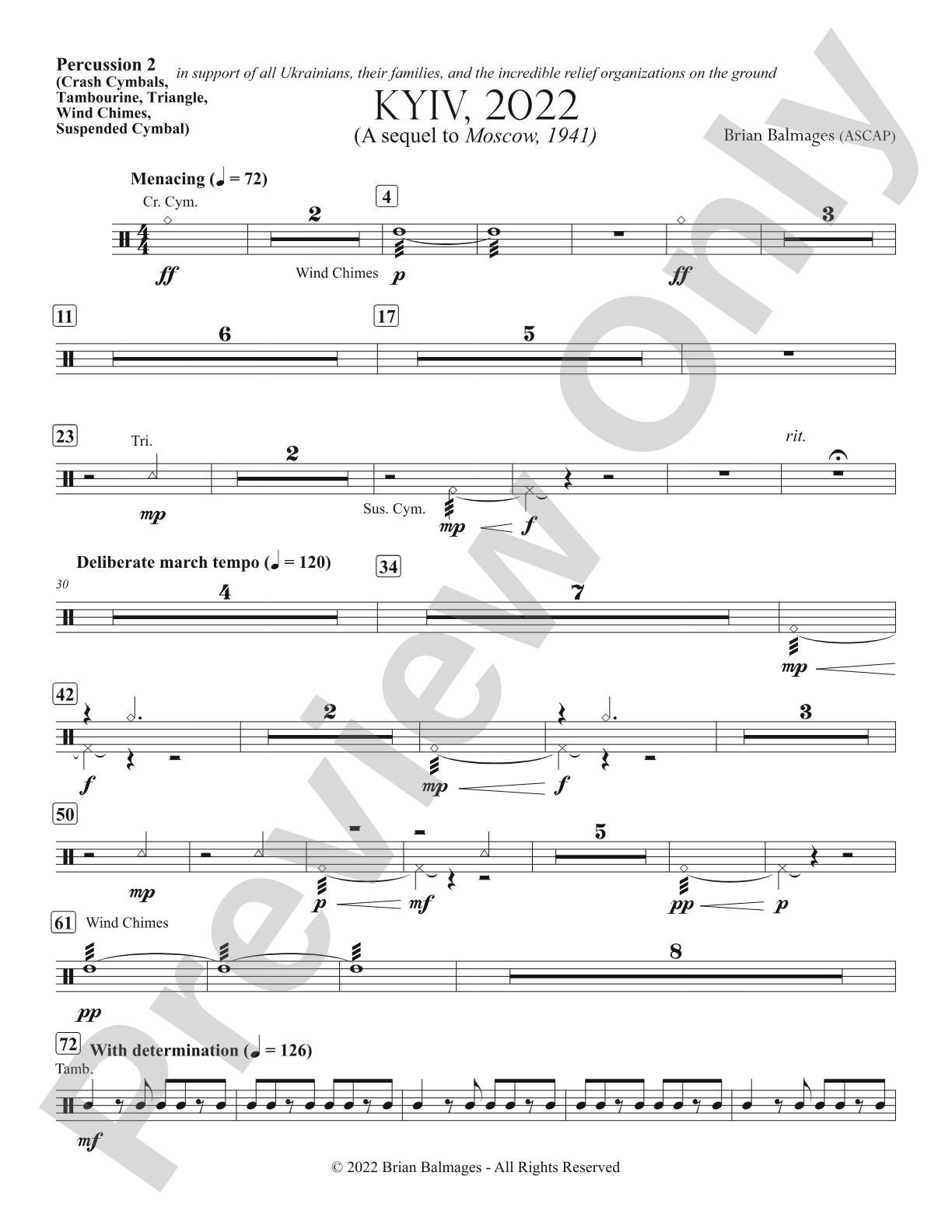

Kyiv, 2022: 2nd Percussion
A Sequel to Moscow, 1941
By Brian Balmages
Grade: 2.5
Item: 00-PC-0018751_PC2
$5.99
Pickup currently not available
Description
Written as a powerful sequel to Moscow, 1941, this work changes the narrative, where the theme from Moscow now becomes the aggressor, and the heroic people of Ukraine are represented by the Ukrainian National Anthem and the powerful song "Prayer for Ukraine." Certain to spark discussions about humanity, history, and culture, this piece can easily be performed alongside Moscow, 1941 or in place of it. (4:35)
"Kyiv, 2022" Performances


"Kyiv, 2022" Performances
Don't just read it, hear it, play along with it, and watch your students grow with it. In MakeMusic Cloud, Kyiv, 2022: 2nd Percussion comes alive with professional accompaniment, adjustable tempo, and built-in practice tools that turn solo practice into real progress.
Open in the Player
Jump straight in and assign it today.
Start Your Free Trial
Open this title and explore the full library in minutes.
Sample Audio
1
Audio File
--:--
0:00
0:00
Sample Video
Additional Details
Series:
MakeMusic Young Band
Publisher:
MakeMusic Publications
SKU:
00-PC-0018751_PC2
More about this title
About the Composer: Brian Balmages

Brian Balmages has established himself across orchestral, band, and chamber music genres, with performances spanning from elementary school ensembles to major professional orchestras in venues including Carnegie Hall, the Kennedy Center, and Sydney Opera House. His compositional achievements include the 2020 NBA William D. Revelli Composition Contest win for Love and Light, the A. Austin Harding Award from the American School Band Directors Association, and election to the American Bandmasters Association. His music appeared in the 2013 Presidential Inaugural Prayer Service attended by President Obama and Vice President Biden.
Balmages holds degrees from James Madison University and the University of Miami, where he received the inaugural Distinguished Alumni Award and later received a commissioning request for the institution's presidential inauguration. As a conductor, he maintains an active schedule with all-state ensembles, university groups, and professional orchestras worldwide, with notable guest appearances at the Midwest Clinic, Western International Band Clinic, and conferences across North America and internationally. He currently serves as Director of MakeMusic Publications and Digital Education for Alfred and MakeMusic.
Why we love this
Balmages crafts a sequel that reframes the original Moscow, 1941 concept entirely, transforming the aggressor theme into a dramatic foil against the resilience of the Ukrainian National Anthem and Prayer for Ukraine. The programmatic clarity and emotional weight give young conductors genuine artistic substance to communicate without overwhelming their ensembles technically, and the 4:35 duration fits comfortably into concert and festival programming. Directors will find this piece opens rich conversations about history and humanity while offering students music that means something beyond the page.
What to expect
The piece unfolds like a narrative confrontation, beginning with ominous familiarity before Ukrainian voices rise in defiant beauty. There is dignity in the resistance, sorrow in the struggle, and strength in the anthem and prayer that anchor the work's heart.
Who it's for
Young concert bands ready to tackle programmatic music with genuine emotional content and historical awareness. This piece works well for Grade 2.5 ensembles seeking festival repertoire that challenges them musically while offering meaningful subject matter that resonates with student musicians.
How to get the most out of it
- Balance the contrasting thematic material carefully so that the Ukrainian melodies emerge with clear voice rather than becoming lost under the Moscow theme. The narrative depends on listeners understanding which material represents which force.
- Use the recorded accompaniment to anchor ensemble entrances and transitions, particularly during the programmatic shifts where the musical landscape changes. This helps younger musicians stay secure during emotionally intense passages.
- Shape the Ukrainian National Anthem section with intentional rubato and breath, treating it as a hymn rather than a marching theme. Students will connect more deeply to the material when they understand its cultural weight.
- Consider the final moments carefully in rehearsal, discussing with your band how the ending should feel given the piece's historical context. Student ownership of the conclusion will elevate the entire performance.
How to use it
Program this alongside Moscow, 1941 to create a thematic concert arc that explores how the same composer addresses different historical moments through music, or perform it independently as a festival or concert finale that sparks post-performance conversation. The moderate length makes it accessible for spring concerts while the programmatic power elevates the entire event.
Skills your students will build
- Executing contrasting dynamic levels and textures to support programmatic storytelling
- Balancing multiple melodic themes simultaneously within the ensemble
- Interpreting musical content with cultural and historical awareness
- Sustaining lyrical phrasing in the Ukrainian anthem section
- Responding to subtle conductor cues during thematic transitions