Kye Kye Kule - Chay Chay Koo-lay: 1st Percussion Sheet Music Preview

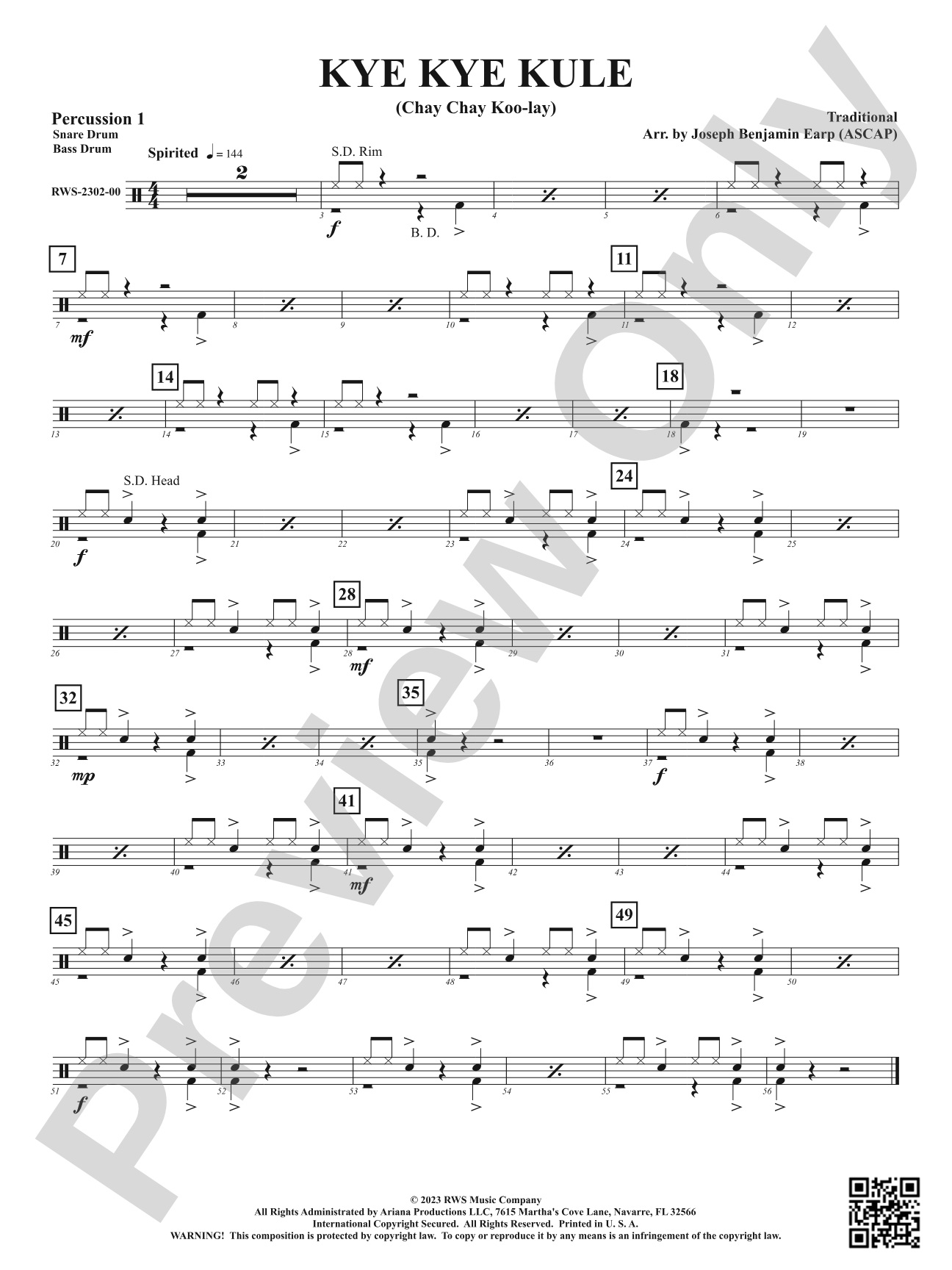
Kye Kye Kule - Chay Chay Koo-lay: 1st Percussion

Chay Chay Koo-lay

Arranged by Joseph Benjamin Earp

Grade: 1

Item: 98-PC-RWS2302_PC1

Digital Download
$3.99
Description
Kye Kye Kule (Chay Chay Koo-lay) is a traditional call-and-response song performed by countless children in Africa and around the world. This arrangement provides a spotlight for a soloist or small groups while also highlighting the full ensemble. Everyone will be sure to enjoy this setting of an iconic African call-and-response song.

Original Item#: RWS-2302-00

Kye Kye Kule - Chay Chay Koo-lay: 1st Percussion isn't in MakeMusic Cloud just yet...but it could be. Let us know you'd like to see it, and you'll help shape what comes next. In the meantime, start a free trial and dive into thousands of interactive titles your students can play along with today.

Sample Audio
0:00
0:00
Sample Video
Additional Details
Series: RWS - Beginning Band
Publisher: RWS Music Company
SKU: 98-PC-RWS2302_PC1

More about this title

Why we love this

Earp captures the interactive energy of a call-and-response without sacrificing musicality or ensemble balance. The arrangement genuinely showcases individual voices while building confidence in newer players, and its Grade 1 accessibility means everyone participates meaningfully rather than sitting out.

What to expect

Playful and inclusive, with the warmth of a familiar song that invites everyone into the conversation. The interplay between soloist and ensemble creates moments of genuine joy and connection rather than formal reserve.

Who it's for

Beginning concert bands and mixed-level ensembles looking for repertoire that celebrates cultural music while building sectional confidence. The spotlight sections are ideal for emerging soloists who need lower-pressure performance opportunities.

How to get the most out of it

  • Establish clear call-and-response cues between the soloist or small group and the full ensemble so transitions feel conversational, not mechanical.
  • Encourage the ensemble to listen actively during solo passages; this trains ear awareness and keeps the band engaged even when not playing.
  • Maintain a steady, infectious pulse throughout. The charm of this piece depends on rhythmic clarity and infectious energy from the conductor.

How to use it

Open a concert with this piece to set a welcoming, community-centered tone. It works equally well as a spring program opener or as part of a world music showcase where cultural context and fun coexist.

Skills your students will build

  • Call-and-response listening and rhythmic independence
  • Solo performance confidence in a supported ensemble context
  • Active ensemble listening and cue responsiveness
  • Understanding cultural music traditions through performance

You May Also Like