

Kum Ba Yah: 2-Part Choral Octavo
Traditional Spiritual / arr. Robert T. Gibson
Item: 00-PO-0007804
$2.50
Minimum order quantity: 20 copies
Pickup currently not available
Description
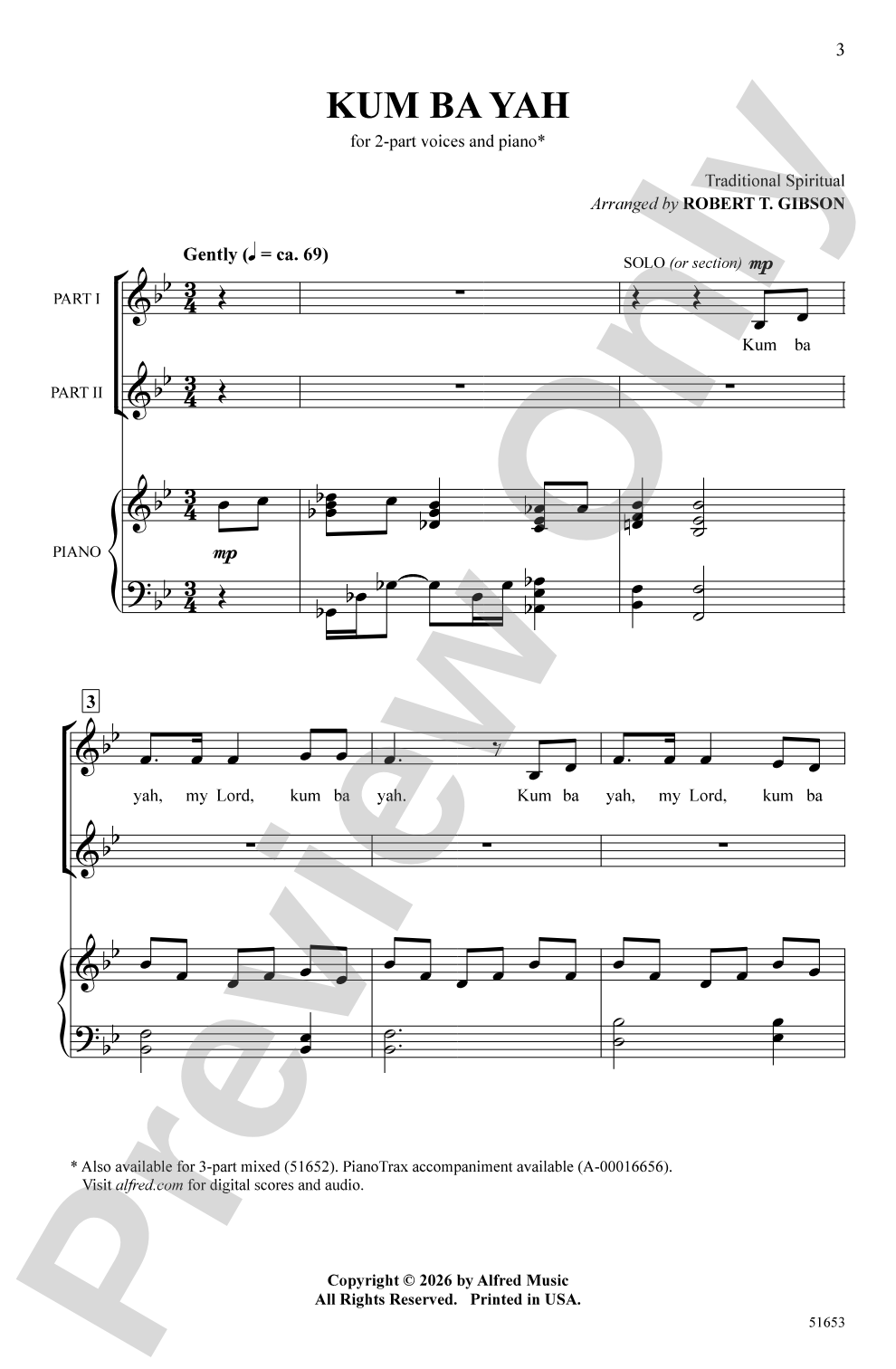
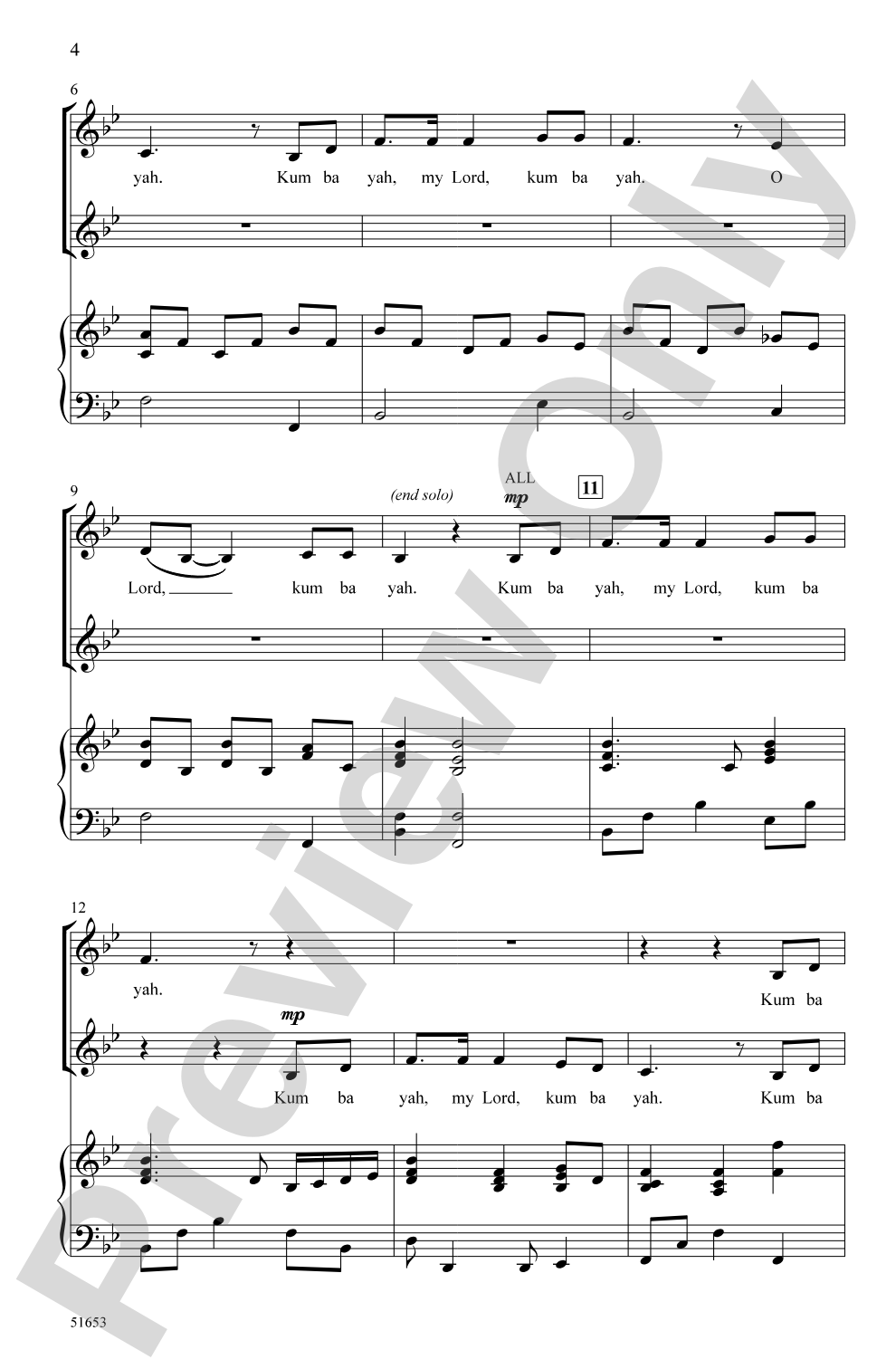
Don't miss Robert Gibson's contemporary reimagining of this classic spiritual. You'll recognize the familiar melody, and you'll appreciate the fresh perspective. Feature your favorite alto soloist at the beginning to set a reverent tone. Listen closely to unexpected interludes, which introduce and layer unique vocal riffs, creating powerful transitions between verses and leaving a lasting impression at the end. Appropriate for school or church singers of any age.


Kum Ba Yah: 2-Part Choral Octavo isn't in MakeMusic Cloud just yet...but it could be. Let us know you'd like to see it, and you'll help shape what comes next. In the meantime, start a free trial and dive into thousands of interactive titles your students can play along with today.
Request This Title
Tell us you want it.
Start Your Free Trial
Explore everything that's ready to play right now.
Sample Audio
1
Audio File
--:--
0:00
0:00
Sample Video
Additional Details
Series:
Alfred Choral Designs
Publisher:
Alfred Music
Page Count:
12
SKU:
00-PO-0007804
More about this title
About the Arranger: Robert T. Gibson

Robert T. Gibson brings deep roots in both education and the performing arts. Based in Houston, he holds degrees in music education from the University of North Texas and a master's degree from Missouri State University, where he later served as an adjunct professor and director of Reed Academy. His work spans middle school, high school, collegiate, and church settings, and he has guest-clinicized across Texas, Missouri, Pennsylvania, Kansas, Tennessee, and New York.
Gibson's commitment to developing the next generation of music educators shapes everything he creates. At Missouri State, he conducted the Gospel Choir and founded the Multicultural Ensemble, both of which performed at state conferences. His choral arrangements have been programmed by the Texas All-State Tenor Bass Choir and the Missouri Summer All-State Choir. In recognition of his contributions to the Springfield community, Gibson received the 2022 NAACP Trailblazer Award and was honored with a city proclamation. He is a recipient of the 2020 Missouri Choral Directors Association Opus Award for his arrangement of "We Shall Overcome."
Why we love this
Gibson's arrangement respects the spiritual's soul while giving it room to breathe. The addition of vocal riffs and carefully placed interludes transforms a familiar tune into something that surprises singers and audiences alike, making this feel fresh without losing the reverence these songs deserve. The featured alto solo at the opening gives you a natural showcase moment while the two-part voicing keeps the focus on storytelling and vocal blend.
What to expect
Reverent and grounded, with unexpected moments of rhythmic energy that catch you off guard. The familiar melody anchors listeners immediately, but the interludes and vocal riffs create momentum and sophistication, building to a conclusion that lingers.
Who it's for
School and church choirs of any age will connect with this arrangement, though it works especially well with singers who have developed basic part independence and can hold their line through layered textures. The two-part voicing makes it accessible for middle school ensembles while remaining engaging for high school and adult choirs.
How to get the most out of it
- Choose an alto soloist with a warm, grounded tone for the opening. This moment sets the emotional foundation, so allow space for genuine connection rather than technical display.
- Pay special attention to the vocal riffs during interludes. Mark dynamics clearly in rehearsal and isolate these passages until the layering feels intentional, not accidental.
- Build dynamics gradually across the arrangement to let the unexpected moments land with impact. The power comes from contrast, not from pushing volume throughout.
- Consider the recorded accompaniment as a rehearsal tool to lock in part independence before you conduct live. The interludes are rhythmically intricate and benefit from multiple hearings.
How to use it
Program this as a cornerstone spiritual when you're building a concert around sacred or folk traditions. Its combination of accessibility and arranged detail makes it work well alongside other spirituals or hymns, and it's substantial enough to carry weight in a festival or contest setting while remaining appropriate for a community or school worship context.
Skills your students will build
- Sustaining melodic independence while navigating layered vocal textures
- Responding to dynamic contrast and emotional pacing within a familiar form
- Executing rhythmic precision during interludes and riffs
- Blending as a section while allowing individual voices to contribute to harmonic color